World Bartending Champion Felice Capasso Shakes Up Manila
For the world’s number one bartender, making a great cocktail begins with understanding the spirit, the room, and the person drinking it.
Published on Jul 24, 2026
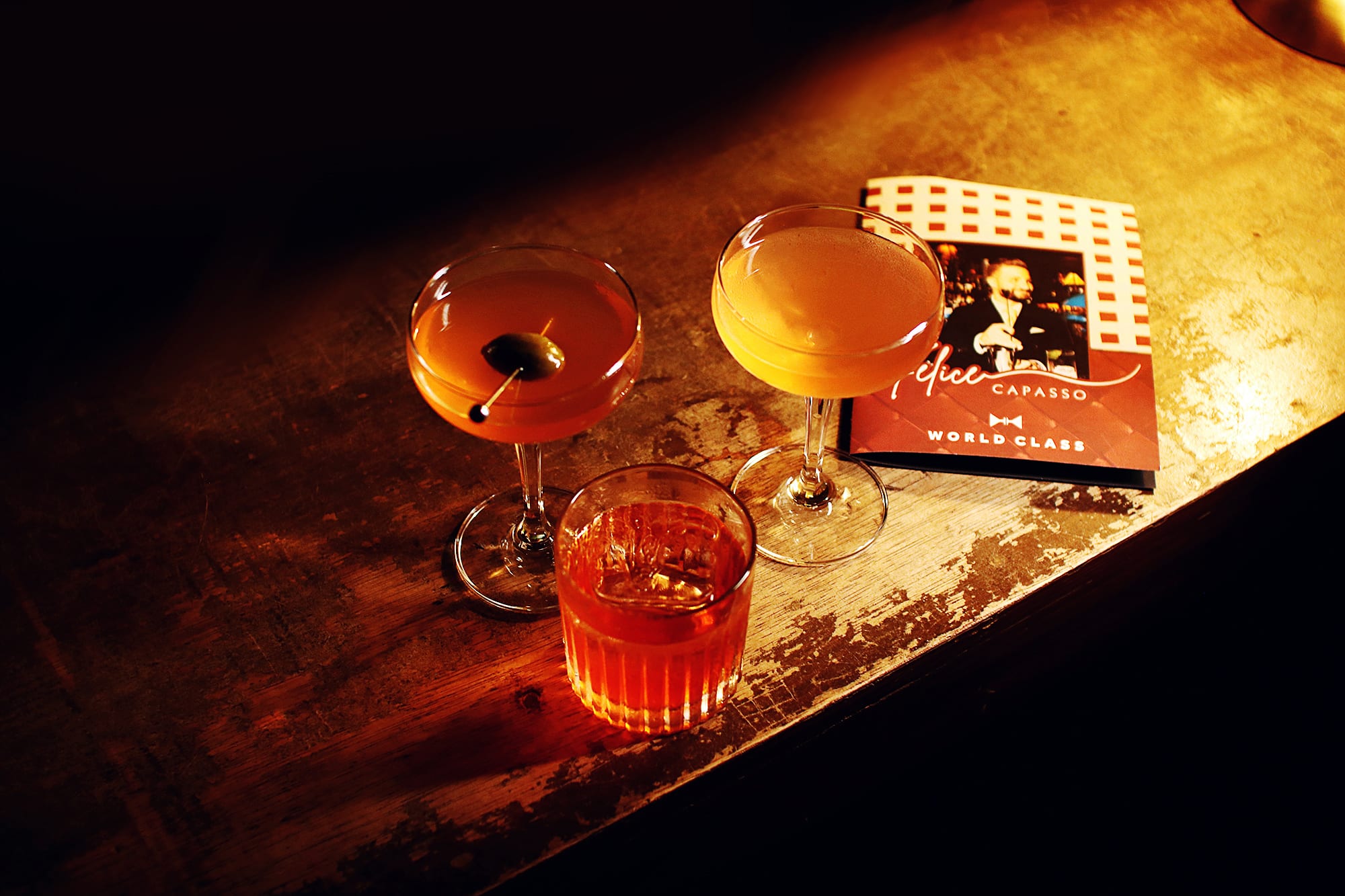
At The Spirits Library in Poblacion, Makati, a cocktail menu arrived like a ticket for a one-night-only performance.
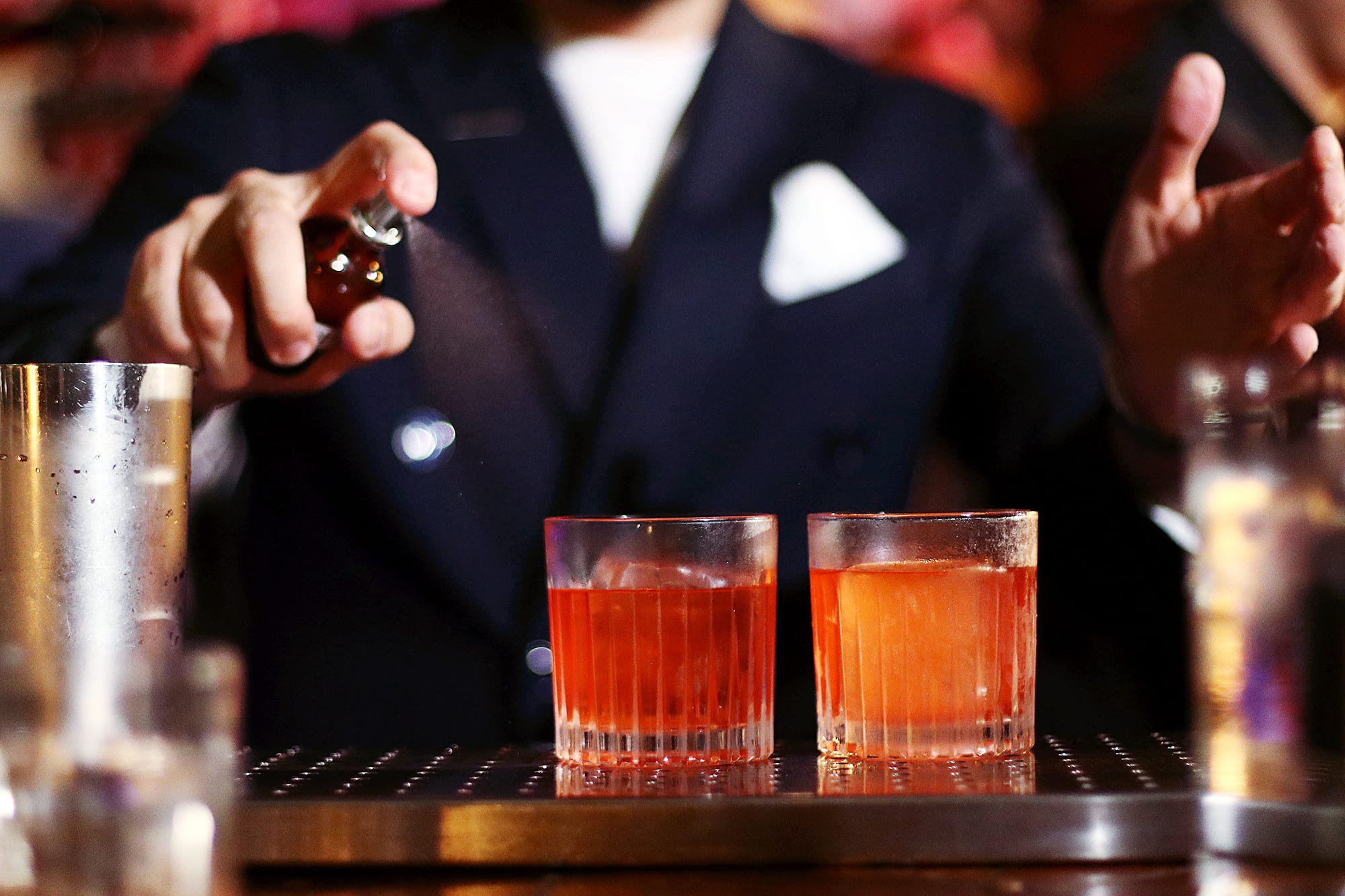
There was a Dry Martini made with Tanqueray No. TEN, Cocchi Extra Dry, and Castelvetrano olives; a strawberry cocktail built around The Singleton of Dufftown 12 Years, nutritional yeast, and strawberry bitters; a Rhubarb with Tanqueray No. TEN, juniper, and rhubarb; a Cloudberry made with Don Julio Blanco, cloudberry, and mushroom sauce; and a Negroni. Taken together, the menu read like a map of the world arriving in a Manila bar: Norwegian inspiration, Italian tradition, Mexican agave, Scottish whisky, English gin, and ingredients that piqued one curiosity after another. What, exactly, was nutritional yeast doing with strawberry and whisky? What could mushroom sauce possibly have to say to tequila?
For Felice Capasso, the answer begins with the spirit.
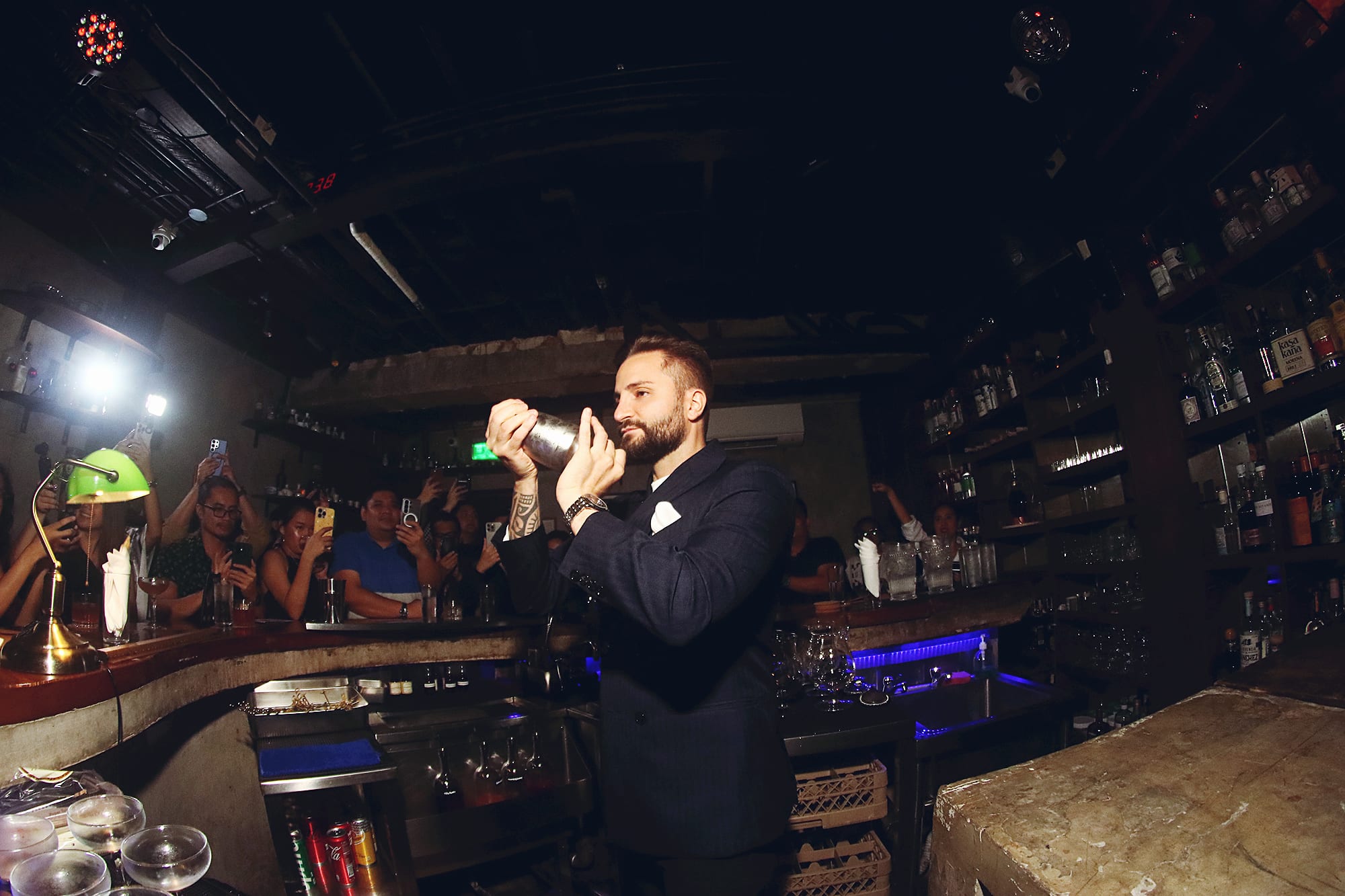
“The first step is to understand what guides each spirit, then identify one or two of its defining characteristics—whether that's texture, aroma, or flavor—and build your concept around them,” he says during the guest shift last July 15.
Capasso, the 2025 Diageo World Class Bartender of the Year, has spent his career learning how drinks change as they move through the world. His journey began in a small coffee bar in the suburbs of Napoli and took him to London at eighteen, then across England, Australia, the UAE, Spain, and Norway. Today, based in Oslo, he is a bartender, educator, writer, and entrepreneur whose work through The Spirits Journal and Sesto Senso Academy has made the science and culture of spirits accessible beyond the professional bar.
His arrival in Manila, however, placed that accumulated experience in a very particular setting. The cocktails had to work in a room in Poblacion, before Filipino guests with their own palates, expectations, and relationship to drinking. A drink exists in relation to the person who orders it, and Capasso's understanding of bartending has been shaped by the many different rooms in which he has worked.
When asked whether a Negroni in Oslo should taste exactly the same as one in Manila, he refuses the premise.
“Make the Negroni however the hell you want, as long as the guest is happy with it,” he says. “That's my answer. It's that simple.”
The answer sounds instinctive, though it rests on a considerable amount of knowledge. Capasso describes himself as a purist and a traditionalist, and his respect for tradition is precisely what allows him to understand when a drink might need to move beyond a fixed formula. A classic equal-parts Negroni will behave differently depending on the gin, its alcohol content, its botanical profile, and the vermouth and bitter used alongside it. The same proportions can produce very different results.
The professional's task is to understand what those variables are doing to the drink, then make a decision that serves the person in front of the bar.
“What is the end result of that Negroni?” he asks. “It's to make somebody happy.”
That philosophy would form part of the conversation when Capasso met Filipino bartenders for a masterclass the following day. The lesson was not a set of recipes to reproduce. It was an invitation to look more closely at the ingredients already in their hands and to develop the understanding required to make decisions of their own.
“Have you ever met a great chef who does not know the DNA of the raw materials he or she is working with?” he asks. “Every single great chef understands in detail the raw materials they're working with.”
For Capasso, spirits deserve the same attention. The raw material contributes something. Fermentation contributes something. Distillation contributes something. Maturation contributes something. A bartender who understands those processes can begin to identify what is actually present in the glass and decide which elements deserve to be brought forward.
“Your job as a professional is to find these factors, and then you can choose to highlight them in the cocktail.”
The unusual combinations on his Manila menu begin to make more sense in that context. Nutritional yeast and strawberry are part of a conversation with whisky; mushroom and cloudberry form a strange but deliberate counterpoint to tequila. The ingredients are chosen through an understanding of the spirit's possibilities, and the resulting drinks become demonstrations of what happens when technical knowledge leads to creative intuition.
That knowledge, however, accounts for only part of what Capasso believes a bartender needs.
“A bartender who can only make drinks, it's a cocktail maker. It's not a bartender,” he says. “You need to be able to host people, you need to have product knowledge, you need to be able to read a room, you need to have social skills, you need to have a bunch of different things.”
His definition of the profession extends naturally from the drink to the space in which it is served. Bars are places where people gather, talk, conduct business, find love, and occasionally make spectacularly bad decisions. “Some of the most beautiful and terrible things happen in a bar,” he says, “most probably in the same evening, at the same time.”
The ability to navigate that complexity has been shaped by Capasso's years of travel. Living across different countries taught him “flexibility and respect,” along with the understanding that every culture has its own assumptions about how people gather, drink, and relate to one another.
“I believe, as humans, we're all born with a level of superficiality, and we're all born with a wall in front of us, and all we see is that wall, until we break that wall,” he says. “Traveling helps you break that wall and see beyond.”
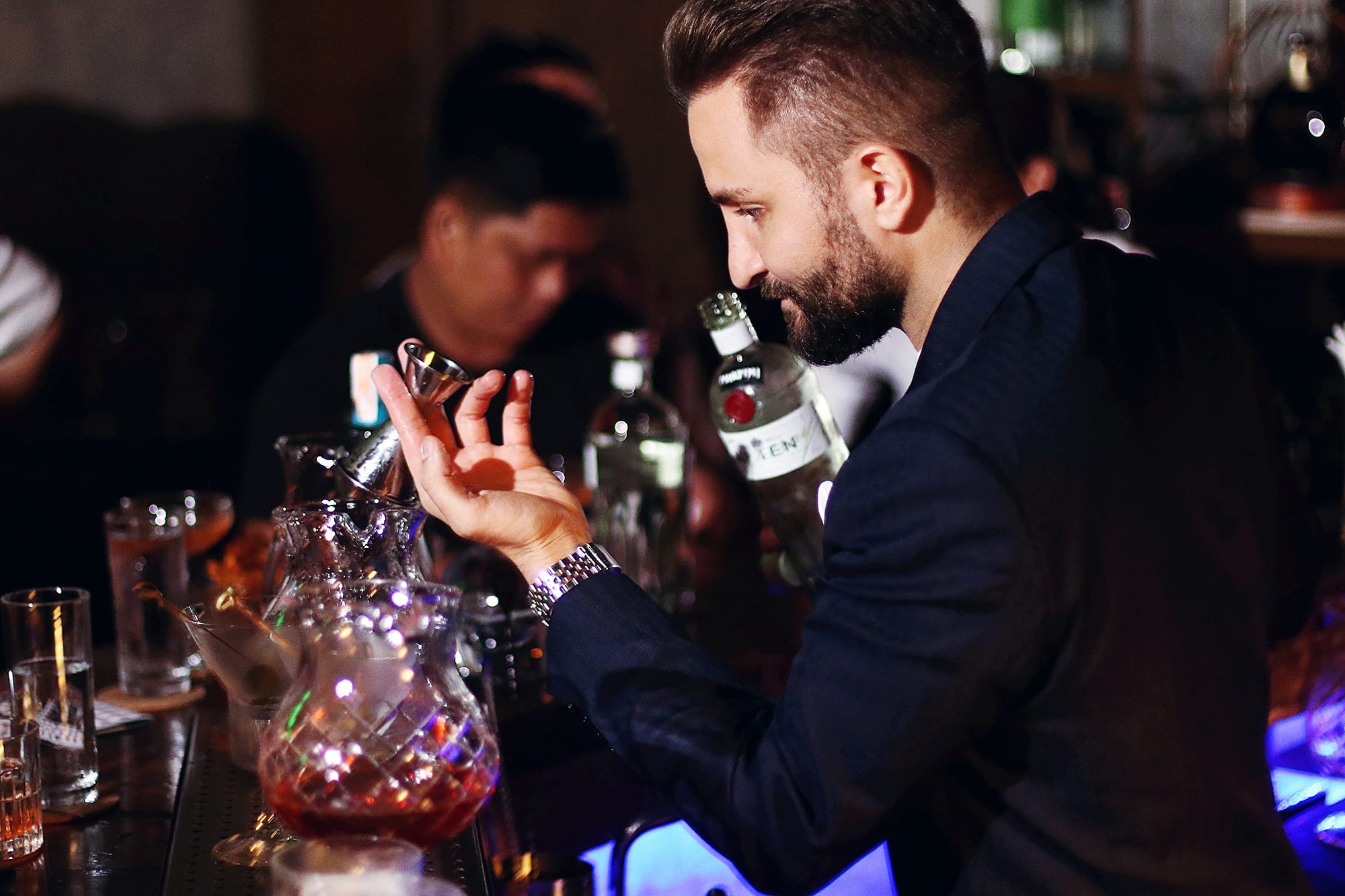
In Manila, that perspective became part of the encounter. Capasso brought a world of experience to a local bar, while the Filipino bartenders who met him the following day had the opportunity to place that experience alongside their own. The value of a global bartending platform lies partly in this exchange: ideas travel, acquire new contexts, and eventually return in forms shaped by the people who receive them.
As Ronald Cruz, the 2026 Diageo World Class Philippines Bartender of the Year, prepares to represent the Philippines at the global finals in Scotland, that exchange is moving in both directions. Filipino bartending is entering the wider world with its own stories, techniques, sensibilities, and ways of making a guest feel welcome.
Perhaps this is why Capasso's definition of a world-class bartender remains deliberately expansive. The title belongs to someone who can understand a spirit in detail, read a room, adapt to the person standing before them, and bring enough character to the work that the drink becomes part of a larger human encounter.
The world arrives at the bar in fragments: a spirit from one country, an ingredient from another, a bartender shaped by their own life and lived experiences, and a guest whose expectations belong to the place where they happen to be drinking. The bartender's skill lies in bringing those things into conversation.
Then, if the work has been done well, someone takes a sip, looks up, and is happy.
ALSO READ:
Today I Learned: Why Every Bar Is Suddenly Obsessed With Guest Shifts
5 Bars in Metro Manila Where You Can Actually Hear Your Date
Craft cocktails, social justice, books, board games, and TTRPG. Chopsuey.
View More Articles About: