What Happened to Robby?
A healthcare professional, recognizing something familiar about The Pitt's Dr. Michael "Robby" Robinavitch, opens up about her mental health.
Published on May 10, 2026
As most fans are wont to do when they’re obsessing over a show, I scrolled through dozens of The Pitt-related posts on Threads, X, and Reddit, and I came across a recurring question: Why is Robby being such an asshole?
Robby, or Dr. Michael Robinavitch (played by Noah Wyle), is the lead of HBO Max’s hit medical show about the fictional Pittsburgh Trauma Medical Center. Dr. Robby was quite the hero in the show’s first season: consistently calm, attentive, and competent. As a doctor, I picked up a lot of gold standard bedside manners: sitting down to meet the patient at eye-level, debriefing trainees after a death, and talking to families about grief and letting go, all of which Dr. Robby did fantastically. He always created an environment of trust, respect, and empathy, and quickly became America’s favorite emergency medicine physician.
(If you have not yet seen the second season of The Pitt, be warned that there will be spoilers from this point forward. Now is a good time to watch all 15 episodes. Come back after binge-watching.)
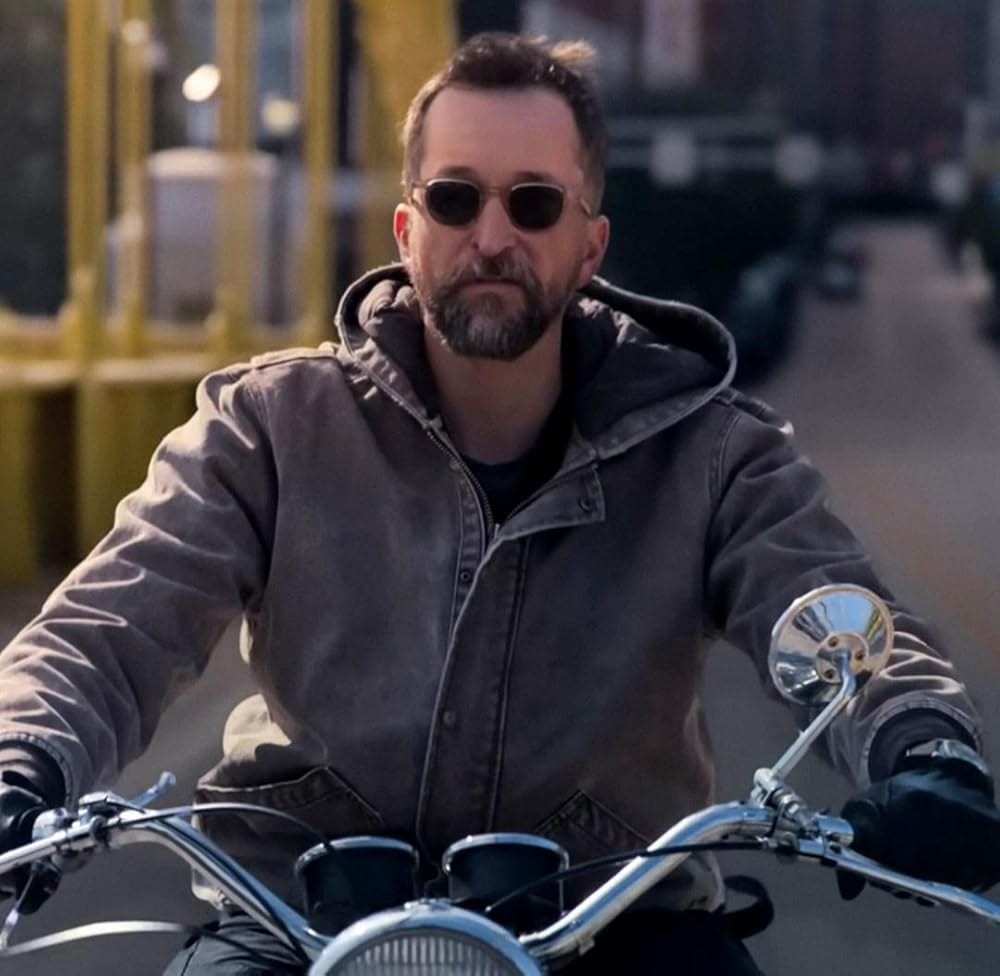
So I understand the confusion and disappointment of seeing Robby’s corruption arc in Season 2. It was like watching Mr. Hyde taking over Dr. Jekyll. Robby was a mess. He was hostile towards charge nurse Dana, dismissive of med student Javadi, and avoidant of his returning golden boy, Dr. Langdon. He belittled Dr. Mohan’s panic attack and refused to believe the new attending physician could do as good a job as he did. This Robby is abrasive, arrogant, and absolutely annoying. He clung to his role as department chair with an infuriating God complex, acting like he couldn’t leave because the department would fall apart without him. At the same time, he made constant allusions to giving up and running away from it all, throwing in suicidal comments here and there. From the very first scene of the very first episode, the Internet attacked The Pitt for showing Robby driving a motorcycle without a helmet—a passive death wish if I’ve ever seen one, especially for a doctor who’s already seen and treated hundreds of motorcycle accidents. The Internet went wild: That’s irresponsible! It’s bad role-modeling! How could the most realistic medical drama on TV do that?
Simple: it was all intentional. Robby, for reasons yet to be revealed at that point, is not himself and is not okay. This reckless motorcycle-riding, his three-month soul-searching sabbatical, and vague goodbyes to colleagues become a recurring point of conversation, with audiences increasingly worried that Robby might actually want to hurt himself and never return. I participated in plenty of online discussions on what would happen to Robby. Would he kill himself? Would his motorcycle crash? Is he going to adopt Baby Jane Doe? (Yes, I clearly watch too many teleseryes.)
To be clear, I, too, hated Robby this season, but I also recognized something familiar in him. No, I’ve never ridden a motorcycle, and I’ve never gone to a place literally called Head-Smashed-In Buffalo Jump. But maybe I, too, had a passive death wish, careening over the edge like Robby. On more than one occasion during my medical training, I have considered that, if I were to cross the street and collide with a speeding car…well, I wouldn’t be thrilled, but I wasn’t actively going to stop it, either.
These thoughts were most pervasive in 2020. I was a second-year internal medicine resident when COVID came and upended our lives. Social distancing, face shields, PPEs, and tocilizumab all trigger some less-than-pleasing memories, much like Robby’s flashbacks on the show. I didn’t lose a beloved mentor the way Robby did, but I remember all the death—so, so much death. Repeated, incessant, meaningless deaths. Deaths every day, every shift, almost every hour at times. Young or old. Male or female. Battling with cancer or perfectly healthy. Everything was new and uncertain: the disease, the medications, the (ever-changing) protocols. We were battling a disease no one was ever trained for. The circumstances were insane. The pandemic scarred us in ways we may never completely heal from, and as Robby’s flashbacks showed in Season 1, we’re still carrying a lot of that trauma today, six years since then.
It comes as no surprise, then, that I got flagged for symptoms of anxiety and depression. Back then, our department required us to take a mental health screening test every month. It was one of those tests that I could have easily lied about to avoid trouble and attention, but at that point, I didn’t care. I was offered professional help, but I could not wrap my head around the possibility of a mental health diagnosis. I’m a doctor. I should be on the treatment end of the illness narrative. Besides, I was fine. I showed up for my shifts. I attended Zoom meetings. I did my work. I was functional, and functional was as good as you could get in a global pandemic.
In hindsight, I was less okay than I thought. I went to work like a robot, going through the motions of patient assessments and procedures. Even leisure became mechanical. I spent my off-hours watching all seasons of The Bold Type, but remembered absolutely nothing about the plot or characters. Good food, good company, and a good night’s sleep were not working like they used to. Truthfully, I probably knew something was wrong, but I refused to acknowledge it. Call it pride, call it shame, call it hypocrisy. I brushed off that era as mere exhaustion, nothing a bit of rest couldn’t handle.
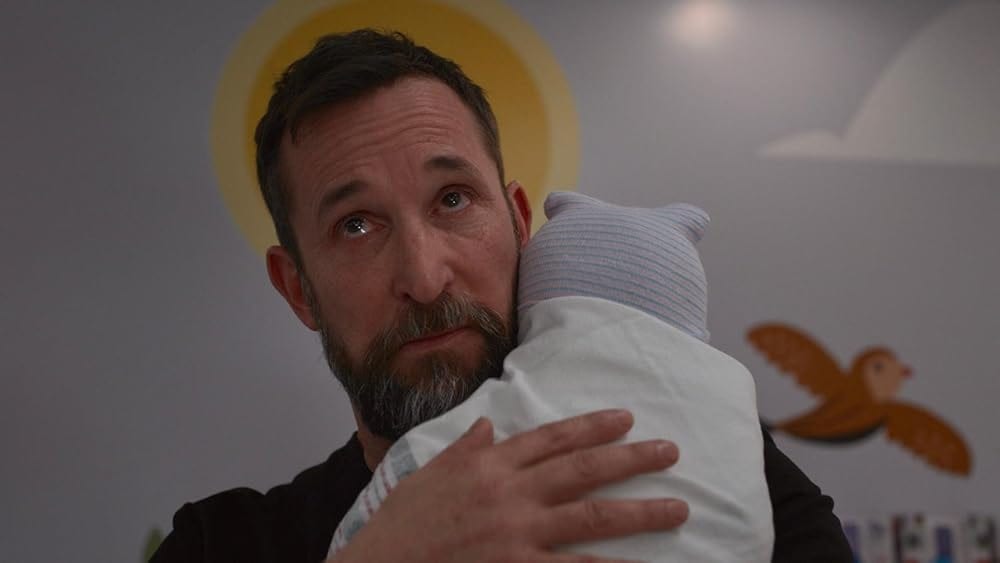
As it turned out, that wasn’t the end of it. This season’s Robby was also me in 2024, when I was in the middle of my endocrinology subspecialty training, one of the rungs in the ladder of medical training. There was no global pandemic, no mass casualty event, no evil enemies, just regular run-of-the-mill work, and yet I was barely keeping myself together. I was constantly looking over my shoulder, worried I had messed up a patient’s treatment, that I was lagging behind my colleagues, or that everyone would realize I was never fit for the job in the first place. I catastrophized every mistake and minimized every win as a lucky break. I arrived earlier and left later than I had to because I felt I needed to make up for my deficiencies. The few hours I was at home were spent either sleeping or catching up on unfinished tasks. That entire year was a blur, but close friends told me that I was obviously not okay. I was uptight. I snapped at everyone. I completed my tasks with the whiny passive-aggressive behavior of a hormonal teenager. If anyone so much as called me out, I retaliated with hostility. It was like I had a dark cloud over my head, I was told. Plus, I refused to ask for help, incorrectly believing that doing so would look even more Not Okay. A close uncle of mine died that same year, and I had every reason to take a break, but I insisted on going to work. When our chief fellow finally forced me to take a leave of absence, I still couldn’t keep away, still talking to colleagues and checking chart entries remotely. I remember not wanting to be judged for passing on work or for doing sloppy work.
For the second time in my life, I was told that I may be depressed, and once again, I refused to believe it, even feeling insulted that people thought I was. This time, I came around, finally consenting to treatment and therapy, but that took months of frequent back-and-forths with loved ones telling me to seek help, gently listening to my cognitive distortions, no matter how repetitive they became, and reminding me to take my medications (I, a doctor, didn’t think they were working).
I was abrasive, arrogant, and absolutely annoying. Just like Robby.
Robby’s conversation with Dr. Abbot in the season finale hit particularly close to home. The desperation to not feel like you’re drowning all the time was me in 2024, wanting out of the hospital but still feeling burdened by the weight of the job that I couldn’t leave, even when I was allowed to—the snapping, the projection, the trying-to-fix-things-because-you-can’t-fix-yourself. Damn, I can’t believe I didn’t see how bad it was. Maybe that’s just it—it’s impossible to see when you’re in a dark place.
Some viewers feel that there was too much focus on Robby’s mental health this season, with conversations about it occurring over and over without much progression. I would argue that Robby’s downward spiral was precisely the point of the season. That’s exactly what happened to me. That’s what mental illness feels like: gripping, all-consuming, and repetitive, and it can manifest itself in the most annoying version of a person. It was hard to empathize with Robby because a person who is not okay can also be difficult to work with.
Other fans were waiting for the equivalent of the PittFest mass shooting in Season 1, a similar high-scale disaster that would shake up the ER. There were many red herrings peppered in: Fourth-of-July accidents, the potential cyber attack, or the collapsed waterslide incident. I thought ICE agents taking a patient in would trigger a string of chaos, but while that episode was one of the most stressful ones of the season, the ICE agents eventually left, leaving a cloud of fear and anger in their wake.
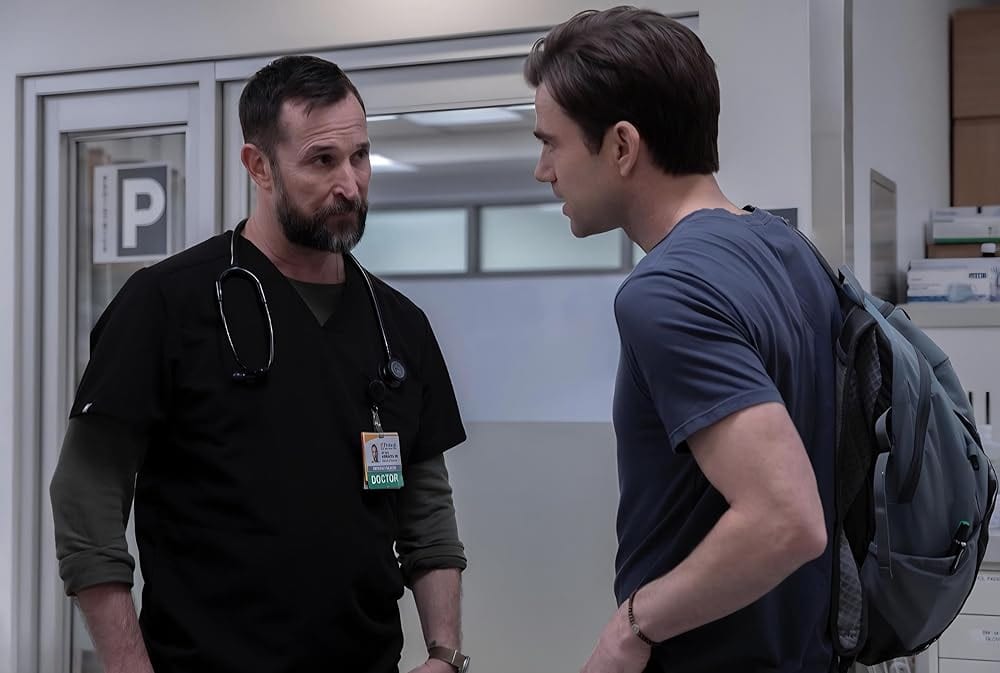
But this season showed an important truth about working in healthcare: sometimes, the biggest disaster is just getting through the day. You don’t need a calamity or a pandemic to have a horrendous day. I can’t tell you how many times I broke down over unfinished charting, or malfunctioning printers, or late clock-outs because there was still so much to do. It’s not action-packed on camera, but that battle in your head is tumultuous and noisy and agonizing. It’s a constant struggle to get through while carrying this impossible weight and trauma, wrestling with yourself at every turn. It’s a quiet and lonely struggle you don’t even know you’re carrying.
And this isn’t limited to Robby. Everyone was having a spectacularly bad day this season. Everyone was on the brink of a breakdown. Javadi summarized how broken they’ve all become in the last episode: "Look what this place does to you. Langdon's an addict…McKay was on house arrest. Dana's a time bomb. Santos is one of the angriest people you are ever going to meet…Samira has no life. Abbot's an adrenaline junkie who gets shot at for fun. Robby's got, like, PTSD or something way fucking worse." Everyone was coping the best way they could. Javadi had her TikToks. Dana had her nicotine patches. Med student Joy had her dry humor and prioritized going home on time. Mel and Santos went out for karaoke. Abbot found a hobby in moonlighting as a tactical medic for a SWAT team. Everyone was just trying to survive a job that asks and takes so much from them.
This is not a defense of Robby’s or anyone’s behavior, but an illustration of what a person who’s struggling can look like. Like Robby, like the entire crew, like me—healthcare workers set aside their burdens and trauma, so they can see yet another patient and save yet another life. I am grateful that, when I was at my worst, I had people who loved me enough to call me out, to help me get help, to make sure I sat through treatment and let it work and not let go. I apologize to all the Danas, Mohans, Javadis, Langdons, Dukes, and Abbots in my life, who had to sit through my hostility, my denials, and my stubbornness, who stuck with me when I wasn’t the easiest person to be with, who extended their grace and forgiveness even when I didn’t deserve or ask for it. I’m in a much better place now because something they said finally came through.
Just like last season, The Pitt succeeds in realism: it shows what healthcare looks like today, a system so broken that it breaks people, too.
If you or someone you know is struggling, the National Center for Mental Health's Crisis Hotlines are: 1553, 1800-1888-1553, 0919-057-1553, 0917-899-8727 (USAP). Services provided by their first responders are free of charge.
ALSO READ:
Happy Pitt Day to Those Who Celebrate
The Best Show on Television Is a Source of Pinoy Pride
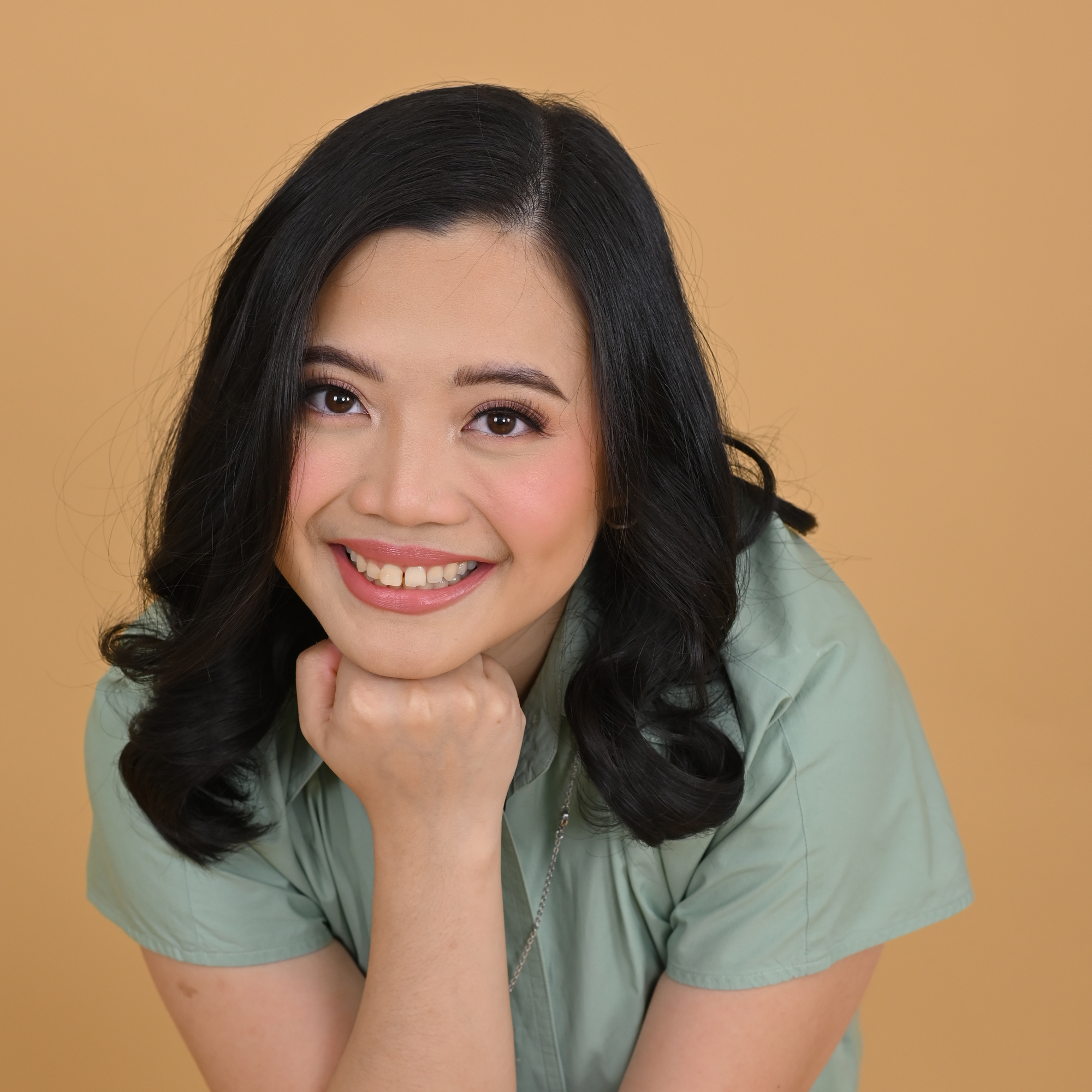
Ella Mae Masamayor is an internist-endocrinologist, writer, and podcaster. She co-hosts the Kwentong Callroom Podcast, a podcast dedicated to demystifying and humanizing medicine.
View More Articles About: