A Tale of Two Brazils: São Paulo and Paraty
From the electric, glass-rimmed roar of São Paulo’s urban jungle to the cobblestoned silence of Paraty’s colonial shores.
Published on Apr 19, 2026
When you think of Brazil, the first city that often comes to mind is Rio. You imagine the latter’s resplendent beaches, warm weather, Christ the Redeemer, and all sorts of adjectives (or even bad things such as crime). São Paulo seems like an afterthought. It doesn’t have the same recognition as Rio de Janeiro, nor is it the capital of the country (Brasilia has that honor). However, São Paulo is one of the biggest cities not just in Brazil but in the world, with a population of more than 20 million within its greater metropolitan area. It is also home to a diaspora of Japanese, Arabs, and others from surrounding Latin American countries.
My impression of the city was that it’s a sprawling concrete jungle with plenty of high-rise buildings, traffic, congestion, diversity, homeless people, and organized chaos, some of which reminded me of our own Metro Manila. It felt like more of a city you live in rather than visit. An informal survey of Brazilians I met said they would rather live in São Paulo because Rio is for tourists. The money is there, more jobs, and a better standard of living. I didn’t stay long in São Paulo during my visit, but I did get glimpses of Brazilians’ preferences.
.jpg)
The Kinetic Energy of a Metropolis
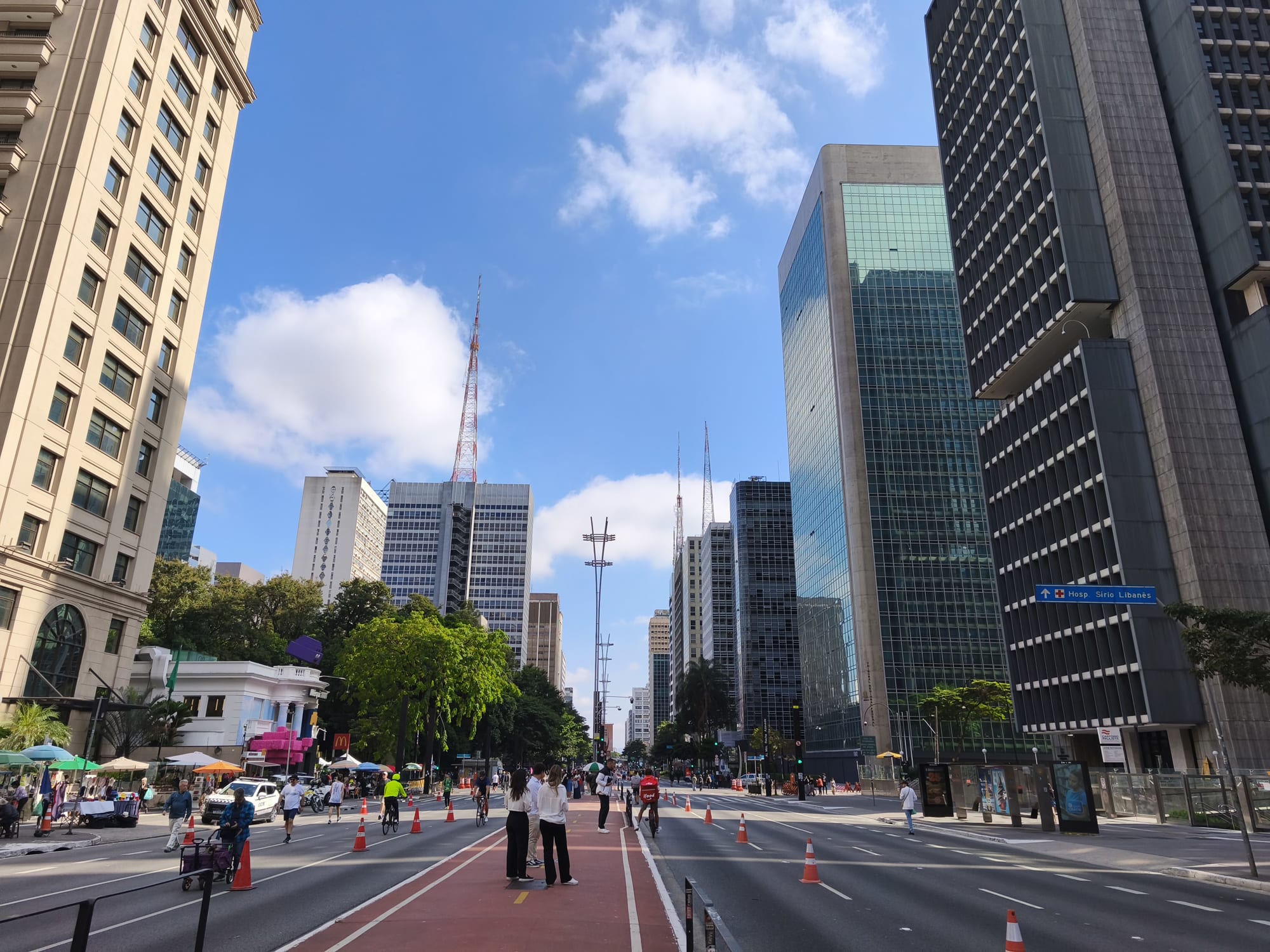
Lined with banks, skyscrapers, restaurants, and the renowned Museu de Arte de São Paulo or simply known as MASP, Avenida Paulista is pretty much like a combination of BGC and Makati. It is the city’s financial, commercial, and entertainment district. And like its Filipino counterparts, it is a curated version of São Paulo (AKA the showpiece). Thousands of pedestrians go about their routines here, to go to work, shop, visit a museum, or dine at one of the restaurants. I was lucky enough to arrive during an event when they closed the entire street for pedestrians and street performers.
Not too far from Avenida Paulista is Liberdade, famously known as a Japanese enclave. Thousands of Japanese immigrants have lived in this neighborhood over the decades since the early part of the 20th century. It’s not as clean or as organized as the Japanese cities I’ve been to, but you can clearly see patches of Japan’s culture through restaurants, shops, signs, or a few torii gates here and there. I found several shops selling toys or all sorts of paraphernalia of anime characters. Other groups of the Asian diaspora in Brazil also live here, such as the Koreans and Chinese.
.jpg)
The Mercado Municipal de São Paulo and the walk towards it reminded me of Quiapo and Binondo, with its vendors and shop owners calling out to passersby and potential customers, cluttered sidewalks, and droves of pedestrians (some of whom have their backpacks and sling bags in front of them). It was comforting to know that other people outside the Philippines did those too. Both the area around the mercado and Liberdade are stark contrasts to the glitz of Avenida Paulista. These similarities piqued my curiosity even more. I made my way to the mercado to get something to eat. It was hot and noisy inside with a local band playing in one spot of the mercado and numerous stalls selling all sorts of food and other items. With the limited knowledge of a tourist in a new city, I tried what I believed to be the local specialty, which was a mortadella sandwich. The latter is a huge sandwich stuffed with Italian mortadella and melted cheese. I was unsure if I overpaid or not, but I did find the sandwich delicious.
I visited São Paulo (and Brazil for that matter) with the history and cultural lens of a Filipino. Part of the shared history we have with Brazilians is the colonizers who left a piece of themselves on the countries they colonized (Spaniards to Filipinos, Portuguese to Brazilians). The churches, religion, food, and even the mixed skin tones are part of their influence.
.jpg)
Paraty: Stepping Away from the City
Rio de Janeiro’s inherent contradictions of poverty and affluence, and natural beauty amid an urban jungle, draw crowds from all over the world, while São Paulo’s progress and development attract businesses and Brazilians who want to move up in life. Somewhere in between these two megacities is a charming coastal town that seems like it’s lost in time. The place I’m referring to is Paraty, located on Costa Verde, a lush green corridor that runs along the coastline of Rio de Janeiro.
I alighted from the bus I took at a small station. In big cities such as Rio and São Paulo, I wouldn’t dare arrive so late at night. Paraty was asleep, with most establishments closed or about to close. I was fortunate enough to find a local restaurant open. I ate a light dinner and walked all the way to my accommodation. I immediately felt the difference between walking in the dead of night in Rio and in this sleepy town. I didn’t see any homeless people. I didn’t feel like I was in a constant state of danger where I had to look over my shoulder so often. Upon arriving at my lodging, I breathed a sigh of relief and looked forward to exploring Paraty.
.jpg)
Paraty’s historic center is a UNESCO World Heritage Site along with the surrounding protected biodiversity areas. During Brazil’s colonial era, gold passed through the town en route to Europe. The colonizers also brought African slaves to work in the mines. The center is a mix of old colonial architecture characterized by cobblestone streets, centuries-old houses, shops, restaurants, and accommodations. It’s a charming beach town with enough buzz to keep visitors occupied after day trips. It kind of reminded me of Coron and El Nido.
I joined a group tour out of convenience. It would be easier to get around compared to spending hours on a local bus to get anywhere. On a side note, I would usually take the local bus, but I made an exception for this leg of my trip. It’s a nice change of pace after moving from place to place like a local. I was fortunate enough to be in a group of mostly Brazilians (I was the only foreigner, actually). They thought I was Chinese, but it’s not often they meet a Filipino who flew in from the other side of the world.
.jpg)
The drive to the beaches was scenic, passing hills and mountains and the Brazilian countryside. The waters weren’t as warm or as calm as those in Boracay, Palawan, or Bohol, but just as beautiful. There were a few establishments lining the shore, but they didn’t take away from the natural beauty of the coast. I can see why Paraty is a popular beach destination for those living in either Rio or São Paulo.
It’s peaceful.
Sometimes that’s all that matters.
The urban roar and grid and glass of São Paulo and Paraty’s colonial sanctuary and quiet shores couldn’t be more different. On some days (probably on most days), I’d love to make the most money I can in a big city and feel its kinetic rhythm. On other days, I wouldn’t mind whiling away the hours and the days doing nothing, reflecting, and thinking in a place like Paraty. A place that feels like it’s an “in-between” figuratively and geographically (it’s in the middle of two of Brazil’s biggest cities, Sao Paulo and Rio de Janeiro).
ALSO READ:
Rio de Janeiro: Finding Beauty in a Dark Past
Jeju, South Korea: The Island Forged Twice by Fire
Joshua Berida loves to travel. He's also into writing and watching movies.
View More Articles About: