Changed Expectations: Discovering Wuhan and My First Snow in Shennongjia
Wuhan, the capital of Hubei, has been overshadowed by its reputation. But this visit allows us to view the city through a new lens.
Published on Jul 2, 2026
My first trip to mainland China began in perhaps its most recognizable city, not because of centuries of history or iconic landmarks—despite being rich in both—but because of an event six years ago that brought the world to a standstill. I arrived in Wuhan expecting to find myself thinking, "No wonder it started here."
Instead, I found a city that challenged every assumption I had carried with me: remarkably clean, strikingly modern, and more organized than even many cities I've visited.
Our tour guide, Lily, tells us, “Many people think we in Wuhan eat bats, but if you walk around the city, you'll see that most of the food is just ordinary Chinese cuisine—even the street food,” she says. “There’s hardly any exotic food in Wuhan. I’ve never tried any myself.”
Although nobody in our small group brought up the infamous bat soup myth, we appreciated that Lily acknowledged it early in the tour. It helped dispel a misconception that had long shaped outsiders' perceptions of Wuhan and allowed us to see the city with a fresh set of eyes.
Yangtze River: From the Pages of Books to Reality
On our first day in Wuhan, we set out on a late afternoon-to-evening cruise along the waters of the Yangtze River. Towering buildings lined both banks, their colorful lights earning our attention. I wondered if they had been specifically installed to wow tourists taking the river cruise.
Ever since I started reading Asian literature, I have encountered the Yangtze River countless times, especially in novels set in China. I always imagined its vast waters, the civilizations it nurtured along its banks, and the pivotal role it played in the country's history.
To finally lay eyes on even a small stretch of it felt surreal. The pages I had read for years suddenly came to life. And while the river itself was a picture of calm, my mind was racing, knowing I was cruising on the waters of a river that had long existed only in my imagination.
The Three Kingdoms Banquet and More of Wuhan
We would put our exploration of Wuhan on hold, as the following morning we boarded a high-speed train to Shennongjia, a county in Hubei Province best known for its UNESCO World Heritage Site and UNESCO Global Geopark located within its mountainous landscape.
When we returned a few days later, we would discover even more of Wuhan's history and culture.
It was at Zhiyin Hall, where our lavish banquet unfolded like a theatrical production, that I was introduced to China's Three Kingdoms period. Lily told us that even cadets at the United States Military Academy at West Point study ancient Chinese military history, particularly the Three Kingdoms era, to better understand military strategy, intelligence operations, and warfare. The lengthy conflict among the rival kingdoms of Cao Wei, Shu Han, and Eastern Wu, which lasted from 220 to 280 A.D., remains one of history's most studied military campaigns.
The "Banquet of the Three Kingdoms" pairs a multi-course feast with a dramatic retelling of this historic era. Costumed performers weave between dining tables as scenes from the epic unfold, transforming history into theater scenes.
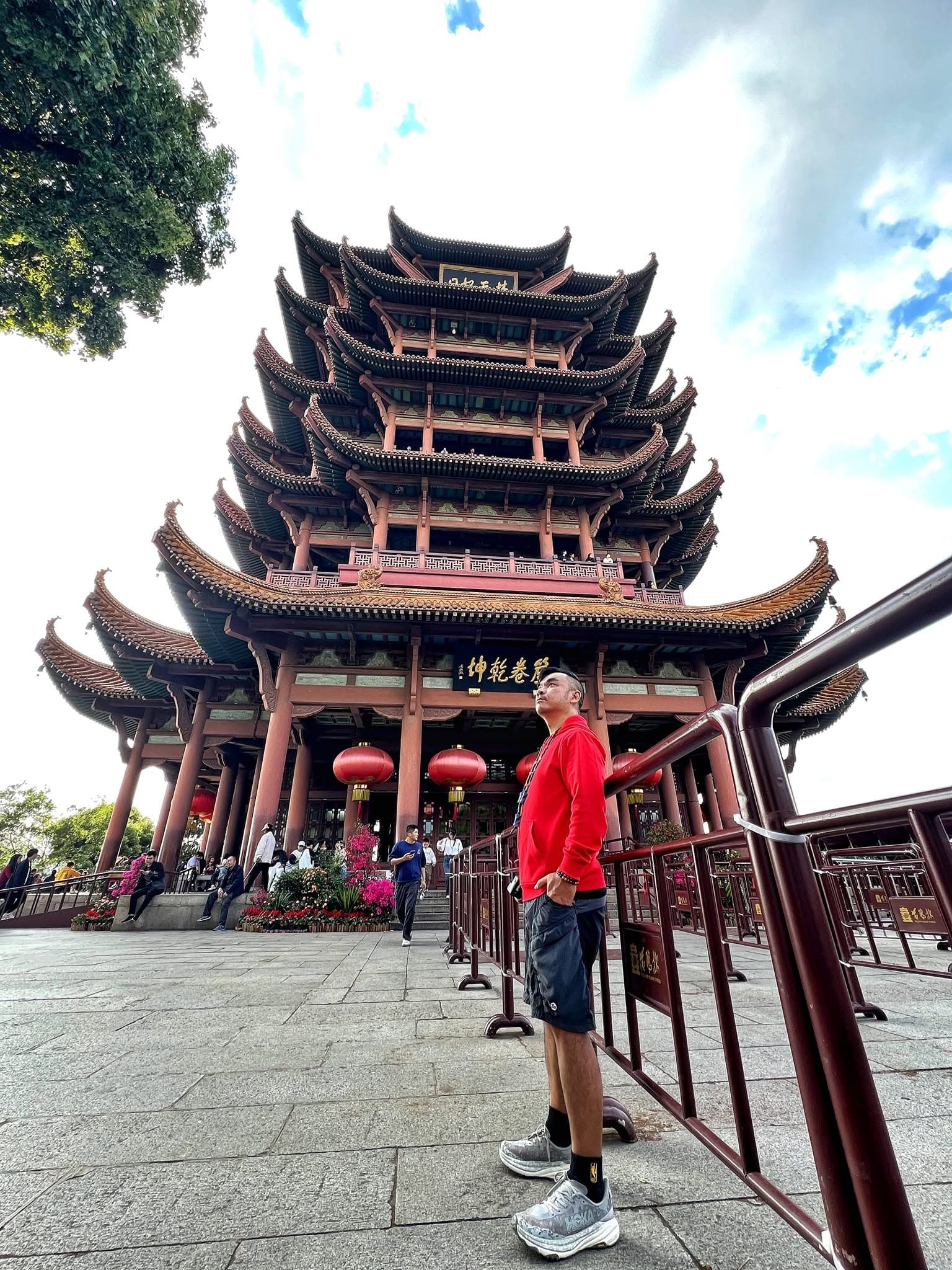
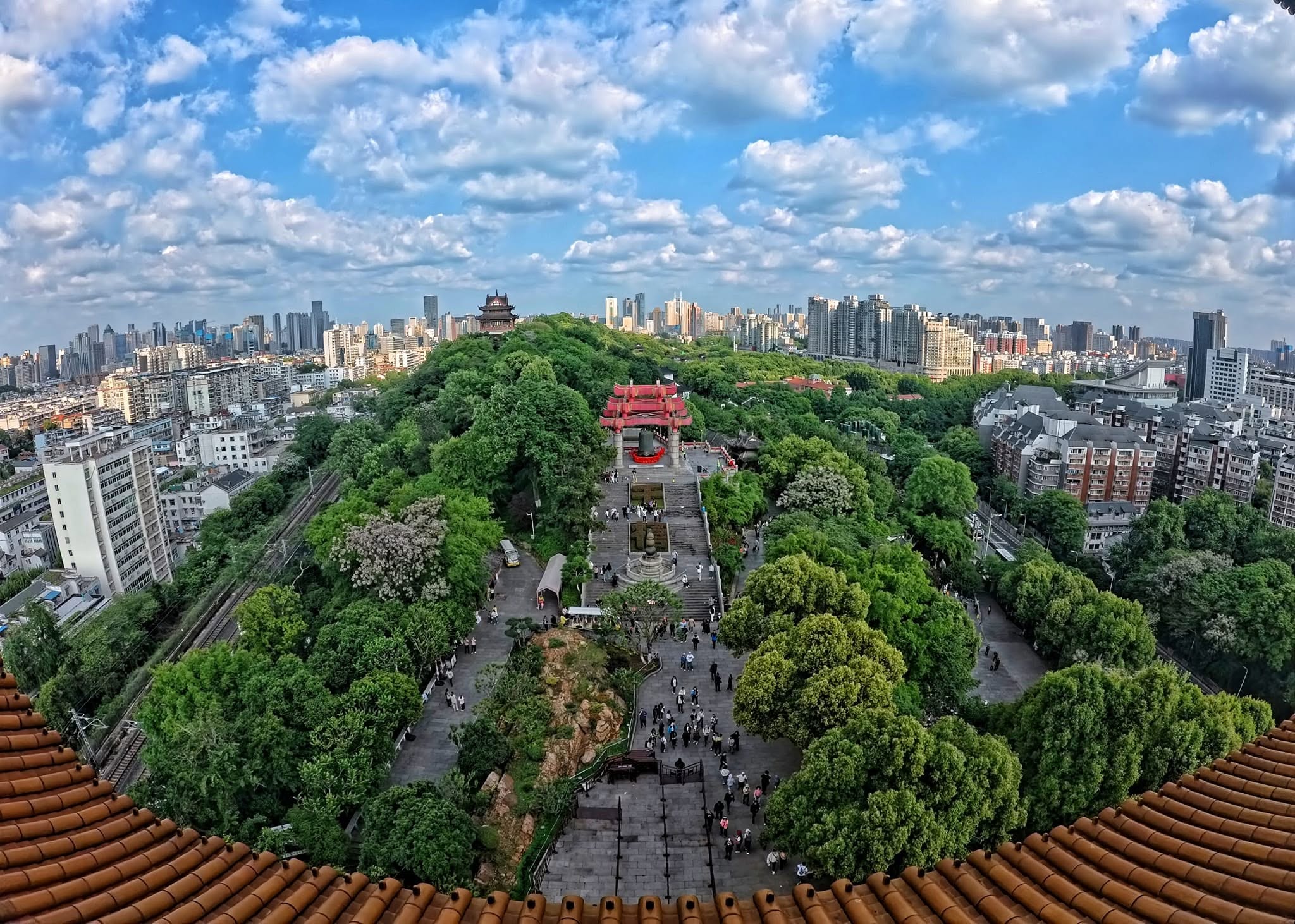
At the Yellow Crane Tower, I got my best view of Wuhan. From its upper levels, the Yangtze River cuts through the city as modern skyscrapers stretch toward the horizon. It was easy to see why this hilltop has drawn visitors.
Rebuilt in the early 1980s, the present structure traces its origins to 223 A.D. during the Three Kingdoms period. What began as a military watchtower later evolved into one of China's most celebrated cultural landmarks, mentioned in poetry and literature and visited by generations of scholars, artists, and philosophers.
Looking out over the city, I couldn't help but think about the contrast before me. The same vantage point that once overlooked ancient kingdoms now frames one of China's most modern skylines. It was yet another reminder that Wuhan was far different than the version I had imagined in my head before arriving.
The rest of my glimpse into Wuhan was spent on city walks and cafe-hopping, especially around East Lake Scenic Park, home to what is said to be the largest urban lake in China. Families, both locals and tourists, were enjoying walks along the pathways, while cyclists, joggers, and book lovers occupied the park's tree-shaded lawns and benches. Watching people enjoy a Wednesday afternoon made me envious of the many green and open spaces of the city, particularly around East Lake.
In Hankou, once a separate town before it merged with Wuchang and Hanyang to form modern-day Wuhan in 1927, my architecture-loving self found endless joy wandering its historic streets. At the intersection of Lanling Road, Dongting Street, and Poyang Street, the triangular-shaped Panoff Mansion immediately caught my eye, along with crowds stopping to photograph the century-old landmark.
Built in the early 1900s by Russian tea merchant J. K. Panoff, the five-story mansion once symbolized Hankou's flourishing China–Russia tea trade. Today, following an award-winning restoration, it anchors Lihuangpi Road, where beautifully preserved heritage buildings have been transformed into cafes, galleries, restaurants, and boutiques. Walking through the district felt like stepping into another era, one where Wuhan's cosmopolitan past still shows behind every building façade.
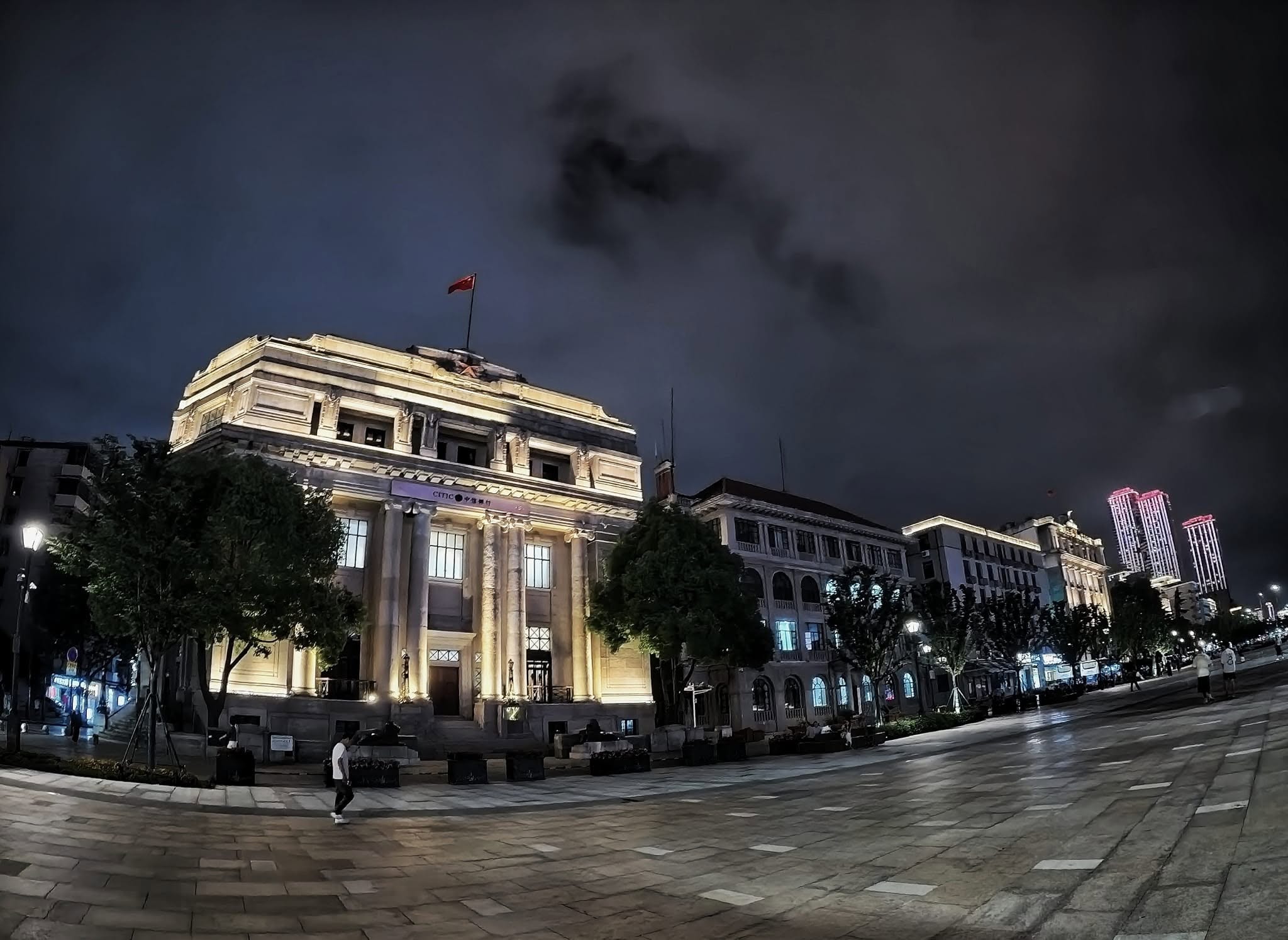
As the rest of the group headed toward the lively shopping street near the Jianghan Customs House, I went the opposite way, making my way to Wuhan's historic Hankow Bund.
The waterfront is lined with surviving late 19th- and early 20th-century landmarks, all well-preserved structures that stand as lasting reminders of the five foreign concessions—the British, French, Germans, Japanese, and Russians—that once helped transform Hankou into one of China's most important inland port cities.
Walking the Bund felt like more than exploring a Chinese city; it felt like leafing through a chapter of colonial history, where British, Russian, Japanese, French, and German architecture still stands side by side.
Of course, when we’re not enjoying formal set meals at well-known restaurants where we were served generous platters of local specialties such as roast duck, along with an array of chicken, pork, and beef dishes accompanied by plenty of vegetables, all eaten with chopsticks, I took every opportunity to explore Wuhan's street food scene.
At Wubu Alley, a 150-meter-long food street, stalls selling grilled skewers, dry and soup noodles, dim sum, roast duck, and countless local snacks presented me with the good problem of deciding what to order. I settled on a dry noodle dish with generous toppings of seafood.
Apart from its well-preserved buildings, green spaces, and cycling and walking paths, another thing I envy about Wuhan is its impressive mass transit system. What better way to experience it than by riding the city's suspended monorail?
Also known as the Optics Valley Photon or Sky Train, it became China's first driverless suspended monorail when it began operations in September 2023. The line currently spans 10 kilometers with six stations, while a second phase will extend it to 27 kilometers with a total of 16 stations.
I found that riding the Sky Train is more than just a convenient way to get around. With its expansive glass windows and even a glass-bottom section, it also offers a unique perspective of Wuhan, gliding above streets and through some of the city's most scenic areas. It wasn't simply futuristic transport; it was another reminder that Wuhan was nothing like the city I had imagined before arriving.
First Snow Experience in Shennongjia
My first trip to mainland China came with another first: experiencing snow for the very first time. True to our cheerful chant of "Hep, Hep, Hubei" whenever someone called for a group photo, the trip became even more memorable for most of us in the group, many of whom had never seen snow before.
Wuhan and Shennongjia are nearly 500 kilometers apart, yet both belong to Hubei Province, a testament to the sheer size of China. Lily told us that before the high-speed rail line opened in 2022, the journey by land took around eight hours. Today, the high-speed train has cut that travel time to just two and a half hours.
We were greeted by near-freezing temperatures and thick fog as we made our first stop at Tianyan Scenic Area. Situated in the mountains, the park is known for its lush greenery and sweeping views. But on that day, the landscape was shrouded in mist. Instead of panoramic views, we found ourselves climbing a curved red bridge suspended above a sea of fog, creating a scene that felt as though it had been lifted straight from a fantasy film.
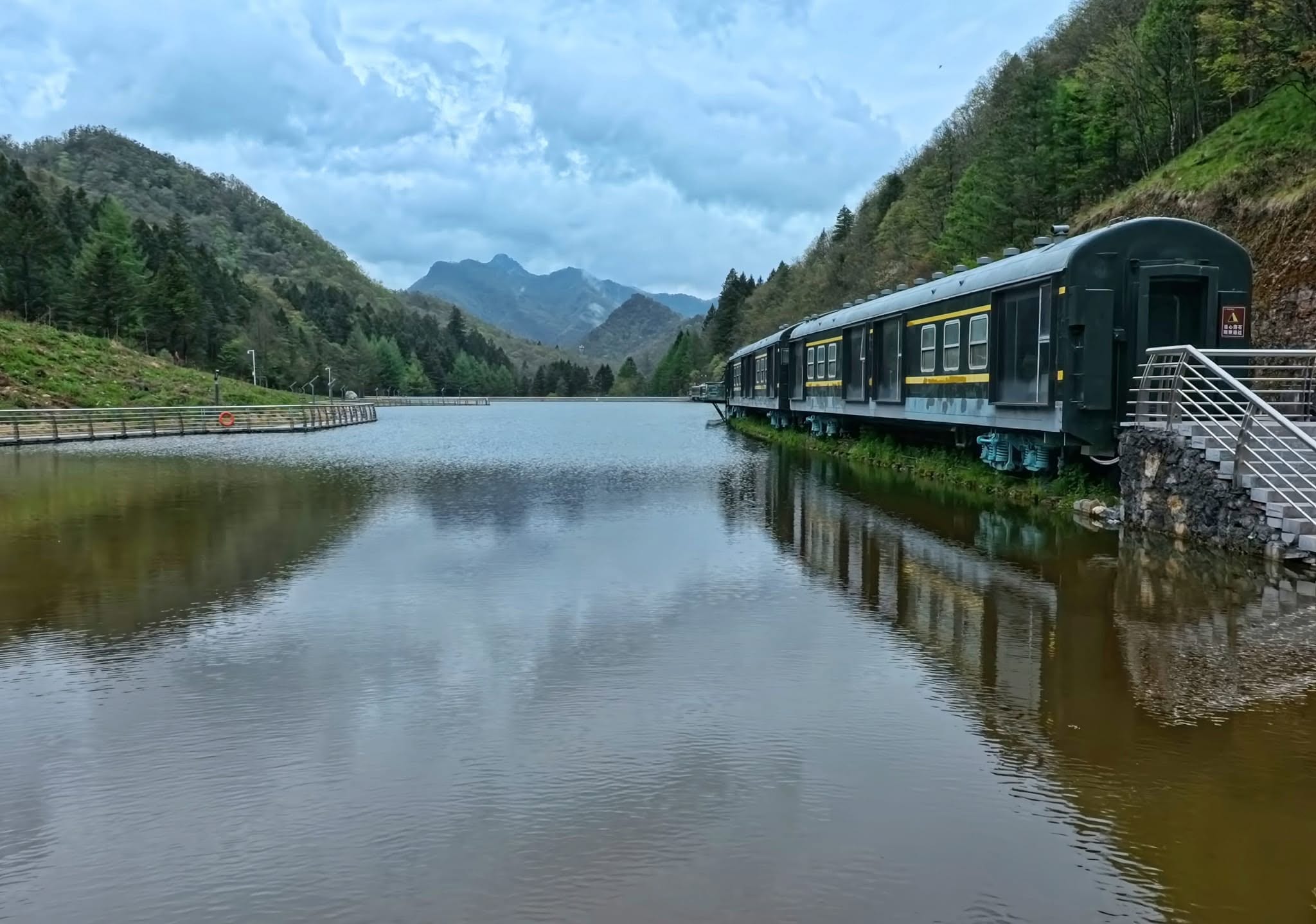
Our accommodation for the night was Shennong Tianchi Hotel, where old train cars, a vestige of China's coal-powered railway era, have been repurposed into guest rooms overlooking a scenic lake.
Shennong Peak, the crown jewel of Shennongjia's UNESCO Global Geopark, would normally reward visitors with dramatic landscapes, including the Babinyan Stone Forest, the 21-meter-tall Shennong Altar, sweeping valleys, and a diverse flora and fauna.
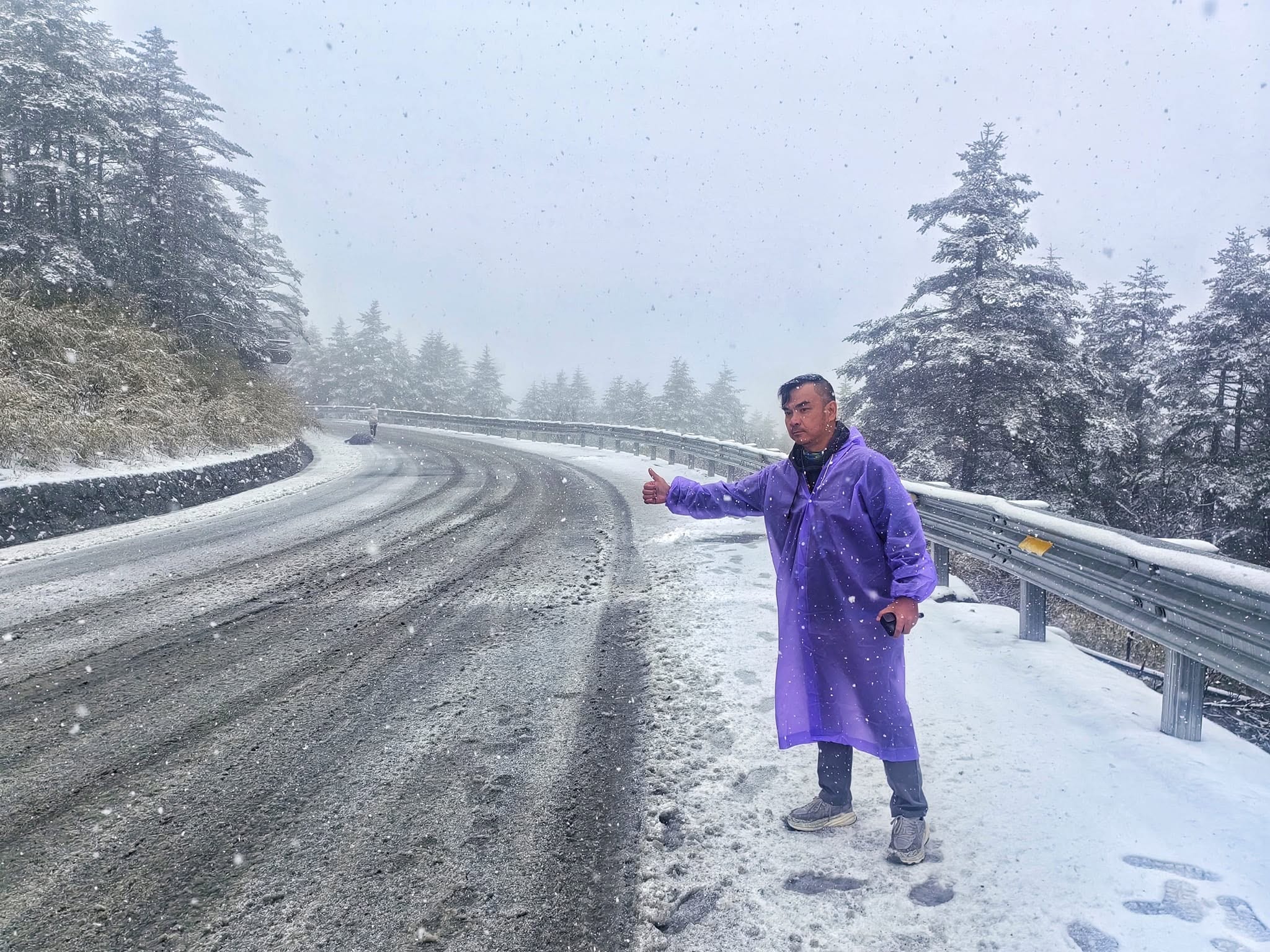
We didn't see any of them. Instead, we were greeted by an endless blanket of white. While missing out on the main attraction of Shennongjia's UNESCO Global Geopark might disappoint many travelers, the unexpected extended snowfall transformed our visit into something even more unforgettable. Thick snow blanketed the roads as snowflakes continued to fall around us. It was my first time seeing snow, and in that moment, I didn't mind that the snow became the highlight of our trip to Shennongjia.
We made two stops. At the first, a viewing deck that would normally overlook the mountains, all we could see was an endless blanket of snow. Standing by the roadside, I found myself thinking about my mother's stories of winter in Chicago. For the first time, I could finally relate to those stories.
Our next stop was the Shennong Altar. On the steps leading up to it, a few of us started a snowball fight, scooping up handfuls of fresh snow and throwing them at one another as snowflakes continued to fall around us. I lasted barely ten minutes in the cold before retreating inside our heated tour bus. But those ten minutes were enough to make my first encounter with snow one of the most unforgettable moments of the trip.
China Connection
My paternal roots trace back to China. Growing up, my late father often told us how his grandfather sailed from China to Panay Island in the early 1900s, hoping for a better life. Before he passed away, he would always tell me, "Visit China someday and trace your roots."
Despite traveling to many countries, I had long postponed that journey because of geopolitical issues. But I also knew that a country's politics are not its people, its history, or its culture.
This trip finally allowed me to fulfill a wish my father never got to see. More than discovering Wuhan and experiencing my first snowfall in Shennongjia, I found a deeper connection to a place that has always been part of my family's story. Like India and Japan, I know I'll return to China, not just to see more of the country, but to better understand a part of myself.
ALSO READ:
An Enchanting Journey Through Zhangjiajie, China
This Five-Star Hotel Is on the Quieter Side of Hong Kong
Marky is a travel junkie, writer, and photographer who dances only to 'The Guns of Brixton' by the English punk rock band The Clash.
View More Articles About: