Save Your Sanity: Keeping Your Cool in an Age of Disinformation
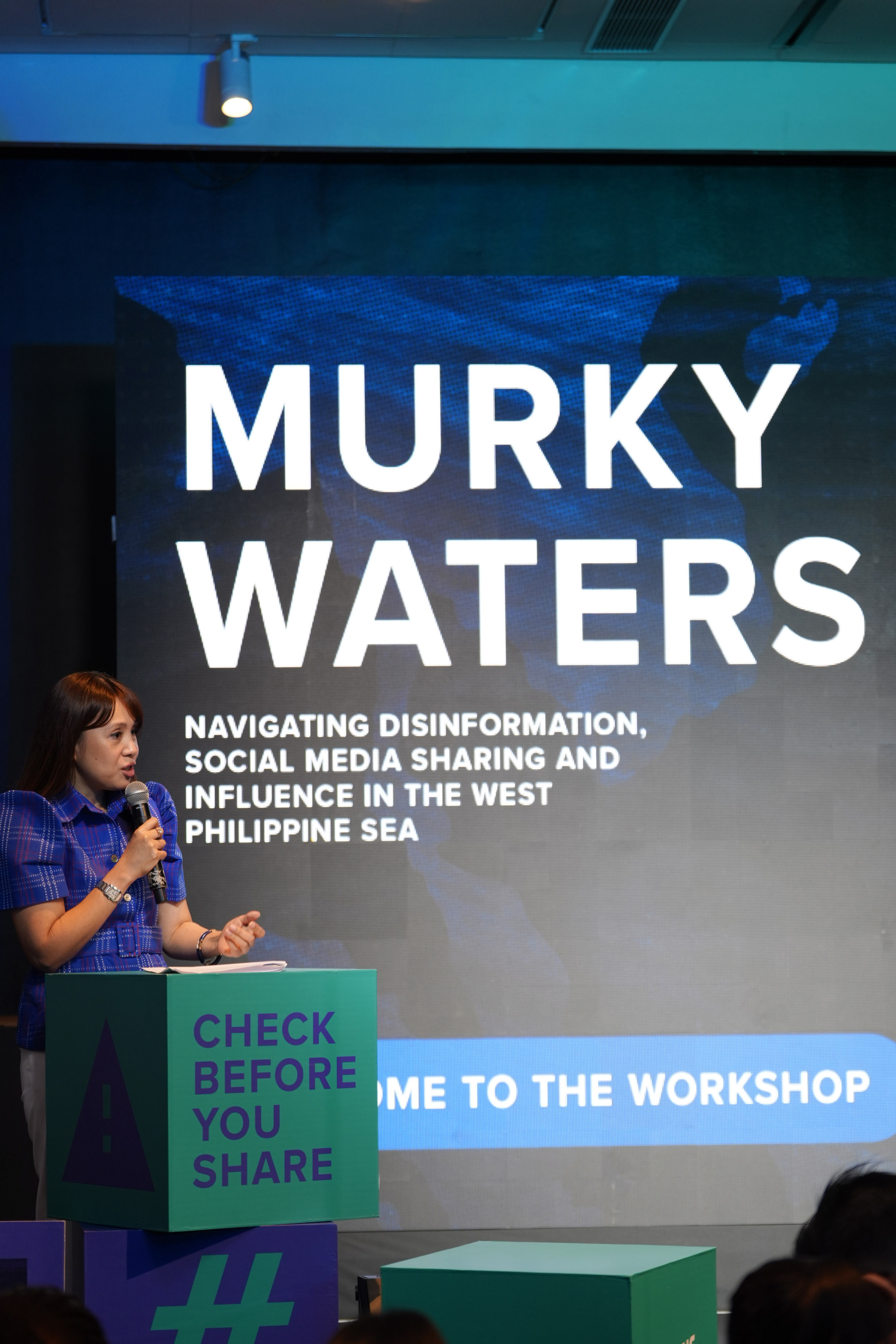
Here are my takeaways from an educational workshop called Murky Waters: Navigating Disinformation, Social Media Sharing, and Influence in the West Philippine Sea at the Ayala Museum.

Published on Nov 11, 2026
I have a bad habit of checking my phone the moment I wake up. Before I've had coffee, I've already encountered several national catastrophes, witnessed a handful of public arguments, and taken personal offense from someone I've never met. It's an exhausting way to start the morning, especially when I consider how easily I can lose an hour doomscrolling, getting outraged, and arguing with strangers on the Internet. Apparently, keeping up with current events has become an unpaid job, and I'm not particularly good at clocking out.
I recently attended Murky Waters: Navigating Disinformation, Social Media Sharing, and Influence in the West Philippine Sea, hosted by the Center for Information Resilience and Integrity Studies (CIRIS), at the Ayala Museum last November 8. It aims to collaborate with key opinion leaders in shaping responses to dis/mis/mal information about the West Philippine Sea. But I came away with an unexpectedly practical lesson: sometimes, the best thing we can do for our mental health, and society at large, is to stop.
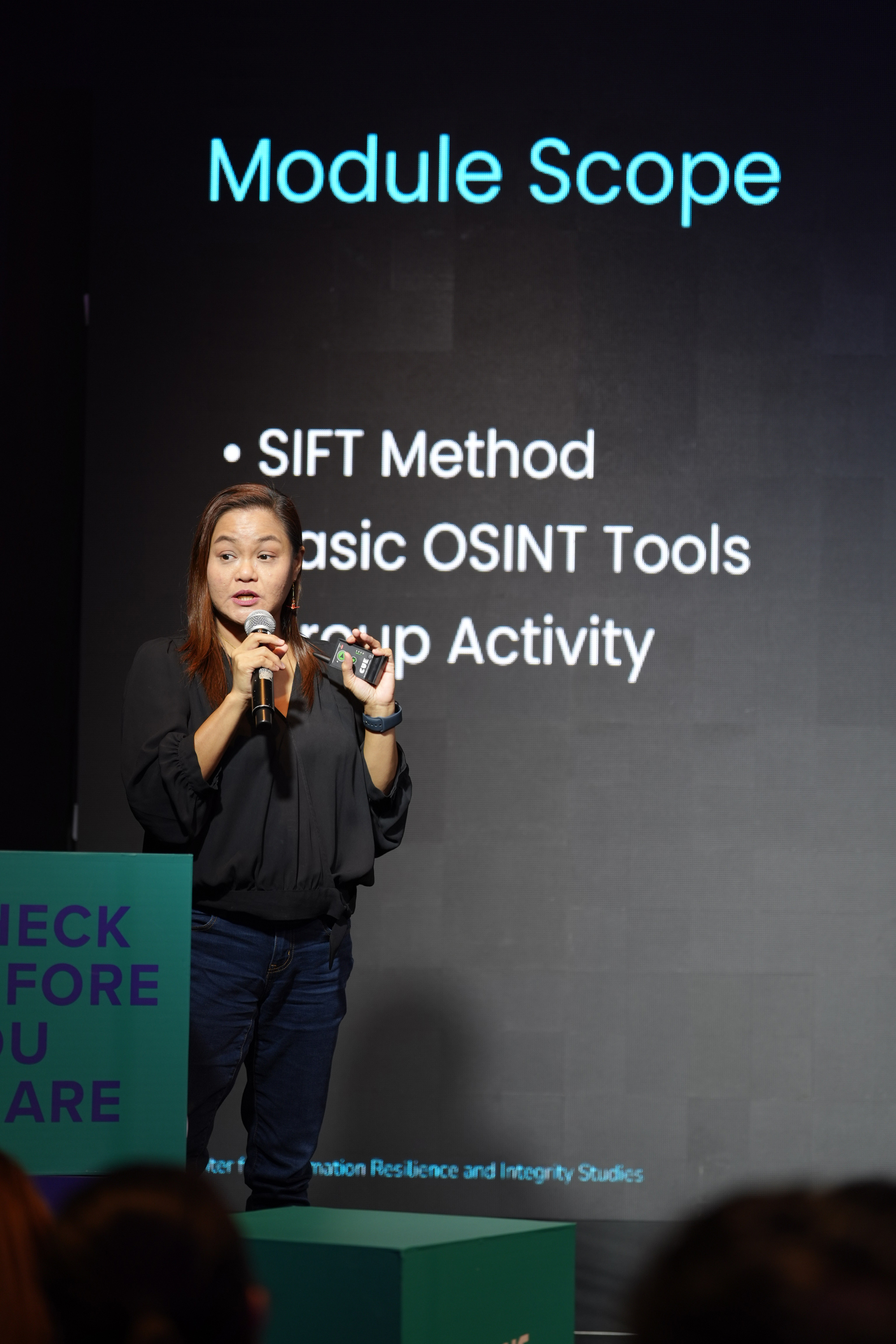
The session introduced the SIFT method for evaluating information encountered online. Its first instruction is also its simplest: STOP. Before sharing a sensational headline, reacting to an inflammatory post, or joining an argument in the comments, give yourself permission to pause. We often underestimate how much of our attention is consumed by content designed to provoke an emotional response. Anger keeps us engaged, and engagement keeps us scrolling. By the time we've finished arguing with a stranger, we've surrendered a considerable portion of our day to something that may never have deserved our attention.
Stopping, I've come to realize, is an act of self-preservation. We cannot afford to let every provocation dictate our emotional state, especially when some of those provocations are deliberately engineered to do precisely that.
The remaining steps of SIFT give that pause a purpose. Investigate the source by checking the credibility and possible biases of the publisher or author. Find better coverage by consulting independent and more authoritative reporting. Trace claims, quotations, images, and other evidence to their original context. These steps involve lateral reading: navigating away from the website or post where you encountered information and opening other tabs to investigate it independently.
It's essentially going down a rabbit hole, except this time you have a method. You learn to recognize red flags such as missing provenance, context mismatch, coordinated signatures, and engineered emotional urgency. A photograph might be genuine but presented in an unrelated context; seemingly independent accounts might be repeating identical talking points; a headline might insist that you react immediately before you've had the chance to establish whether its claims are true. A little lateral reading can reveal quite a lot.
What surprised me most, however, was how much these practices matter to people who already consider themselves informed. We tend to imagine that misinformation primarily targets the gullible or poorly educated. Yet educated, politically engaged people are valuable targets of information operations precisely because they shape opinions and influence their communities. We share information within professional networks, participate in public discussions, and lend credibility to narratives through our own platforms. An operation doesn't necessarily need to convince us of a lie; it might be enough to make us angry enough to spread it. Or angry enough to hate our fellow Filipinos, condemn them to the life of ignorance and poverty we are convinced they chose, and give up on any chance of a unified front. We have to understand that they want to widen that rift among us.
Disinformation, misinformation, and malinformation can undermine the foundations of public trust: our confidence in authority, our institutions, and one another. Foreign influence operations can exploit existing grievances and deepen social divisions, making ordinary political disagreements feel irreconcilable. Even when people reject a particular falsehood, they can still be left more distrustful and antagonistic toward the society around them.
This made me reconsider my own tendency to engage with trolls. I've always felt that correcting demonstrably false claims was a worthwhile use of my time, even when the exchange became unpleasant. But I've begun to appreciate the value of kindness in these encounters. This is my personal takeaway from the session rather than a prescribed step in SIFT: responding with patience and courtesy can deny provocateurs the hostility they hope to generate. Sure, I see the military and navy being used to encroach on ancestral lands, but I must also trust their capacity to enforce national security.
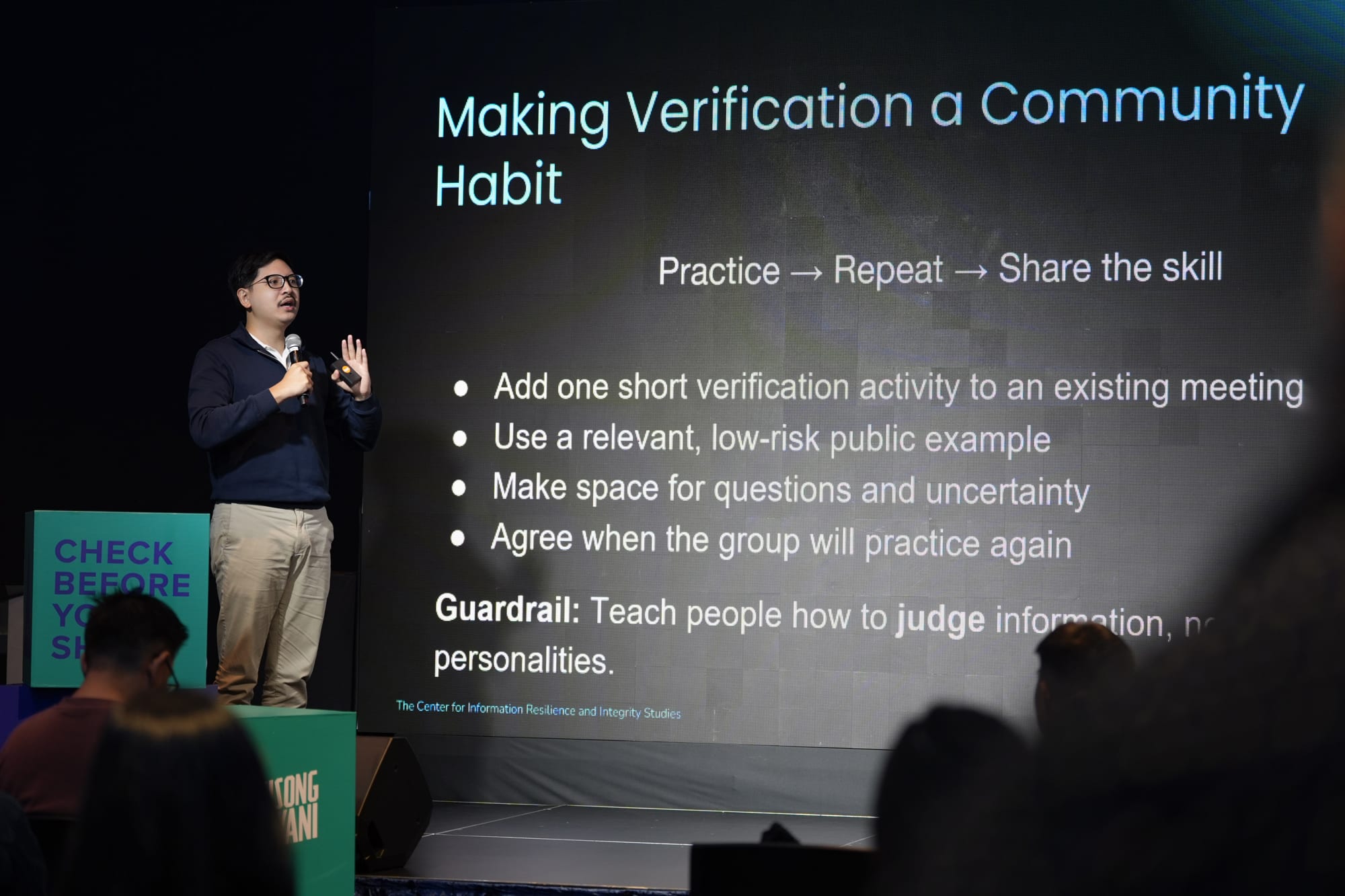
There is a larger social responsibility in that choice. If information operations seek to fracture relationships and encourage distrust, we should be careful not to reproduce those divisions in our own responses. We can challenge falsehoods without humiliating the people who repeat them, and insist on accountability without turning every disagreement into a public execution. Our online conversations should leave room for people to reconsider their positions and, occasionally, change their minds. Or if they are paid trolls, no amount of effort will change, so we have to play nice because the world is watching and waiting for us to crack.
I don't expect to wake up tomorrow and abandon my phone, much less become someone who never gets irritated by an outrageous post. But I can try to stop before reacting, investigate before believing, and think more carefully about what I choose to amplify.
Saving our sanity might sound like a selfish ambition in a country with so many pressing problems. Yet preserving our capacity to think clearly and engage constructively is part of our responsibility to the society we inhabit. We are among the people who shape public opinion, and we should be conscious of how our participation affects the conversations around us.
Perhaps the most useful thing we can do when the Internet tries to make us angry is to refuse to let it set the terms of our day. Sometimes, keeping our cool is already a small act of resistance.
ALSO READ:
Opinion: The Case for Shared Responsibility on Disinformation
Why Our Parents and Other Older People Fall for Fake News
Craft cocktails, social justice, books, board games, and TTRPG. Chopsuey.
View More Articles About: