Ambeth Ocampo: ‘I Am Not Your Ordinary Academic Historian’
For 40 years, Ambeth Ocampo has made a career out of getting Filipinos interested in dead people.
Published on Nov 18, 2026
Every year, Esquire Philippines presents Man at His Best, the local iteration of a global signature event, where we celebrate extraordinary Filipinos reshaping society as we know it. These are the dreamers and doers who are making a profound impact on our way of life, and who are using their talents and skills to make something of themselves and inspire the rest of us to become better versions of ourselves.
This year, in celebration of Esquire Philippines’ 15th anniversary, we’re honoring 10 heroes and mavericks in entertainment, journalism, culture, business, and advocacy, as well as five iconoclasts who exemplify what it means to be a Man at His Best.
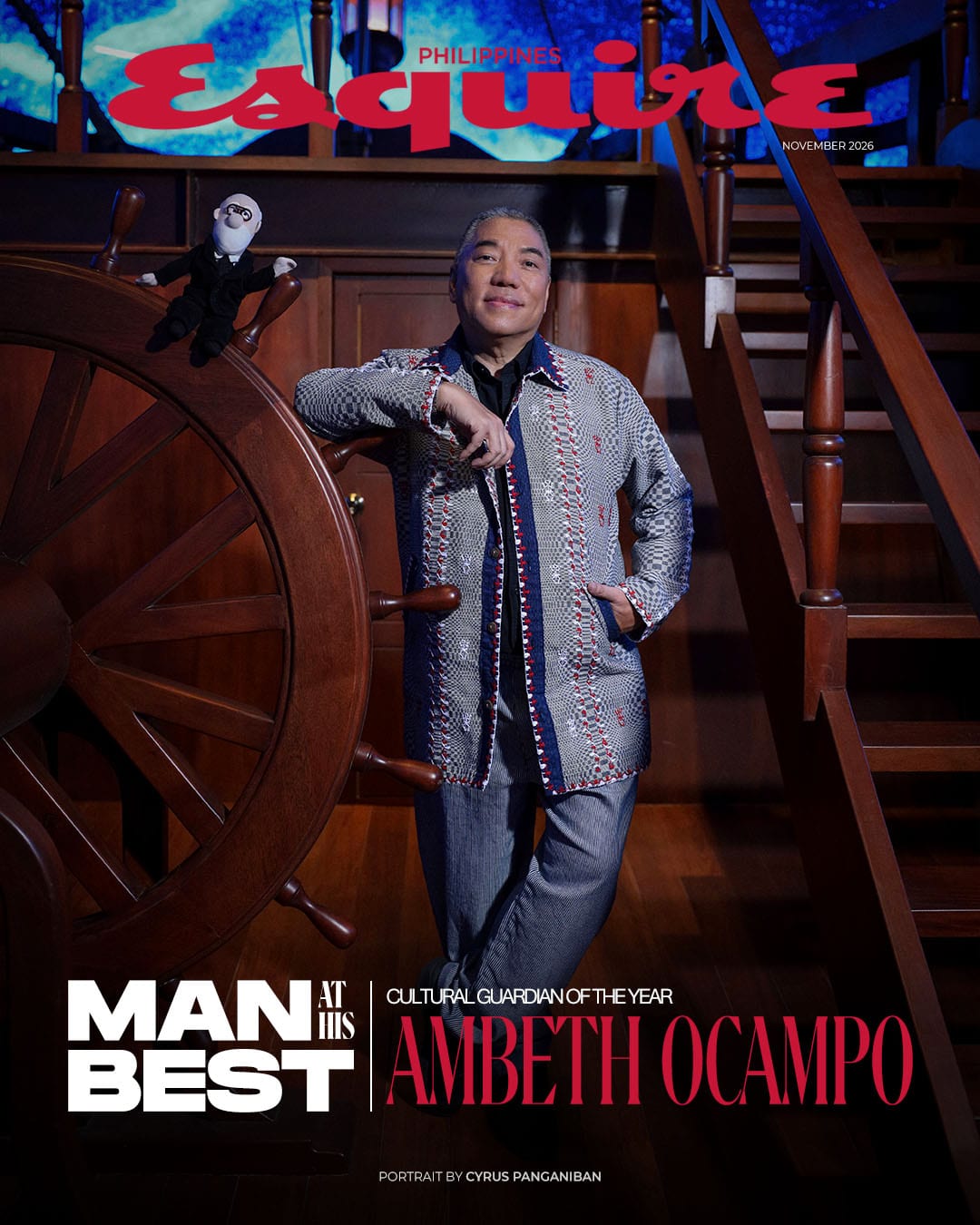
Meet Esquire Philippines' Cultural Guardian of the Year, Ambeth Ocampo
“TAMA NA. YOU HAVE NO FUTURE IN MOVIES.”
This was Ishmael Bernal speaking to a young Ambeth Ocampo sometime in the 1980s. Ocampo had been hoping to appear in a historical film that Hilda Koronel had asked the National Artist to direct. He had barely gotten through two sentences of the script when Bernal decided that a career in cinema was not in the cards.
It was a fairly definitive review.
Bernal, after all, was not just anybody. He was one of the country's greatest filmmakers, and Ocampo was not exactly in a position to dispute his assessment. There was, however, a sequel to this story.
“I have appeared in three films. Two of them were X-rated and denied exhibition,” he said. We gagged on this bit of information.
“What X-rated films?!”
“Secret!”
“I leave it to your imagination.”
He is particularly fond of Ang Babae sa Septic Tank—the first movie—and immediately said yes when he was offered a role in the third one, Ang Babae sa Septic Tank 3: The Real Untold Story of Josephine Bracken, in which he plays himself, a historian summoned to explain why Eugene Domingo would make a terrible Josephine Bracken.
“I'm the historian who tells her she's wrong,” he recalled being told when he accepted the role.
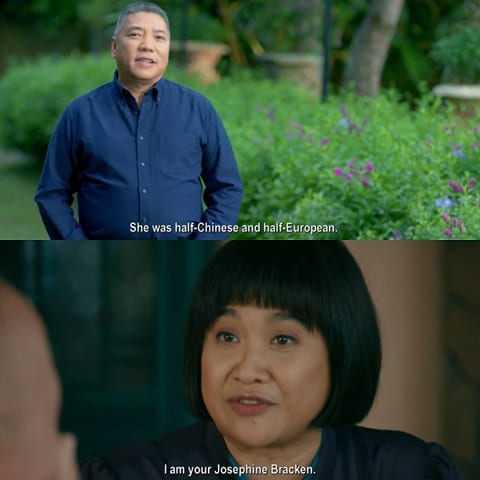
The production did not even bother giving him a proper script. Ocampo arrived on set, asked what the story was about, and was told to answer questions about the Irish woman born in Hong Kong. He would simply talk, and the filmmakers would select whatever soundbites they wanted. The only line he actually had to memorize was the closing, in which he tells everyone that he has to leave.
Not a particularly demanding role, considering that he was essentially playing himself.
The resulting film was funny, partly because of the contrast between Ocampo's descriptions of Bracken and Domingo's appearance. He remembers the juxtaposition quite fondly: “Si Josephine Bracken, payat, maputi,” followed by “Si Eugene Domingo, mataba, brown.”
After Bernal's declaration decades prior, having three films is not a bad career.
“Aside from those, I also appeared in a Johnnie Walker campaign and a history of San Miguel,” Ocampo said proudly. “I am not your ordinary academic historian.”
Cinema's loss was history's gain. For 40 years, Ocampo has made a living doing something considerably more difficult than memorizing lines: persuading Filipinos to take an interest in their own past. He has done it by writing about dead people as though they were still around, by making historical research sound like an afternoon spent exchanging gossip, and by asking questions that occasionally make the country's most revered figures look rather less intimidating.
He is, among other things, the man who took Jose Rizal's overcoat off. And he has no intention of putting it back on. It is a metaphor, of course, and the title of his book, Rizal Without the Overcoat, in which he set out to humanize the national hero, stripping away the layers of reverence that had kept Rizal untouchable on his pedestal. Ocampo wanted readers to meet the man beneath the monument: his quirks, his vanities, his appetites, his contradictions, and all the rather ordinary human things that made him extraordinary.
The National Hero Had a Life, You Know
Ocampo's career as a public historian began, rather fittingly, in a newsroom. He was not a history major. His undergraduate degree was in the humanities, and he initially found his way into journalism, writing for a lifestyle page. In the years following EDSA, he began writing a newspaper column, first for the Daily Express and then the Daily Globe.
His table happened to be beside that of Ricky Lo, then arguably the country's most popular entertainment writer. It was a useful arrangement for a young journalist. Lo knew how to get people to read, and Ocampo paid attention.
“In those days, you had to write something that entertains people and something that educates.”
The distinction might sound obvious now, but it was not necessarily how history was presented back then. Historical writing was largely the province of academics, and the expectation was that readers would approach it with the appropriate seriousness.
Ocampo had other ideas. He wanted people to read the first paragraph.
“The formula has always been that you have to engage them. The first paragraph should be something scandalous, gossipy-like, or ask a question, and then you go to a main text, which is often a primary source text.”
He discovered that history could be approached through the things people were naturally curious about. What did Rizal eat? What did he write in his letters? What was he like when he wasn't busy being Rizal? The answer, he found, was often considerably more interesting than the version taught in school.
Ocampo began reading Rizal's letters and diaries and encountered a man who seemed to have been misplaced somewhere between the pages of a textbook and a monument in Luneta. The Rizal in the documents had private thoughts, opinions, habits, and relationships. He was not simply the solemn fellow in European attire, standing on a pedestal and looking meaningfully into the distance. A book on his left arm for good measure.
The title of Ocampo's most famous book came from a childhood visit to Luneta with his father. Looking at the Rizal monument, his father asked why the national hero was wearing a heavy winter overcoat in a country as hot as the Philippines.
“You know, Rizal is wearing a heavy winter overcoat. He probably wore that in Europe, but here in Manila, it's so hot. Why is Rizal wearing a heavy winter coat in the tropics?”
It was the sort of question that could easily be dismissed as a joke. Ocampo, however, would eventually turn it into a publishing career.
Rizal Without the Overcoat was not initially conceived as a book. It was a collection of his newspaper columns, which his publisher suggested compiling in 1989. There was enough material for several volumes. Ocampo eventually separated the Rizal essays from the rest, and the collection became its own book. The title was particularly apt. It suggested that there was more to the national hero than the familiar image Filipinos had grown accustomed to seeing.
“Rizal is someone I write about all the time. When I have nothing better to write, I write about him because Rizal left us with 25 volumes for a nation that doesn't read him.”
He says this with the amusement of someone who has spent much of his professional life reading material that the rest of the country has been perfectly content to leave unread.
The Noli Me Tangere and El Filibusterismo are required reading, although being required to read something and actually reading it are two different matters. Rizal's letters and diaries are even less likely to find their way into the average Filipino's leisure reading.
Ocampo's solution was to make the subject difficult to resist.
History, With a Little Chismis
When Ocampo began writing this way, not everyone in academia was impressed. Some considered his work tsismis or gossip. He was writing about trivialities, they thought, rather than producing the sort of serious historical scholarship expected of an academic. He remembers the criticism. He also remembers what he was trying to accomplish.
“People will not graduate and read academic work if you don't get them to read history in the beginning.”
It is a simple proposition. Before you can persuade someone to read a scholarly work about 19th-century Philippine society, you might first have to convince them that 19th-century Filipinos were interesting people. Ocampo has always been rather impatient with the notion that history is inherently boring. When people tell him they hated history in school, he has a standard response.
“You probably had a bad teacher. You did not have me, or you did not read any of my books.”
He is not exactly shy about his abilities as a storyteller. But he has a point. History is full of extraordinary human behavior. It involves ambition, jealousy, vanity, love, betrayal, money, politics, and people making spectacularly bad decisions. If none of that can hold someone's attention, perhaps the problem lies elsewhere.
Ocampo himself grew up in a house where books were readily available. His father was a reader, and the family had an arrangement that would probably have made him very popular with children today.
“The deal when we were children was that if you wanted a toy, a toy was conditional—he could say no—but a book is never refused.”
He read early, and he read widely.
He understood that an audience had to be drawn in before it could be educated.
He remembers an appearance on the Randy David Show in the 1980s, when he was paired with an older historian. During the opening segment, David spent the first few minutes talking to Ocampo before cutting to a commercial break, much to the dismay of the other.
The host explained that he needed Ocampo to keep the audience from changing the channel. Ocampo understood the assignment.
He also understood that the ability to tell a story was not an ornamental skill for historians. It was part of the job. Even the word historia, he points out, has an older connection to salita, the spoken word or narrative. It is a point he has returned to repeatedly: history must be told.
This does not mean that historians should sacrifice accuracy for entertainment. Ocampo is particularly insistent about the distinction. His columns might begin with a juicy anecdote, but they eventually lead to documents. The gossip is the bait. The research is the meal.
And unlike actual gossip, historical writing is supposed to come with receipts.
The Trouble With Calling Things by Their Wrong Names
There was a time when Ocampo could get away with writing about history without worrying too much about the political consequences. He started his career in the tail end of the Marcos era, when he discovered that history was considered relatively safe territory. Writing about the past was not necessarily seen as a threat to the present.
That has changed.
The controversy surrounding Maid in Malacañang brought this home to him. Ocampo reviewed the film very badly. An actress was subsequently quoted as saying that history was tsismis. Ocampo objected, arguing that history was about truth.
The trolling that followed was initially something he did not think much of. But when Rappler examined the attacks, it found that they came from only three websites, with the same material being repeated. He began to worry about the implications.
“I felt that it was not an attack on me; it was an attack on the discipline. It's an attack on history, and it's an attack on truth.”
For Ocampo, an attack on a historian can be dismissed as a personal disagreement, but an attack on the discipline itself is something else. It raises the question of what happens when the public loses the ability, or the inclination, to distinguish historical evidence from whatever version of the past happens to be most convenient.
“History, culture, and identity actually need protecting in this time.”
Ocampo believes historians have to be more active online. He is not particularly interested in becoming a viral personality, however.
“The secret of social media is virality. I could actually make a living just doing scandalous things, but I felt that you need perspective, you need calmness.”
He is equally concerned about the quality of information circulating on the Internet. Search for Philippine history, and there is no guarantee that the results will be reliable. Some are outright false. Others are well-intentioned but unsupported by evidence.
The arrival of artificial intelligence has made the problem considerably worse.
“The biggest problem now is not the amateur historians; it's AI history.”
Ocampo is concerned about AI-generated historical images and texts that appear increasingly convincing. The technology can produce something that looks like an old photograph or an authoritative historical account, but the appearance of authenticity is not proof of authenticity.
“AI cannot write history.”
His objection is straightforward. Historical research requires documents, validation, and the examination of evidence. AI can draw from information available online, but that does not mean it knows whether the information is accurate.
“Everything I say or write is always premised on having actually found a document.”
This is particularly important in a country where the appearance of authority can sometimes be enough to persuade an audience. A photograph can look old without being historical. A paragraph can sound scholarly without being supported by scholarship. The danger is that the more convincing the fabrication becomes, the less inclined people may be to ask where it came from.
Ocampo also has a problem with the term historical revisionism, which has become shorthand for attempts to rehabilitate the Marcos dictatorship. He argues that revisionism should mean correcting the historical record. If new documents emerge and an established interpretation needs to be changed, that is revisionism. What people are describing when they attempt to make the true false is historical distortion. He is particular about this distinction.
“If you're imprecise with wording, you're also imprecise in thinking.”
A Word About Heroes
Ocampo has spent much of his career studying people who have been elevated into national symbols. It has also made him interested in the words Filipinos use to describe themselves.
One of his favorite pastimes is reading 17th-century dictionaries. He likes the way old definitions reveal how people understood their world.
The word saliksik, for example, was defined in an old dictionary as looking in all corners of the house for a lost object. It is an appealing description of research, and one that Ocampo thinks captures the work rather well.
He is also fascinated by the word bayani.
Filipinos commonly translate it as hero. But the older definitions are more expansive. Among them is the idea of someone who offers his services or his life for a common endeavor.
This is where Ocampo finds the connection to bayanihan.
The usual image involves people carrying a house together. But he argues that the practice has not disappeared simply because people no longer move houses that way.
“When a car stalls in any street in the Philippines, people will come and push. You don't have to pay them.”
It is a small, ordinary act of assistance, but it is precisely the sort of thing he finds interesting about Filipino culture. A bayani does not necessarily have to be a person whose name appears in a history book. Sometimes, it is somebody who stops to help a stranger get his car moving.
Ocampo is also careful not to treat history as a fixed body of knowledge. New discoveries can change what we know. Younger historians may find documents that their predecessors never encountered.
“History is a very humbling discipline.”
He hopes that future historians will be kind to him when they discover things he missed.
It is a rather generous way of looking at academic disagreement. Earlier historians worked with the information available to them. Newer generations have the opportunity to build on that work, correct it, and occasionally overturn it.
There is no reason to treat every correction as an accusation of incompetence.
This is perhaps a particularly useful lesson in a country where historical disagreements can quickly become personal. Ocampo seems comfortable with the idea that his own work, too, may eventually need correcting. The documents do not belong to him, after all. They belong to whoever is willing to find them, read them, and make sense of what they say.
The Living, According to the Dead
Toward the end of our conversation, we asked Ocampo whether spending a lifetime studying dead people has made him understand the living any better.
His answer is that people have not changed very much in the past 2,000 years.
He gives an example from his teaching days. One of his early assignments asks students to find a newspaper published on the day they were born. They have to go to the library to retrieve it. The exercise is partly intended to demonstrate that parents are not always reliable sources of information about the circumstances surrounding their children's birth. But the more interesting part comes when the students start reading the newspaper.
They encounter familiar political names. They see stories about graft and corruption, typhoons, flooding, and murder. The problems look remarkably familiar. Their reaction is usually something like: Parang pareho lang.
Ocampo uses the exercise to explain why history matters. The newspaper offers a snapshot of the world into which they were born, but it also gives them a glimpse of how little some things have changed. The same politicians remain in the news. The same problems recur. The same arguments seem to return, sometimes with different characters and slightly updated vocabulary.
It is an unsettling discovery for a college student.
Ocampo hopes that future generations will be able to look at the newspapers published on the day their children are born and find a country that has changed for the better.
“If there's anything that history teaches me, it's that we have not changed in the past 2,000 years.”
He offers one more observation, this time about the reason he continues to work.
"Well, one, because I need a job."
There is that Ocampo humor again. Even after four decades of writing, he is apparently not above reminding everyone that historical research does not pay the bills by itself. But there is another reason he continues. He wants people to understand how the country came to be, what it has done, and what it might still become.
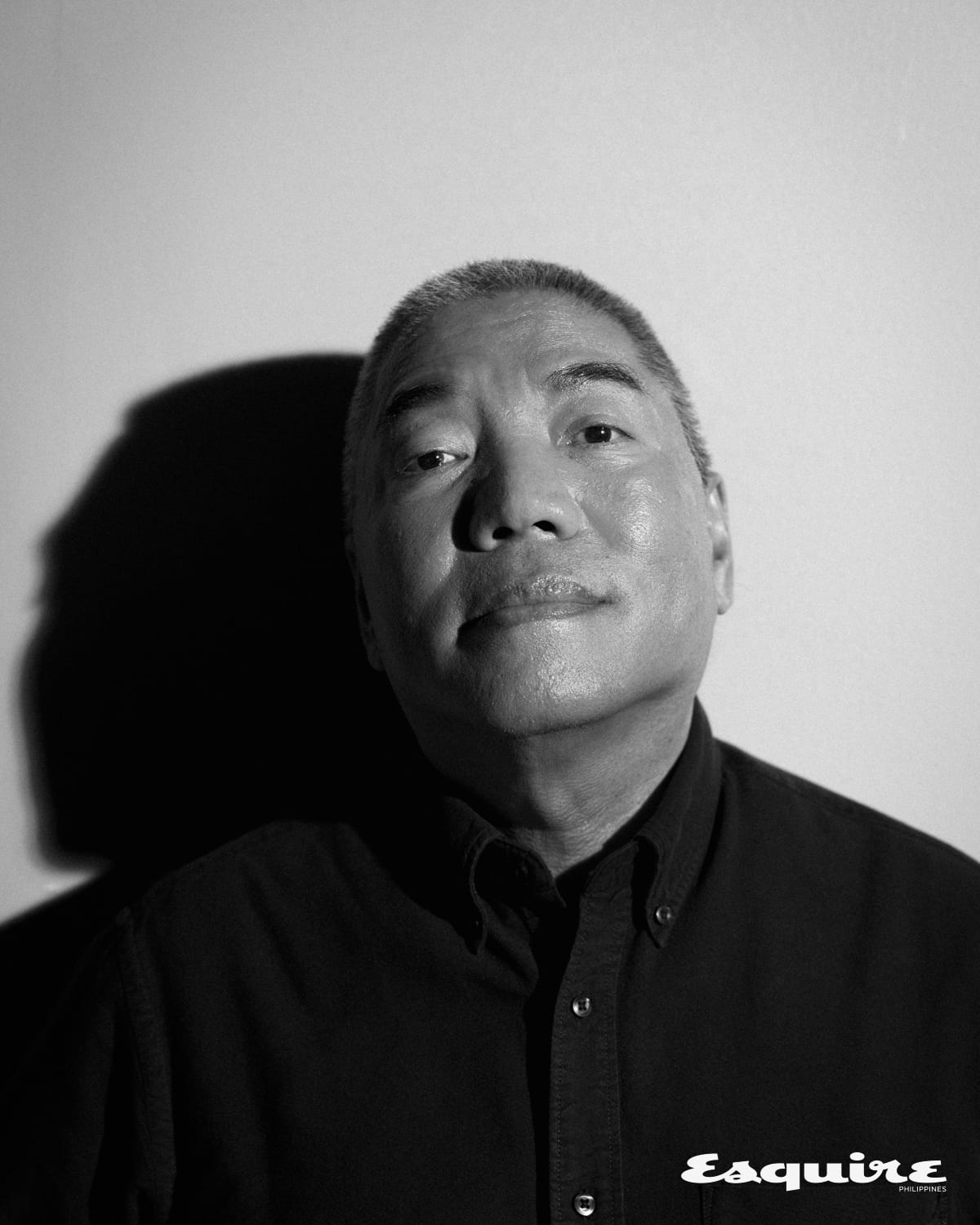
"History is a mirror. It shows us the best that we can be, but it is also the best that we fail to be. It shows us what we should be against what we presently are."
This year, 2026, marks 40 years of his writing. He is already retired from university teaching, although retirement does not appear to have made him particularly interested in sitting still. He wants to publish more books, explore video, and find new ways to reach people who might never voluntarily pick up a history book.
He has no interest in dancing on TikTok. He has had enough trouble with movie directors. And he would probably insist on correcting the lighting before agreeing to another television appearance.
But he still has plenty to say.
For someone who has spent four decades getting Filipinos interested in their past, Ocampo's concern is increasingly about what they do with it. The letters, diaries, newspapers, and old dictionaries are still there. The evidence has not disappeared. The challenge is getting people to look at it, especially when there are so many easier and more entertaining versions of history competing for their attention.
Ocampo learned a long time ago, sitting beside Ricky Lo, that nobody reads a story simply because the writer insists that it is important.
You have to give them a reason.
Bernal may have been right about his prospects in the movies. But after 40 years, Ocampo has become something of a star in his own field. He has no need for a screenplay, although he does prefer a teleprompter. He has no need to dance, although he knows a thing or two about keeping an audience from changing the channel.
And he has a rather large cast of characters to work with. Most of them, admittedly, are dead.

Story: Mario Alvaro Limos
Interview and Production: Christa I. De La Cruz
Editor-in-Chief: Paul John Caña
Creative Direction: Igi Talao
Photography: Cyrus Panganiban
Videography: Jino del Mundo
Grooming: Team Muriel Vega Perez
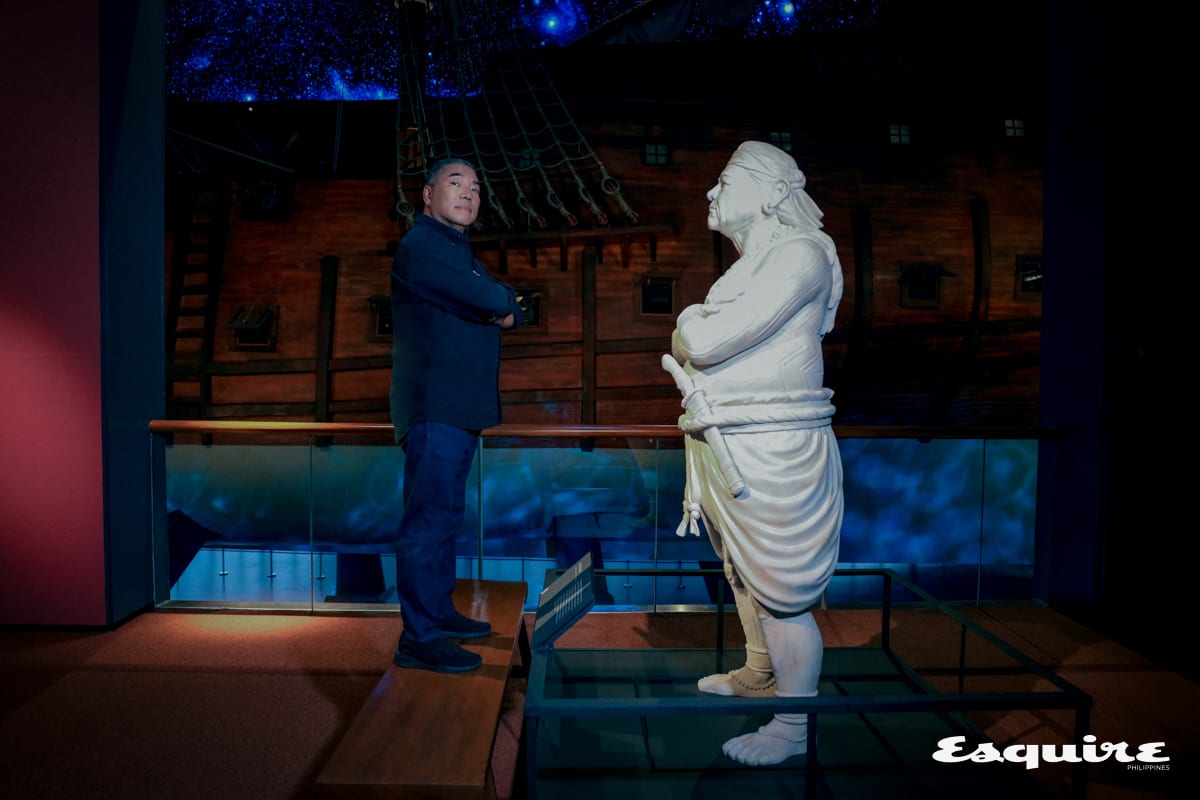
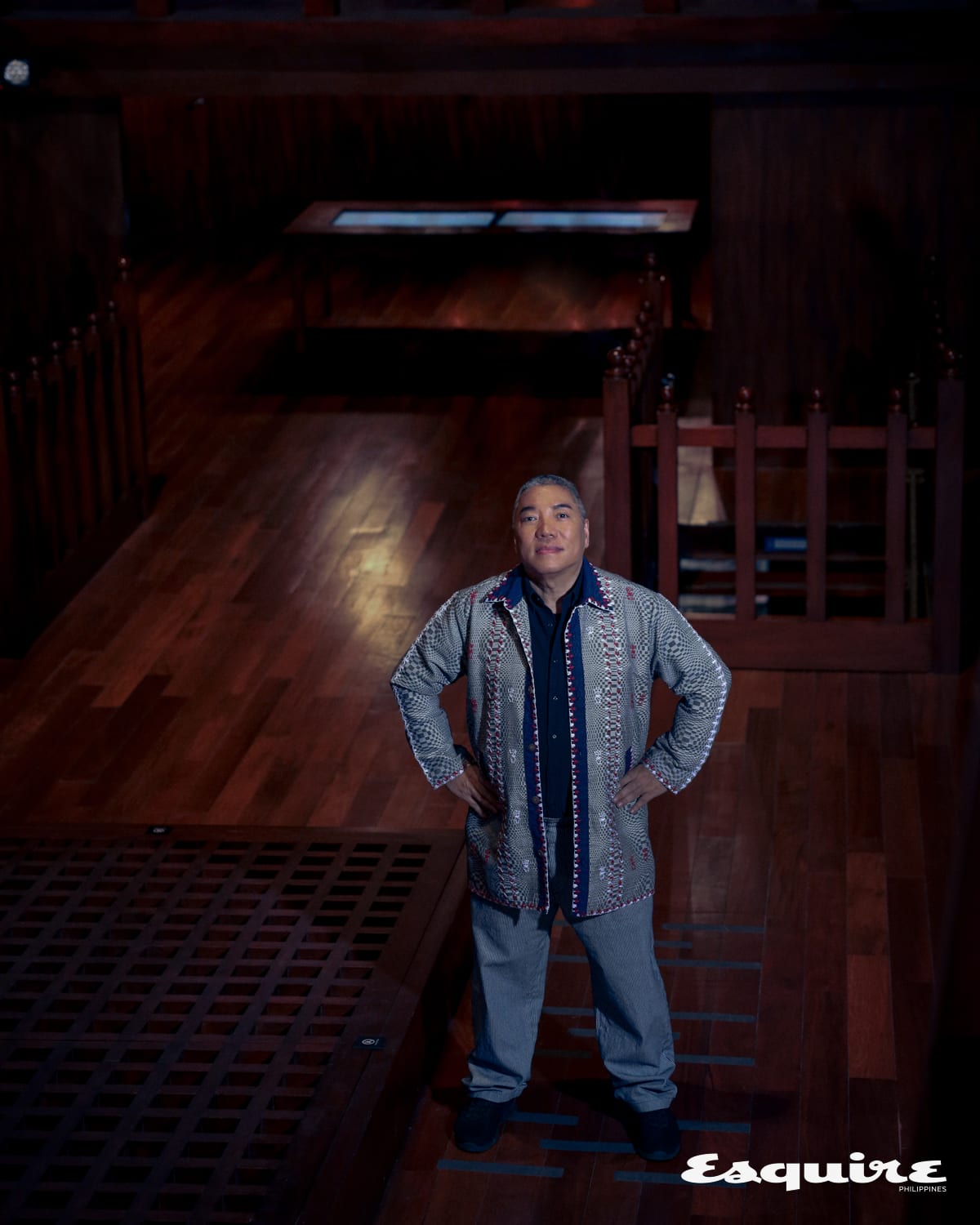
Shot on location at Museo del Galeón, SM Mall of Asia Complex
Special thanks to Regina Morales, Brand Experience & Communications Officer of Museo del Galeón.
ALSO READ:
Today I Learned: The Manila Galleon Trade Linked Three Continents for More Than Two Centuries
Today I Learned: Jose Rizal's Original Manuscripts Were Stolen in the 1960s
View More Articles About: