Karol Yee of EDCOM: 'We Can't Afford to Study for Studying's Sake'
All Dr. Karol Yee of the Second Congressional Commission on Education wishes for is more Grade 3 Filipinos who can actually read and who are safe from bullies.

by JV Ordoñez
Published on Nov 18, 2026
Every year, Esquire Philippines presents Man at His Best, the local iteration of a global signature event, where we celebrate extraordinary Filipinos reshaping society as we know it. These are the dreamers and doers who are making a profound impact on our way of life, and who are using their talents and skills to make something of themselves and inspire the rest of us to become better versions of ourselves.
This year, in celebration of Esquire Philippines’ 15th anniversary, we’re honoring 10 heroes and mavericks in entertainment, journalism, culture, business, and advocacy, as well as five iconoclasts who exemplify what it means to be a Man at His Best.
Meet Esquire Philippines’ Advocate of the Year, Karol Yee
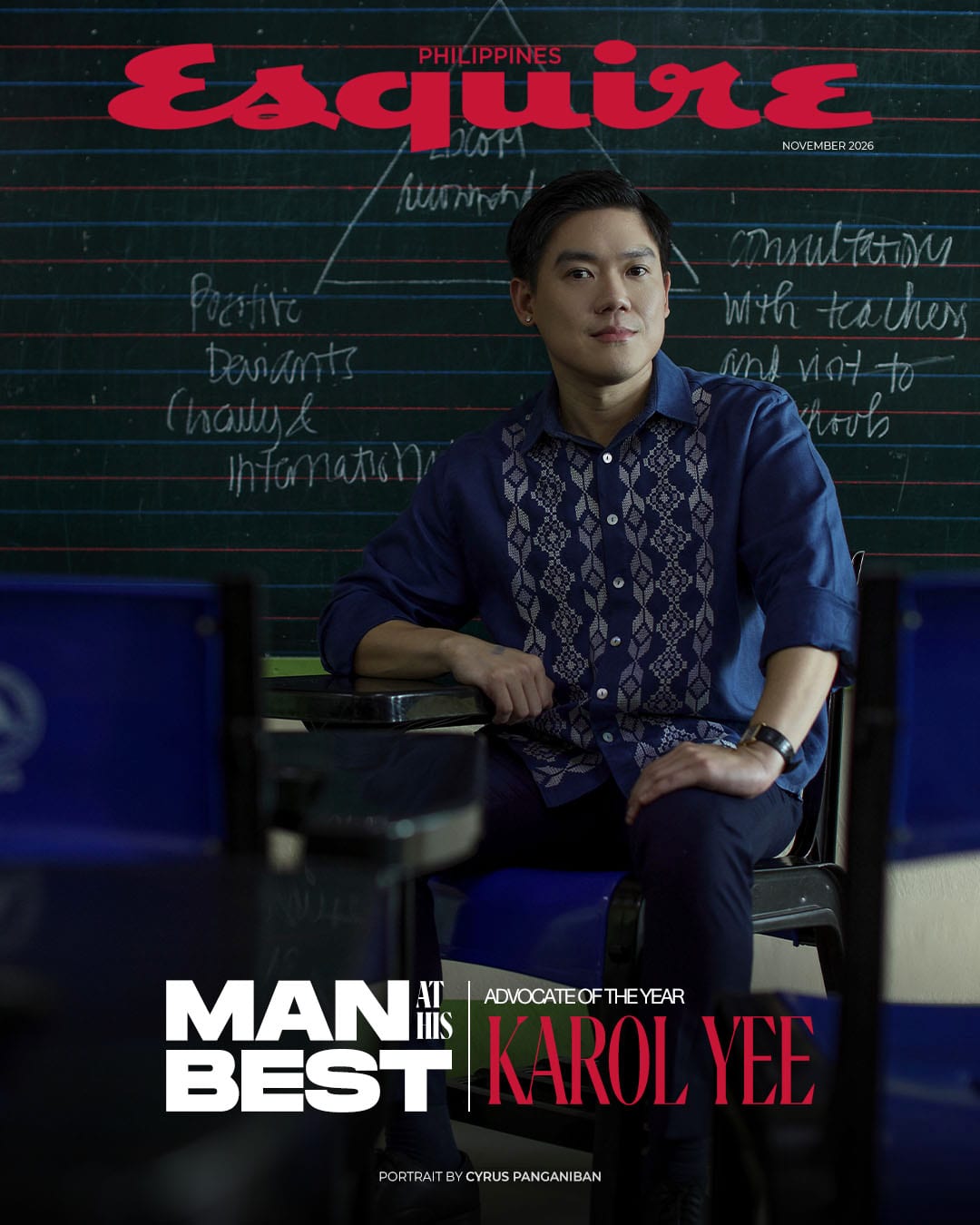
Filipinos love a joke about the Filipino student who cannot read or write. It is dinner-table material, delivered with the practiced shrug of a people who decided long ago that laughing is cheaper than fixing. But one man has made it his North Star to do something about the illness afflicting Philippine education.
Karol Mark Yee is the executive director of the Second Congressional Commission on Education, better known as EDCOM II. The numbers on his desk are not funny. The commission’s final report, Turning Point: A Decade of Necessary Reform (2026-2035), came out on January 26 after three years of study, with a central finding of learners who are not proficient growing from 30 percent in Grade 3 to 74 percent in Grade 12. To make matters worse, the education system keeps moving them up anyway, or this phenomenon of "mass promotion" you've heard being thrown around.
Only about 200,000 of 24 million learners are retained in grade. This is a sign of something much more malignant.
EDCOM II prescribes this decade-long road map, which is shooting for at least 90 percent of Grade 12 students being proficiently literate by 2035.
The overarching checklist includes banning mass promotion, raising overall grade 3 proficiency, scaling up targeted nutritional support against stunting, and overhauling teacher education, among other necessary reforms you can read about in full here.
Yee is a graduate of broadcast communication at the University of the Philippines Diliman and has a master's degree in international education policy from the Harvard Graduate School of Education as a Fulbright scholar.
Before his prolific work at the congressional committee, he had a stint at the Commission on Higher Education as executive director from 2017 to 2018.
The most pressing mission for Yee and his humble office right now is to find out what we ought to do about the astonishing statistic of about 91 percent of Filipino 10-year-olds not being able to read and understand texts suited to their age, according to data from the World Bank.
This is better known as learning poverty, a tidy label for a child who looks at a page and gets nothing out of the experience of what is supposed to be reading. Indonesia's learning poverty sits at 53 percent, while Thailand was at 23 percent.
In April this year, the World Bank approved a $600 million (P38.38 billion) loan intended to help Manila do something about this tragic state.
On the Quest to Patch Up a Generational Crisis
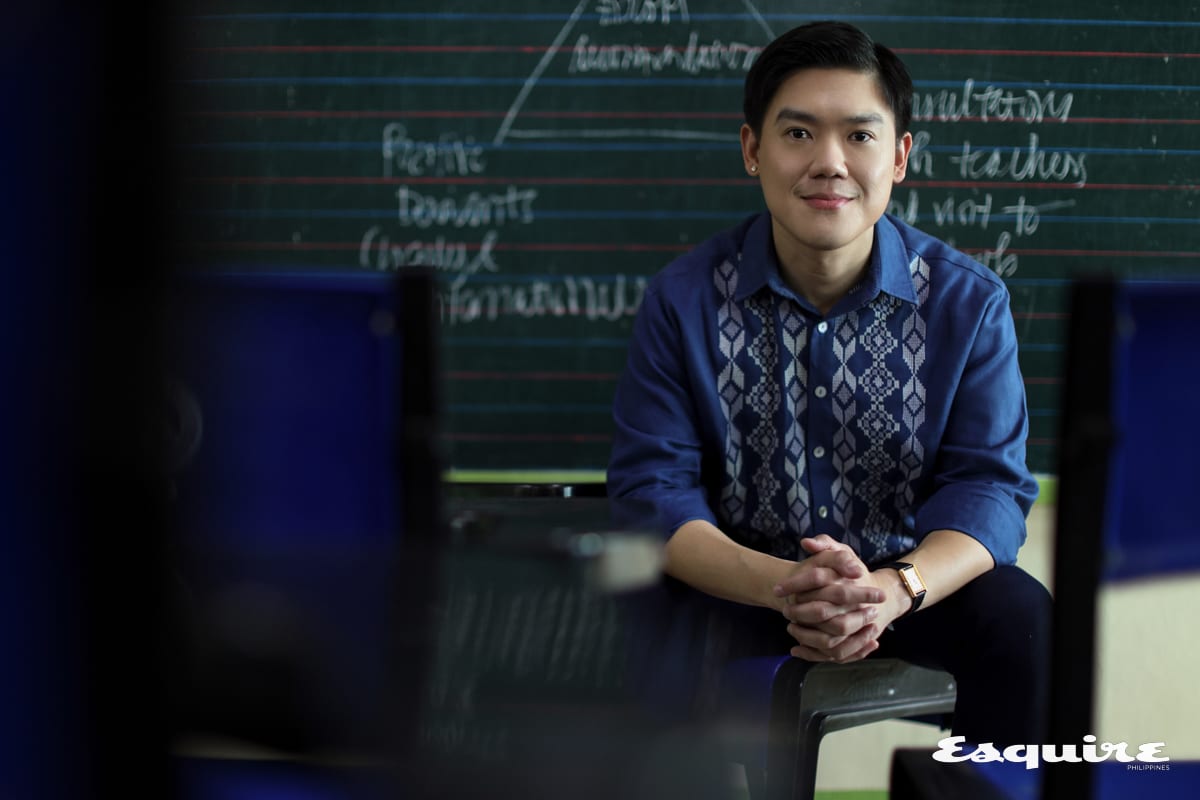
We met with Yee to chat at Qurino Elementary School in Quezon City during a learn from home day, as we got to really get immersed in an everyday learning environment.
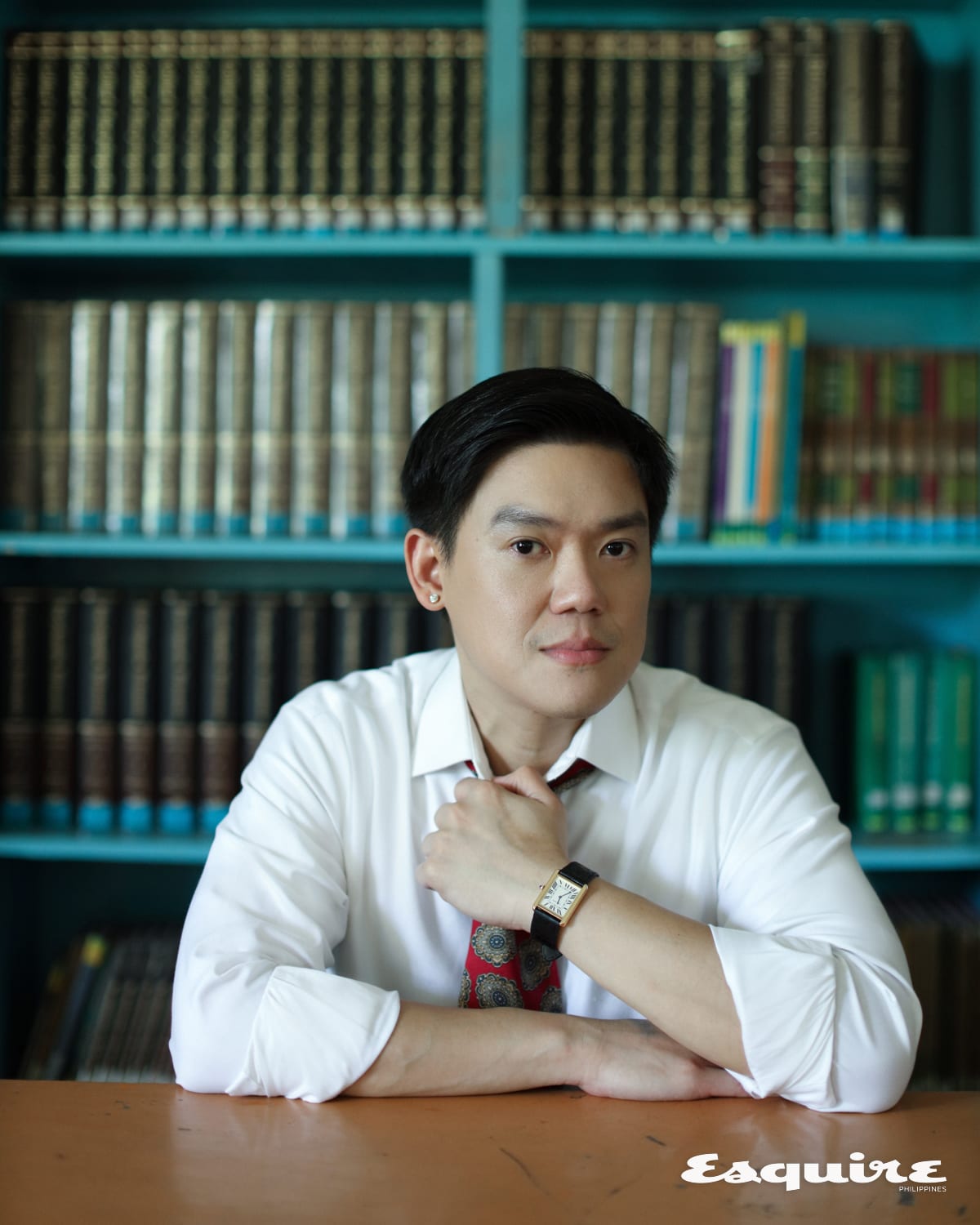
The school, despite being a typical public institution in one of the most densely populated cities in the country, came equipped with state-of-the-art smart TVs in a lot of the classrooms. This was juxtaposed with a pretty large library that wasn't typical in public schools; it had the complete Harry Potter collection and textbooks from the early 2000s and from earlier memories of yesteryear that Filipino students still use to this day.
"Kids are not reading. Eighty percent are struggling to read. Let’s figure out how to fix this," he told Esquire Philippines as we picked his brain on the alarming state of learning, appropriately in a classroom that had progress charts on who could read the best among the students.
Going back to his decorated academic background, such as his standout Harvard degree, it is the obvious question to ask: what is keeping him in the land of struggling students?
"I really don’t have the heart to work for the children of other countries, as I have seen my other friends and colleagues do," reflected the EDCOM chief, who had also taught at the Ateneo de Manila University.
"When I know that there is still so much that can be done in our country and still so much potential that our youth have been unable to achieve because of the failure of our systems.”
We Have Our Work Cut Out for Us
We're sure you're also fed up with all the AI-slop that is spreading like the plague both in professional and "recreational settings." The overreliance on AI and how it could actually kill critical thinking or people having their own lucid thoughts and autonomy over their minds has been philosophized to death at this point.
With these AI tools, kids these days can just type in a bunch of commands and prompts to churn out these manufactured academic outputs that would bring a tear to even the most resilient teacher.
Yee doesn't see AI as a destructive force in education since we haven't even gotten to the point of boosting actual literacy among our students and how we fare in international assessments.
“At the heart of it, I always go back to literacy. You can only actually take advantage of AI if, to begin with, you are literate," he said.
“If you don’t, and if you are at the level of constructing a sentence, you can’t really do anything with AI that is of value.
Filipino teachers and students use it more than most, and lawmakers are scrambling to fence it in.
He also had a pretty poignant take on if AI tools would make for dishonest students: "Whether or not there is AI, if you will steal, you will steal. If you are dishonest, you are dishonest. Because the values—those are your anchors.
.jpg)
Most Filipino kids are also stunted because of malnutrition; more specifically, one in four of them are. This is a massive detriment to students who are already barely hanging on in the classroom reading at levels far below what they are already supposed to be at. A 2025 national survey put the national stunting rate at 25.3 percent.
Being at the helm of such a unique congressional commission means constantly being in front of lawmakers, bureaucrats, and industry leaders who are the actors necessary to move this needle in the education crisis.
We asked Yee who is the hardest among these dignitaries to get on board and to stir a fire of urgency within.
He goes straight to the people running the schools. “One group would be our civil servants in DepEd, CHED, and TESDA,” he says. “Not because they don’t want to, but I think because they have been jaded unintendedly by many, many years of different leaders.”
He then recites the revolving door from memory. “Kasi you need to understand, no, in the early 2000s, every year, iba yung secretary ng DepEd. And every new secretary has different priorities and programs."
The education champion also stressed the need for parents to be reading to their children "every night or at least several times a week, even if they're babies," to give them a head start on an already handicapped learning system that should start at home.
To put things in perspective, the Organization for Economic Cooperation and Development’s (OECD) Programme for International Student Assessment 2025 showed that Manila placed 72nd out of 90 countries in reading, 74th out of 90 in mathematics, and 77th out of 91 in science.
The bottom line is that the Philippines is finally out of the bottom 10 countries that fared the poorest in these basic subjects, making the latest placement the best showing to date.
Not really a high bar to leap over since the Filipino reading score of 367 still trails the OECD average of 461, with the organization noting a gap of four to five years among Filipino students. Manila went from dead last to far behind.

A Five Year Wish
Here we arrive at Yee's critical and blunt piece of advice to the students who are fortunate enough to choose to become experts in accumulating knowledge adjacent to generational problems the Philippines can't seem to shake.
“We cannot afford to study for studying’s sake. We have so many problems as a country that we still need to solve. Sometimes we can be quite enamored or inclined to study things that might sound sexy but not really relevant," he said.
"Because if we do research for research’s sake, it is a waste because we still have a lot to do and fix in our country.”
Yee also cited an overlooked but urgent roadblock to actually getting Filipino students to actually learn: rampant bullying in what he calls the "bullying capital of the world."
It is no secret that the incendiary school shootings in South Cotabato, at Banga National High School on Sept. 18 and the one at Ateneo de Zamboanga University, showed how far this bullying and cyberbullying crisis can escalate.
“Are we also forming their hearts in a way that makes them good people, good citizens? "Yee," he said. “Because at the end of it, yes, we want them to be smart people. But before that, good people, right? ”
Based on the 2025 PISA Study, nearly half of 15-year-old Filipinos got bullied at least several times a month or more than twice the average across OECD countries.
This translates to about 47 percent of students in the Southeast Asian nation being bullying victims in one form or another compared to the 20 percent global average.
Academically, these students scored an average of 49 points lower in science than their peers.
“My wish would be, at least for the next five years, that all students finishing grade three will read," the education advocate told us. "If we can achieve that, I’m telling you, in 10 years, we will be a different country.”
.jpg)
Story and Production: JV Ordoñez
Editor-in-Chief: Paul John Caña
Creative Direction: Igi Talao
Photography: Cyrus Panganiban
Videography: Greeko Del Junio
Grooming: Abdul Azis Tando
Shot on location at: Quirino Elementary School in Quezon City
Esquire PH's resident music scribe, wristwatch disciple, and essayist fluent in niche internet subcultures and Philippine politics.