Today I Learned: That 'Space Jellyfish' Was Actually a Chinese Rocket's Plume
It was seen over parts of the Philippines on Monday night, May 12.

Published on May 13, 2026
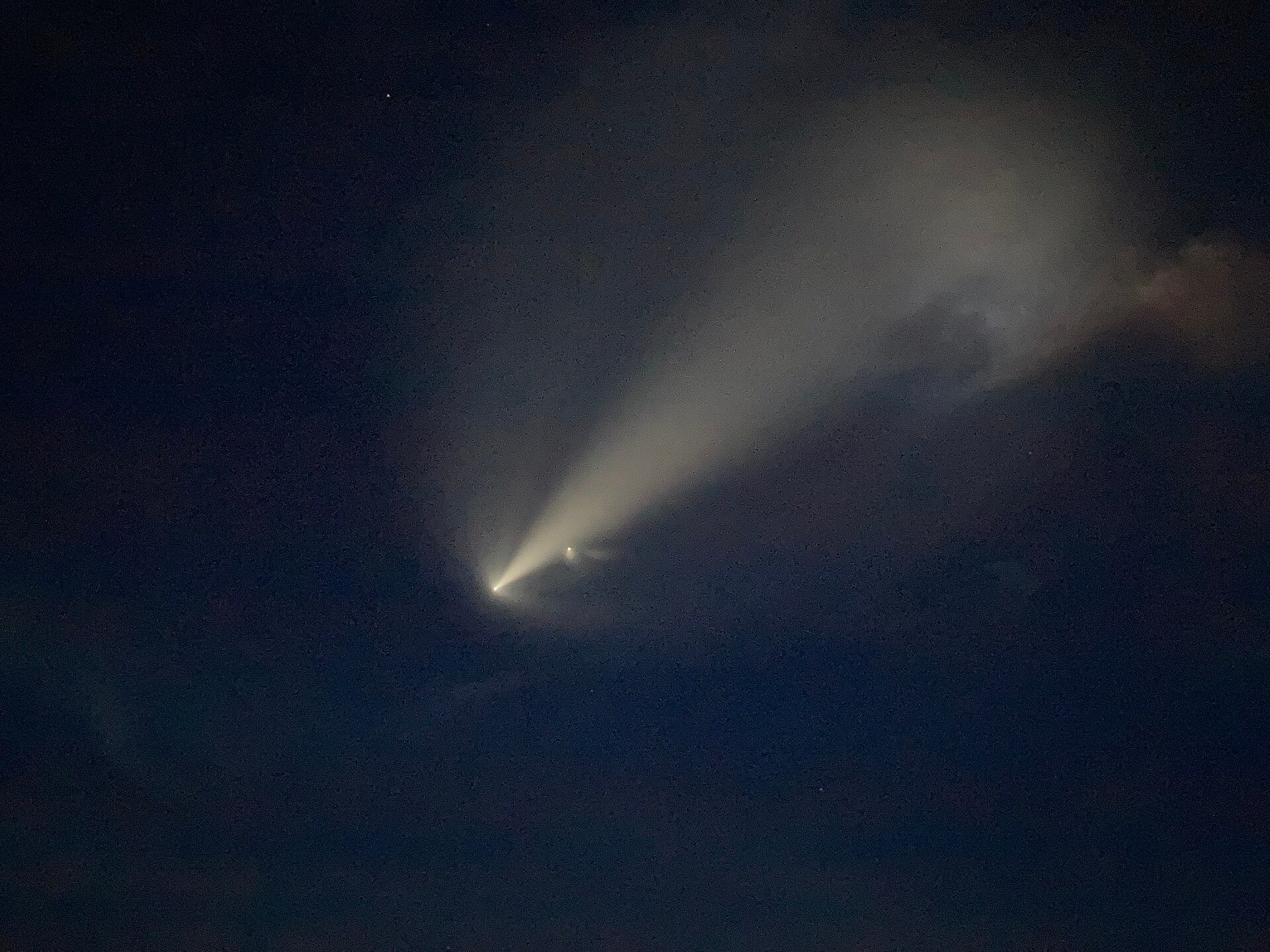
At approximately 8:10 p.m. (Philippine Standard Time, PhST) on Tuesday, May 12, residents across the country looked skyward to find a ghostly shape glowing in the night sky. Light beams seemed to be fanning out from a single source, leaving us to wonder if aliens have (finally) arrived. Obviously (and maybe, even unfortunately), they're not.
The Philippine Space Agency, in an advisory, confirmed that the sighting is highly likely due to the passage of the Long March 6A (Chang Zheng 6A) rocket launched by the People's Republic of China from the Taiyuan Satellite Launch Center at approximately 7:58 PM PhST.
What is a Space Jellyfish?
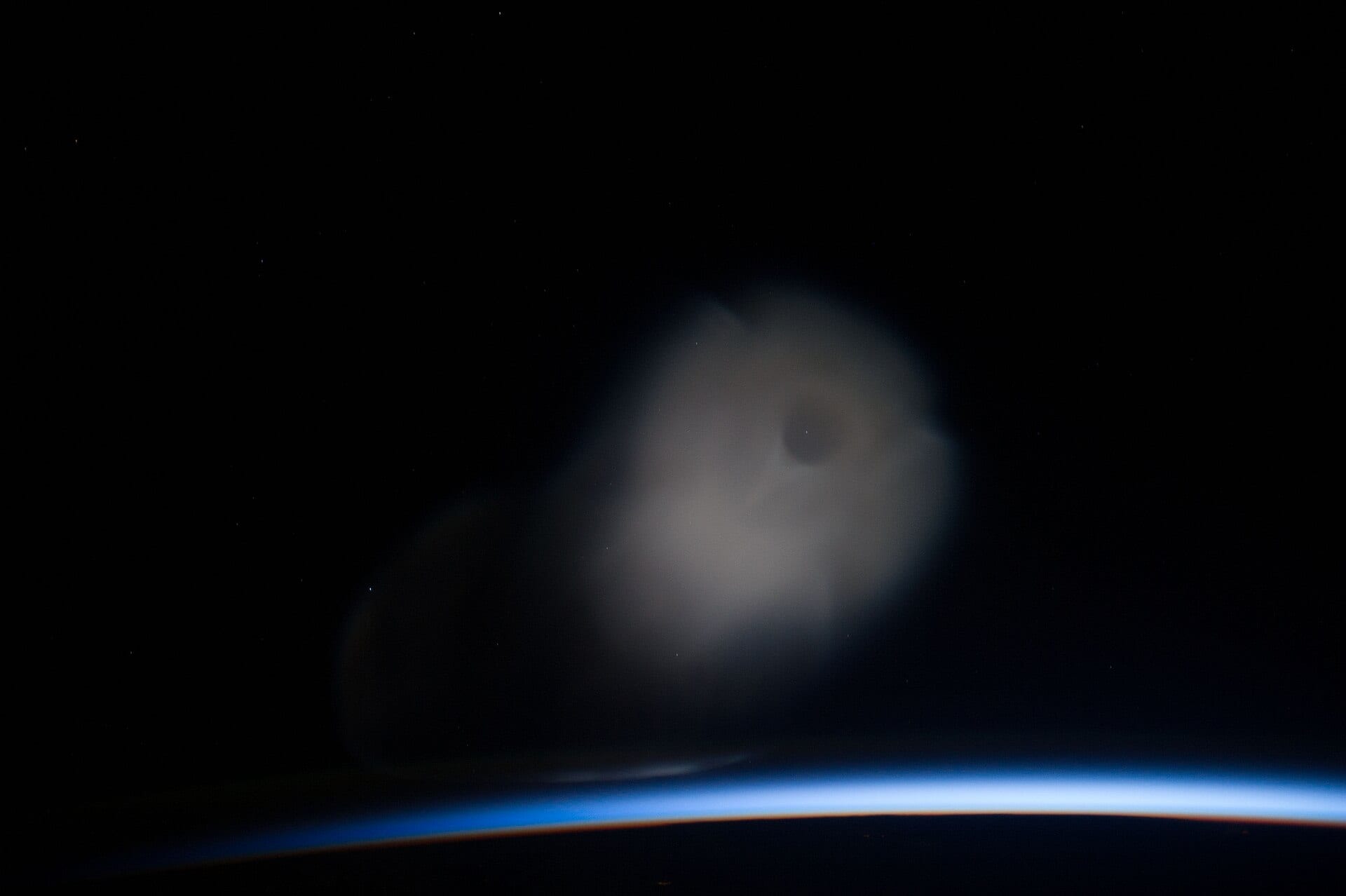
Space Jellyfish, sometimes called jellyfish UFO or rocket jellyfish, is a rocket launch-related phenomenon. It happens when a rocket's exhaust plume (composed of water vapor and exhaust gases), released at high altitudes, is directly illuminated by sunlight while observers on the ground remain in darkness (such as at dawn, dusk, and the evening). The plume fans out in the thin upper atmosphere, causing what we know from science class as Rayleigh scattering (or the scattering or deflection of light). Blue wavelengths (which are shorter, thus we see them at the bottom of a rainbow) scatter more, while red-orange wavelengths (which are shorter, thus we see them at the top of a rainbow) pass through. The result is a bluish-white glow on a black background (a.k.a. the sky) that's visible over wide areas.
Space jellyfish can vary in shape, depending on the rocket plume, but it always has that ghostly appearance due to the contrast of blue-white on black.
China's Long March Rockets
The Long March 6A is a medium-lift launch vehicle in the Long March family. It is China's first rocket with solid rocket boosters, and only one so far to combine solid and liquid fuel technology in one rocket. This specific rocket was first launched on March 29, 2022, from the then-newly built complex in Taiyuan.
The Long March rockets are named after the Chinese Red Army's 1934–35 Long March military retreat during the Chinese Civil War, and they're essentially the backbone of China's entire space program. Since the 1970s, they have evolved from basic satellite launchers into a highly specialized fleet that handles everything from local weather satellites to landing rovers on Mars.
According to the PhilSA, unlike recent rocket launches from China's coastal spaceports, no debris drop zones from the launch of the May 12 rocket were projected over Philippine territory or waters.


Previously, a Long March 7 rocket launched from Wenchang, Hainan, at 8:14 a.m. on May 11, 2026, caused unburned debris to fall "approximately 34 NM away from Bajo de Masinloc, 97 NM away from Cabra Island, Occidental Mindoro, and 130 NM away from Busuanga, Palawan, within the Philippine Exclusive Economic Zone (EEZ)." Before that, on December 31, 2025, 6:40 a.m., a Long March 7 rocket was also deployed from the same site, with drop zones "approximately 45 NM away from Burgos, Ilocos Norte, and 67 NM away from Dalupiri Island, Cagayan; and 64 NM away from Santa Ana, Cagayan, and 76 NM away from Camiguin Norte." Both are within the EEZ.
Meanwhile, a Long March 8A rocket launched on March 13, 2026, had debris falling "approximately 162 NM away from El Nido, Palawan, 185 NM away from Puerto Princesa, Palawan, and 101 NM away from Patag Island (DZ 1); and 32 NM away from Hadji Muhtamad, Basilan, 44 NM away from Pangutaran Island, Sulu, and 47 NM away from Tubbataha Reefs Natural Park (DZ 2)." The first is within the EEZ, while the latter is within Philippine archipelagic waters.
ALSO READ:
Today I Learned: It's Been a Decade Since We Sent the First Filipino-Built Satellite to Space
Bongbong Rocket: The Secret Missile Experiment of the Philippines
Christa I. De La Cruz is a Palanca Award-winning writer with over 15 years of experience in feature writing for print and digital media. She earned her Sertipiko sa Malikhaing Pagsulat sa Filipino from the University of the Philippines Diliman and holds an MFA in Creative Writing from De La Salle University.
View More Articles About: