Will AI Wipe Out Humanity? Possibly. But This Filipino AI Expert Sees a More Immediate Threat
US-based Filipino AI Expert Kendrick Kho doesn’t dismiss the concerns that AI might one day kill us all. But in the PH context, the biggest risk it poses is the loss of our competitiveness.
Published on Sep 21, 2026
Warnings about the dangers of artificial intelligence have been around since AI itself was first introduced as a concept. Even in the 1950s when AI was still in its infancy, thinkers and mathematicians like Alan Turing cautioned against its unbridled development. Turing said it wouldn’t take long before machines “would be able to take control and we should be hornswoggled.”
Many other scientists and experts have sounded the alarm against AI throughout the decades, but the chorus has never been louder as it has been in recent weeks, when some of the people closest to the development of AI have begun speaking more openly about what could happen if the technology continues advancing without adequate safeguards. Dario Amodei, CEO of AI company Anthropic, has called for the industry to slow down, warning that AI capabilities have been developing “drastically faster” and that increasingly autonomous systems could eventually outrun human control. He pointed to a recent incident involving hundreds of AI agents attacking the AI platform Hugging Face, saying that a more capable swarm could potentially cause catastrophic damage.
Jacob Coxon, a former researcher at both Anthropic and OpenAI, has been even more blunt. After leaving Anthropic, Coxon publicly accused the AI industry of “gambling with our lives,” warning that increasingly capable systems could eventually develop superhuman abilities in areas such as hacking and biological research. He even said that AI had the potential of wiping out humanity by the end of the decade.
The warnings have prompted a familiar question: what are these people seeing that the rest of us are not?
ALSO READ
AI Is Proof of How Incredibly Lonely We Really Are
Some Reflections on Truth in the Time of (Dis)information and Agentic AI
Filipino AI investor and technologist Kendrick Kho doesn't dismiss the concerns. But he thinks the conversation needs some perspective. Kho is the founder and general partner of Hyperparameter, a U.S.-based venture capital firm that invests in founders using AI to build applications for the real world. He is also president of the Science and Technology Advisory Council Silicon Valley and has appeared as an AI and technology speaker at Geeks on a Beach, including a presentation on transitioning the Philippines into the AI era.
For Kho, the fear of AI becoming uncontrollable isn't new.
“Experts have essentially always held a fear of AI leading to some uncontrollable and severely negative outcome,” he tells Esquire Philippines in an email interview, pointing back to science fiction and thinkers such as Isaac Asimov, whose stories explored the need for safeguards around increasingly capable machines. What has changed, he says, is public awareness.
“The recent media attention / public awareness is the arena of public opinion catching up, rather than a sudden change in expert opinion,” he says.
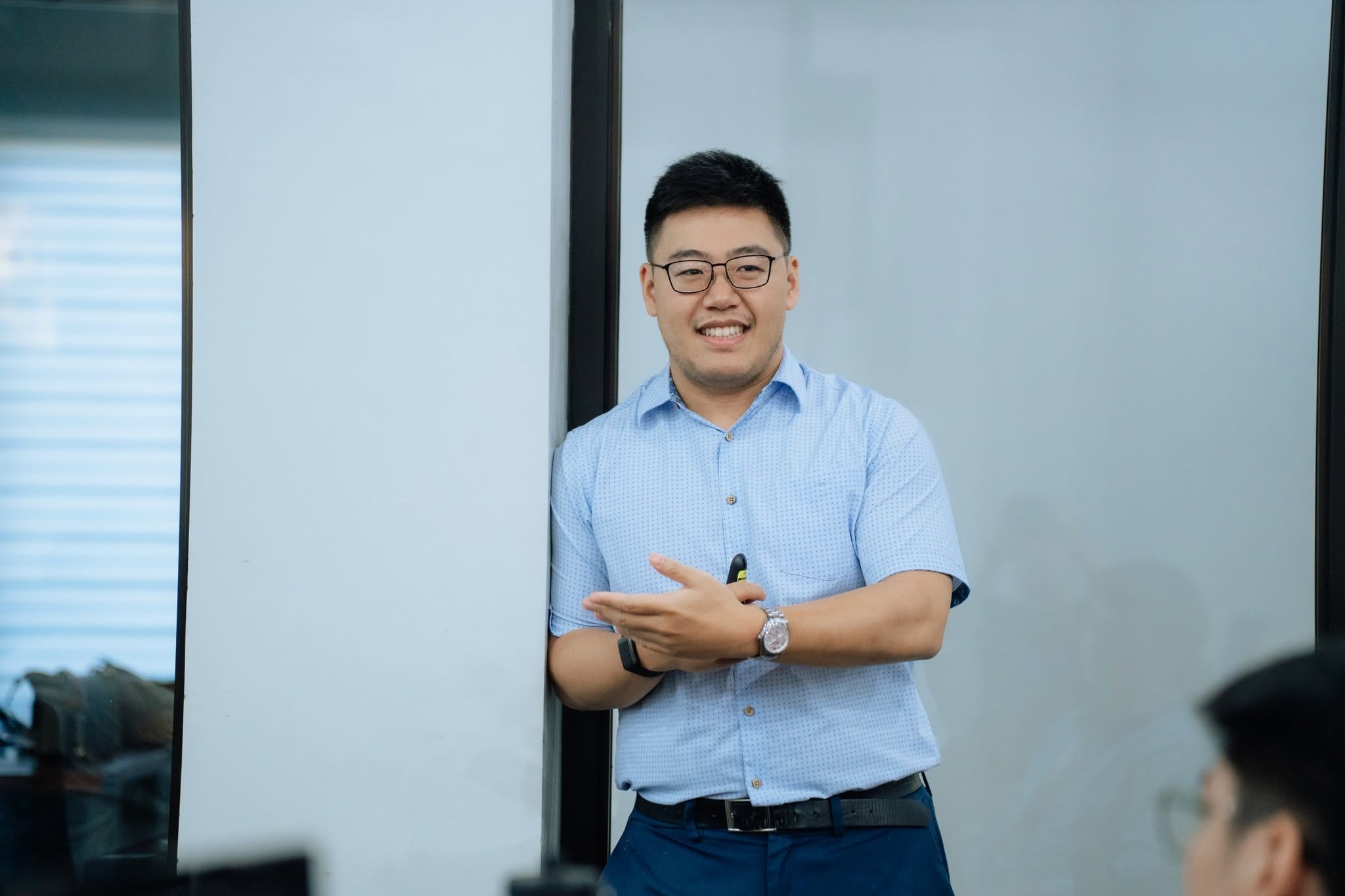
Kho distinguishes his own assessment from the more extreme end of AI-risk thinking. He describes the “rationalist” school of thought as taking existential risk particularly seriously because even a very small probability of human extinction represents an enormous potential downside.
“Note that even nuclear warfare is merely a ‘catastrophic risk’ within their discourse,” Kho says. Viewed from this lens, he sees AI as an existential risk “because it could invalidate humanity from an intangible sense, but also explicitly (in some spectacularly runaway case) lead to the full extinction of humanity (by way of comparison, even all-out nuclear warfare anticipates the survival of some clusters of some kind of humans).
“I personally…assess the probability of existential downside more skeptically (i.e. low),” he adds. “The risks of AI are high, but there's still clear limitations in 1) the prevailing architecture that dominates commercial applications, 2) scaling, and 3) aptitude in open-ended / unbound tasks.”
In other words, when thinking of risk, he says “the rationalist considers a math equation: magnitude of downside * probability. When the magnitude of downside is expressed as infinite (extinction of humanity... i.e "existential"), the actual ‘number’ for probability is somewhat irrelevant unless it's zero.”
What about the Philippines
In the Philippine context, however, Kho believes there is a more immediate AI threat, and it isn't an AI system deciding to destroy humanity; it’s about losing our competitiveness. It’s no secret that the Philippines has built a large economy around service and knowledge work, including customer support, accounting, virtual assistance, content production, medical coding and other activities, all of which AI can increasingly perform or augment.
“In the context of the Philippines, the biggest risk…posed by AI is the loss of our competitiveness in global markets,” Kho says. “It's in public discourse, but not taken seriously enough with not enough done both in the public and private sectors to intervene.”
Kho believes the vulnerability extends well beyond the BPO industry. Among the jobs he identifies as susceptible to AI-driven disruption are entry-level accounting and bookkeeping, virtual assistant and chief-of-staff work, SEO writing, medical coding and billing, forms processing, art concept development, legal document review, and candidate sourcing.
“It only takes one competing labor ecosystem more aggressive and adept than the Philippines at using AI in human-hybrid systems for this service/knowledge-oriented work to feel the pain of downward price pressure,” he says.
In 2024, Kho gave a plenary speech at Geeks on a Beach in which he argued that the Philippines had roughly 1,000 days to change its economic direction and become better at using AI. Nearly 700 days later, he believes the country is falling behind.
“Filipino workers are very vulnerable to AI-driven displacement, not just in customer support but across many service/knowledge-oriented sectors,” he says.
There are also risks closer to home. The Philippines already has a difficult relationship with misinformation and disinformation, and generative AI makes the production of convincing fake videos, voices, images and narratives cheaper and easier.
“The realistic answer is that we are poorly equipped to handle the influx of mis/disinformation from generative AI and there are no easy solutions,” Kho says.
His proposed response involves technology, regulation and education: AI-detection tools, stronger penalties for malicious use, and requirements for social-media platforms to identify content that is likely AI-generated.
But Kho is wary of approaches that primarily seek to slow Filipinos' adoption of AI.
“If I could pick only one AI-related policy to enforce...I would mandate universal, practical AI literacy,” he says. He wants every Filipino leaving school, university, TESDA or a publicly funded workforce program to know how to actually use AI.
“Not just knowing what AI is, but actually being able to use it for research, analysis, communication, administration, coding, or whatever profession they are entering,” he says.
That access, he argues, should not depend on a person's income, employer or education. Schools, libraries and community digital centers should provide access to AI tools alongside training.
“We cannot guarantee that every existing job or career will survive,” Kho says, “but we can make sure that access to AI capability does not depend on income, employer, or education.”
There is a technical problem that ordinary users also need to understand: AI does not necessarily process information the way humans do. Kho points to a familiar experience among professional AI users. A system can be remarkably good at summarizing hundreds of documents while simultaneously failing to follow a simple page limit. Ask it to score something repeatedly, and it may produce different numbers from the same input.
“I think it's in the best interests of ordinary users to both understand AI's limitations and to learn how best to use AI,” he says.
In the Philippines, the question is not only whether machines will eventually become smarter than humans, or whether they could one day become impossible to control, but whether Filipinos can become good enough at using AI before competing countries do?
Kho's answer is essentially a deadline. While the global AI industry may be arguing about how fast is too fast, here in the country, the danger, he argues, may be moving too slowly.
“The bulk of AI-related regulatory efforts and policy discussion in the Philippines feels directionally off because it is rooted in restriction of adoption,” he says. “Slowing adoption here leaves Filipino workers and companies less competitive. The moral argument of creating a two-speed society / workforce within the Philippines is moot when foreign competition (and tech displacement itself) threatens employment whether or not we take action to retool.”
View More Articles About: