The Wild World of Sneaker Cushioning Gimmicks
Brands have always promised that their shoes made you run the fastest or jump the highest. How they accomplished that, however, has been fascinating at best and comedic at worst.
by JV Emmanuel
Published on Sep 29, 2026
The Polar Race. The Race to Mt. Everest. The Space Race. And, of course, the race to make the most comfortable footwear cushioning. With the improvement of diet and training came improved performance, and with that came better equipment, especially footwear. The once straightforward affair between tough leather and hard rubber is now an unending quest for the best materials, particularly the foam beneath our feet. But for every icon like Nike’s Air Sole and Adidas’ Boost, there were inventions ahead of their time, and interesting innovations forgotten by many (perhaps for the better).
Posture Foundation (1937)
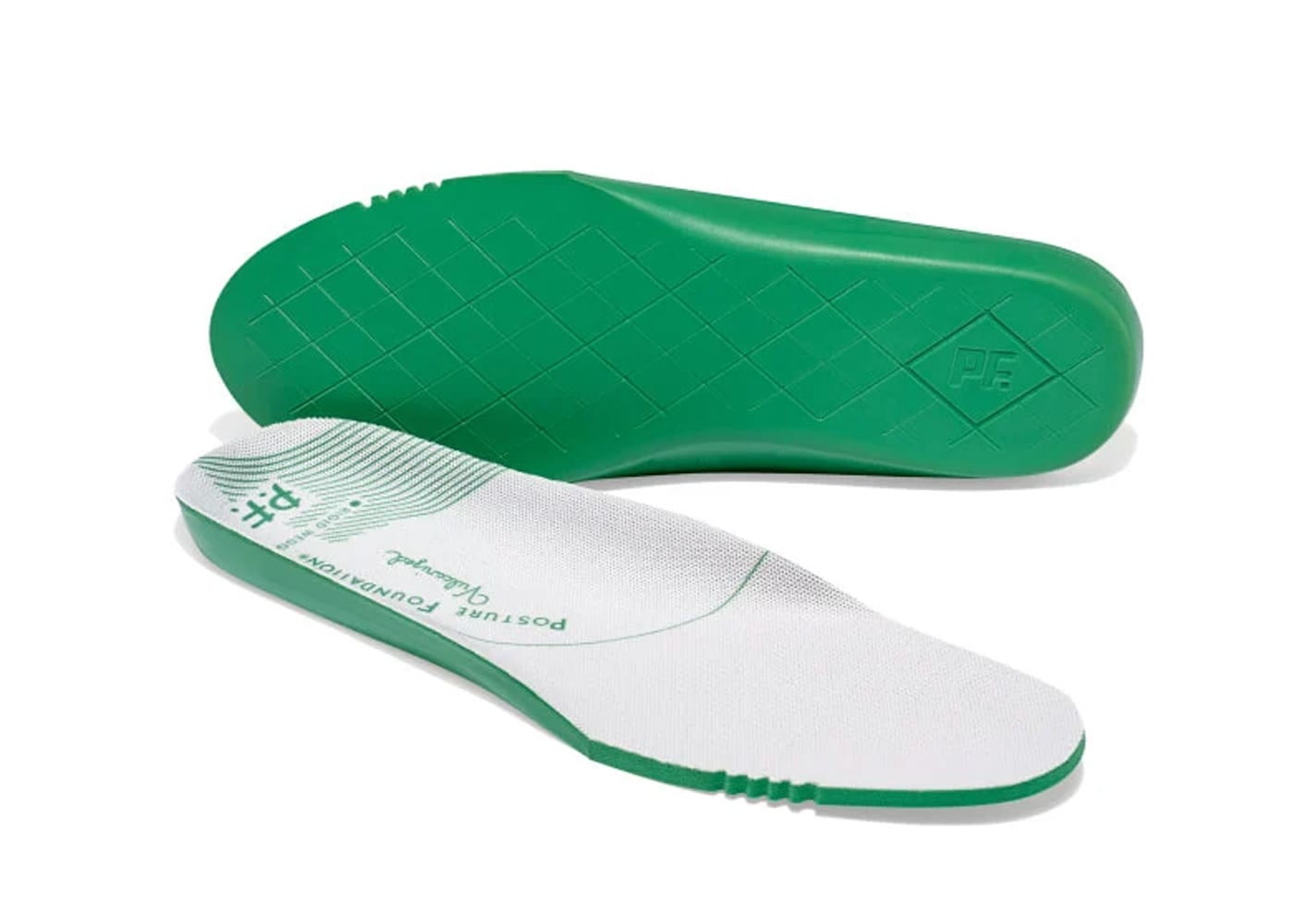
Canvas sneakers and superior comfort don’t often go hand-in-hand, but in 1933, B.F. Goodrich scientist Hyman Whitman invented the Posture Foundation insole, seeking to provide more comfort and arch support for better, well, posture. In 1937, B.F. Goodrich—yes, that tire company—began selling canvas sneakers with Whitman’s invention under the P.F. Flyers brand. From schools to military bases, P.F. Flyers were everywhere in America until the '60s, but faded into obscurity as the '70s came.
P.F. Flyers are still available today, with that same innovative cushioning technology from 1937. Many who grew up wearing P.F. Flyers still swear by them, and new fans of the brand are finding out exactly why. While the tech undeniably held up well, the same cannot be said of the sneakers’ popularity.
Another notable footnote that deserves the spotlight is P.F. Flyers’ “Run faster, jump higher!” slogan, coined in 1944, a phrase now universally associated with footwear marketing.
Karhu ChampionAir (1977)
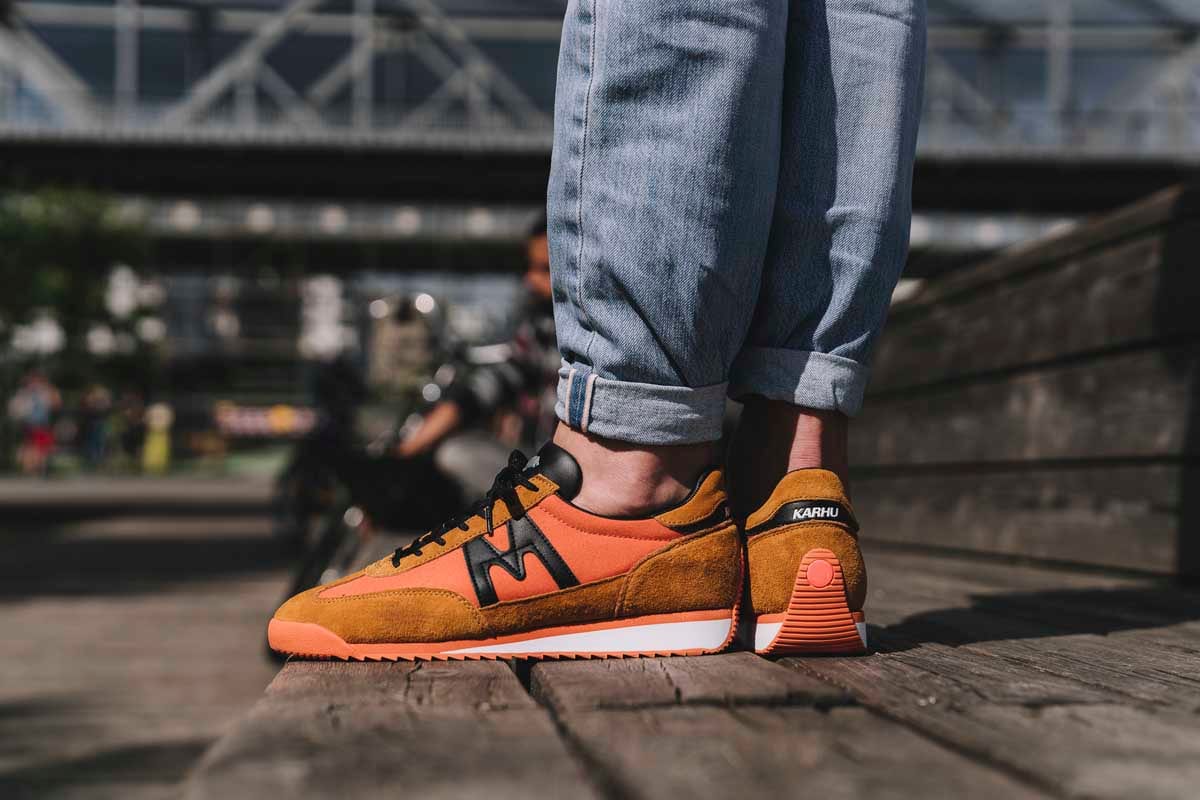
Despite its popularity, ubiquity, and history, Nike’s Air Sole was not the first air cushioning in footwear. In 1977, Dutch sportswear company Karhu released the Champion Air featuring a patented air-cushioned sole—the very first of its kind, and a few years ahead of Nike’s first air-cushioned runner. From the moment it hit store shelves until about 1984, the Champion Air sold over a million pairs, proving the viability of air cushioning both as a product and a performance tool. Sadly, being ahead of the competition did not guarantee the Champion Air's staying power, as Air is now almost synonymous with the Swoosh, owing largely to Nike’s strong pop culture presence.
But there is something to be said for the first to try something once thought too outlandish, and even impossible—Nike Air may not have ever seen man fly (or dunk from the free-throw line) had Karhu not given man wings first.
Aero Shoe Company (1983)
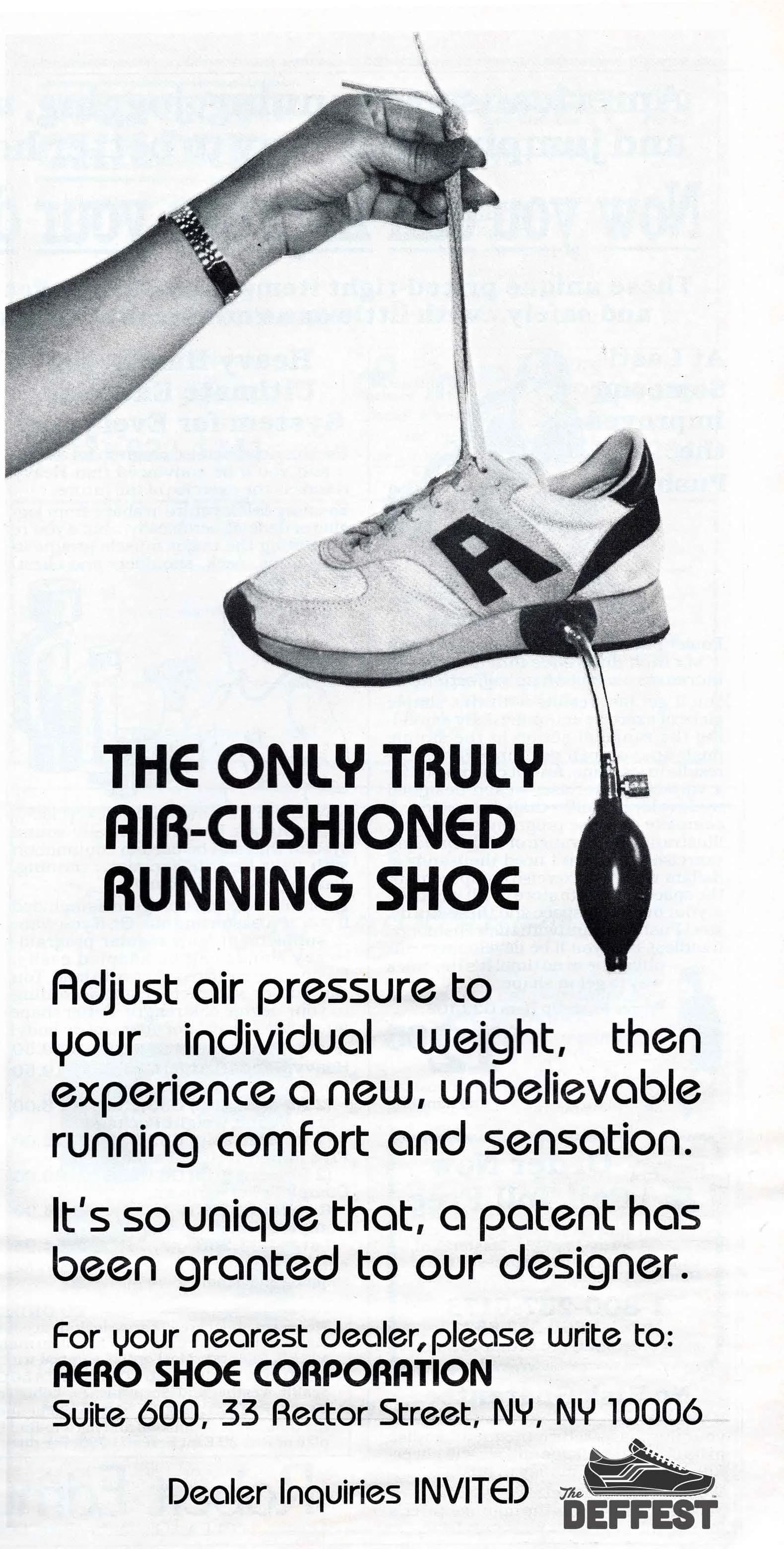
The name of the shoe? Unknown. How many units were sold? Unknown. When exactly were the shoes released? Also unknown. What we do know is that in 1983, the Aero Shoe Company was founded in the midst of the air cushion craze. That same year, it released its very own air-cushioned sneakers, but with even more air - the shoes came with a small bladder that attached to the sole, allowing the wearer to hand-pump their soles to their desired cushioning level.
Due to the inconvenience of carrying around what is essentially the pump from a blood pressure cuff, the shoes did not take off as intended, causing the Aero Shoe Company to fold in 1988. But the dream of fully customizable cushioning would be fully realized by the Reebok Pump, and Nike’s own version of the Pump (more on this).
Hi-Tec Air Ball Concept (1989)
The year 2006 saw the release of Jordan Brand’s Air Jordan 21, a performance basketball shoe with detachable, interchangeable cushioning pods in the midsole. This was not the first time such a concept made it to market (there seems to be a pattern here).
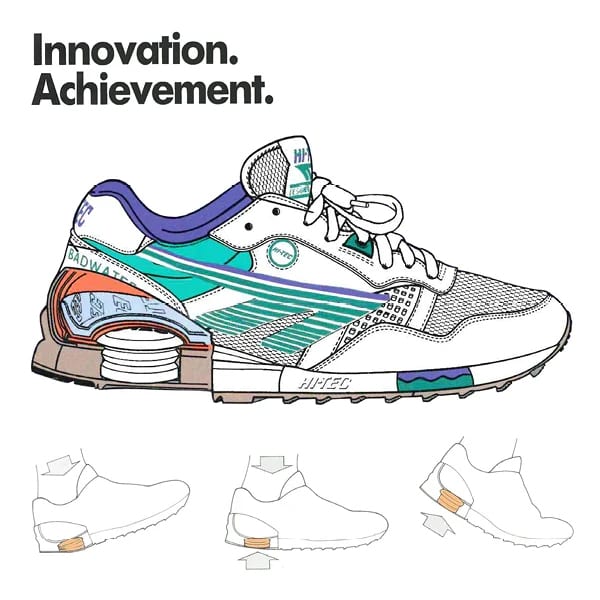
Interchangeable cushioning pods made their world debut in 1989, by way of Hi-Tec’s Badwater 146 and the Air Ball Concept. Inspired by one of the toughest races of the time, the Badwater Ultramarathon, the Badwater 146 came with two interchangeable Air Ball pods, one pressurized to 6 psi for heavy heel strike runners, and a 4 psi variant for light heel strike runners.
Underrated is an understatement for the Badwater 146. But with no memorable TV spot, celebrity endorsement, or a big-name athlete to tout the breakthrough technology, it too was forgotten. Clearly not by Nike, Jordan Brand, and everyone else who clamored enough for Hi-Tech to bring the Badwater back a few years ago.
Nike Air Pressure (1989)
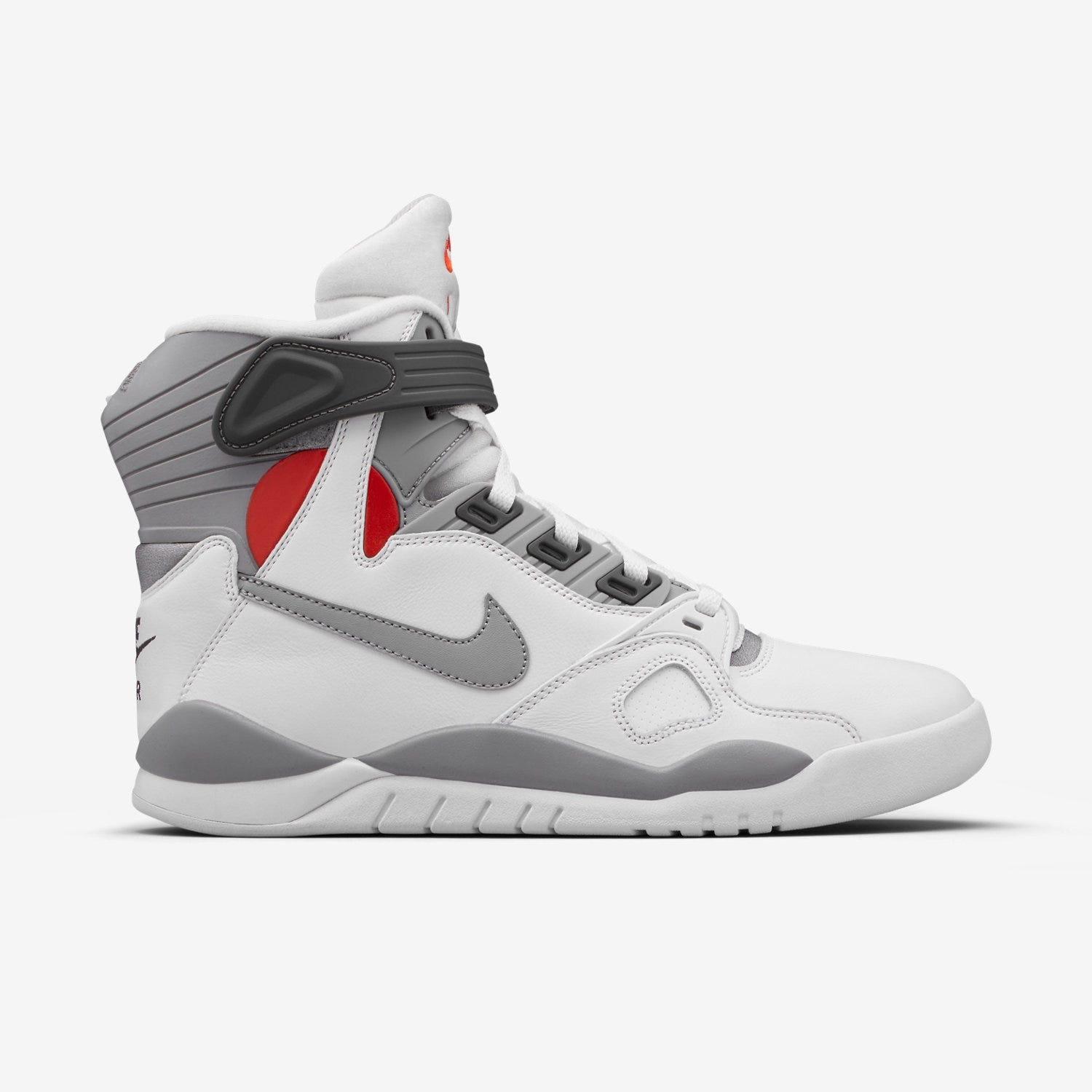
In 1989, two footwear giants released basketball sneakers with internal inflatable bladders: Nike's Air Pressure and Reebok's Pump.
While Reebok had found a way for their sneakers to have their own built-in pump mechanism, effectively making an external detachable pump obsolete, Nike absolutely failed to learn from the mistakes of the past (hello, Aero Shoes) and opted to keep the detachable hand pump around, thinking a cool futuristic-looking carry bag and a strong ad campaign would make the Air Pressure a slam dunk.
The Air Pressure was a fancy lay-up at best, but it was still just worth two points, much like any other boring shot worth two points.
Decades later, people still remember the Reebok Pumps, and even John Cena gave it a moment in the mid-2000s; meanwhile, the Air Pressure folded under its namesake, relegated to sneakerhead collections and articles like this one.
Adidas Energy Blade (2013)
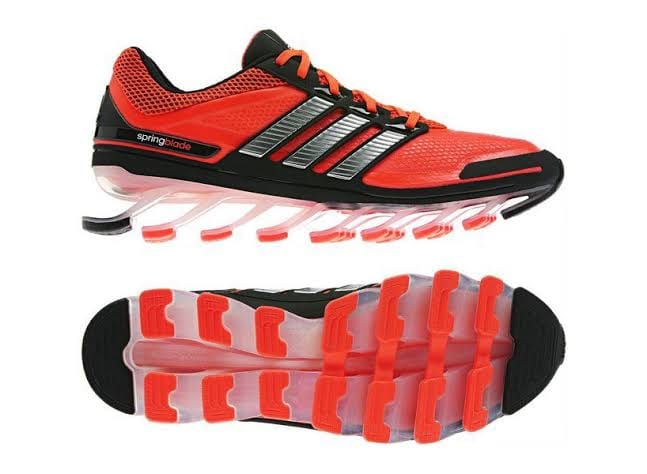
By the time the Adidas Springblade came out in 2013, it had already been six years since its Energy Blade cushioning began development. The new and groundbreaking system completely eschewed classic foams, opting instead for 16 finely tuned directional polymer blades meant to pop better with each step, providing unprecedented energy return.
As confusing as that sounds explained verbally, it looks just as questionable visually. But Adidas wasn’t trying to create a looker, but a beast of a performer that wasn’t just better than the competition, but also lighter than its counterparts burdened with EVA or TPU foams.
In 2014, Adidas began recalling pairs due to the blades breaking too easily. This continued well into 2015, and by 2016, it’s as if Adidas itself wanted to just scrub the Spring Blade off its memory.
Who would’ve thought plastic blades on a shoe would be a bad idea?
This would’ve been a bigger stain on the brand had Boost not saved the day. But another German brand had Boost first.
Puma NRGY (2016)
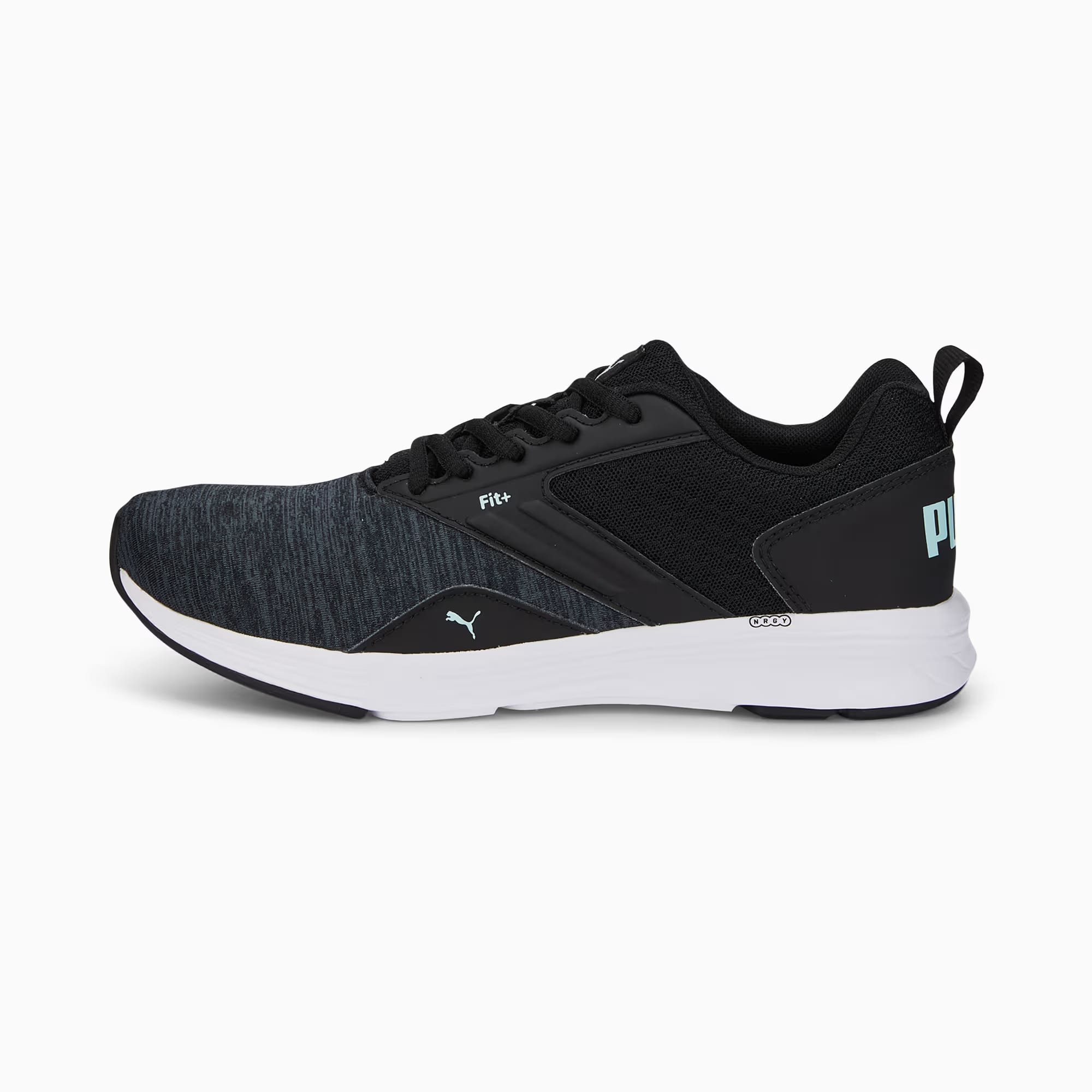
When people hear “Boost”, people think Adidas, and rightfully so. However, Adidas didn’t actually invent Boost, but rather their rival Puma, with the help of German chemical company BASF.
The partnership between BASF and Puma ended in 2011, just two years after it began, with BASF subsequently selling the rights to use Boost foam to Adidas, but leaving Puma with the ownership of the process of creating Boost. What ensued was a legal battle that Puma eventually won, allowing them to use their proprietary technology to manufacture expanded thermoplastic polyurethane—the exact material compound Boost is made of.
In 2016, Puma debuted the NRGY, and shortly after followed it up with a novel approach to using ETPU—instead of having a traditional one-piece midsole, Puma encased individual ETPU pellets in a rubber outsole, which in theory provided a more dynamic ride that adjusted intuitively to the wearer.
But by then, it was already a little too late for Puma, and their NRGY, despite being the original Boost, would always be seen as a ripoff.
It’s a classic case of someone saying the joke but louder, stealing away someone’s 15 minutes of fame. And in most cases, nobody remembers, or even knows, who said the joke first, but rather who said the joke better—one quick look at the sneakers with Puma’s NRGY foam tells you all you need to know.
ALSO READ:
Today I Learned: Throwback to Signature Kicks Before Air Jordan
Rappers Who Built the Hip-Hop Sneaker Game
JV Emmanuel is a writer, photographer, and human rights activist. See some of his photos on IG @gospelchordsonly.
View More Articles About: