Chinese Auto Brand Denza Wants In on the PH EV Game
The premium BYD unit is ready to kick-start its luxury EV presence in Manila.

by Alvin Uy
Published on Mar 16, 2026
When a new Chinese car brand enters the Philippine market these days, it usually arrives with aggressive pricing and an ambitious dealer rollout. But when Denza officially opened its first retail network in the country, the message was slightly different: this is not just another EV brand chasing volume. It is positioning itself squarely in the premium segment.
The marque is part of the BYD Group and has begun local retail operations with a strategic network of flagship dealerships in key urban centers including Alabang, Makati, San Juan, and Cebu.
The move signals a clear intention to establish a strong physical presence early, targeting affluent locations where customers expect both luxury and full-service ownership support.
Denza's arrival also sets the stage for its first major public appearance at the Manila International Auto Show 2026, where the brand will make its official debut before the broader Philippine motoring audience.
If BYD has spent the past few years reshaping the mainstream electrified vehicle market in the Philippines, Denza intends to represent the next step up.
Originally formed as a joint venture between BYD and Mercedes-Benz in 2010, the brand was conceived to combine advanced electrification with luxury vehicle design.
Today it operates as BYD's premium division, offering vehicles designed to compete with executive-class products rather than mass-market EVs.
What changed the brand's trajectory was BYD taking full operational control in 2021, buying out Mercedes-Benz's stake and repositioning Denza as a standalone premium nameplate. Since then, it has expanded its lineup to include SUVs, sedans, and MPVs, and now sells in over 10 countries, with footholds in markets like Norway, Thailand, and the UAE. The Philippine launch represents one of its most substantial pushes into Southeast Asia to date.
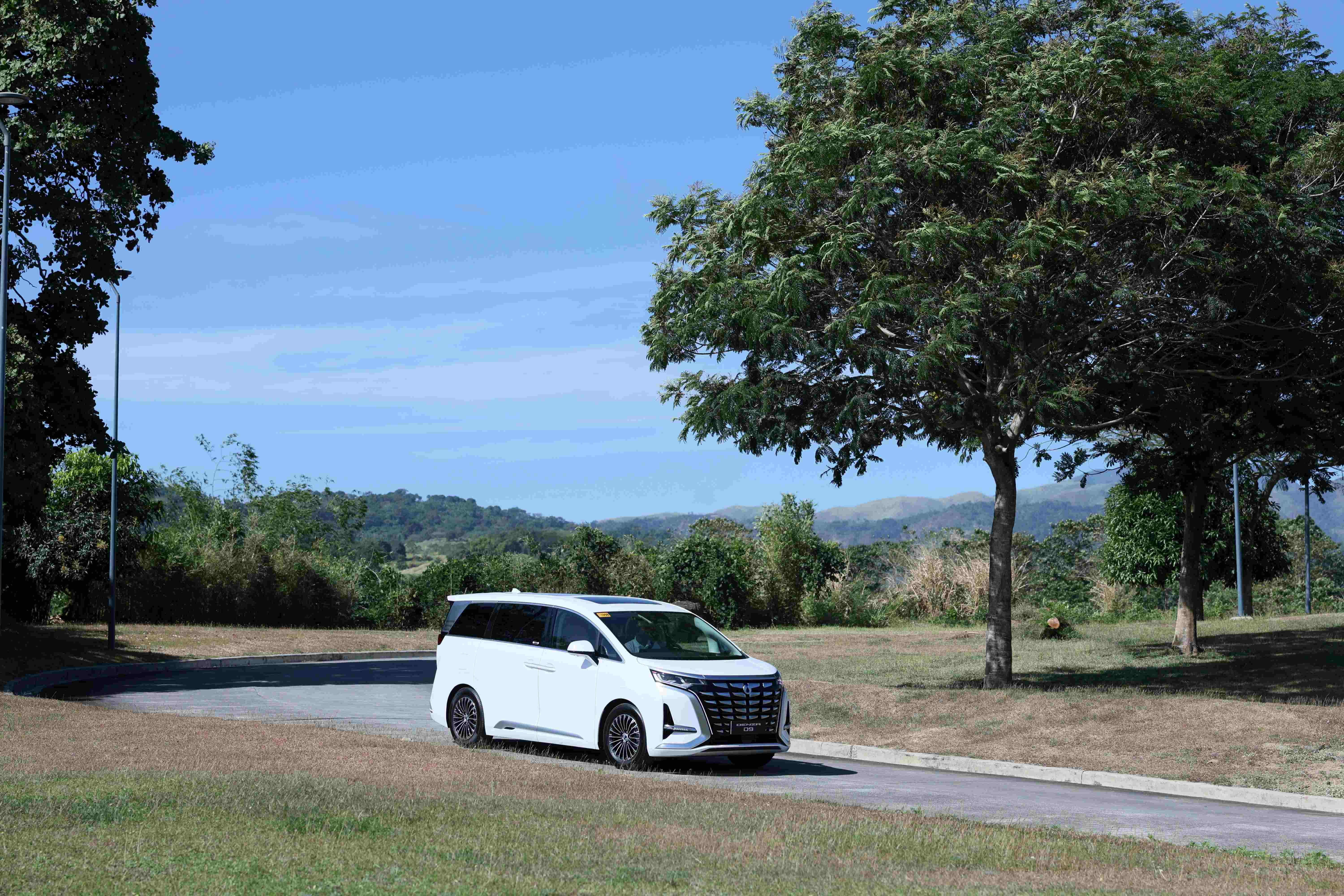
In the Philippines, that strategy begins with the Denza D9, a large luxury MPV that places itself in a segment typically dominated by vehicles like the Toyota Alphard and Lexus LM. The D9 carries a suggested retail price of P4.298 million, but the first 300 customers can acquire it at an introductory price of P3.998 million, positioning it aggressively against established luxury people movers.
Denza Alabang Facade
.jpg)
Electrified Luxury for Executive Travel
Unlike traditional luxury MPVs that rely purely on combustion engines, the D9 arrives with BYD's Super DM-i plug-in hybrid system, pairing a 1.5-liter turbocharged engine with dual electric motors. The setup produces around 401 horsepower and 681 Nm of torque, with a combined driving range of up to 980 kilometers.
Inside, the vehicle leans heavily into executive comfort: Nappa leather upholstery, multi-screen infotainment displays, a premium audio system, and second-row "zero-gravity" captain's chairs with heating, ventilation, and massage functions. A built-in refrigerator and rear entertainment screens round out the package, making the D9's target audience clear: corporate transport fleets, chauffeur-driven executives, and affluent families.
Although Denza operates under the same technological umbrella as BYD, its products occupy a different tier of the market. The D9 uses similar underlying battery and hybrid technologies but wraps them in a significantly more upscale package, demonstrating how BYD's modular electrified platforms can scale from mainstream crossovers to full luxury vehicles. While the BYD lineup targets buyers transitioning into electrified mobility, Denza aims for customers already accustomed to premium brands who are looking for something more technologically forward.
That distinction may prove important in the Philippines, where the luxury MPV segment is both brand-conscious and fiercely competitive.
To support its premium positioning, Denza Philippines is prioritizing dealership infrastructure from day one. Its largest facility is in Alabang, spanning 5,410 sqm with an eight-vehicle showroom and a 12-bay service center. In Cebu, a 3,680 sqm dealership supports the brand's presence in the Visayas.
The Makati location sits along Chino Roces Avenue, targeting customers in Metro Manila's central business districts. In Greenhills, the brand currently operates a pop-up store, with a permanent showroom in San Juan slated to open by the third quarter of 2026. This is some serious footprint expansion in the country's central business district already home to many of the most celebrated car brands.
The rollout is being undertaken with local dealer partners ACMobility Premium Dealership Inc., Harmony New Energy Auto Service (Philippines) Ltd. Corp., and E-Vantage Motors Inc.
According to Adam Hu, Country Head of BYD and Denza Philippines, the expansion is about more than showroom visibility. "Each new dealership makes Denza's premium NEV experience more accessible to communities across the Philippines, moving us toward a future where sustainable mobility is the preferred choice for drivers."
With its arrival, the Philippine automotive landscape gains another player in the fast-growing premium electrified segment. Chinese automakers are no longer competing solely on price; increasingly, they're challenging established luxury players on technology and features.
Beyond its dealership rollout and product introduction, the Denza launch also comes at a time when BYD is pushing further on electrification. The Chinese automaker recently unveiled the second-generation Blade Battery alongside its new Flash Charging technology, developments aimed at two of the most persistent challenges in EVs: slow charging times and reduced efficiency in cold temperatures. The updated battery architecture improves energy density and safety while enabling significantly faster charging, bringing EV charging speeds closer to the convenience of refueling a combustion vehicle.
Brands under the BYD umbrella, Denza included, are expected to benefit from these advances in the near future. As the new battery and charging technologies are gradually integrated into upcoming platforms, both Denza and BYD models stand to gain faster charging capability, improved efficiency, and stronger performance across varying conditions. For a market like the Philippines, where EV adoption continues to grow alongside charging infrastructure, that kind of progress could go a long way in making electrified ownership more practical for everyday drivers.
READ MORE
The BYD Dolphin Wants Us to Calm Down With the EV Anxiety
Are You Ready for BYD’s New Electrified Pickup?
Toyota Still Dominates the Search Bar in the Philippines, and the Rest of the World
These Are the Most and Least-Loved Car Brands in the Philippines and the World
Toyota Reigns As the Most Googled Car Brand in the Philippines
View More Articles About: