It's 7.18, and the Porsche 718 Cayman May Already Be a Modern Classic
The 718 Cayman's about to go extinct, and Porsche Philippines still has a few left before it's gone for good.

by Alvin Uy
Published on Jul 18, 2026
There are dates that mean nothing to most people and everything to a select few. For Porsche enthusiasts, July 18, or 7.18, is one of them. It isn't an official holiday, and Stuttgart's marketing department has never claimed it, but every year, owners and admirers of the 718 quietly mark a car that has spent most of its life in the shadow of the 911, despite being arguably one of the purest sports cars Porsche has ever built.
This year's 7.18 lands differently, and not because Porsche has rolled out a special edition or another high-performance RS variant. The 982-generation 718 Cayman and Boxster have already reached the end of their production run, with Porsche Philippines working through its last available units. Esquire Wheels got hold of one to relive a weekend both this writer and Esquire PH's editor-in-chief PJ Caña spent behind the wheel of a 718 in Singapore roughly eight years ago, back when the car was still new.
History has a habit of elevating cars that were once taken for granted. The air-cooled 911 was just yesterday's Porsche before collectors started paying fortunes for them. The original Boxster got dismissed as the entry-level Porsche before enthusiasts caught on to how balanced its chassis was. The current 718 Cayman looks headed the same way, not for being the fastest Porsche money can buy, but for standing a decent chance of being remembered as the last of something Porsche may never build quite the same way again.
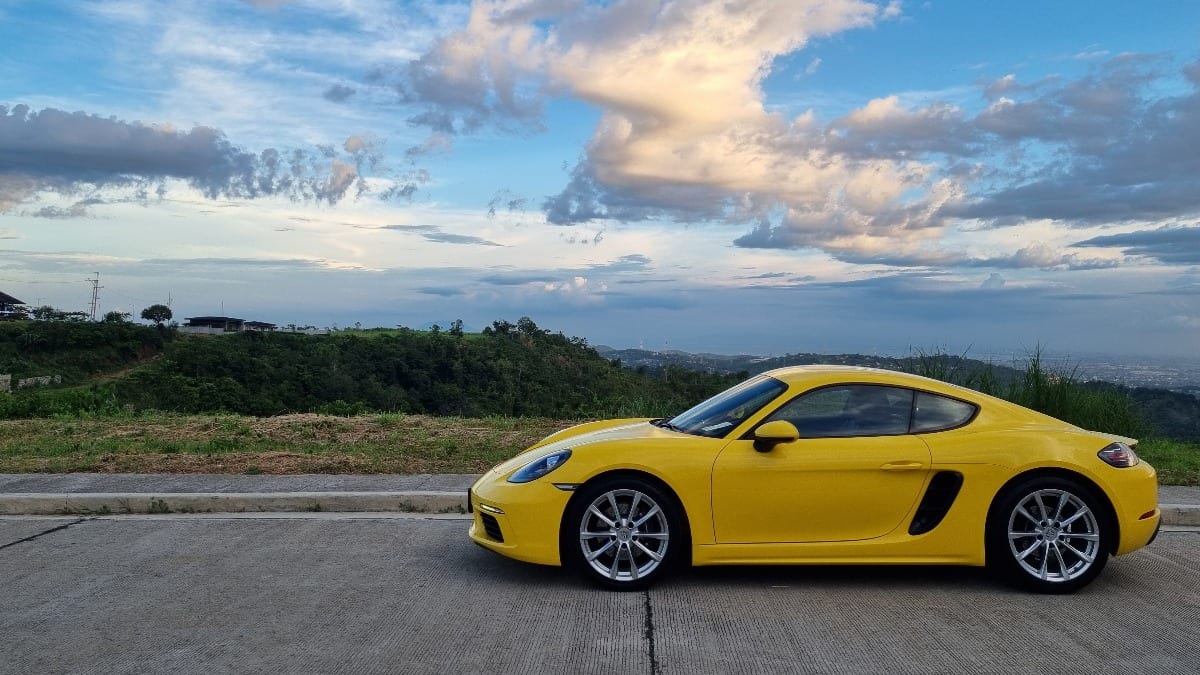
The story behind the badge goes back more than six decades. The number 718 traces to Porsche's lightweight, mid-engined racing cars from the late 1950s, cars that ran compact four-cylinder boxer engines instead of sixes and still humbled bigger rivals at races like the Targa Florio. When Porsche introduced the current-generation Boxster and Cayman in 2016 and swapped the naturally aspirated flat-six for a turbocharged four, plenty of enthusiasts called it sacrilege. In hindsight, it read more like Porsche returning to where the nameplate started than straying from it, which makes the decision look better with every year that passes.
The Philippine-spec Cayman keeps things uncomplicated. A 2.0-liter turbocharged flat-four sits just behind the seats, making 300 horsepower and 380 Nm of torque, sent to the rear wheels through Porsche's seven-speed PDK dual-clutch. The local-spec car comes standard with the Sport Chrono Package and its familiar rotary mode switch on the steering wheel, while Apple CarPlay and Android Auto keep it from feeling dated in daily use.
None of those numbers grab headlines in 2026. Electric crossovers can embarrass it in a drag race, and plenty of family SUVs make more horsepower. Reducing the Cayman to its spec sheet misses what it's actually selling, because Porsche has never measured driving pleasure in horsepower alone, and the Cayman makes that case before you've buried the throttle even once.
Slide into the low-slung cockpit and there's no wall of digital displays waiting for you, just a dashboard that still prioritizes driving over distraction. The analog tachometer sits front and center, physical buttons still handle most of the important functions, and the doors open with actual handles instead of electronic switches. Everything you touch feels like it was built to be touched, not just looked at.
It moves the way you'd hope. With the engine mounted squarely between the axles, the Cayman carries a balance that even plenty of 911 owners admit to envying. The front end darts into corners without ever feeling nervous, every steering input comes back with an equally measured response, and the chassis rotates beneath you like it's pivoting around your hips. Porsche switched to electromechanical steering years ago, but the calibration still ranks among the best in the business, feeding back just enough texture from the road to keep a driver engaged rather than isolated.
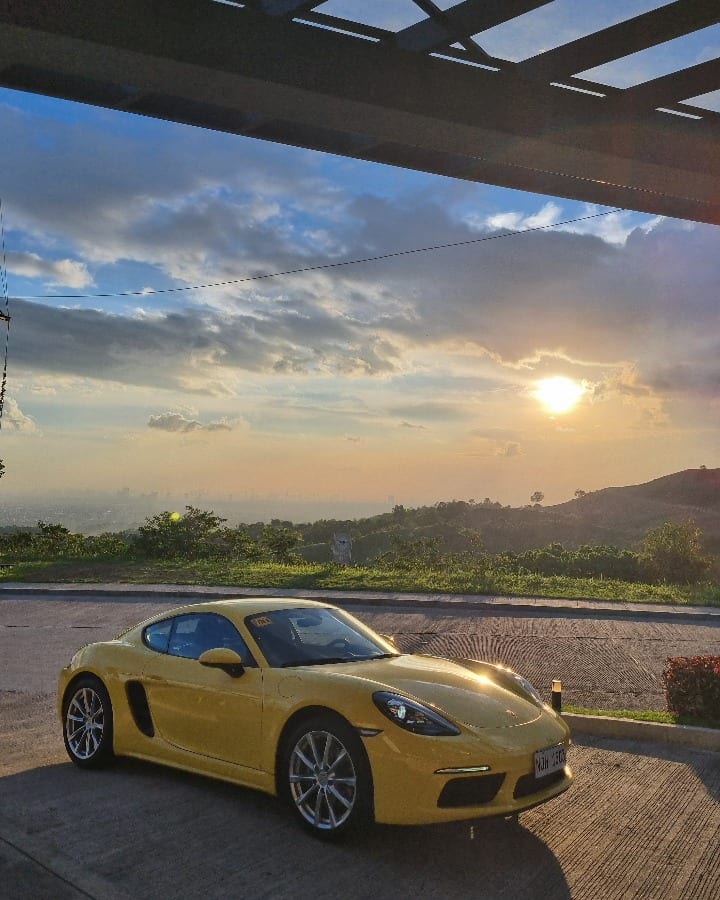
Nothing about the car tries to do the work for you. There's no hybrid torque surge covering for a clumsy throttle input, no artificial soundtrack piped through the speakers, no layer of electronic intervention quietly rewriting what you asked the car to do. Switch off the stability systems and the Cayman largely trusts the driver to handle the rest, a kind of trust that's become harder to find in a modern performance car.
Calling the current 718 the last true analog Porsche would start an argument in enthusiast circles, particularly among the purists. Some would hand that title to the previous 981 generation, the last with hydraulic steering, or the 987.2 before electronic complexity became unavoidable. The 982 isn't short on modern technology either; global buyers can still spec a six-speed manual alongside the PDK, and the car comes with electric power steering, an electronic parking brake, Porsche Stability Management, adaptive cruise control, and a full modern infotainment system.
What analog means today just isn't what it meant twenty years ago. It's less about a car free of electronics altogether and more about software staying in a supporting role instead of taking over the scene. By that measure, the Cayman still qualifies. It rewards precision over brute force, smoothness over spectacle, and driver skill over digital intervention, which is exactly why its timing matters as much as it does.
Porsche's future clearly points toward electrification, and the company has been developing a fully electric successor to the 718 for years. Industry reports suggest that the timeline has shifted more than once as battery development and market conditions evolved, and there have also been reports that Porsche is reconsidering how much room combustion engines still have in future sports cars after EV adoption came in slower than expected worldwide. Whether a high-performance gasoline 718 eventually returns is still an open question. Even if it does, it will run on a platform built alongside batteries and electrified architecture instead of the remarkably light mid-engine chassis enthusiasts know today, and that's a different car by definition.
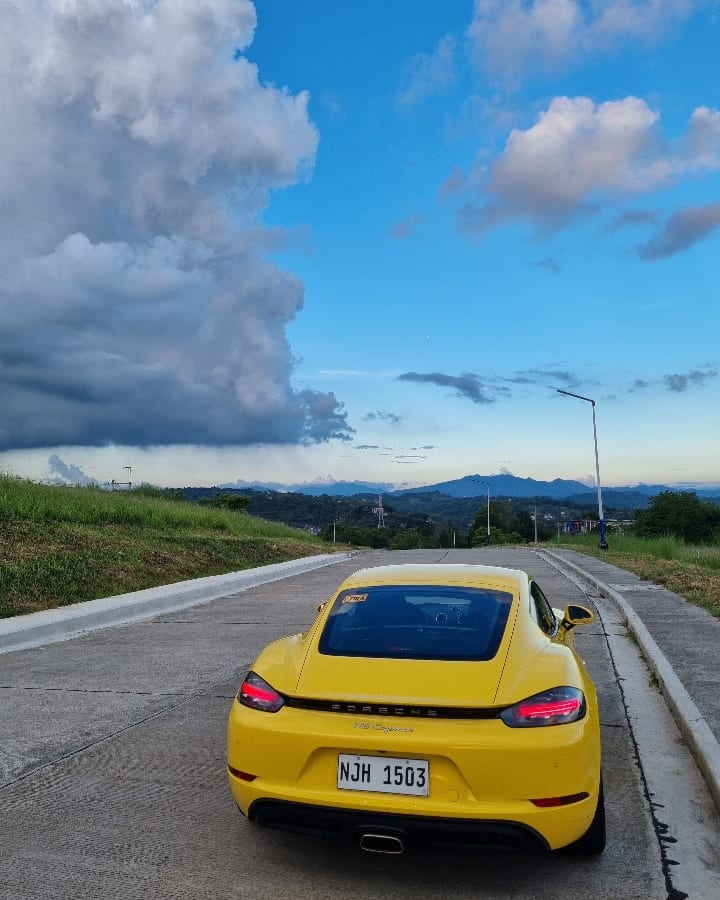
The current Cayman represents nearly three decades of continuous evolution stretching back to the original 1996 Boxster, built around simplicity, compact dimensions, and balance rather than chasing bigger power figures every generation. It may not turn out to be the last combustion mid-engine Porsche ever built, but it's almost certainly the last of this specific, tightly focused lineage.
The market seems to already understand that. Global demand for the 718 spiked once Porsche confirmed the combustion version's production run was ending, with buyers who might have otherwise have waited realizing they weren't just buying a sports car; they were buying the closing chapter of one. Porsche's own sales figures backed that up, with 718 deliveries climbing as enthusiasts rushed to secure one before the window closed.
That's what makes the base Cayman the one worth having, somewhat against expectation. Collectors will always chase GT4 RSs and Spyder RSs, cars that will keep commanding attention and premium prices regardless.
But history tends to be just as kind to the understated models that quietly defined an era, and the 718 Cayman was never trying to set Nürburgring records or dominate a social feed. What it delivers instead is clarity of purpose, proof that a sports car doesn't need to be the most powerful one on sale to be the one people remember.
So as Porsche enthusiasts mark another unofficial 7.18, the occasion is less about the badge and more about a moment already passing. One day the current 718 Cayman won't just be remembered as the Porsche that came before the electric one. It'll be remembered as the last compact, lightweight, combustion-powered, mid-engine Porsche built with one job: making every drive feel like an event. For whoever ends up with one of Porsche Philippines' last remaining units, that's already worth something.
View More Articles About: