Tesla Just Opened a Super-Fast Charging Hub at Opus Mall
More supercharger hubs could sway you to get that EV.

by Alvin Uy
Published on Feb 18, 2026
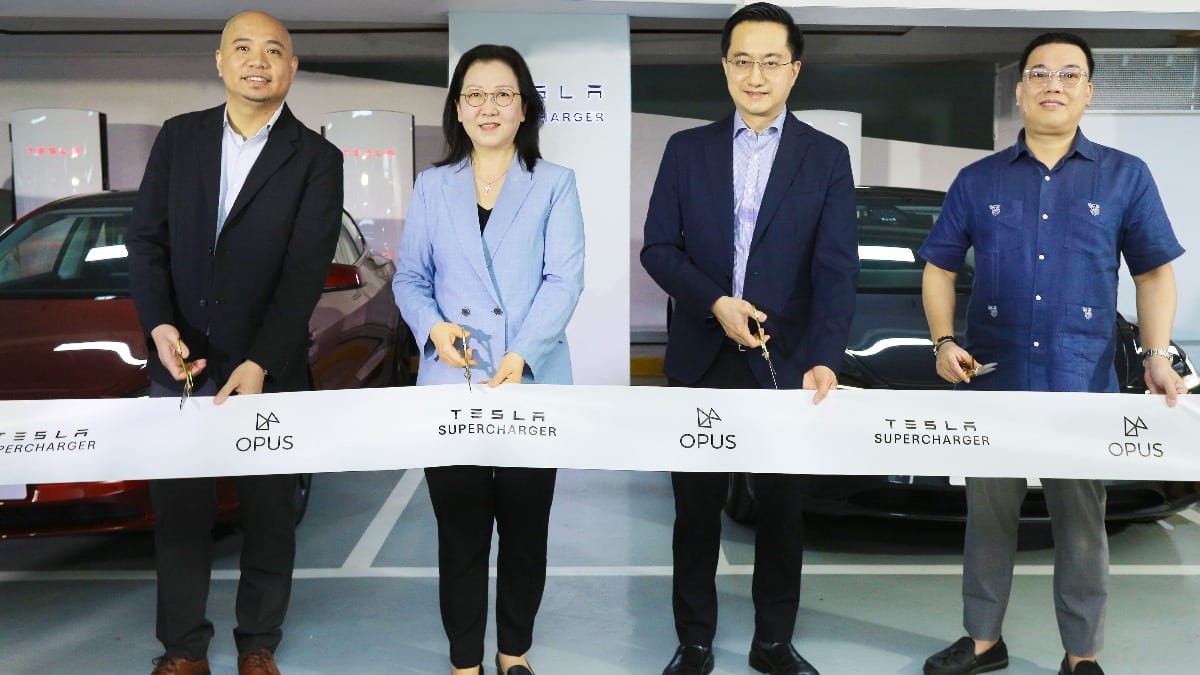
The future of mobility is slowly finding a home inside lifestyle and retail spaces, and the newest example of this is the partnership between Opus Mall and Tesla. This premium retail destination has officially unveiled a V4 Supercharger hub, reinforcing how malls are evolving beyond shopping hubs into integrated ecosystems built around convenience, sustainability, and cutting-edge technology.
Located at Level 3, Mezzanine 1, the new Tesla Supercharger station marks a significant milestone in bringing high-speed electric vehicle infrastructure into a curated lifestyle environment. For Tesla owners, it's not just about plugging in. It's about turning downtime into lifestyle time.
One of the biggest barriers to electric vehicle adoption has always been range anxiety, and Tesla's Supercharger network was developed to eliminate it. The V4 Superchargers at Opus deliver charging speeds of up to 250 kW, allowing compatible models to recharge rapidly while drivers step away for coffee, dinner, or a quick shopping run.
Working at peak charging rates, a Model Y Premium Long Range RWD can add up to 267 kilometers of driving range in just 15 minutes. At a rate of P19 per kWh, currently the lowest charging rate in Metro Manila, the hub also helps make EV ownership more financially appealing in a market still transitioning toward electrification.
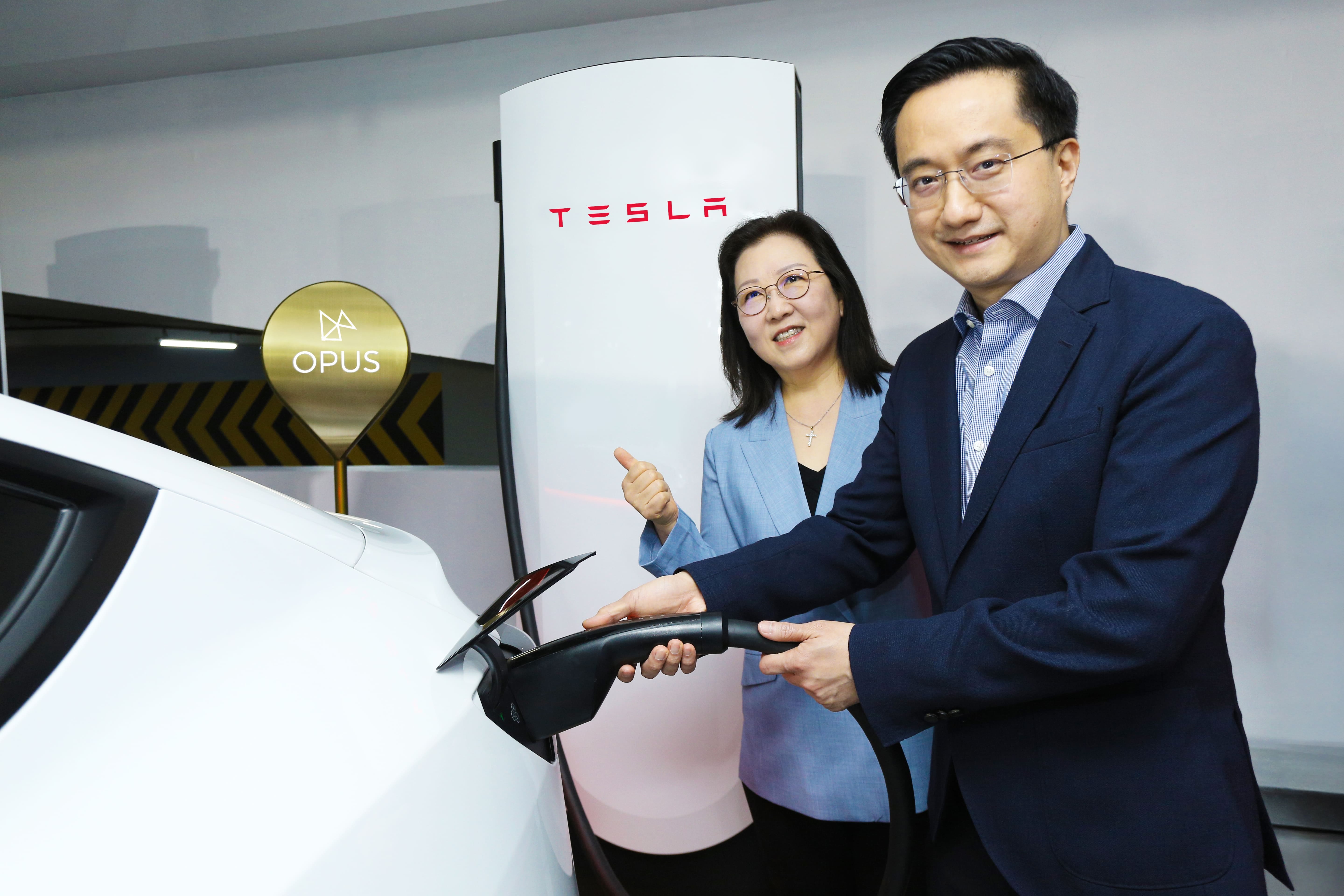
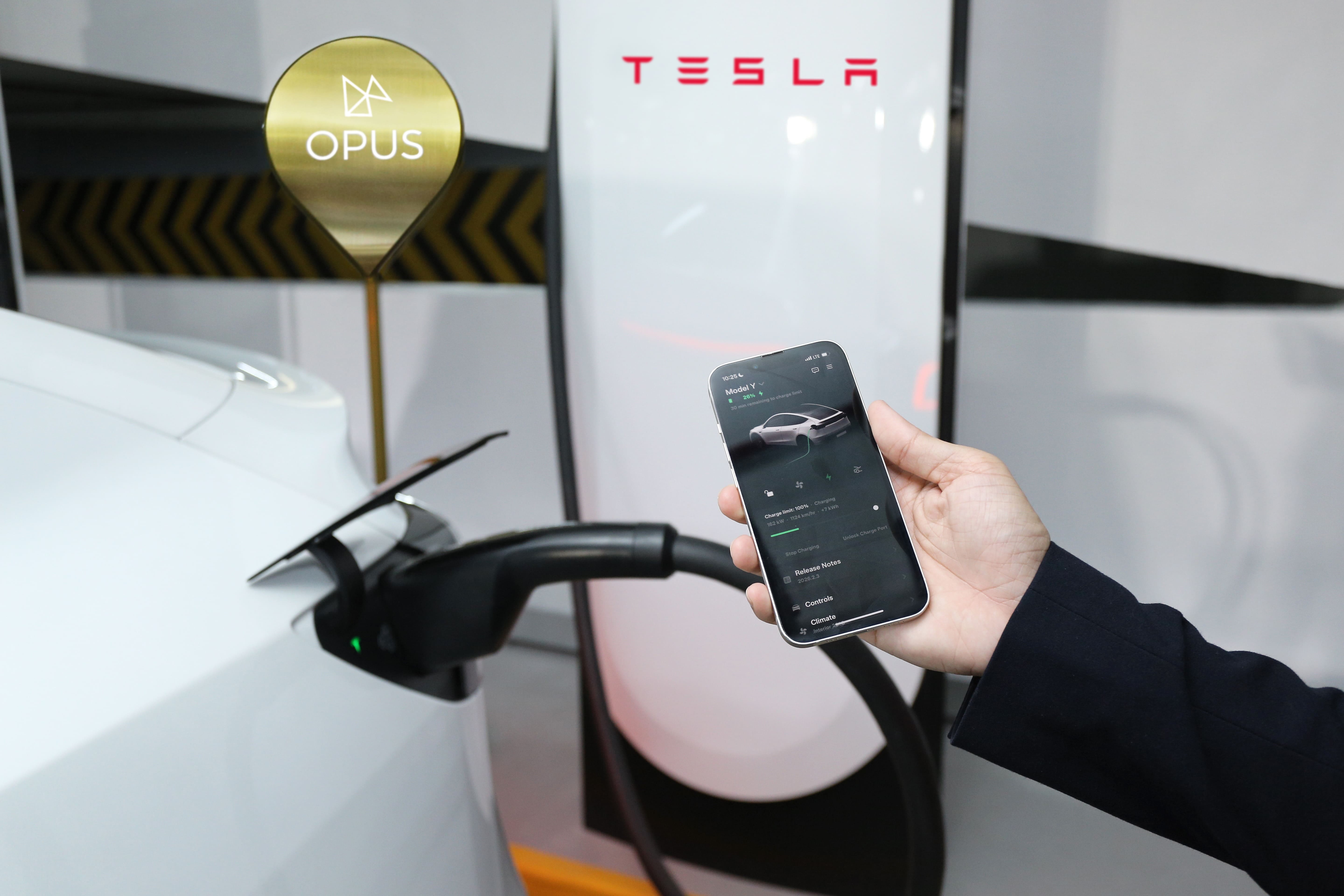
Tesla's Supercharger system is designed to provide seamless charging integration. The chargers automatically communicate with the vehicle, optimizing charging speed and battery health while allowing drivers to monitor progress through Tesla's app and in-car interface. The system prioritizes rapid charging early in each session, reducing downtime and making long-distance driving more practical.
The initiative aligns with the broader sustainability goals of Robinsons Land Corporation, which continues to invest in future-ready infrastructure across its properties.
"Sustainability is a core priority for RLC," said Faraday Go, Executive Vice President and Business Unit General Manager of Robinsons Land.
"The launch of Tesla Superchargers at Opus is another meaningful step forward, enabling cleaner transportation, reducing emissions, and supporting the government's EV initiatives."
The inauguration was also attended by Isabel Fan, Tesla's Senior Regional Director for Hong Kong, Macau, and Southeast Asia, alongside Robinsons Land executives Lucky Jay Damaso and Joel Lumanlan.
Fan emphasized that expanding the Supercharger network remains a crucial part of Tesla's long-term vision. "Our mission is to build a world of sustainable abundance," she shared during her presentation, underscoring Tesla's integrated ecosystem spanning mobility, renewable energy, and software innovation.
What separates Opus' Supercharger hub from conventional charging stations is what happens during the wait. Instead of sitting idle inside a parked car, Tesla owners can fully immerse themselves in the mall's curated mix of retail and dining experiences.
Owners also receive exclusive perks, including special discounts at Olive Garden, effectively transforming every charging stop into a lifestyle reward.
The collaboration highlights how premium lifestyle spaces and sustainable technology can complement each other. But more importantly, it reflects a much larger shift currently unfolding across the Philippine automotive landscape.
Electric vehicle adoption in the Philippines has historically lagged behind neighboring Southeast Asian markets like Thailand and Indonesia, largely due to infrastructure limitations, high acquisition costs, and consumer unfamiliarity. That narrative, however, has started to change.
Government policy has played a key role, particularly with the passage of the Electric Vehicle Industry Development Act (EVIDA), which promotes EV adoption through incentives such as reduced import duties, tax breaks, and the gradual rollout of charging infrastructure nationwide. The Department of Energy has also been actively mapping out national charging corridors to support long-distance EV travel.
Private sector participation has accelerated the momentum. Real estate developers, retail operators, and energy providers are increasingly integrating charging facilities into commercial developments, transforming malls, office towers, and mixed-use spaces into mobility hubs. For many early adopters, accessible charging locations, particularly those paired with lifestyle amenities, are often the deciding factor between curiosity and commitment.
Tesla's arrival in the local market has also reshaped consumer perception of EVs.
The brand's reputation for combining performance, software integration, and charging infrastructure has helped normalize the idea that electric vehicles are not merely eco-conscious alternatives but legitimate aspirational purchases.
More importantly, the expansion of fast-charging networks directly addresses the Philippines' unique urban challenges. Metro Manila's dense traffic conditions often make range less of a daily concern, but long-distance travel between provinces remains a major consideration for potential EV buyers. Superchargers capable of adding hundreds of kilometers in minutes significantly improve confidence for intercity driving, a crucial step toward mainstream adoption.
With Tesla's newest Supercharger hub now operational, Opus positions itself not just as a retail destination but as a forward-looking mobility hub, one where the future of transportation quietly charges in the background while life carries on uninterrupted.
As electric mobility gains traction in the Philippines, partnerships like this demonstrate how infrastructure, lifestyle, and sustainability can intersect seamlessly.
And if the growing presence of high-speed charging stations inside everyday destinations is any indication, the country's transition toward electrified mobility may not be a distant ambition anymore. It may already be parking in the mall.
View More Articles About: