The Comedy of Kindness: How Atsuko Okatsuka Turns Empathy Into A Laughing Matter
The Asian-American comedian with a signature bowl cut finds the humor in family dysfunction and everyday life experiences.
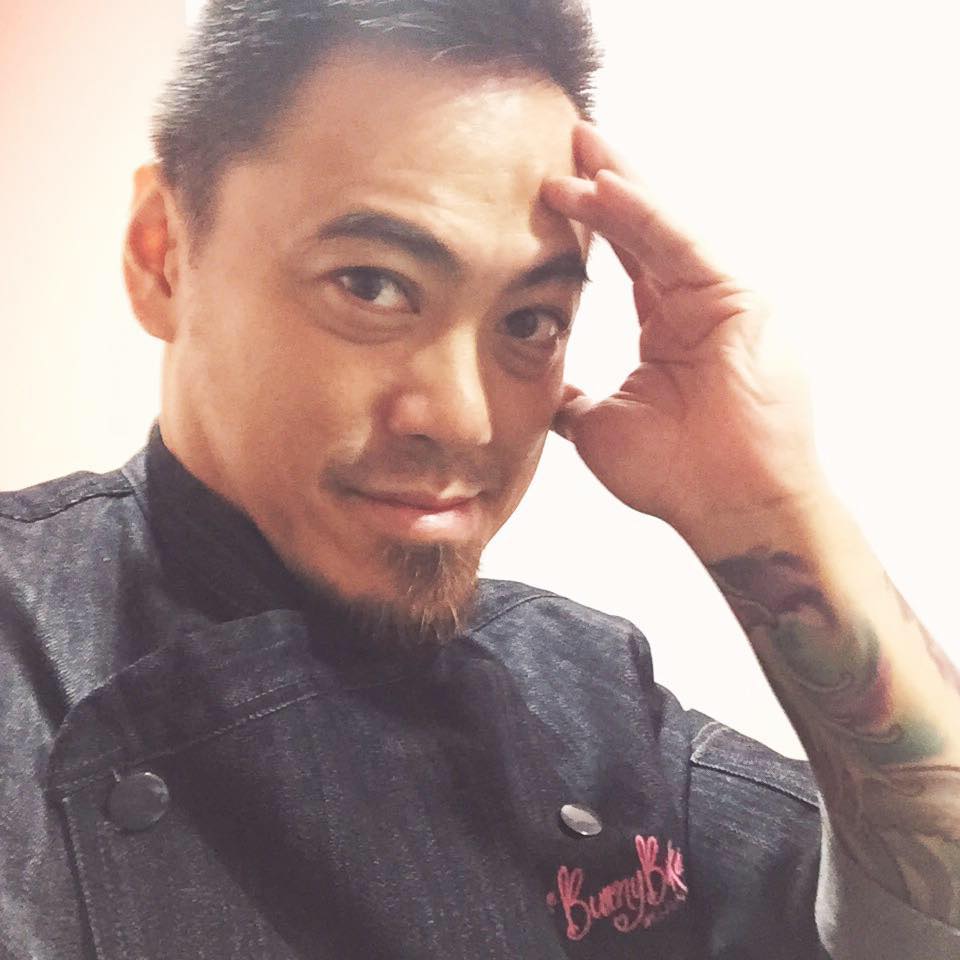
by Zach Yonzon
Published on Nov 27, 2026
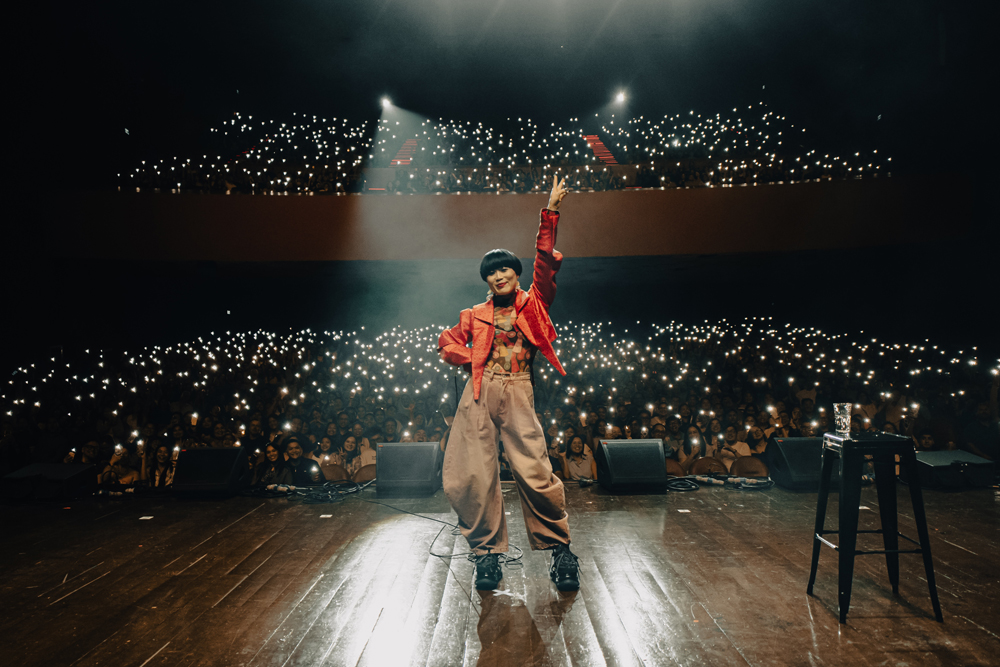
Atsuko Okatsuka kicked off the Asian leg of her Big Bowl Tour with a stop in Manila, armed with a lot of brand new material for a special set to debut on Netflix in May, 2027. “I’m doing all the streaming services,” she laughs. Her first stand-up special, The Intruder, aired on HBO in 2022, followed by Father in 2025 on Hulu. Okatsuka is a style icon with a bowl cut that’s become synonymous with her comedy, a unique blend of autobiographical humor, terpsichorean physicality, and expressive delivery.
The bowl cut is part of Okatsuka’s brand, a sort of unchanging uniform the way Dora the Explorer is always in a pink shirt and orange shorts. She might even be unrecognizable without it, the same way Zooey Deschanel became unrecognizable without her bangs. “You know, in my head, she's more than her bangs,” she muses until shown Deschanel’s 2013 Met Gala look where she wore her signature fringe away from her face. “That's a lot of people,” she gasps, “you know what I mean? Like a lot more people than bangs, Zooey.”
“Definitely, I think people won't recognize me as easily without the bowl cut. If I'm showing my forehead, I look really different.” Fans have sported her look for Halloween and for her shows, “I feel like I should have them available going into the show. I think that would be such a great idea.” Okatsuka has rocked the ‘do since 2018, reminding her of going back to childhood, a full circle moment. When told that many Filipino kids went through a bowl cut phase, she shares how it cuts across cultures, “like white people, all kinds of people had the bowl cut as a kid. That's how much parents just like, wanted to be efficient and lazy at the same time, because they just put a bowl on you.” It’s an easy haircut to maintain, after all. At least, all our parents thought so. Atsuko found out the hard way this wasn’t the case when the pandemic hit: “It got weird. The haircut sometimes got weird.” During lockdown, it was Ryan, her husband, who was tasked with maintaining the chic and precision cut signature bowl, “but you know,” she laments, “that’s not his art.”
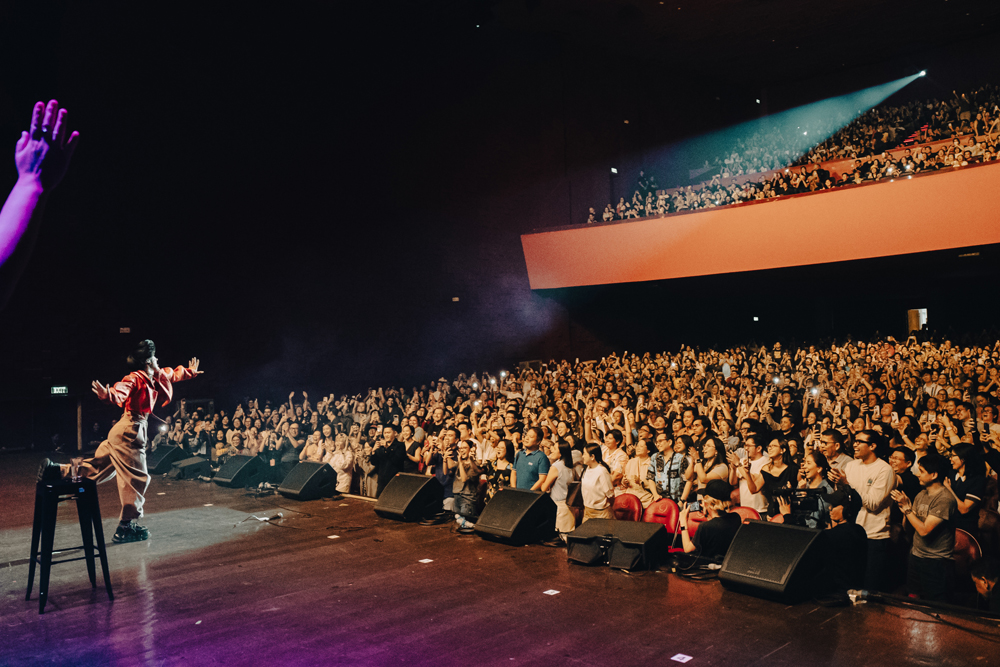
Atsuko grew up, like most Asian-Americans, in a religious environment where she attended church services listening to oftentimes droning sermons from pastors whom she thought could do a better job of “being funny.” Asked if she could’ve made a great pastor, she reflects for a moment, “Oh, gosh. Maybe. Probably,” she says, “because, I mean, they're both public speaking jobs.”
“Storytelling, getting a community together. I have more laughs per minute than pastors. So, you know, in a way, I guess so,” Atsuko muses, then tells the story of her father-in-law, who just happens to be a preacher. “We used to kind of have a competitive relationship. Because he's on TV like five times a week. He's like a televangelist. And so he would ask me, ‘How many hours did you talk this week on stage?’ And I'd be like, you know, ‘You have more. I don't get to do five days a week on TV!’ But then I go, ‘How many laughs did you get?’ You know, it's a competition.” Then she concedes, “It’s not fair because he has like God on his side, you know.”
But God seems to be on her side, too. The Taiwanese-born Okatsuka was famously whisked away to the United States by her maternal grandmother at the age of eight, technically a kidnapping, and made to live as an undocumented immigrant above a garage for the next seven years. Her mother suffers from schizophrenia, and she has mentioned that a tiny garage is too small a space to hold three generations of women. Yet despite the obvious trauma such a childhood carries (her maternal grandfather was assassinated during the White Terror in Taiwan), Atsuko manages to look on the bright side of what couldn’t have been an easy life. “Well, you know, I do feel very lucky. I'm one of the lucky ones. I got to learn English. I was taken to Los Angeles. Sure, I was kidnapped, but it was Los Angeles I ended up in. Things could be worse.”
“And I like to remember that. And so because I'm able to and I get to do comedy for a living when so many people are still, you know, suffering,” she reflects. “And so I think that's why I don't just like live in the sadness because I go, well, I'm able to do a lot of things, even though, you know, that's where I came from. Yeah. So I feel like a drive to, you know, spread that positive energy instead of being like, ‘oh, my life sucked.’ It's like, well, I'm in a nice meeting room in Manila right now at the Shangri-La. It is a good life.”
“I think it's a responsibility to be able to spread the joy if you can.”
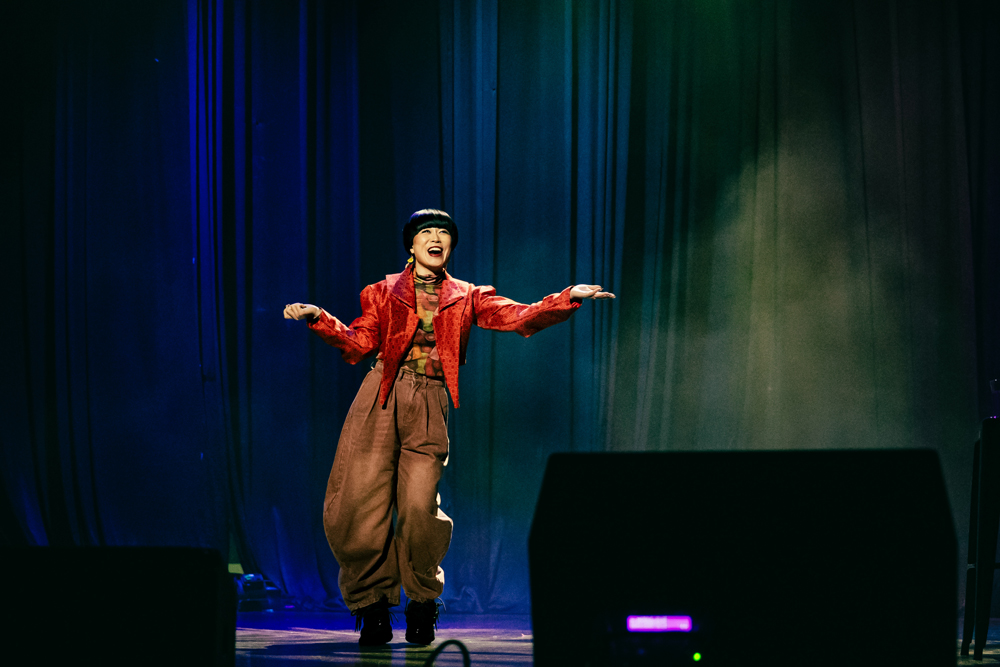
That’s what Atsuko Okatsuko does. Spread joy. She has a bright aura about her that effuses into the room, her quirky, colorful wardrobe a window to her inner vibrancy. She sees Filipinos in the same way: “The Filipino community across the world is vibrant. They are the best people for a reason. Everyone knows that, you know. And yeah, and I was like, oh, they super travel the world. They have relatives everywhere.”
“So, yeah, my experience is that they're well-traveled [and] close-knit with their nuclear family. I love the idea of community and truly like seeing the levity in things, which is what I like to do with comedy. I come from a very quiet nuclear family. They don't joke and things like that. I always loved that about, you know, my Filipino friends.”
And then she drops a bombshell: “I recently found out I'm one percent Filipino.” It turns out, Okatsuka is basically family. She opens with this nugget in her set in Manila, declaring that she’s come home and, of course, she’s welcomed with open arms. “Yeah, yeah. I wish it was more. One percent Filipino. That is closer to zero percent, you know what I mean? So I'm one percent yes, 99 percent not. You know, it's like I'm more not Filipino than I am. Now it's worse! Now I'm walking around, thinking about how not Filipino I am. You know what I mean? Before, I was fine.” We’ll take it. She’s our kabayan now.
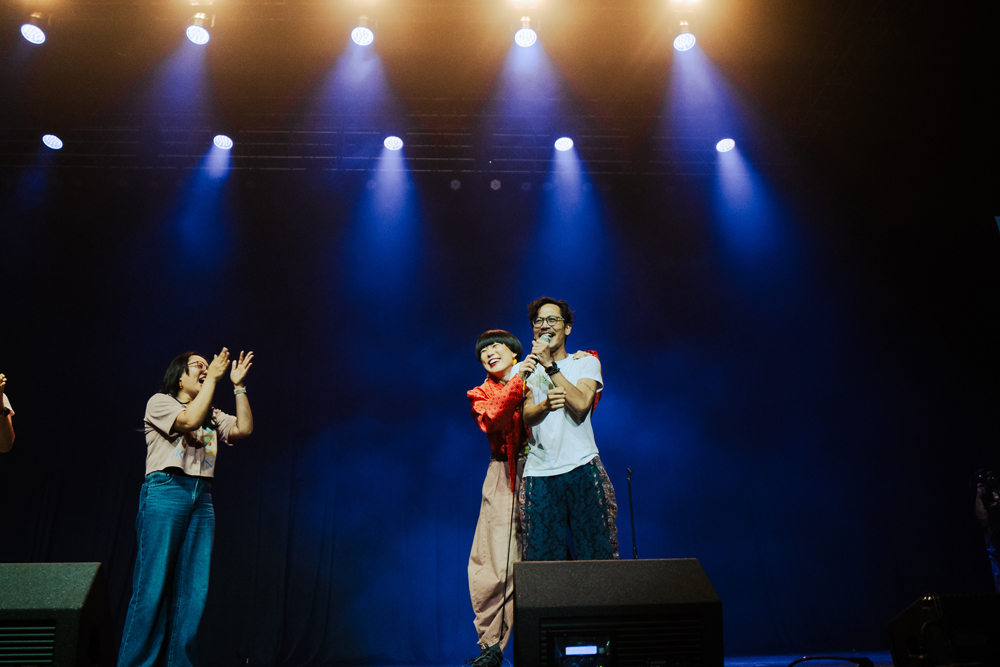
Her face brightens when the conversation turns to her husband, Ryan Harper Gray, who couldn’t make it to Manila because of a pinched nerve. “I've never been asked that. Like what — not that people should model themselves after him or anything — but, you know, what I love about him. And it's just, it's more like not thinking about it. Not thinking about what other people might think and truly being into what you're into. If you're not into football, you don't have to be a guy who's into football.”
In a world rife with toxic and often performative masculinity, Ryan is a breath of fresh air. “Like for me and him, we watch RuPaul's Drag Race together. And so we know all the seasons of that. But we wouldn't know what teams our LA football team is playing this season or anything,” she explains. “And that's okay. I think it's just not thinking about it and enjoying what you truly enjoy, you know, because there's always a community for that. I think that's what it is. Doing everything out of love, you know, he truly, like, we truly respect and love each other.”
Unlike other comedians who joke about their spouses or use them or their marriage as punchlines, Atsuko’s experiential anecdotes always tend to paint Ryan in a good light. “I think it's very revolutionary to say, ‘I love my wife’, you know, ‘I love my husband.’ Because I think in stand-up comedy too, it's easy to do jokes where you're talking negatively about them. I think it's more revolutionary to talk about the things you love and joke about them in a loving way. Because it's way more relatable, I think.”
Ryan is Atsuko’s partner in crime. Aside from being her producer, he’s also often found in her socials where people can see him gamely — and sometimes reluctantly — supporting his wife in her antics. “He definitely got more adventurous from us being together,” Atsuko reveals, “we both, you know, influenced each other in different ways. I was a real messy girl. He has ADHD too, like me. But he was diagnosed when he was a kid. So he's been able to, like, figure it out and have methods for how to be organized or how to, you know, stay on it. You know, I was just diagnosed two months ago.”
“So, you know, he's been very helpful with that. Like in all my life, I was just messy, and he would help me be like, ‘OK, let's prioritize being on time. Let's prioritize being organized.’ There's a lot I'm thinking about. Like, you know, he's really helped me with that.” But their relationship is a two-way street, “and then with him, you know, I've encouraged him to go more bold with colors or different cuts in fashion. (I’ve helped him to) just not be embarrassed, you know, to wear different clothes. It sounds shallow. Like he helped me with my personality. I helped him with his style.”
She also shares tips for men on how to become better Instagram boyfriends or husbands: “I think that, you know, communication is key, right? And truly think about, you know, when you film or take photos of your partner, if that photo or video of you, that angle, that lighting, would you want it on your feed? You know? If you were to see the photo you just took of your partner, you know, let's say you're a stranger scrolling through Instagram. Would you scroll past that photo really fast? Then it wasn't a great one. You know what I mean?”
Atsuko, who is truly adept at making social media content and was dutifully filming short reels right before sitting down for the interview, shares that there are limits, too. “We've argued and, you know, he set boundaries. Which is good.” She advises couples, “Set boundaries. If you're like, ‘I'm not that person,’ that's okay, too. If you're like, ‘I'm not an Instagram husband,’ that's okay. But you gotta say it. You know, it's okay to have tried. Not everyone is that. But communicate that, you know. And yeah, he set boundaries. That's why we don't do dance videos together anymore.”
Our newfound kabayan looks for her fellow Filipinos in her crowds, “I go, ‘Where are my Filipinos at?’ In every country, ‘Where are my Filipinos at?’ And there're always Filipinos, and they're always in the front. And I go, ‘Okay, everyone else, watch how they act. Do that.’” Because Filipinos are loud and we aren’t afraid to show our love, whether it's singing along in concerts or laughing out loud to stand-up comedy. “I even told my opener (Jenny Yang), ‘Don’t be spooked. You’ll see a big difference between the Manila audience and the Tokyo audience. Manila is going to really spoil you.’”
Atsuko Okatsuka is considerate, filled with a genuine empathy for others that somehow manages to translate into something funny. Her new set features anecdotes of her irrepressible need to assist that somehow turn into the most ridiculous situations. Finding the humor in bad situations and caregiving seems to be in her blood. She’s part-Filipino, after all.
Atsuko Okatsuka performed in Manila on November 15, 2026, at the New Frontier Theater as part of The Big Bowl Tour. She also came to the Philippines in 2024 with three consecutive shows from July 13 to 14 at the SM Aura Premier.
ALSO READ:
Sassa Gurl: 'Beauty Is Vast. Hindi Lang Siya Hitsura'
Macoy Dubs: 'Nakaka-Limit ng Comedy ang Cancel Culture'
Zach really, really, really loves films.