Hapag's Cordilleras Menu Runs on Heirloom Rice, and a Pancit Called Pogi
Chefs Kevin Navoa and Thirdy Dolatre's immersion into the often overlooked food culture of the Cordilleras has culminated in a love letter to nostalgia and warmth.
by JV Ordoñez
Published on Jul 8, 2026
The folks at Hapag have made it their mission to champion and articulate criminally overlooked local cuisines into vibrant stories expressed through digestible tastings since the restaurant's inception. It's obvious that their efforts are working, as the Filipino fine dining restaurant has earned a coveted One Michelin Star in carrying out this noble culinary quest.
Esquire Philippines on July 3 got to take a stab at the place's latest love letter to the intricacies and universal warmth reigning in the Cordilleras. Every local chef says the same thing about this particular area in Philippine gastronomy: an untouched, undiscovered, and untapped area that demands to be experienced by every Filipino. Hapag Chefs Kevin Navoa and Thirdy Dolatre went the extra mile and fully immersed into Ifugao mountains, Kalinga, and Baguio City, which resulted in an eight-course masterclass on fatefully capturing a region's flavors and atmosphere.
This isn't the first time renowned culinary masters have chased the mountains for inspiration. In March, we tried out Chele Gonzalez' Heirloom Rice Project tasting menu at his Michelin-star-bearing restaurant Gallery by Chele in BGC. It was undeniably an imaginative take on the low-hanging fruit of Filipinos never really seeing a plate or dish that they didn't instinctively put a cup of rice on and infusing each dish's DNA with fermented grain.
The team at Hapag aims to dispel the misconception of Cordillera food only being purely based in Baguio and the long list of things of familiar flavors remixed with traditional techniques and the diversity of regional delicacies.
"Rather than recreating traditional dishes, we’re expressing our own cooking through the lens of the Cordilleras," according to Navoa."It reflects what we learned there and how our cooking has evolved over the years.”
Culture as a Main Ingredient
Duck Lini'ku
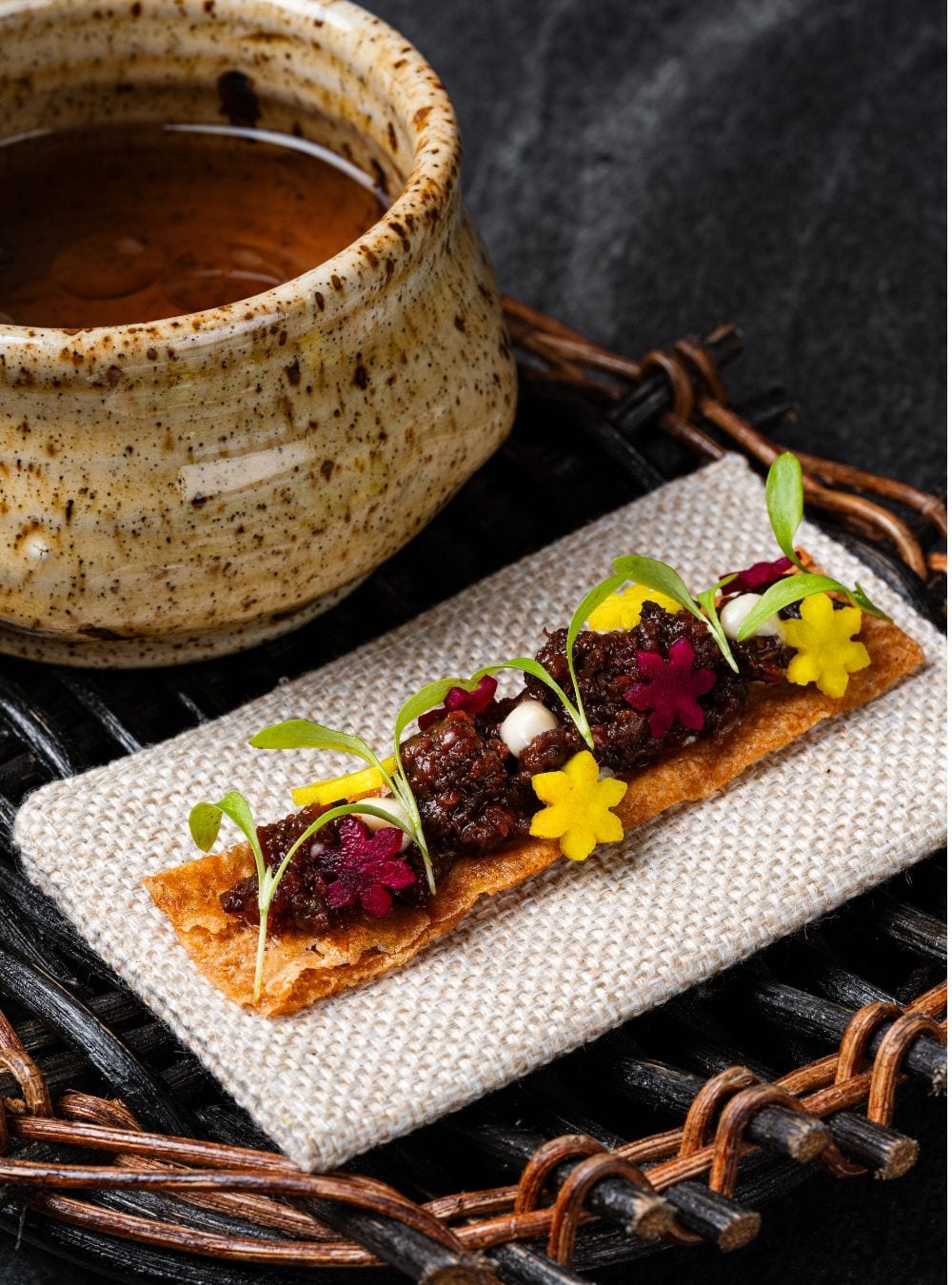
The journey's opening salvo starts with Duck Lini’ku in the municipality of Kiangan, Ifugao. Made with a clear duck consommé, smoked, cut with citrus oil, and served next to a duck pinunog tart topped with chicken skin tuile and pickled beets. Get ready for a smoky broth that grips your tastebuds as the community of flavors arrives. Alongside the duck pinunog tart, you get chicken skin tuile stacked on top of it that shatters on contact, pickled beetroot, pickled singkamas, and a roasted garlic mousse that tops everything off.
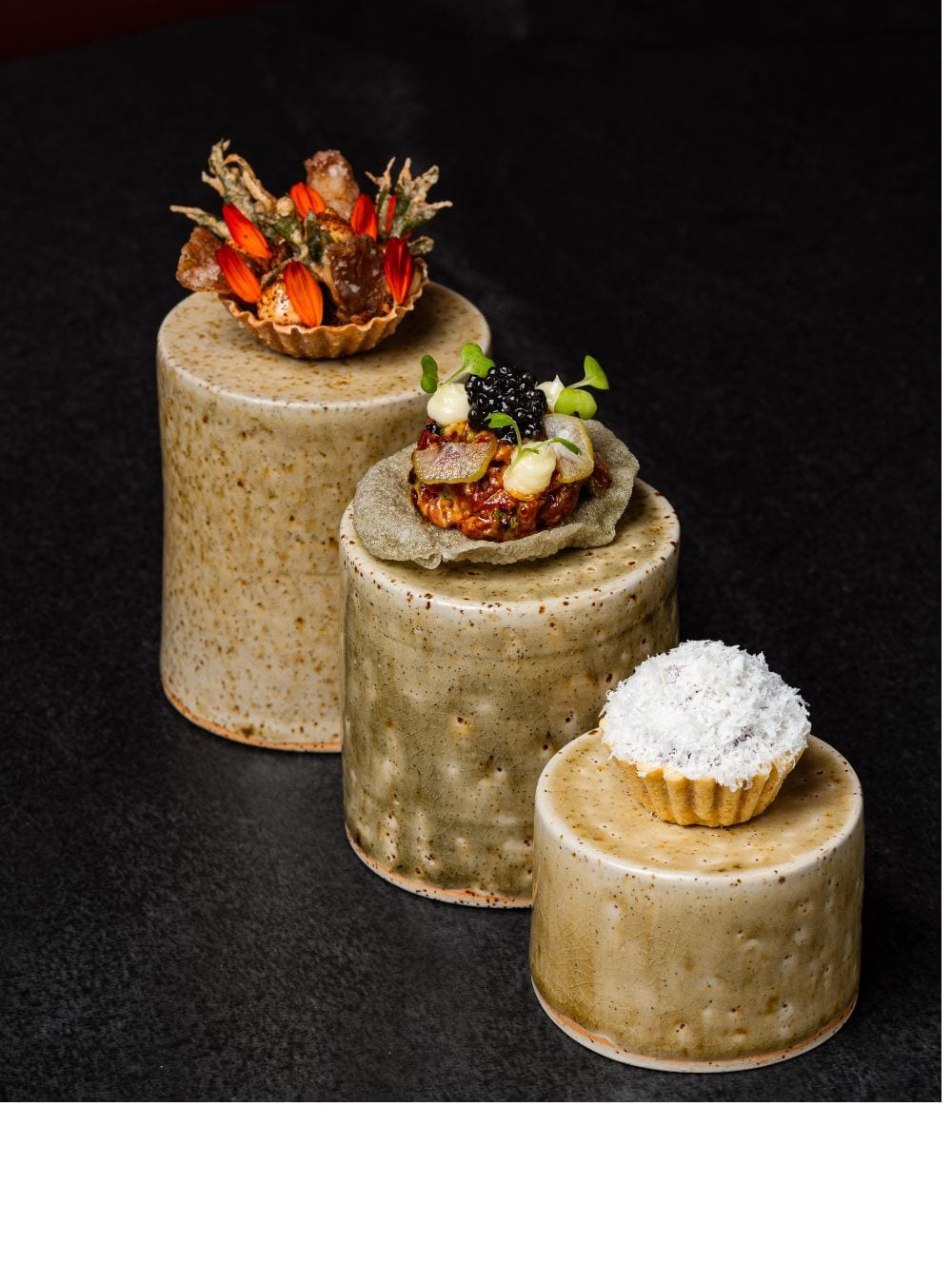
Snacks then arrive as a clear ode to the pasalubong culture when you visit the region. The Kinuday Tartare is an amalgamation of smoked and fresh beef with salsa macha, roasted garlic aioli, and caviar balancing on a gamet cracker. Next up is the Mushroom Dinakdakan Tart, which takes Sada mushrooms and puts them through a creamy, tangy dinakdakan aioli without leaning too heavily on pork parts. Last on the pedestal of snacks is a simple Ube Cheese Tart, which takes Baguio's favorite export and ferments it with bubud (fermented rice wine) and layers it with borracho cheese as it gets locked down onto a black pepper tart shell. A glorious pastry that we need in bulk.
From this first dish alone, it's clear we've gone far past the version of the region Manileños know from weekend strawberry farms and pine-scented sepia-toned photographs. Navoa noted that it's largely because of how abstract a regional cuisine and parochial particularities can be before you're actually in the thick of keeping food edible through a mountain cold.
The glorious Cordillera snack pedestals: Kinuday Tartare on gamet cracker, Mushroom Dinakdakan Tart, Ube Cheese Tart
We then get to where the experience becomes more revelatory. Etaglaw is a dish that is a cross between etag (cured pork, which the highlands are built on) and kinilaw, or the coastal instinct to cure things in an acidic broth instead of smoke. Then you have cured mahi-mahi with fresh melon, kamias, pickled vegetables, and a gamet dressing that reminds you that something distinctly regional is going on.
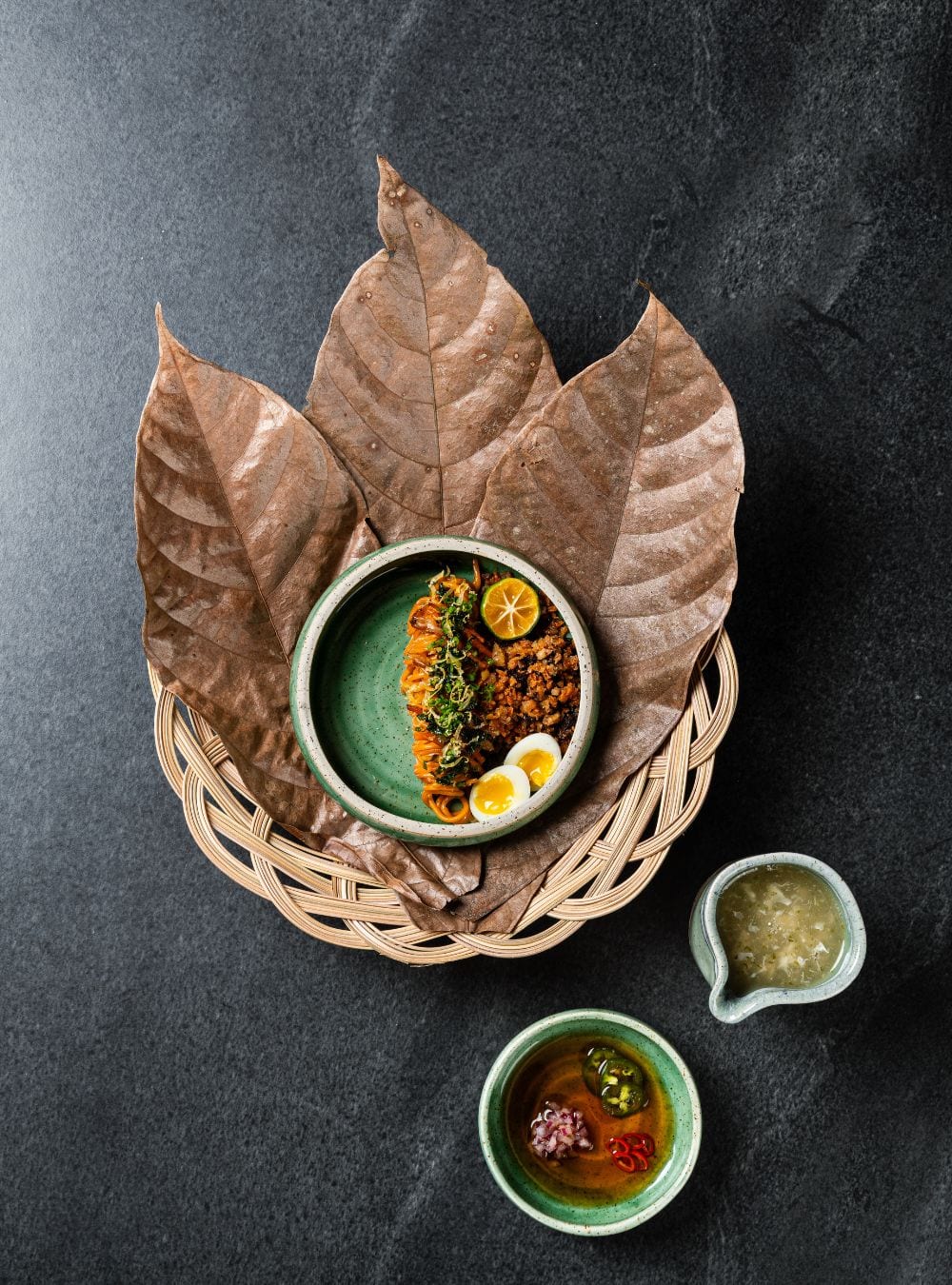
Without a doubt, the most charming and most resonant dish of the evening arrived in the form of a noodle bowl statement called Pansit à la Pogi. The immediate sensory and unexpected musical quality of the dish induced "Digital Love" by Daft Punk to start playing in our heads when we first tried the homemade noodle dish that borrows its backbone from Pancit Batil Patung. The chorizo, liver, crispy pork karajay, and the lush egg drop soup on the side culminated in such a nostalgic formula that we fell in love with. And for those still wondering why it's named like that, the "pogi" part just means it's meant to have as many toppings as humanly possible on it that may include vinegar, shoyu sauce, and the soup for two methods of attacking the menu's magnum opus.
The open-ended design of the noodle dish and the encouragement of engaging an imaginative mind are features that we can't seem to get over to this day. We were irrevocably charmed by this one.
Pansit à la Pogi, a masterclass in Filipino noodle making
Buro is the obligatory bread-based dish of a well-rounded dinner with the Pan de Kalinga at the center of it all. It's essentially Hapag's own sourdough infused with fermented black rice sourced directly from Kalinga, plated with sigpo, or a taba ng talangka cream that is dense enough to double as a spread. We also are treated to a local dill paired with marigold for a note of brightness for a dish that is a statement of sweetness, richness, and freshness that is more than an elevated side note. For our palate cleanser, Hapag's simplistic take on Strawberry Taho carries on this theme of pulling on our street food heartstrings. You get homemade tofu that carries sampinit arnibal, pickle roselle sago, and pickled SCOBY or the stuff you get in kombucha (another ode to fermentation).
Hapag delivers its main course in the form of the time-tested Salu-Salo, or family-style dish, that is becoming quite the norm in these Filipino cuisine tasting menus.
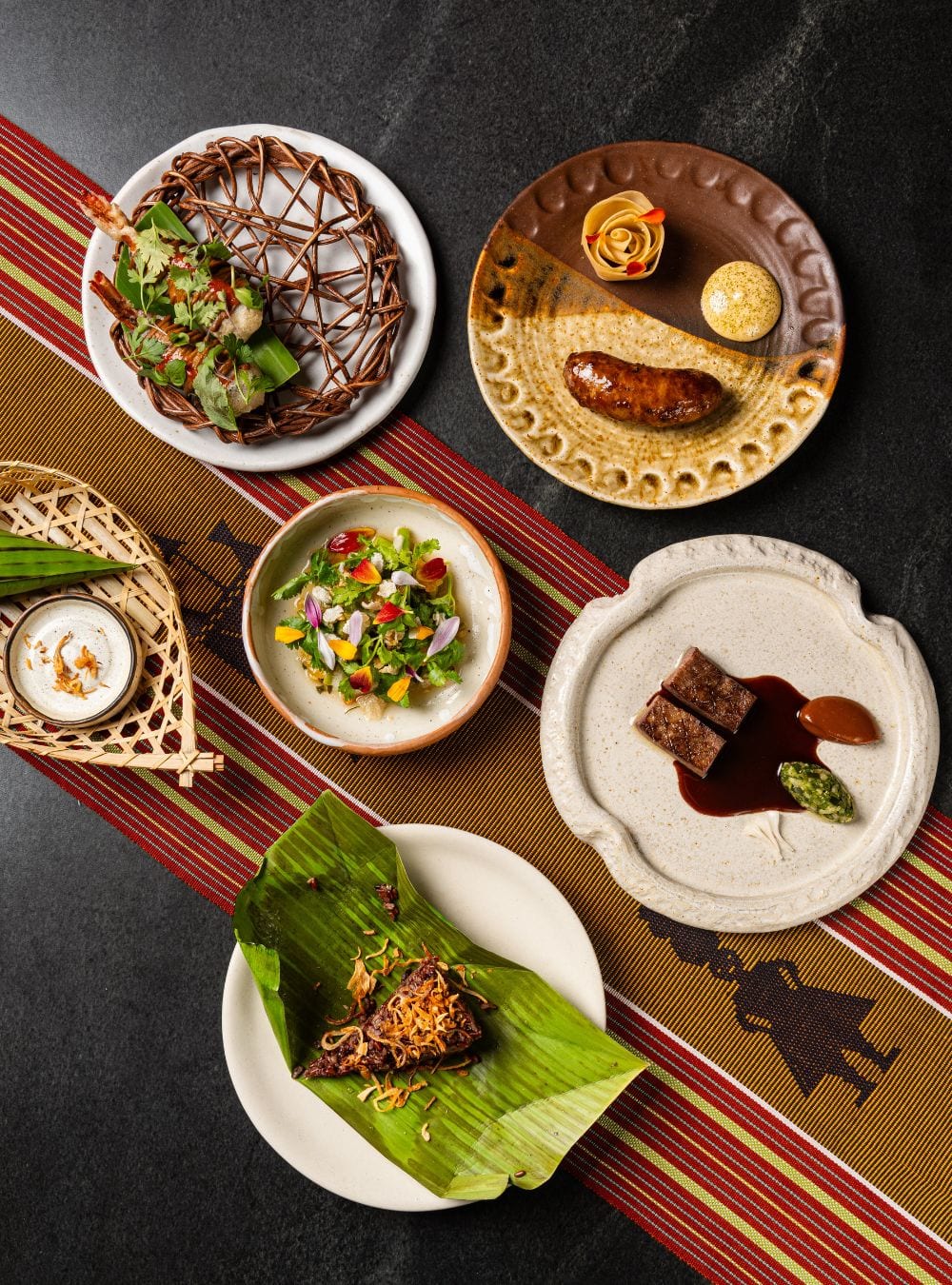
Definitely where the emotional pull is cranked to 11 with Beef Tongue Kiniing, pork longganisa, and a prawn pinuneg finished with a duck and chicken liver sauce that shares a table with a light fruit salad and another pairing of heirloom black and red rice. Navoa noted that the course is rooted in memories of a family-style breakfast at The Glassroom Kalinga, prepared by Irene and Ruel Bimuyag, The Farmer's Daughter Restaurant, and a community dinner at GAFA Agri-Tourism Farm.
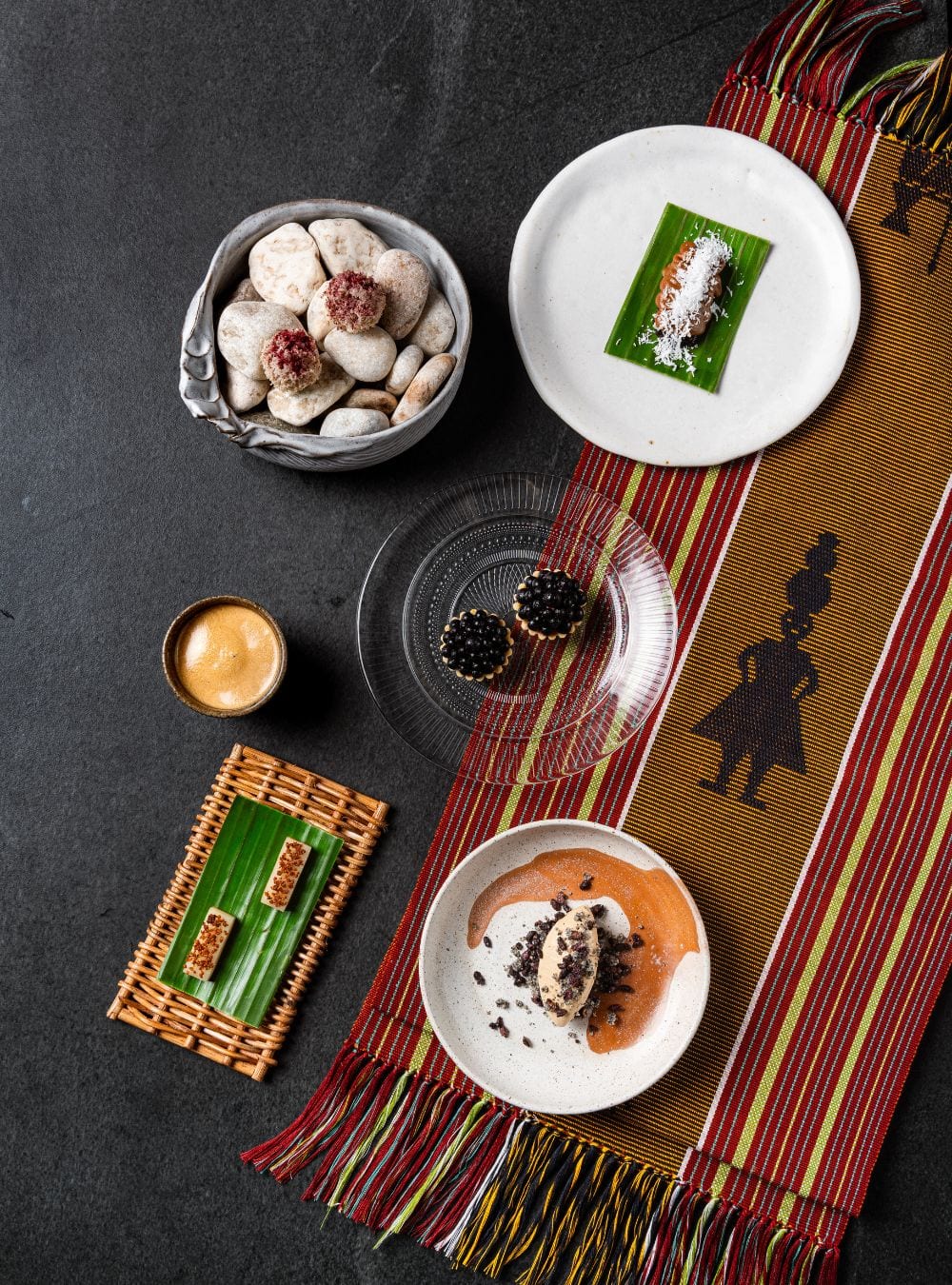
We finally come to the dinner's denouement via a spread of sweets, adamant on paying tribute to rice and local blueberries.
Dessert is a full course of kakanin and local delicacies: toasted brown rice ice cream with black sesame and a puffed black rice crumble; puto bumbong sweetened with caramelized white chocolate instead of the usual muscovado; traditional Kalinga inandila served with latik; a blueberry tart built on local Baguio blueberries; and a taro puff strawberry donut.
The tasting menu runs P7,500 per person, with wine pairing at P3,000 and non-alcoholic at P2,200. Reservations are done through Hapag's site.
Salu-Salo
The dessert spread that awaits you at the end of the Cordilleran love letter
Esquire PH's resident music scribe, wristwatch disciple, and essayist fluent in niche internet subcultures and Philippine politics.
View More Articles About: