Culinary Art Meets Tradition in Hapag's Ode to Western Visayas

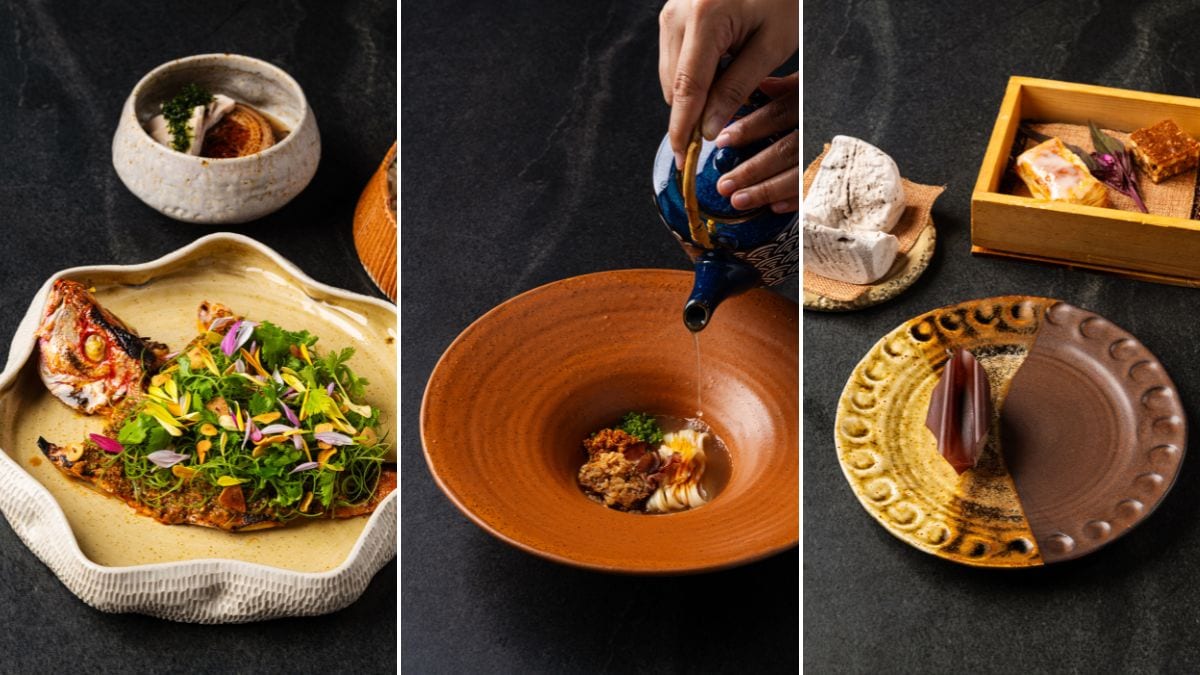
There has been considerable buzz and criticism surrounding Hapag's rendition of Iloilo's iconic noodle dish, batchoy, featured in the fine dining restaurant's Western Visayas-themed tasting menu. A commenter on Hapag's Facebook post said Ilonggos felt "disrespected" by the restaurant's "lack of understanding and reckless treatment of a cultural representation."
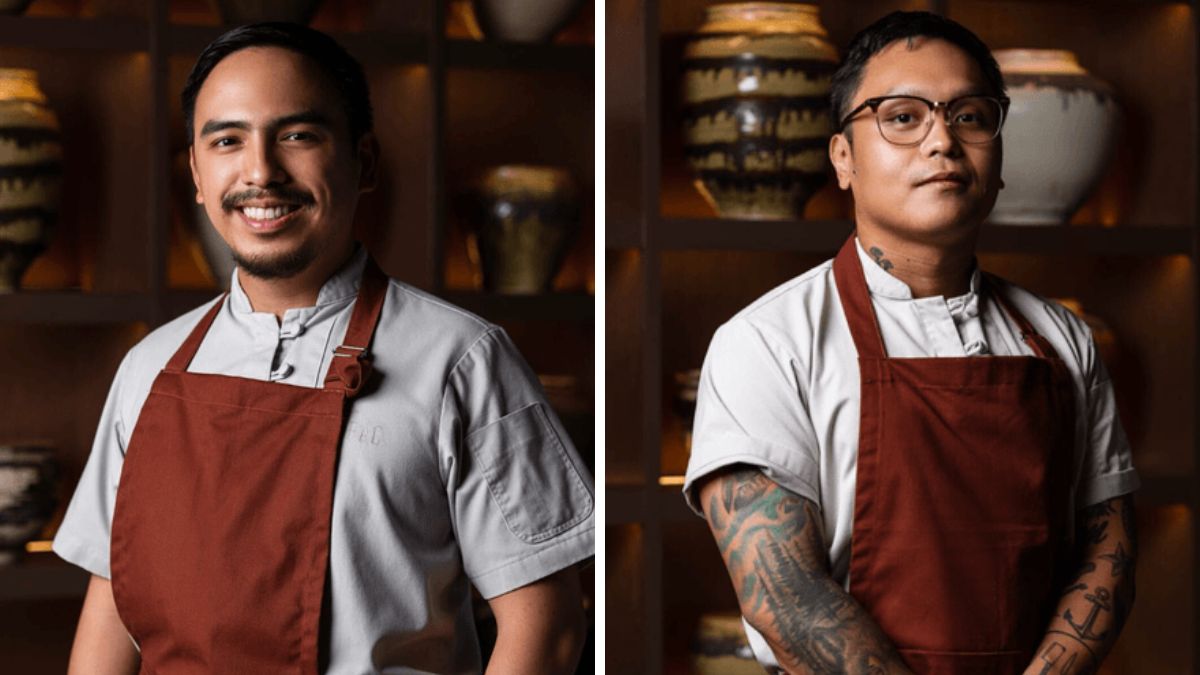
I had the pleasure of experiencing the said tasting menu and even had a brief chat with the talented chefs and co-owners of Hapag, Chef Thirdy Dolatre and Chef Kevin Navoa. I must say that some of the commenters probably don't realize the tremendous amount of effort and dedication these culinary artists pour into their tasting menu. We thought it might help to provide a little backgrounder about their work.
The head chefs and co-owners of Hapag, Chefs Thirdy Dolatre and Kevin Navoa.
The Birth of Hapag
We all know that "hapag" translates to the Filipino word for dining table. As stated on their website, the team describes their brand as "built from the values instilled in them by their respective households—where meals are a sacred time for bonding with those who matter most."
Their philosophy, has always been about "storytelling through food, a gastronomic journey into the heart of Filipino cuisine."
As their initial salvo, Hapag initially showcased the Metodolohiya menu, which are contemporary renditions of local dishes, highlighting Filipino cooking methodologies.
Six months after launching their first tasting menu, and with the team fully adjusted to their new kitchen space in Balmori Suites, the Hapag team decided to explore new stories and unveil a new chapter. "This marks the beginning of our regional series, where we dive deep into the Philippines’ diverse culinary heritage one region at a time, starting with one of our favorites: Western Visayas," explains Dolatre, an alumnus of the Center for Culinary Arts in Manila.
"I think that batchoy-making is reminiscent of Japan’s ramen culture—each version is unique, reflecting the personal touch of its maker."
Batchoy at Puto
Journey Through Flavors
In 2021, they were invited by respected chef and author of "Flavors of Iloilo," Rafael "Tibong" Jardeleza, to judge the Tabu-an, a regional culinary competition that spotlights Ilonggo heritage cuisine and ingredients. The said trip opened their eyes to dishes and ingredients in the region they had never encountered before, sparking the idea to create a Western Visayan tasting menu for Hapag.
"The experience was truly eye-opening," Dolatre says. "While many of us are familiar with beloved staples like inasal and batchoy, our understanding of the region’s cuisine was only surface level."
During that trip, Dolatre, who trained as a Stagiaire at some of San Francisco’s Michelin-starred restaurants, recalls a mission he shared with Navoa: to try as many batchoy variations as possible. "I think that batchoy-making is reminiscent of Japan’s ramen culture—each version is unique, reflecting the personal touch of its maker," he says.
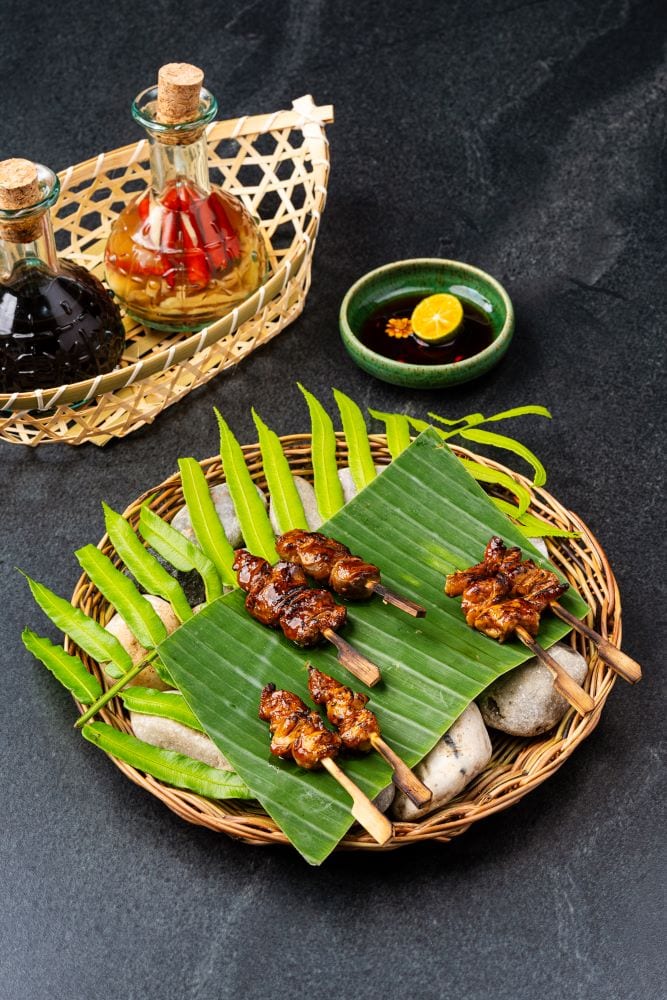
Their iteration of inasal uses underutilized parts of the chicken, such as gizzard, skin, and bottoms.
"Every batchoy shop has its style or signature. Some serve it with a clear broth, while others use a rich, cloudy, collagen-packed base. Some use egg noodles, while others opt for misua. What truly made the experience authentically Ilonggo for me, though, was the pairing of batchoy with puto. Locals told me that batchoy isn’t complete without this combination, often accompanied by their favorite soda, Mountain Dew," he recalls.
After drafting the menu, Navoa decided to go back to the Western Visayas region with the Hapag team "to scratch that itch of wanting to dive even deeper."
With the help of their cook, Jairus, who is a local from Bacolod, Navoa and the team explored unfamiliar towns and places. "Jairus was generous enough to let us into their home to try his mom’s cooking. We specifically requested to try a dish called tambo. It was amazing and inspired one of the dishes we created for this menu," shares Navoa, a Culinary Arts alumnus of the KDU University College in Kuala Lumpur.
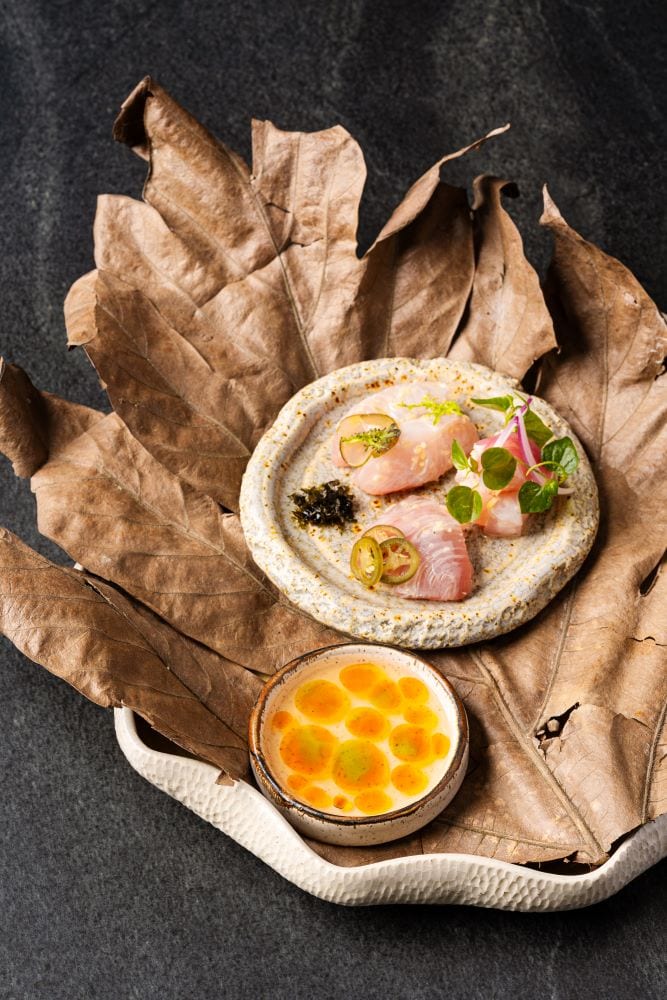
Hapag's Kinilaw features three kinds of fish, served with pickled jalapeño, onions, cucumbers, and Negros mizuna.
In Iloilo, Jardeleza made them try a few dishes they had already drafted on the menu to "see if we had hit it right."
Next, they traveled to Guimaras, where they met with locals who still produce the rare salt known as tultul. "We made sure to understand the process and brought a few blocks home," adds Navoa.
ALSO READ
Filipino Cuisine, But Make it Fine Dining, at the New and Improved Hapag
How Chef Miko Calo Is Challenging Culinary Norms
Afterwards, they took the Roro back to Bacolod, where they met with Slow Food advocate and the founder of Fresh Start Organics, Chin Chin Uy. "We met incredible local farmers who grew the most amazing, rare produce. One example is Chris Fadriga, a cacao farmer who took the initiative to save and develop one of the world’s rarest cacao varieties, the Criollo cacao," he shares. "It’s incredible how much he had to sacrifice and push to ensure he did his part as a Filipino to help Filipinos. We now use his chocolate for our dessert and made sure we did it justice by making it extremely simple."
Another highlight of their trip was visiting Sagay City's "Kinilaw Master" Vicente “Enteng” Lobaton. "As an enthusiast of the kinilaw method, I learned from a guy who has been doing this for decades. He impressed all of us," says Navoa.
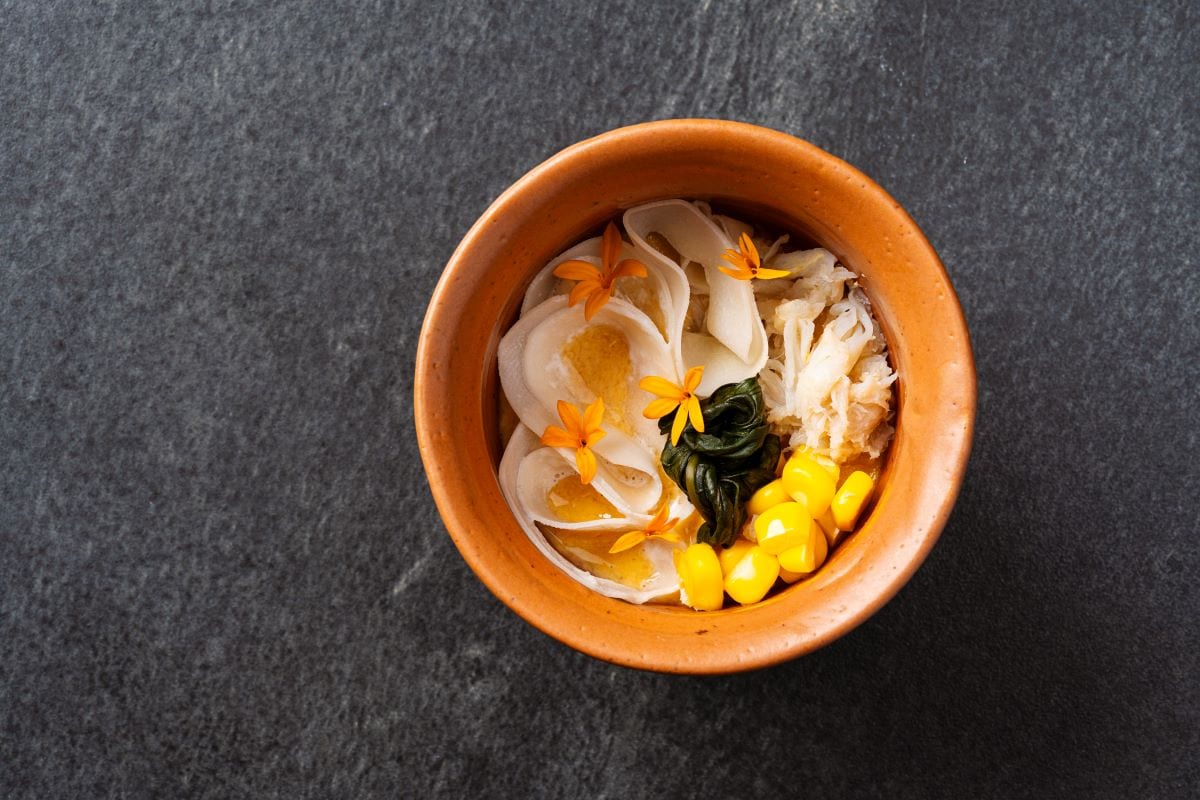
Tambo is reimagined with sweet corn custard, talbos ng kamote, and Negros blue crabs.
Hapag's Homage to Western Visayan Cuisine
On a few occasions, this writer had the chance to visit some parts of Iloilo and Negros Occidental, met the culinary advocates mentioned in this story, and taste their cuisine. I know for a fact that the people there have a deep sense of pride for their food culture. So I was thrilled to taste Hapag's version of some of my favorite Western Visayan food.
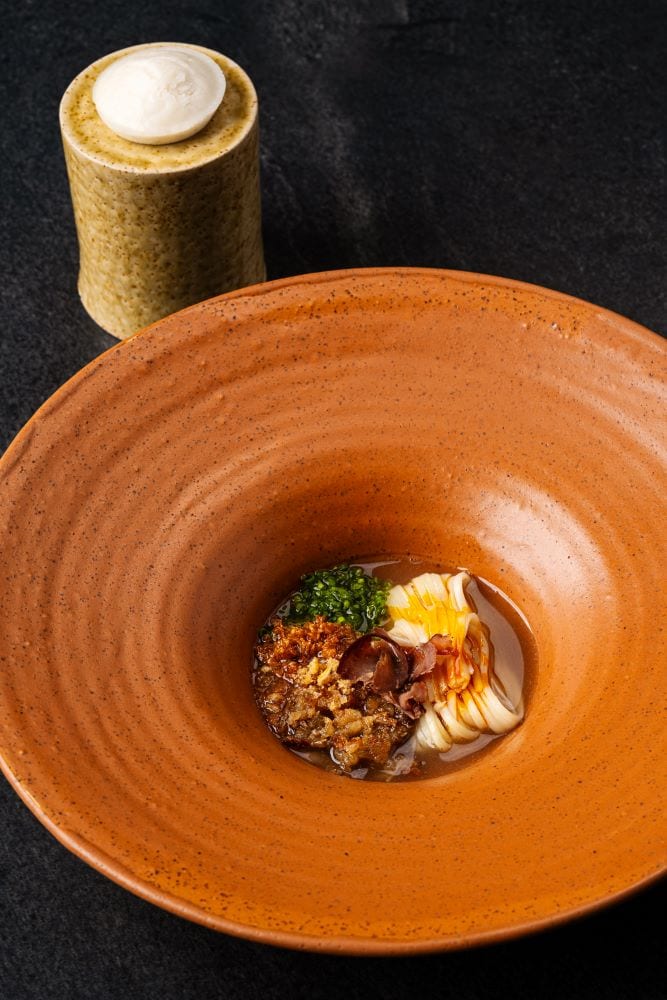
The degustation started with the restaurant's rendition of Batchoy at Puto. True to the tasting menu style, the dish comes in a smaller portion, featuring handmade noodles that complement the savory broth. Elegantly plated in a pasta dish, it is garnished with fried garlic, scallions, chicharon, and crispy pork face. The kitchen staff shared that the pork is smoked for 10 hours and cured for three days, adding depth to the dish's flavor. The batchoy is paired with sourdough puto, providing a balanced and delightful contrast.
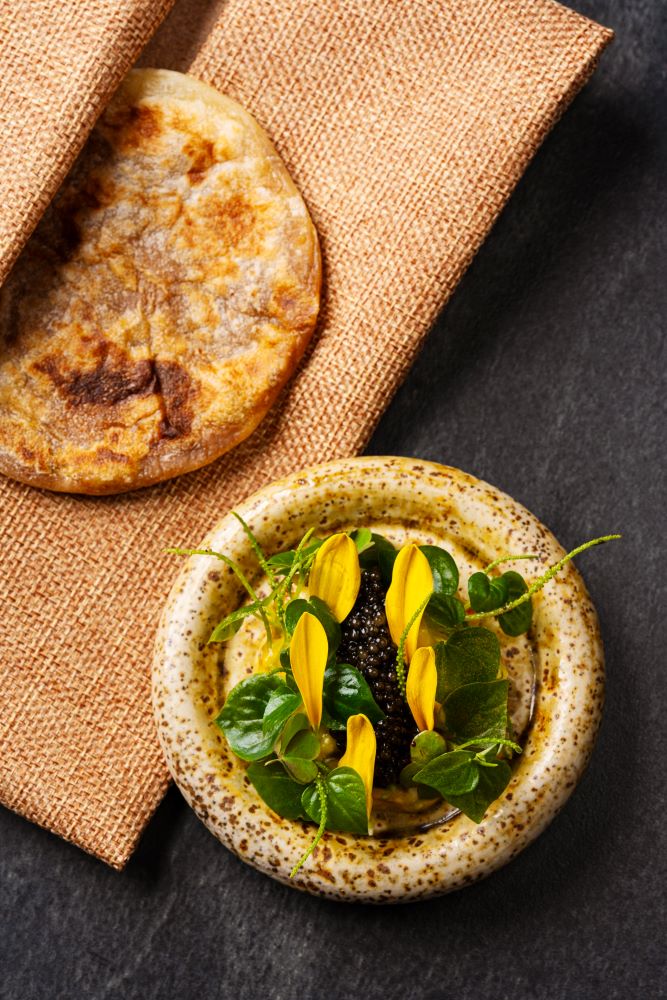
Hapag's version of a savory Piaya served alongside a cold shrimp salad.
Taste-wise, Hapag's Batchoy didn't veer much away from the traditional batchoy I've enjoyed in Iloilo. If anything, the flavors are just cleaner and more refined. The chefs of Hapag did not in any way disrespect the batchoy culture of Ilonggos. In fact, they even put a spotlight on this well-loved noodle dish. Frankly, I don't understand the basis for the negative criticisms.
The plating is very much fine dining—artistic and thoughtful. If I may borrow the words of Ilonggo chef Tibong Jardeleza, "Hapag is not a batchoyan." It's a fine dining restaurant and they serve a degustation menu. So, don't expect them to serve their batchoy the way Deco's or Netong's does.
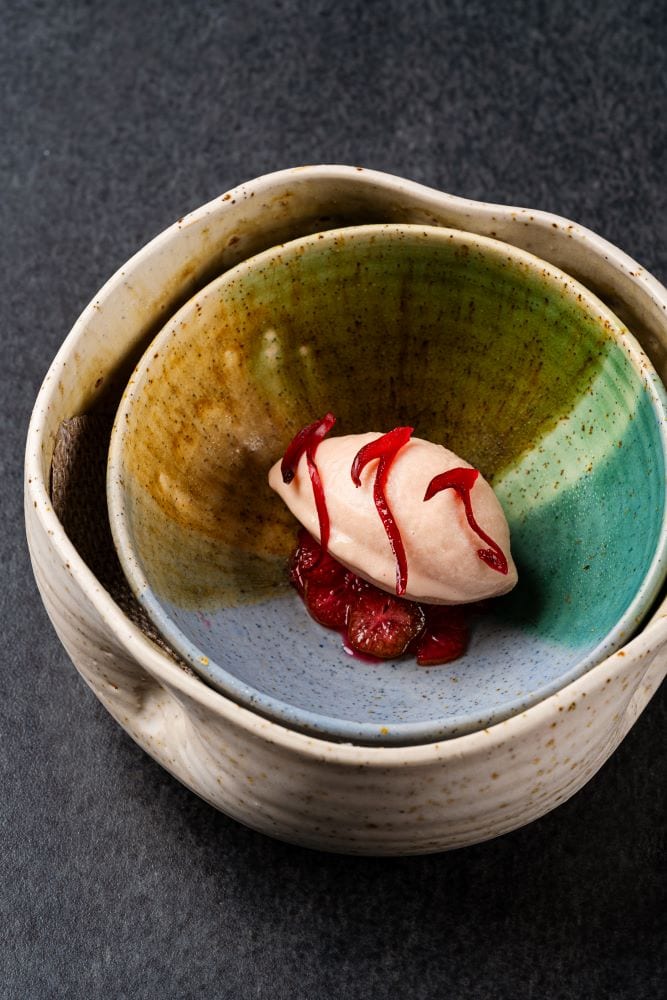
The refreshing and citrusy Batuan Sorbetes adorned with Habilin farms' sweet pickled roselle.
Moving on to the next dish... "Their iteration of inasal uses underutilized parts of the chicken, such as gizzard, skin, and bottoms. "Personally, those are my favorites whenever I eat at inasalan. I make sure I order atay, batikulon, and isol alongside my pecho," says Dolatre. They basted the chicken parts with an annatto glaze, served with house chili, garlic-infused coconut vinegar, and homemade chicken stock shoyu.
Their kinilaw, an tribute to Sagay City's Enteng's, features three types of fish dressed in calamansi and ginger. It is served with pickled jalapeño, onions, cucumbers, and Negros mizuna, which is very similar to the taste profile of the wasabi. It also comes with pickled gamet seaweed to refresh the palate, and accompanied by Negros Criollo cacao vinegar. We immensely enjoyed this alongside sips of citrusy Delamotte Blanc de Blancs NV Champagne.
Hapag's KBL features a roulade of 24-hour slow-cooked pork belly, stuffed with Negrense chorizo.
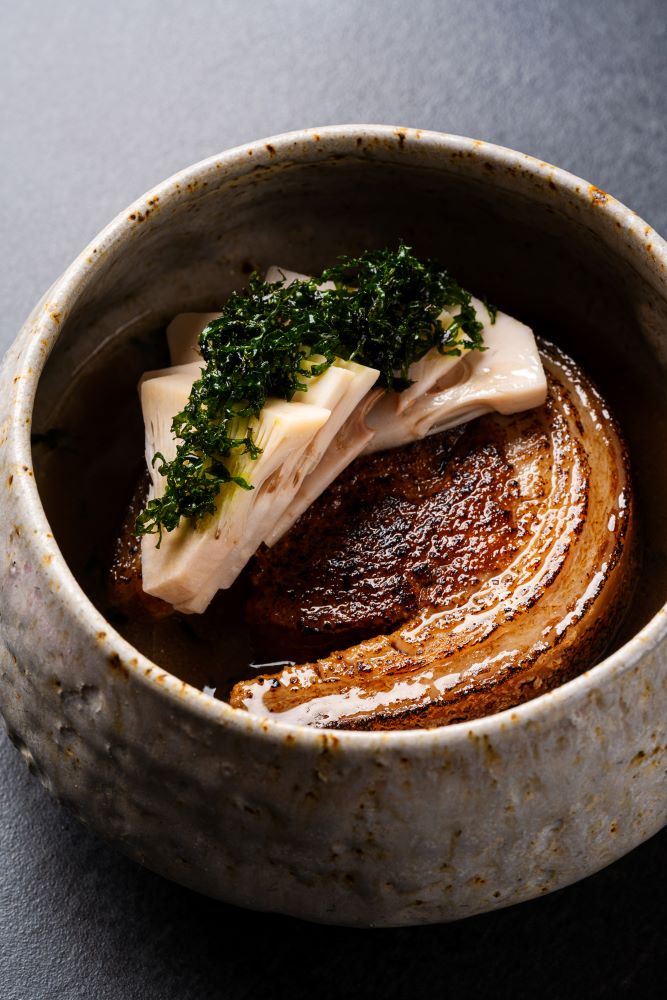
Tambo, also known as labong or bamboo shoots, is traditionally cooked with gata (coconut milk) and accompanied by shrimps or crabs and some greens like saluyot. At Hapag, this dish is reimagined with sweet corn custard, talbos ng kamote, and Negros blue crabs, all simmered in a coconut sauce infused with aromatics and the rich flavors of roasted crab shells. The experience is reminiscent of savoring your favorite taho, but with the delightful crunch from the vegetables and an unexpected harmony of flavors.
One of my favorites in the tasting menu is the Piaya. The savory and crisp potato miso sourdough piaya is cooked on the plancha (metal plate or grill) and served alongside a cold shrimp salad tossed in tofu mayonnaise, with herbs, citrus, and Kaviari caviar. It really elevated the Piaya to a different level.
After enjoying the refreshing palate cleanser of Batuan Sorbetes, we indulged in one of my favorite Ilonggo dishes—KBL (kadyos, baboy, langka). Their take on this classic replaces the traditional pata with a roulade of 24-hour slow-cooked pork belly, stuffed with Negrense chorizo. The hearty, flavorful dish is enriched with a rich pork trotter soup soured with batuan and cooked with jackfruit and pigeon peas.
Adobadong Sinugba accompanied by Ensalada, featuring a mix of grilled and fresh Chinese lettuce and paco salad, alongside KBL.
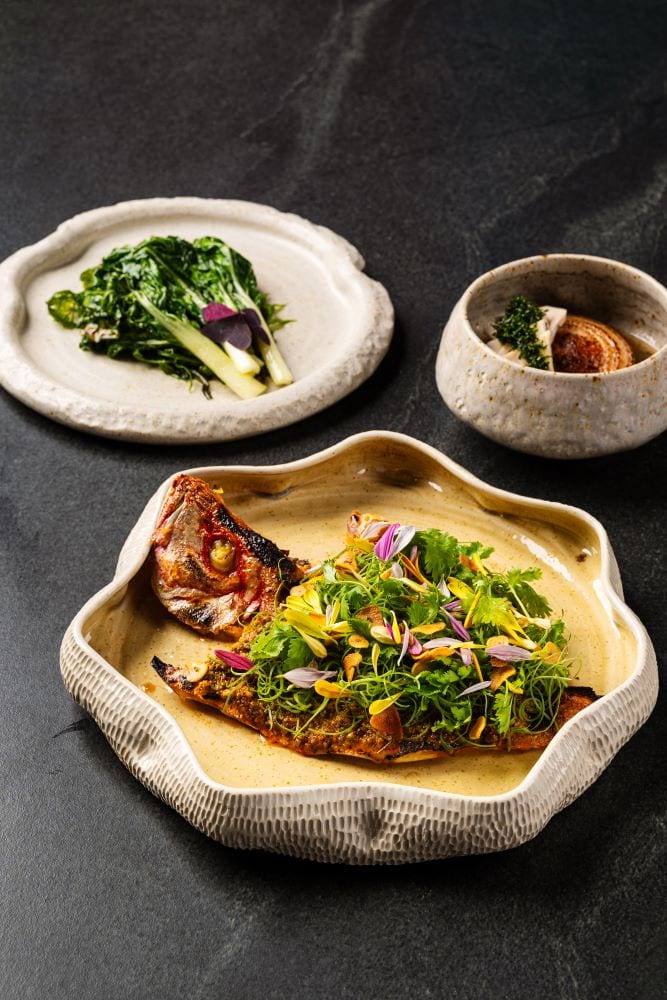
Another highlight of the menu is the Adobadong Sinugba, which entails meticulous preparation. They start by cutting the red snapper and drying it for two to three days to ensure a crispy skin before it's finally grilled. It's finished with adobado sauce (made with tuba, aromatics, and gata), local herb salsa verde, and garlic chips.
We savored the fish alongside some Ensalada, which is a mix of grilled and fresh Chinese lettuce and paco salad served with a mango vinaigrette, and Kalkag nga Kalo Kalo, an aromatic fried rice topped with dried baby shrimp.
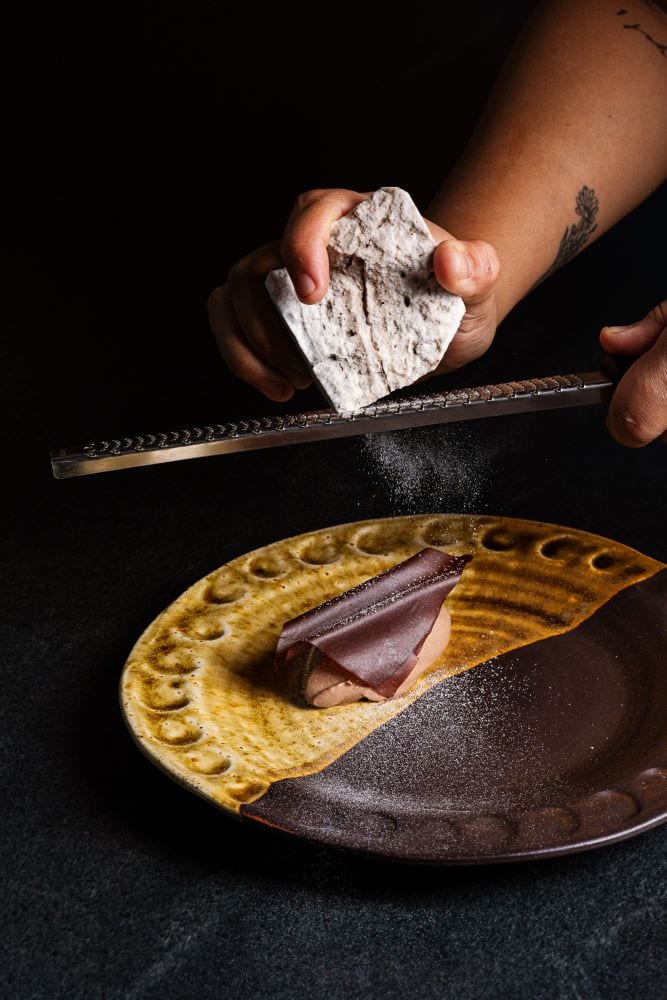
Rounding out the tasting menu is a luscious dessert trio each offering a unique experience: the Napoleones, a puff pastry filled with toasted rice pastry cream and ripe Guimaras mangoes; the Pili Nut Butterscotch, featuring warm, chewy, caramel-like squares subtly infused with local Querica pili nuts from Bicol; and the Criollo Cacao Ice Cream, a rich and decadent chocolate ice cream made with rare cacao from Negros, topped with a crisp chocolate paper and finished with a dash of Asin Tultul, creating an exquisite crescendo to the dessert ensemble.
The Criollo Cacao Ice Cream is finished with a dash of Asin Tultul.
Navoa says he is excited for guests to try the entire menu "because this is not just about creating flavors that would impress people. This menu mostly tells the story of the people of Western Visayas the best way we know how."
I believe Hapag's tasting menu offers a comprehensive representation of the unique flavors of the region. With every dish, the proudly Filipino restaurant not only honors our food traditions but also elevates it, inviting the world to discover and experience our culinary artistry.