Temporal Dreams in the Cinemalaya Short, 'Elenita Elena Elaine'
The 20-minute film stars Agot Isidro, Gabby Padilla, and Mariana Serrano.
Published on Aug 12, 2026
After its world premiere at the 36th Singapore International Film Festival, Gabriela Serrano’s Elenita Elena Elaine (2025) transports its dystopian world as they return to the 2026 Cinemalaya Philippine Independent Film Festival. In a world where time is disoriented, three women interrogate the then, here, and there of their relationship as the world consumes their aspirations and reduces their existence to mere products of capitalism.
Before Elenita Elena Elaine’s local premiere, Serrano’s first appearance at Cinemalaya was with Dikit (2021), a short film she co-wrote and starred in with her sister, Mariana Serrano. The 16-minute diptych short chronicles the lives of two women: one slinks away from a faltering relationship that turns abusive, while the other watches and develops an intimate, tender connection as it reimagines the mananaggal from Philippine folklore. The film won Best Director and the Special Jury Prize at the 18th Cinemalaya Philippine Independent Film Festival.
Her new film, which is co-written by and stars Mariana, is drawn from Gabriela’s personal experiences during the pandemic. Elenita, captivatingly portrayed by Agot Isidro, is a character who was based on Serrano’s own mother, who worked in customer support for a U.S.-based call center, while Gabriela was working as an editor for an American television show. Elaine (portrayed by Gabby Padilla) represents Serrano’s mother in her youth. Here, Elaine embodies her mother's youthful dream of becoming a singer. Banking on these personal anecdotes, the film’s trance-like world builds on a longing for connection, binding their existence and dreams in a world that hinders them from becoming something more.
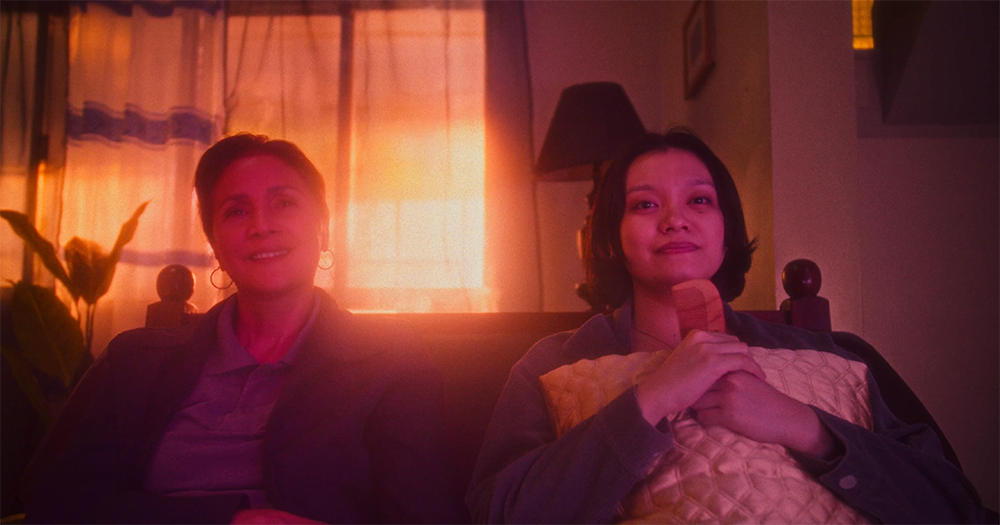
It is notable how the film plays with memory, as well as its significance in binding together the characters' two distinct connections. Through this memory, the gradual fading and blurring of dreams are emphasized; yet on the other hand, it also enables them to reclaim their capacity to resist the oppressive forces compelling them to forget their true desires. Memories are what drive them to remain human in the midst of a devouring world. Furthermore, the film's deployment of memory serves as a device that disrupts the perception of time within the world it constructs. With time thus fractured, recollection becomes their sole conduit to a definitive image of the connection Elena (played by Mariana) shares with her mother, Elenita.
Similar to this approach, the Serrano sisters’ 2025 winning short Surface Tension—about a swimmer named Bullet (played by Mariana) who returns to her hometown to face long-avoided tensions—uses personal experience and memory to confront trauma and reconcile with the past. Premiering as one of the seven short film grantees at the 2025 QCinema International Film Festival, it is a brilliant film that heightens the narrative’s inquiry into breaking free from what holds us back.
The film adeptly utilizes sound, linking Elenita's past experiences to her daily life. In one scene breaking structure, as routine household activities unfold, the audience hears the voices of Elenita’s foreign customers on call while Elena is shown on screen. These voices gradually overlap, heightening the spatial tension. This is also to encapsulate what Gabriela felt as she watched her mother do her work: “That struck me profoundly, seeing this woman I’ve put on a pedestal my whole life be reduced to a voice,” she said in an interview with Vogue Philippines.
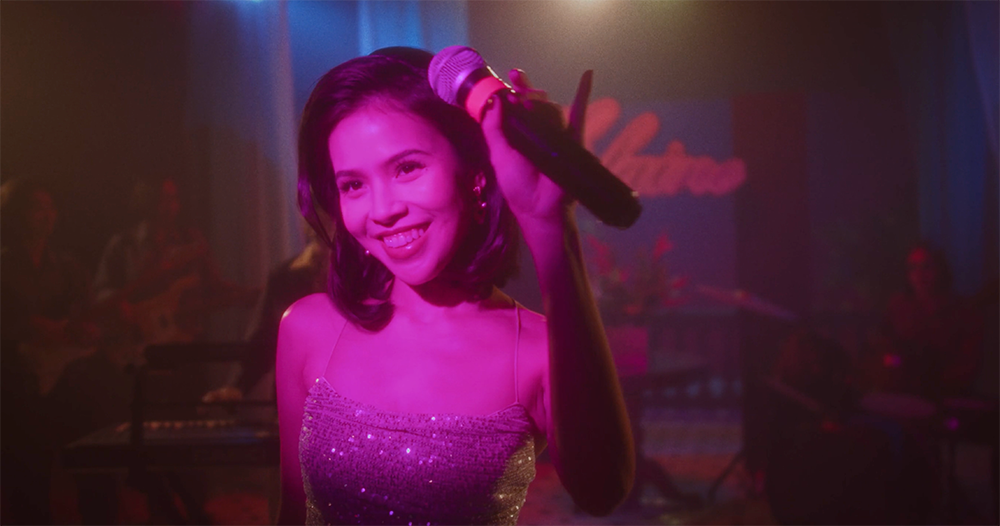
On the other hand, the clever drop of the song "Isang Sandali"—written by the sisters and their mother—delivers a thrilling impact. In these moments, the film seamlessly weaves its technical finesse to reinforce a narrative that critiques a world reducing individuals to mere commodities used to sustain an economy that fails to serve its people and puts the audience in transit as its world traverses into different textures.
Additionally, the ambient silence, which captures the lingering voids left by their relentless labor to survive, further enriches the film. In such times, it is not merely the mother and daughter’s time together that is robbed, but the very life of the space they inhabit. Within these voids lies their longing for a fleeting connection, momentarily free from the forces that exhaust their capacity to fathom a future. The shift between silence and sudden noise becomes an act of wading through both yearning and departure, articulating the unsaid while the sharp cinematography frames the intimate closeness and distance between Elenita and Elena.
As was previously mentioned, the film’s narrative wrestles with its perception of time, as well as its subversion of it. In the midst of a consuming world, Elenita and Elena no longer hold power over their time; it becomes nothing more than a modest wish to somehow restore a decaying mother-daughter relationship. Within this temporal disorientation, dreaming becomes a temporary race against fleeting opportunity. Yet, the film raises a poignant question: what if capitalism co-opts your very own dreams to erode your capacity to desire and imagine anything beyond the present?
In experiencing this neocolonial system within the film's dystopian world (that deprives its people of a collective sense of their own agency), Elenita and Elena’s attempt to hold onto their dream (even if they only revisit it by watching recorded tapes) serves as a refusal to be completely consumed by dehumanization. The film’s ending feels definitive in its emphasis on holding ground and valuing the mother and daughter's time together, even as Elena plans to “leave” the Philippines.
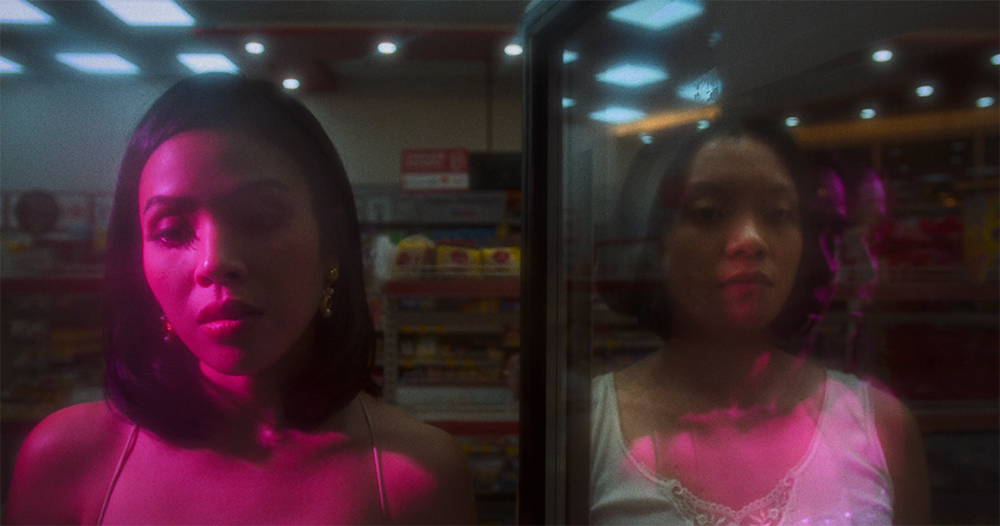
It can be inferred from this that dreaming and living under duress means remaining human: still feeling sympathy and care amid being deprived by a system fraught with contradictions. This offers emancipation from the terrifying force-feeding of a dystopian world where humans are treated as disposable. The rendering of the mundane reclaims an agency that capitalism has stolen, as the system positions workers like Elenita and Elaine as mere tools for production. Here, the everyday acts as a resistance against the neocolonial system’s treatment of people as disposable. Even though this system forces them into precarity, the persistence of the mundane, daily life serves as a barrier against its total control.
The disorder itself bends to give birth to a new order. One where solitude is reclaimed, and togetherness becomes the product of a tenderness that nurtures and weaves Elenita and Elaine’s coexistence. The narrative transcends Gabriela's personal experience, instead coiling around a collective who continue to remember their discarded past dreams, or those forced to set their aspirations aside simply to survive.
Originally written as a feature-length film depicting a year's bond under a neocolonial system, the narrative now transforms into a short that navigates a night enveloped in anxiety from a distant future and hindered dreams. The result is a brilliant piece that goes far beyond its enigmatic cinematic language. It is haunting in its depiction of a world bereaved of intimacy, while winding around its own world-making and introspection to create a force that ultimately anchors and strengthens the very existence of its characters.
Perhaps this is what remains amidst the temporal disorder that the film navigates and interrogates: the incredible tenderness of our existence that no monster of our nation can ever strip away.
The 22nd Cinemalaya Independent Film Festival runs from August 6 to 18, 2026, at the Red Carpet Cinemas in Shangri-La Plaza, Gateway Cineplex 18, and select Ayala Malls cinemas.
ALSO READ:
Status: Rejected from This Year's Cinemalaya Shows How Life Blossoms at Any Age
What I've Learned: Carlos Siguion-Reyna
Lorence Lozano is a film critic and cultural worker from the Philippines. Their interests lie at the intersection of gender, politics, and space within Southeast Asian cinema.
View More Articles About: