From Pop-Up Castles to Neon Streets: The Design Secrets of the Disney Adventure Cruise Ship
It spans seven themed worlds, each crafted from a century of Disney magic.

Published on Mar 14, 2026
For decades, the architectural language of a cruise ship was one of necessary enclosure—narrow corridors, staterooms that look like boxes, similar levels on top of another. No matter how many gold-leafed railings or grand atriums were added, it can't be denied that you're inside a steel hull with musty, carpeted floor and low ceilings.
But Disney Cruise Line, through its newly launched Disney Adventure, introduces a design philosophy that shifts this perspective of a cabin-fever-inducing vessel. Their eighth and largest cruise ship boasts massive vertical volumes and a story-driven geography divided into seven distinct themed areas—Disney Imagination Garden, Disney Discovery Reef, San Fransokyo Street, Town Square, Wayfinder Bay, Marvel Landing, and Toy Story Place.
According to Laura Cabo, Portfolio Executive Creative Director at Walt Disney Imagineering, the project was an opportunity to bring a century of legacy to Southeast Asia in a "big and bold way." The result is a ship that feels less like a floating hotel and more like a collection of living, breathing ports of call.
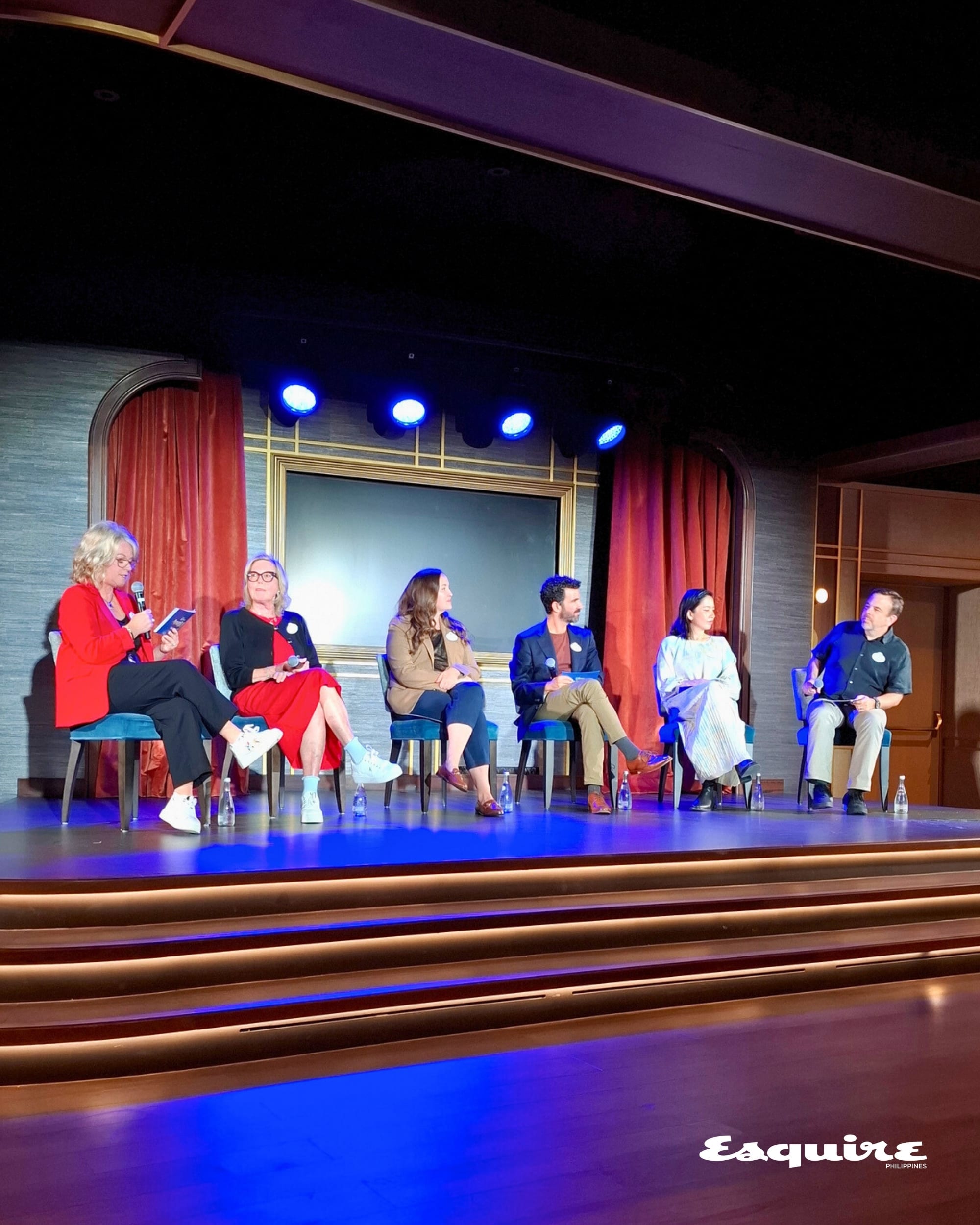
Alongside the creative leads from the research and development arm of the Walt Disney Company, she shared the creative intent behind everything we’ve experienced so far while aboard the Disney Adventure.
ALSO READ:
A Tactical Guide to Avoiding Children on the Disney Adventure Cruise
Today I Learned: Why Your Fitness Tracker Thinks You Run Fast When on a Cruise Ship
The "Canyons" on a Boat
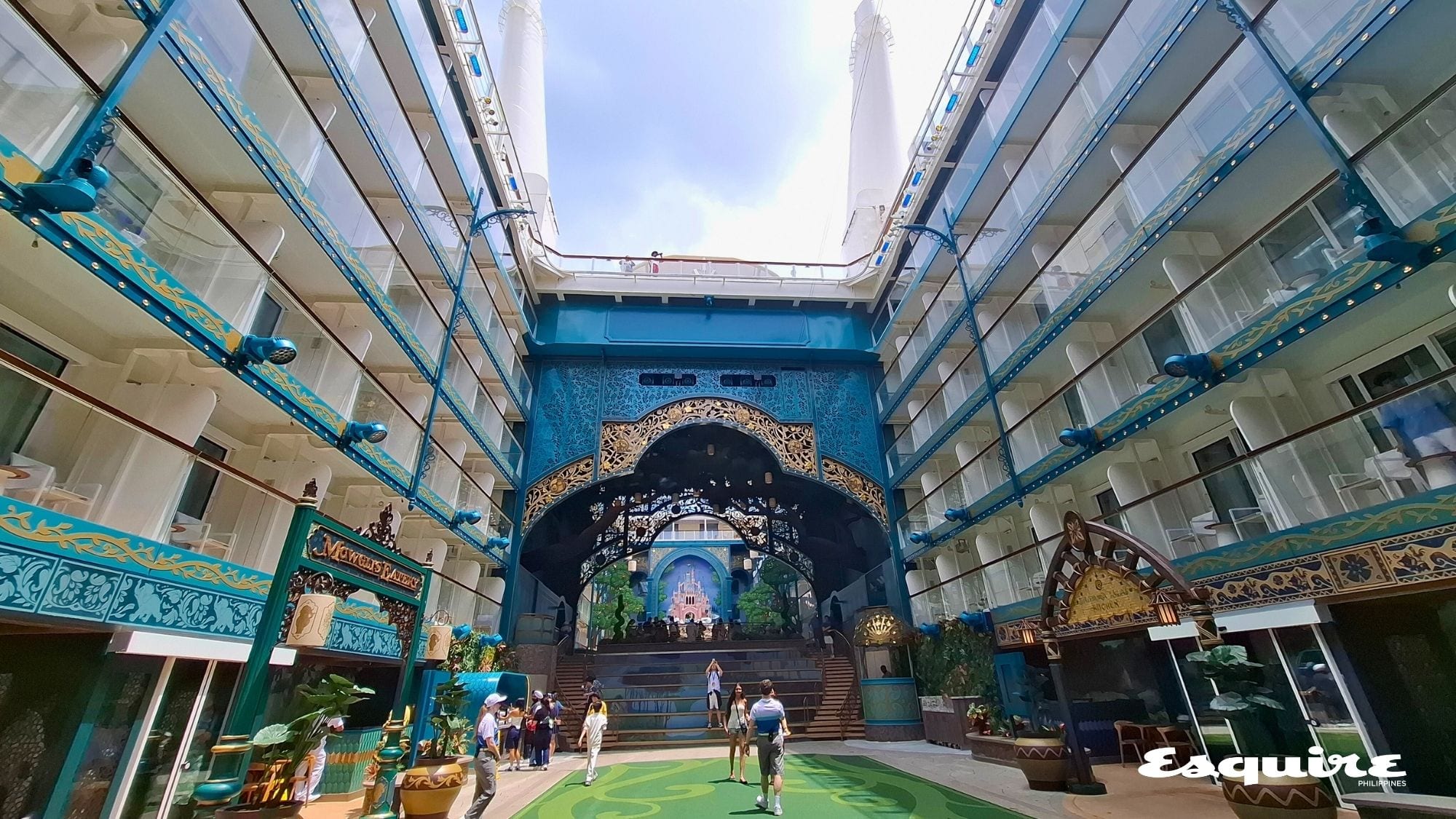
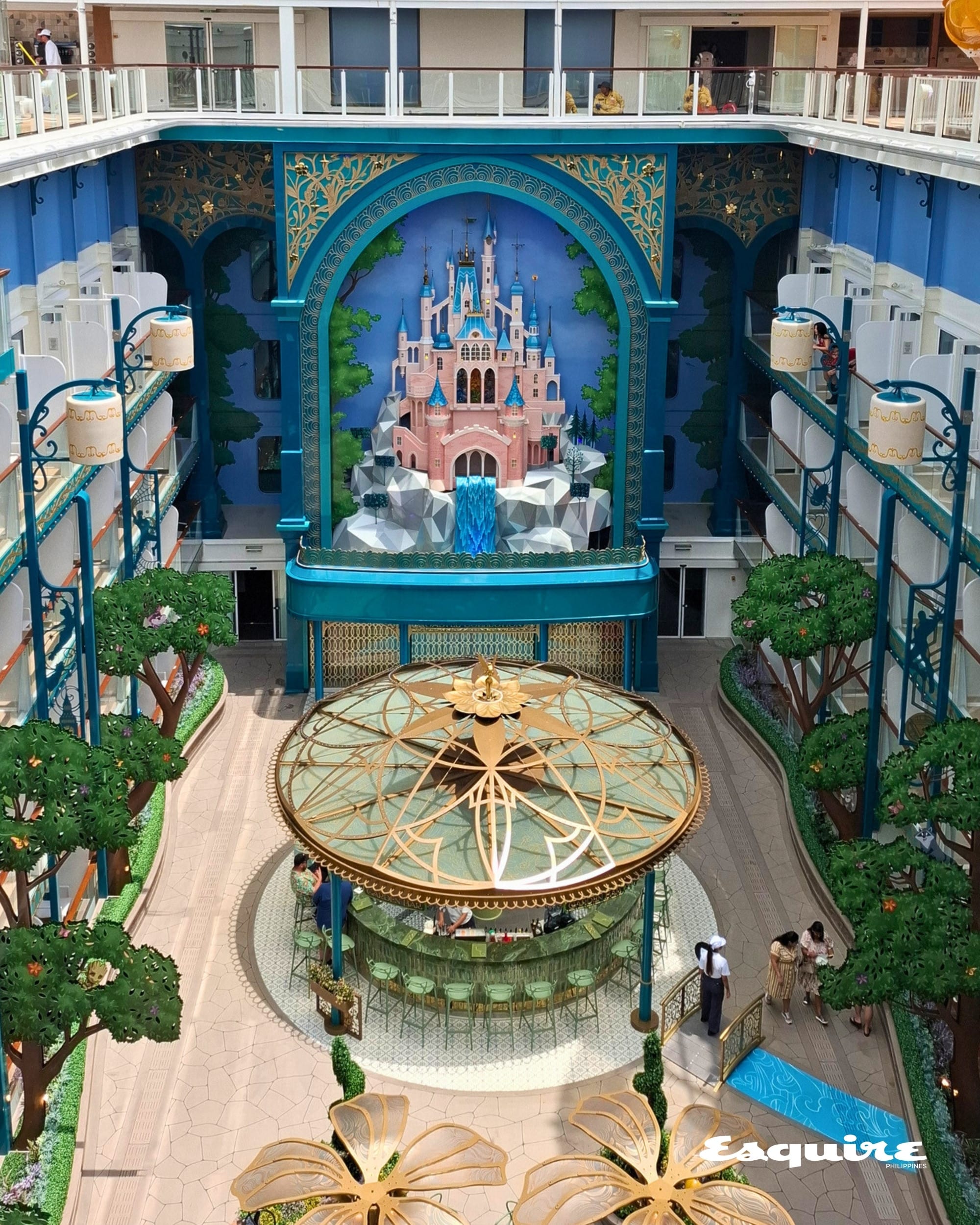
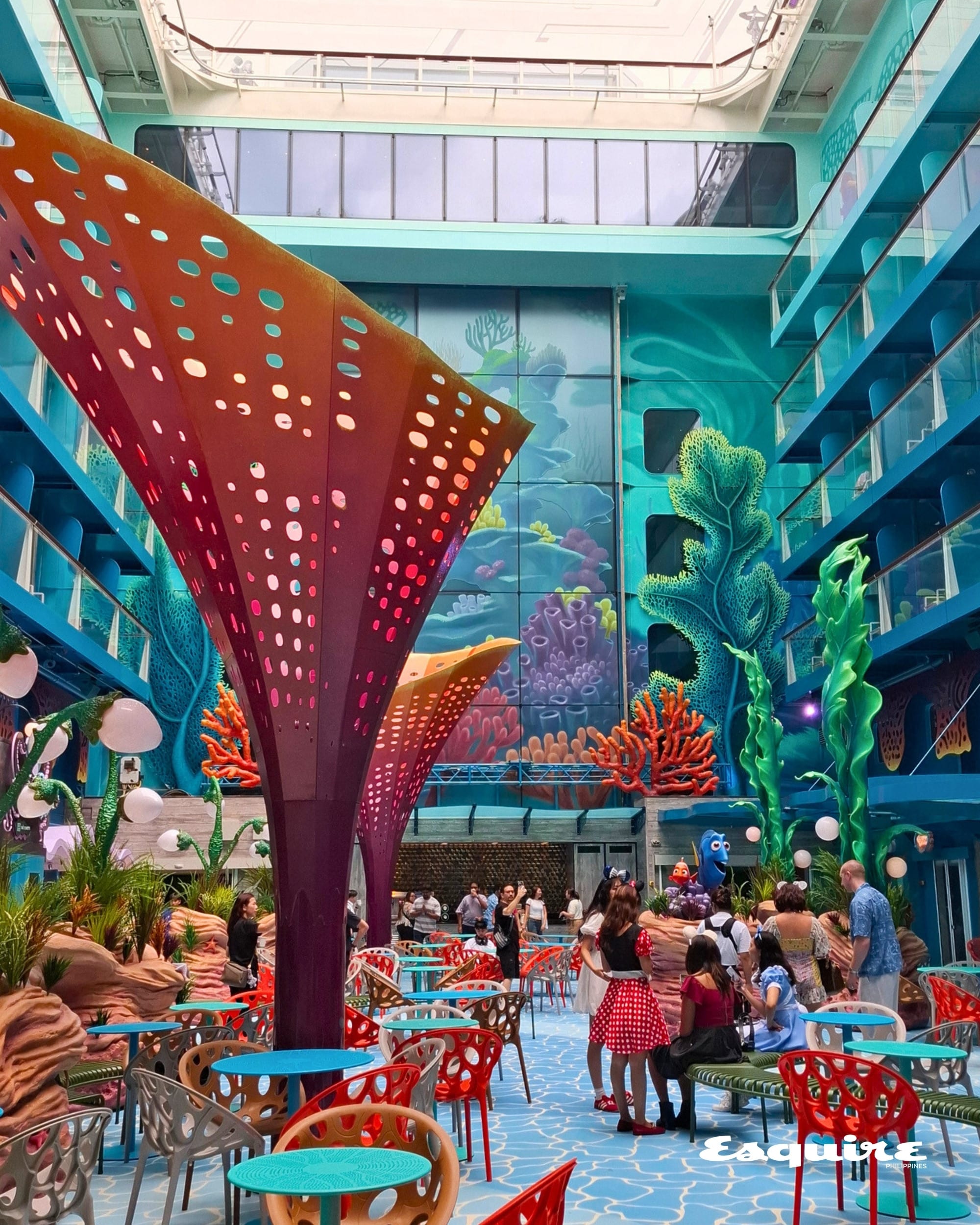
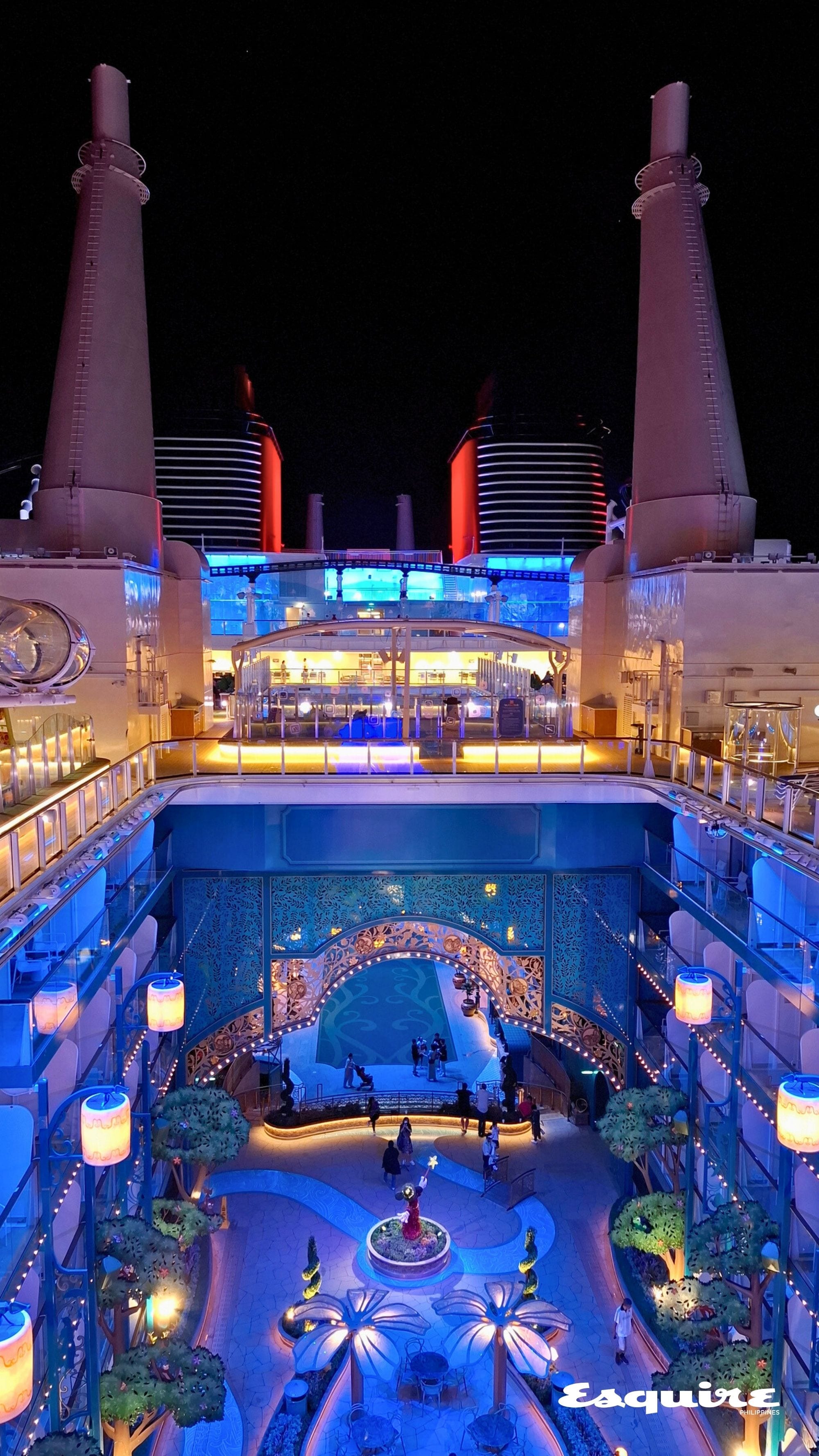
The secret to the ship’s sense of openness lies in what the design team calls "the canyons." In traditional marine engineering, decks are stacked like pancakes, creating a horizontal world that can occasionally feel claustrophobic—especially if you’re booked in one of the Inside Staterooms. The Disney Adventure breaks this mold with vast, multi-storey voids in the center of the ship, specifically within the Disney Imagination Garden and Disney Discovery Reef, both on Deck 10.
"Everything starts with a story," Cabo explained. "We decided that to us, the heart and soul of the ship were these... we called them canyons. They exist in the middle of the ship. And every time we walked into these bare steel areas, our jaws just dropped, because on a cruise ship, usually you're seeing decks that are only of a certain height, and here we had jaw-dropping space."
By carving out these vertical spaces, Imagineers have essentially created a "sky" inside the ship. When you stand in the center of the Imagination Garden, the architecture pulls your eyes upward, mimicking the feeling of being in a valley rather than a corridor. This verticality is the primary tool used to make guests feel unstuck—you are no longer trapped between two low plates of steel; you are in a landscape that breathes. Cabo noted that this design was intentional for a ship with "only magical days at sea," where the interior must replace the sensation of visiting a physical port, especially with Disney Adventure’s cruise-to-nowhere programming. "We needed to create very different immersive spaces that would tell magical stories that would just feel like ports of call."
The Heart of Friendship: Disney Imagination Garden
If the canyons provide the physical space, the Disney Imagination Garden provides the emotional anchor. Designed to look like a three-dimensional storybook, it serves as the ship's front porch. Will Hastings, one of the creative leads, explained that the intent was to create a welcoming space, “an invitation to adventure."
The Imagination Garden’s design is inspired by Disney’s many stories of friendship. "We peppered that storey with friends," Hastings said. "If you look at the beautiful filigree on the arches, it's decorated with these medallions that feature pairs of classic Disney friends, Winnie the Pooh and Piglet, Anna and Elsa, Woody and Buzz, Timon and Pumbaa. They're all there."
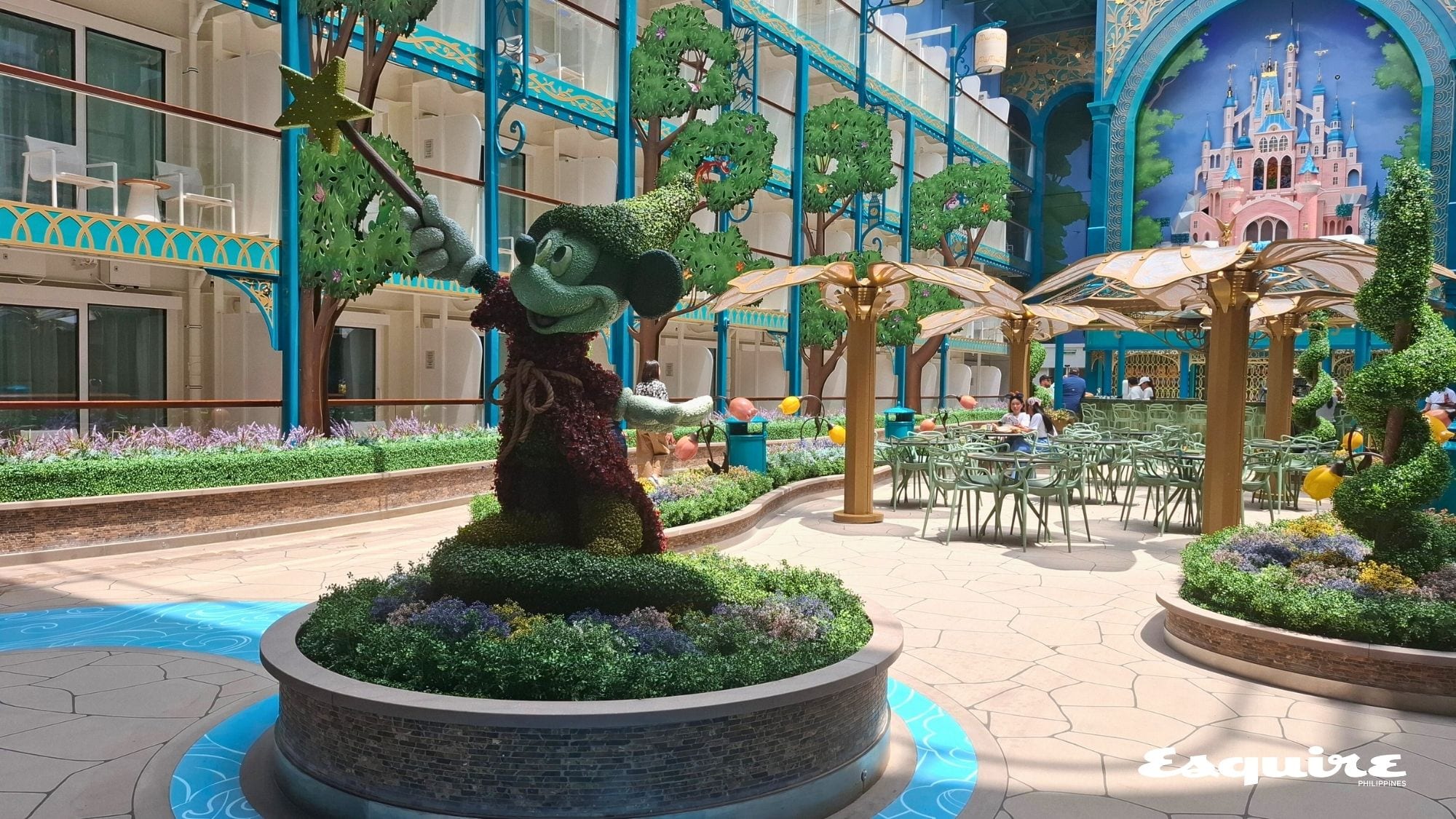
Even the greenery has everyone’s favorite sidekicks; if you look into the trees, you’ll find sculptures of Pascal or Abu.
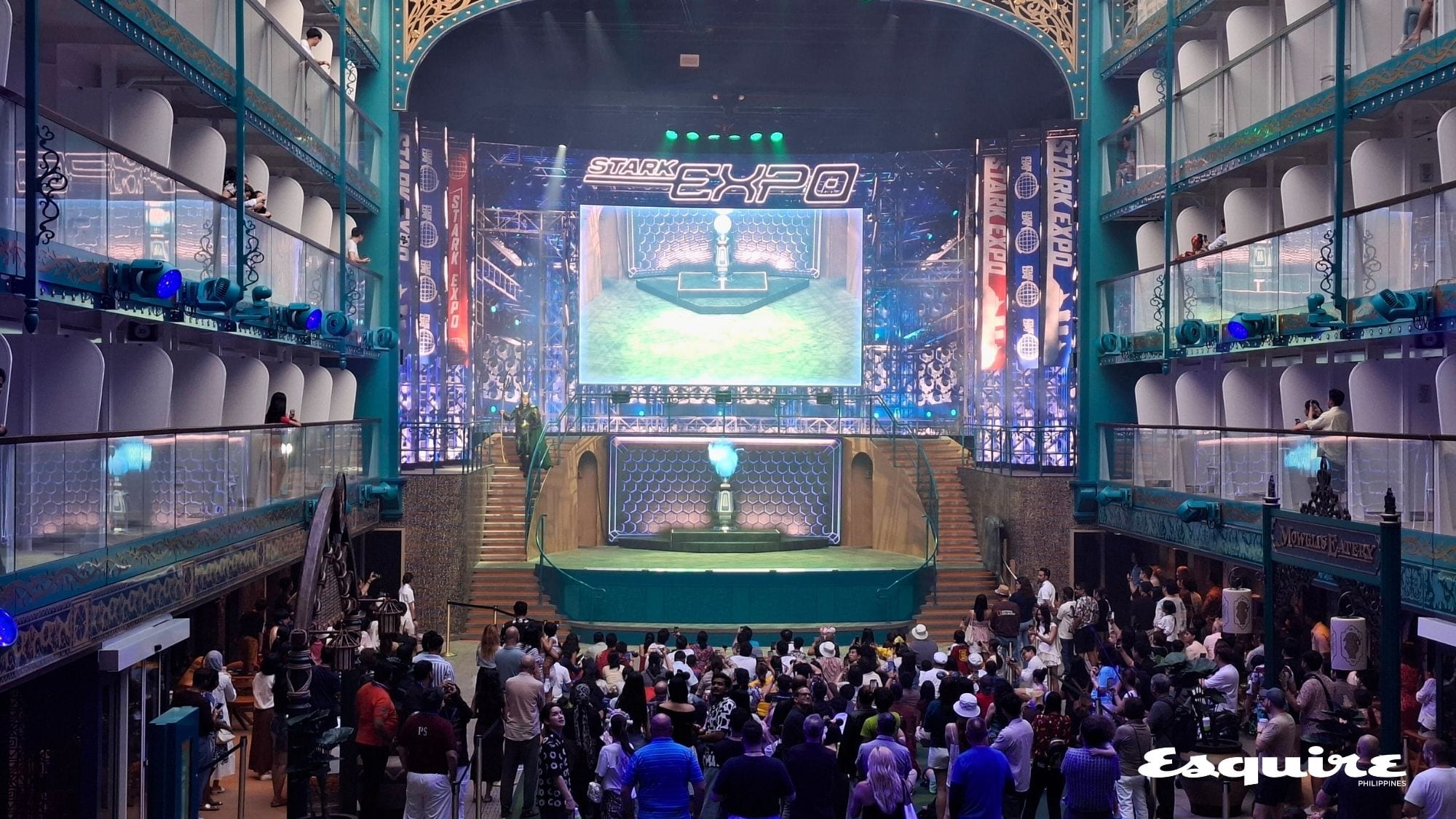
"There's this idea of friendship that sort of permeates that whole space," Hastings added. This theme extends to the entertainment on the stage, which focuses on "friends coming together to defeat villains" in Avengers Assemble or the camaraderie of Duffy and the Friendship.
The most ambitious design choice here is the three-storey-high castle. "All of our resorts around the world have a castle... this is such a quintessential thing," Hastings explained. "We rendered it in a style that really felt like it was a giant piece from a pop-up book. We put this three-story-high castle right there, sort of front and center as an icon of Disney, and it's such an inspirational thing about imagination."
Transitioning Through the Reef
Leading out from the garden is Disney Discovery Reef, the portal for the ship's "water stories" like The Little Mermaid, Lilo & Stitch, and Finding Nemo. Cabo described this as part of the ship's main axis. It acts as a sensory transition, shifting the palette from the earthy, storybook tones of the garden to the ethereal blues and corals of the sea.
"It became the portal for which we would tell all of our water stories because it leads right out to the very aft of the ship, and your focus is all on the beautiful ocean," Cabo noted. (Aft in vessel talk is the stern of a ship or tail of an aircraft, versus fwd or forward.) Likewise, if you look at the carpeting by the elevators, the Fwd side is always green (or the Disney Imagination Garden side) while the Aft side is always blue (or the Disney Discovery Reef side). This strategic placement ensures that the guest's journey through the ship feels like a natural progression from land to sea.
Royal Grandeur at Town Square
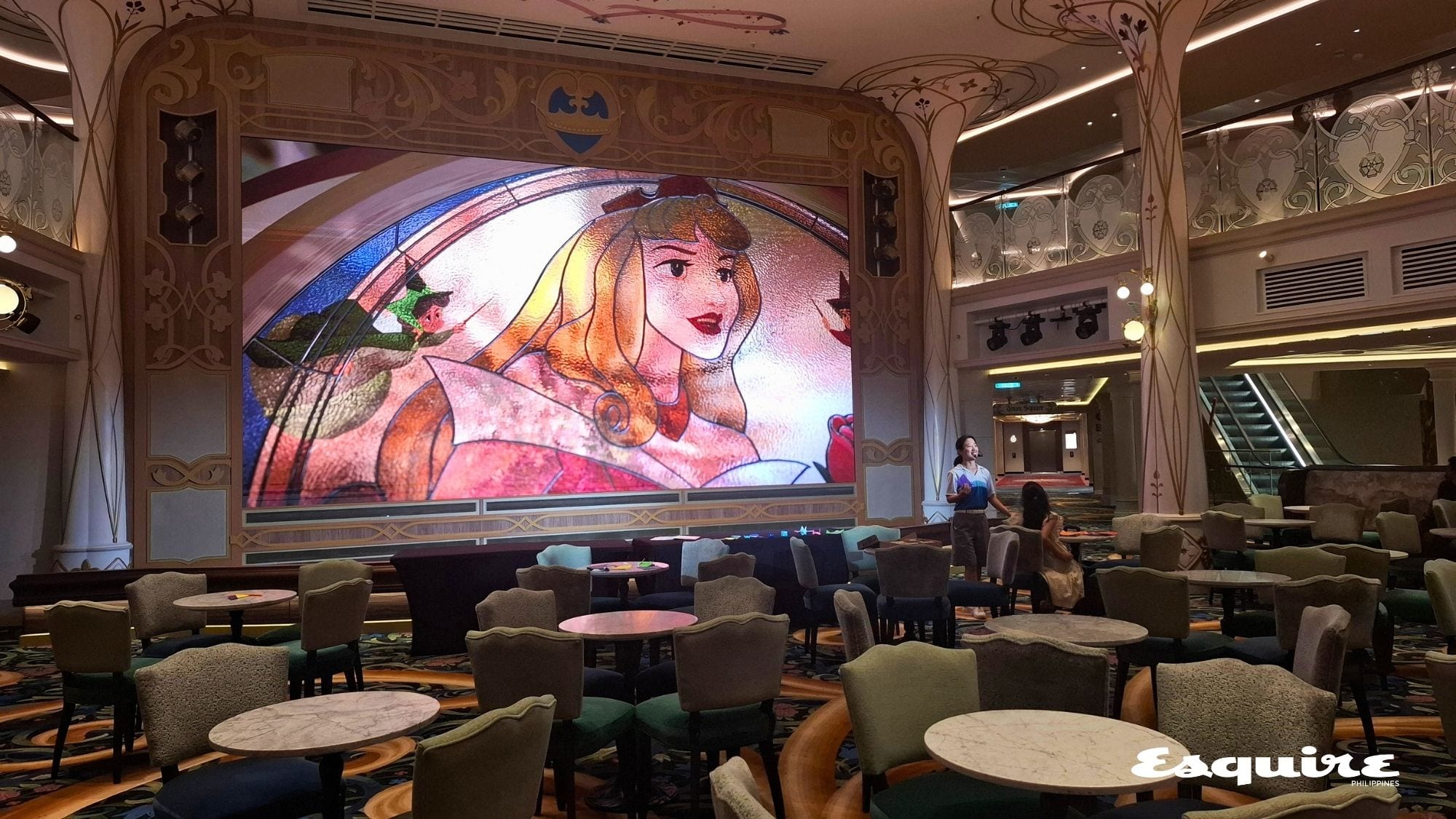
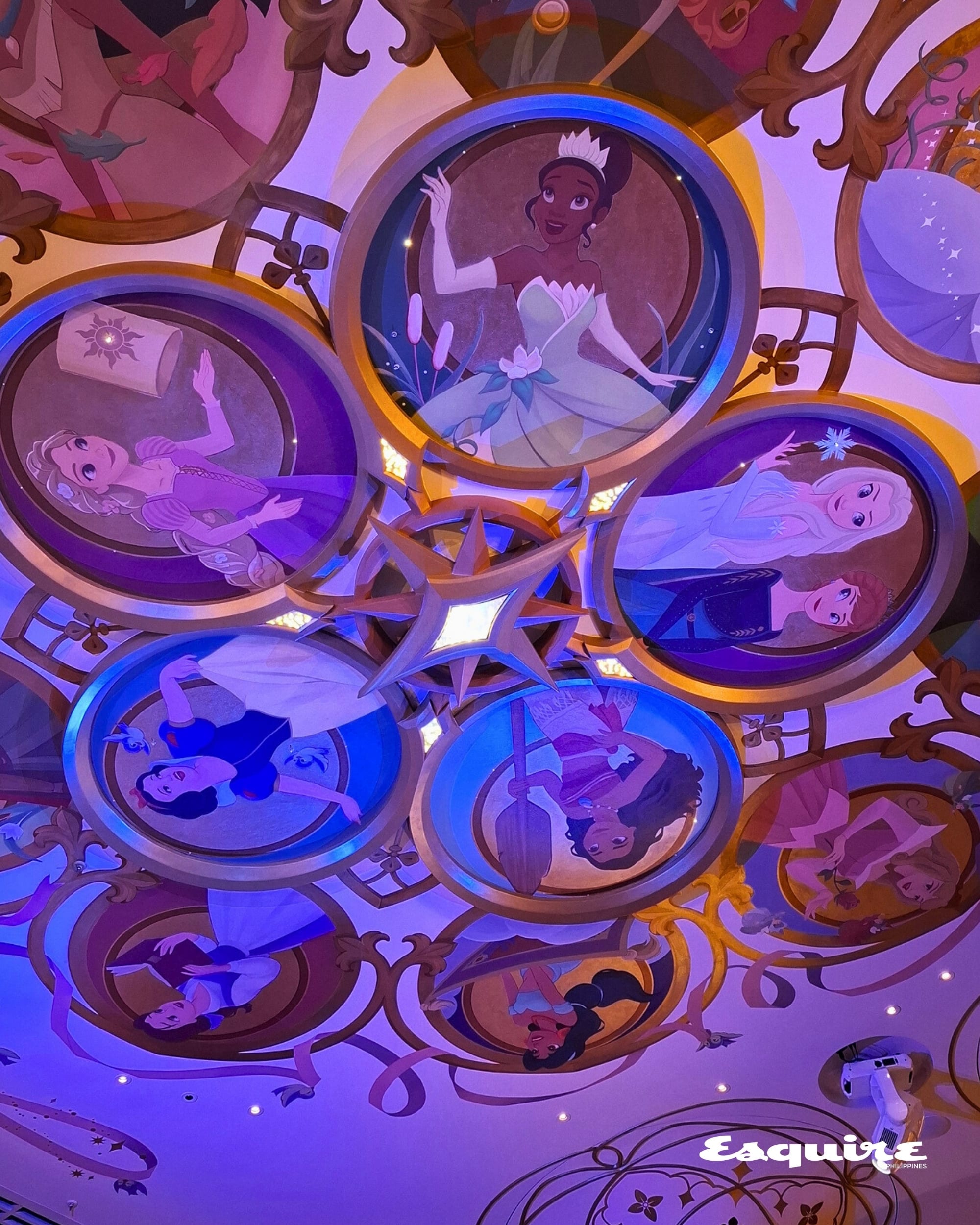
Moving below the garden into Town Square (on Deck 6, Mid), the design shifts toward Disney’s stories of royalty and classic elegance. Here, the scale remains massive, but the focus turns to the "meticulous details," a phrase Stephanie Jimenez emphasizes. The Town Square features a central mural on the ceiling showcasing Disney princesses and heroines, arranged in a stained-glass style.
"Town Square is our main hub in the ship, and in the center of it, we've got the Royal Court," Jimenez explained. The space is a masterclass in architecture, utilizing double-height spaces to link decks visually. Jimenez, who comes from an architecture background, finds the hand-painted nature of the space particularly rewarding. "It's always super gratifying to see people appreciate all of the meticulous details that we've put into a space like Town Square. Some of the murals are hand-painted. We've done that medieval filigree around the proscenium."
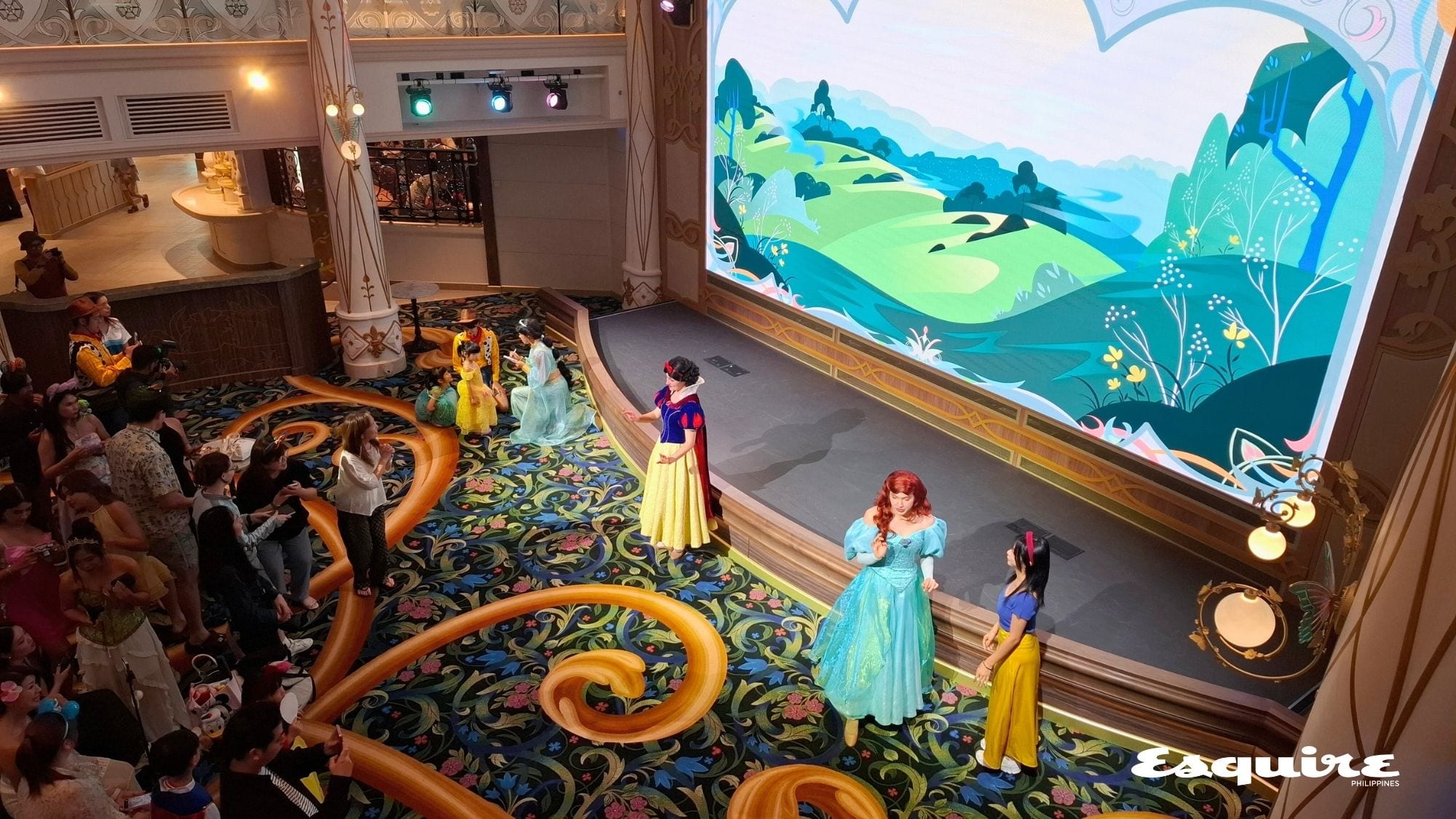
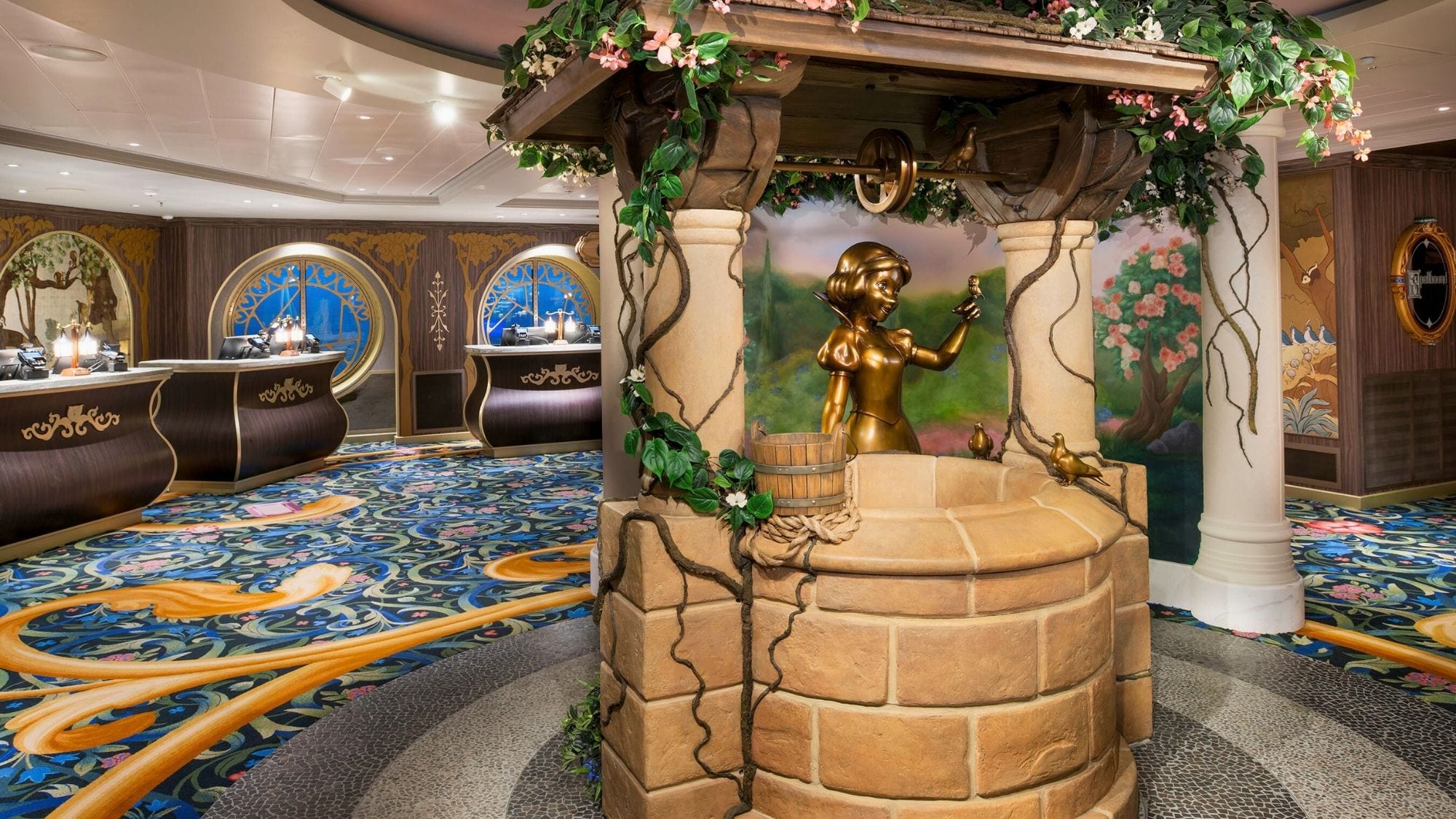
Even the functional areas follow the narrative. The Guest Services, inspired by Snow White’s forest, features a bronze figure of the princess at her wishing well. Jimenez revealed a subtle "Easter egg" for the observant guest: "I don't think anyone's actually counted the guest services desks, but there are seven: seven desks, seven dwarves."
The Town Square area actually spans three decks, with a lounge for royal-themed activities at the center, the Enchanted Summer Restaurant (open for breakfast and lunch buffets), Bibbidi Bobbidi Boutique (an enchanted salon where kids can get their fairytale princess makeover), and Diamonds and Wishes Jewelry Store (where you can drop by every 10 a.m. to get a free charm for your free bracelet). Jimenez added that there are hidden paintings of Pascal at Enchanted Summer, “there are 11 if you wanna look for them.”
Urban Innovation at San Fransokyo Street
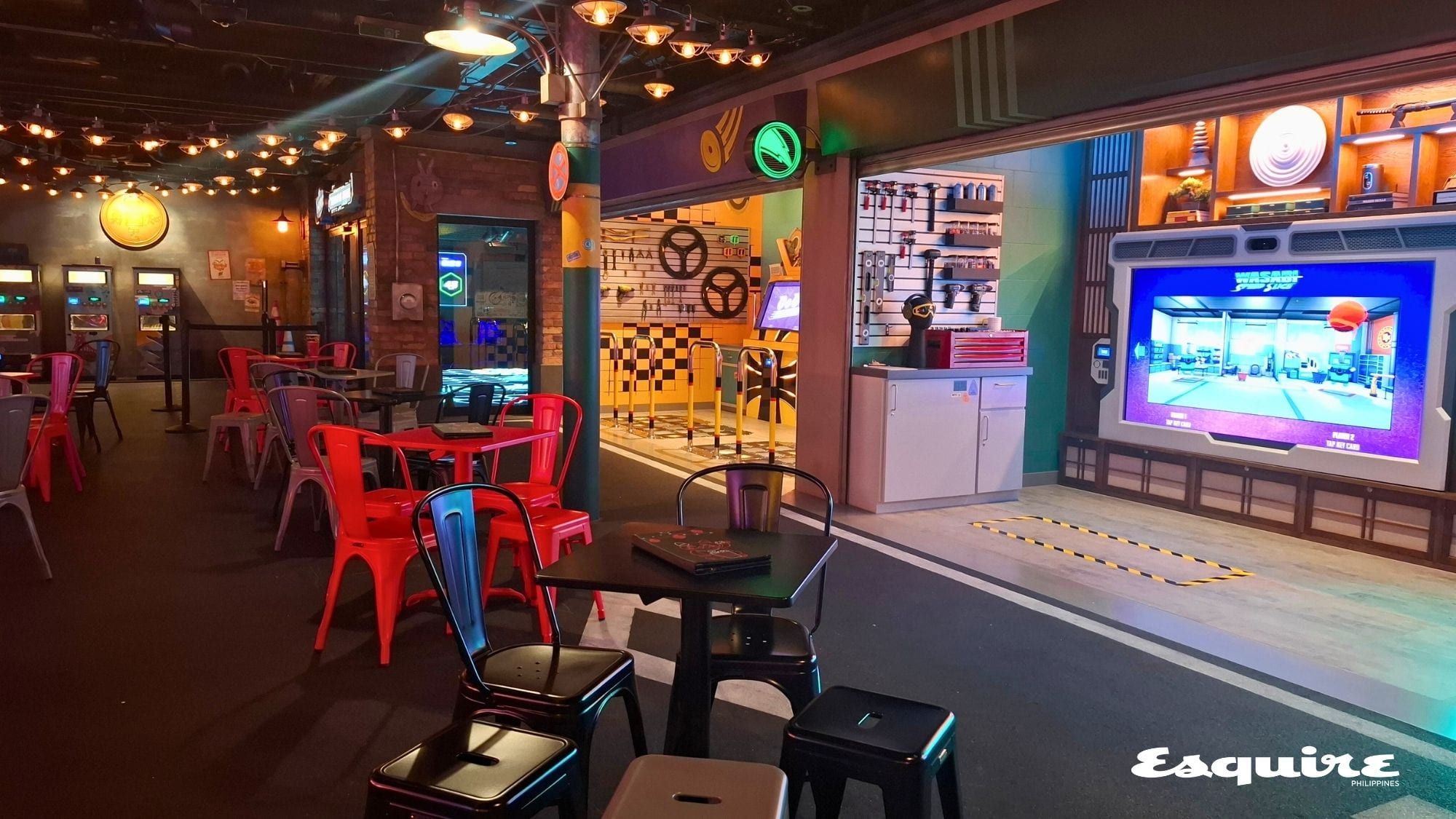
The Disney Adventure also incorporates high-energy urban environments that feel remarkably like a "hustling, bustling" city to prevent “sea fatigue.” San Fransokyo Street (on Deck 7, Aft), inspired by Big Hero 6, serves as a family gaming zone.
Creative Lead Davy Feder explains that bringing a 2D animated world into a 3D physical space requires a deep understanding of guest flow. "One of the really cool things we get to do as Imagineers is bring to life in 3D these incredible worlds... But we can't just recreate shot-for-shot what you see in the film. Because as Imagineers, we have to think about, well, how will our guests actually move through that space?"
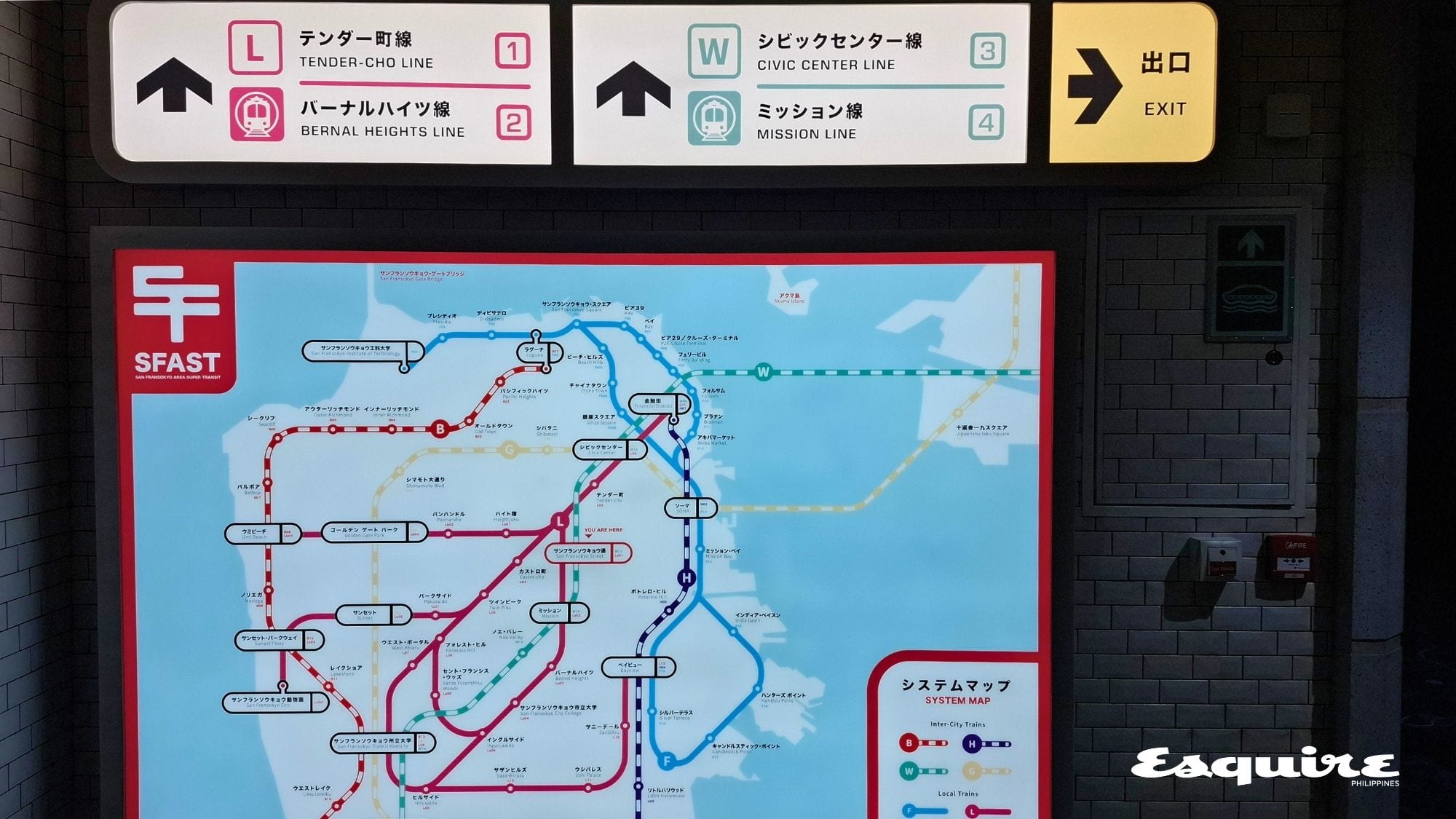
To ensure authenticity, the team visited Walt Disney Animation Studios in Burbank to "pick the brains" of the original directors and animators. They even invented a 50-stop subway map for the city—a detail never fully realized in the film but necessary for the ship’s immersion. "While our partners at Walt Disney Animation had built out this incredibly beautiful world for the screen, they never needed to... lay out what a full subway map looks like for this city. So that challenge fell to us," Feder said.
The result is a space that feels like an "extension of the world from the film." Feder described the joy of watching "three generations—a grandchild, a parent, and a grandparent—all playing at the same time" in the Hero Training Zone. "Everyone gets it, everyone is laughing... it's why we do it."
The Ocean as a Main Character: Wayfinder Bay
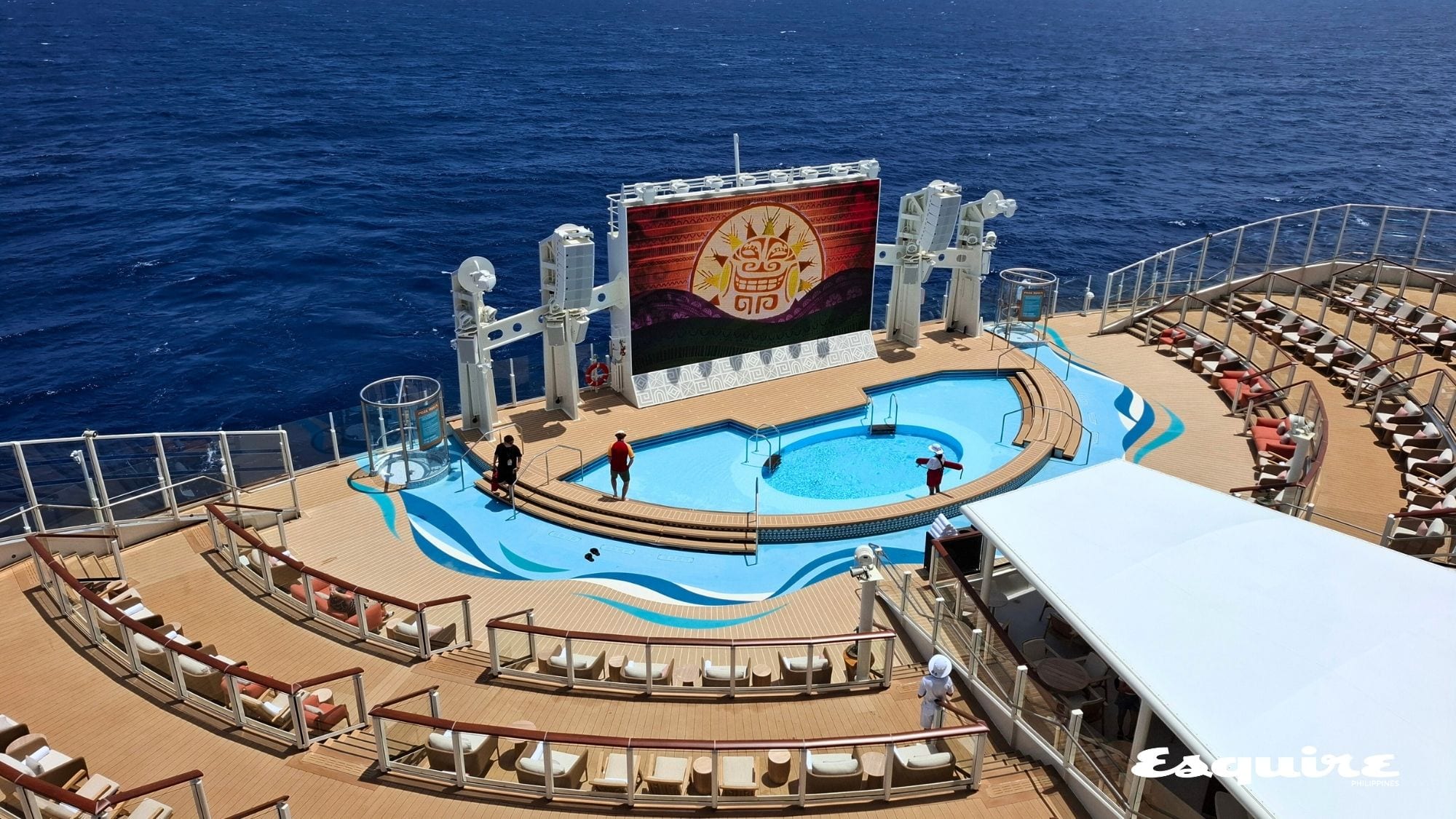
Perhaps the most surprising design move is found at Wayfinder Bay, on the rear of Deck 10. While most cruise ships treat the ocean as a backdrop to be viewed through a window, this themed area treats the horizon as a "main character."
"The most striking design element in this venue wasn't actually going to be in the venue," Feder explained. "It was going to be the ocean that's right outside it, and that you have these incredible views of from everywhere within the venue." By using warmer tones and patterns inspired by Moana’s wayfinding outfit, the design forces a connection between the interior and the exterior elements. It really is where you can “see the line where the sky meets the sea,” as Moana’s song goes.
Feder recalls the satisfaction of seeing this vision realized after years of building the ship in a "giant steel warehouse" in Germany. "For years, while we were thinking through all this design, the ship was sitting in its ship hall. We're picturing this beautiful ocean view, but really just looking at the inside of a giant steel warehouse. We had to use our imagination there. It was really satisfying when we finally got the ship out to sea."
Action and Play: Marvel Landing and Toy Story Place
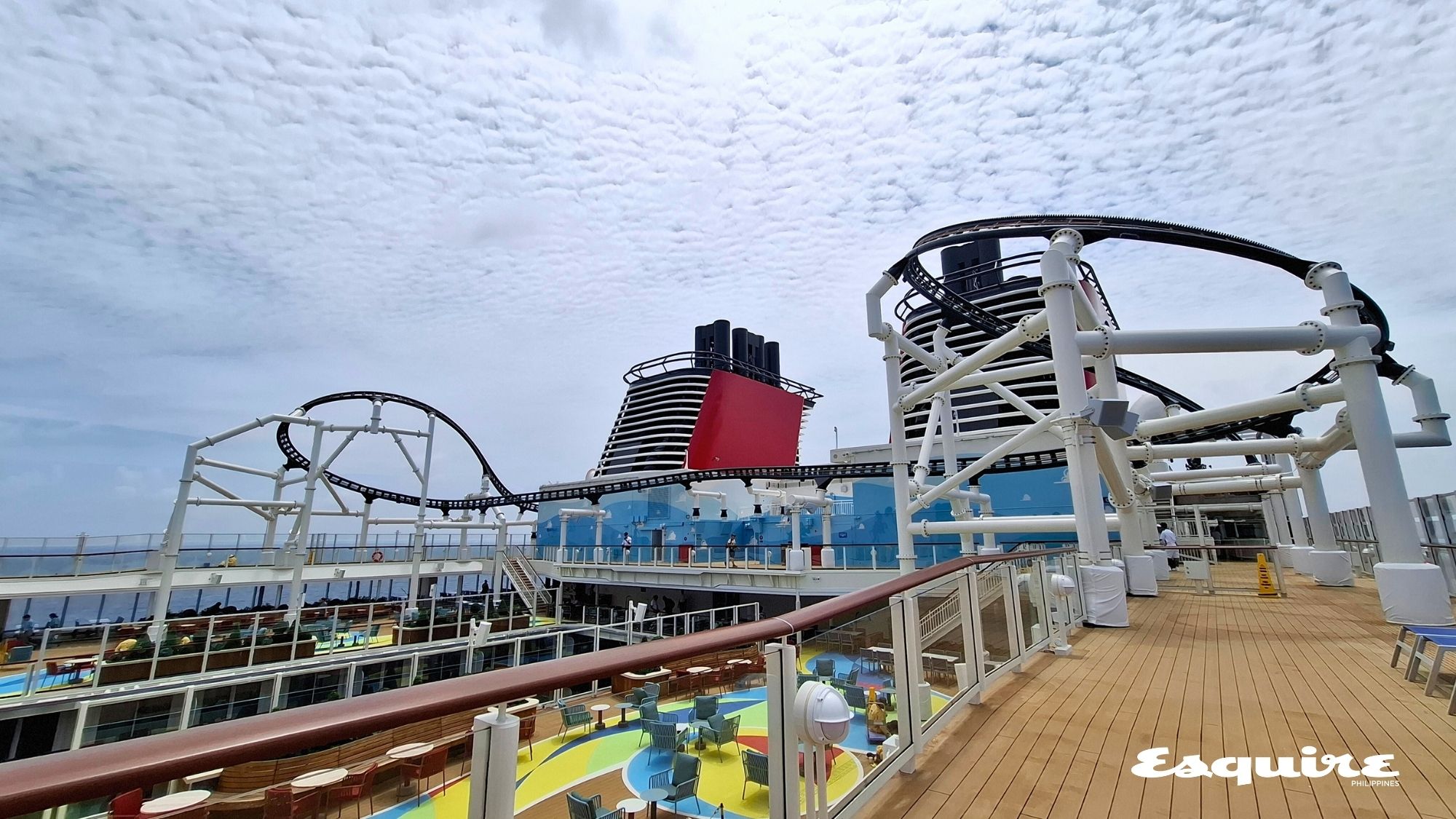
On the upper decks, the energy shifts toward pure kinetic adventure. Marvel Landing brings the Marvel Cinematic Universe to life with attractions that allow guests to "be transformed into your favorite Marvel superhero," according to Courtney Knight. This themed space features three attractions—Groot Galaxy Spin, Pym Quantum Racers, and Ironcycle Test Run, the first-ever roller coaster aboard a Disney Cruise Line ship. It is also the longest roller coaster at sea—spanning over 250 meters.
Nearby, Toy Story Place offers a "super-sized" perspective, much like the toy-inspired movie we love. Cabo described working with Pixar to turn characters into larger-than-life bath toys for the water play areas. "Toy Story is all about family and friendship. And what better story than to be at the center of designing a family water play area?" The space includes the Flying Saucer Splash Zone, based on the space-age aesthetics of Pizza Planet, and the Woody and Jessie Wild Slides. Pizza Planet is also the name of the…well, pizza stand, where you can line up for free pizza at any time of the day.
The Pixar Market Restaurant continues the story, with eight different dining rooms each reflecting a different film, from Finding Nemo to Turning Red. "Every single detail in those dining rooms reflects that space," Cabo said, highlighting the themed light fixtures—seaweed with fish in the Nemo room, and eyeballs with eyelashes in the Monsters, Inc. room. "This is a place where I think you can see firsthand, like the depth and breadth of everything that Imagineering does."
The Singapore Connection
A critical part of the Disney Adventure's design was ensuring it felt "culturally resonant" for its homeport in Singapore. Cabo explained that the team took a "left brain and right brain approach," combining intuitive design with hard data.
"We came to Singapore. It’s one of the coolest things we get to do at Imagineering because we wanna keep it authentic," Cabo said. "We enjoyed all of the things that the tourists do here, and then we also have data from across all of our resorts around the world that tell us which stories resonate in different parts of the world."
Jimenez, whose parents are from the region, noted the emotional impact of this connection. "Seeing them and the interaction with our crew, especially, was so wonderful because so much of our crew comes from this region. For them to talk in their native language with my parents and talk about being close to home, just made the whole experience even more incredible."
From the Imagineers to the World
Designing a ship of this scale is a "huge sacrifice," as Cabo described it. Behind the few faces on stage for the panel are hundreds of Imagineers who lived in Germany for years to bring the project to life. "Most of the Imagineers have lived off and on, or lived totally in Germany, where the ships are built. They've all been on board since January 4th... crossing the Pacific, the Panama Canal, LA, Tokyo, and then the eight days on to Singapore."
"I thought I knew what immersive storytelling was," Cabo admitted, reflecting on her late-career move to Imagineering. "But it is something else. It is next level." She noted that Imagineers "sweat the small stuff" because they are driven by a unique passion. "There's like a screw loose with all of us… where we just love what we do. And the biggest reward for us is seeing your happiness."
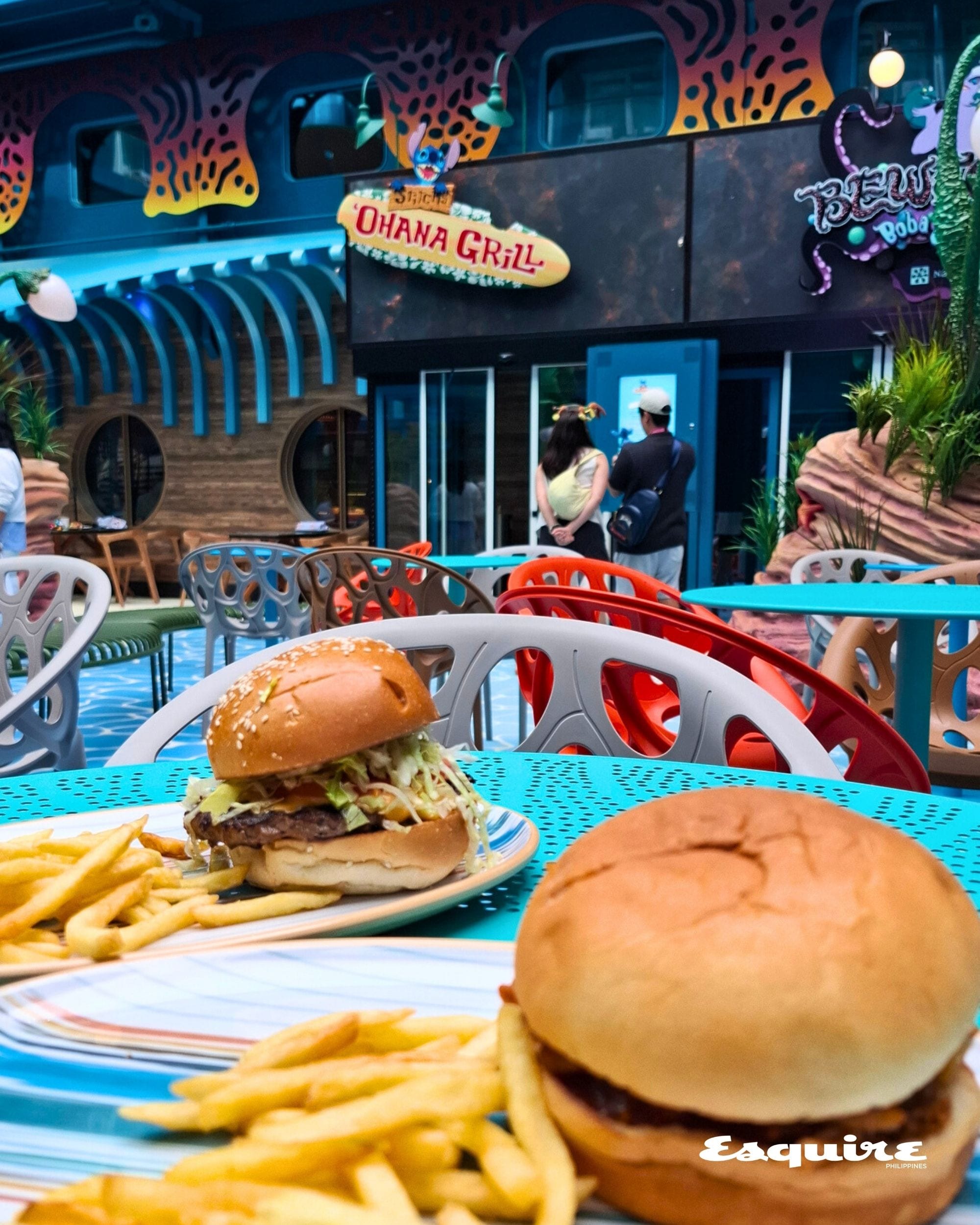
For Hastings, the reward was personal. "The idea that I could take my son into a burger restaurant that I designed, Stitch's Ohana Grill, and eat a hamburger in a restaurant designed after his favorite character was just one of the best experiences of my career."
Cliche as it may be, Disney Adventure is actually a destination in itself. It goes beyond the hull and steel walls and expands the interior with canyons, extending the guests’ imagination and immersing everyone in a magical story at sea.
The Disney Adventure is already sailing from the Marina Bay Cruise Centre Singapore, with three- and four-night cruise dates available on the Disney Cruise Line website. Best available rate starts at P65,000++ for two, inclusive of accommodation (with in-room movies), access to kids clubs and fitness center, entertainment and activities (including fireworks at sea, live acts, and movie screenings); dining (table-service, quick-service, 24-hour room service, and unlimited coffee, tea, and soda); and taxes, fees, and port expenses.
Main photo courtesy of Disney Cruise Line
ALSO READ:
A Tactical Guide to Avoiding Children on the Disney Adventure Cruise
Fly and Cruise: Why Going on a Cruise Takes Much of the Guesswork Out of a Memorable Vacation
Christa I. De La Cruz is a Palanca Award-winning writer with over 15 years of experience in feature writing for print and digital media. She earned her Sertipiko sa Malikhaing Pagsulat sa Filipino from the University of the Philippines Diliman and holds an MFA in Creative Writing from De La Salle University.
View More Articles About: