The Next Philippine Cocktail Fiesta Shines the Spotlight on Cebu
The festival began as a celebration of a growing drinks culture. Its next chapter asks whether that culture can grow without reproducing the same old center.
Published on Jul 24, 2026
By moving its 2026 edition to Cebu, the Philippine Cocktail Fiesta is asking what happens when we recognize the industry beyond Imperial Manila.
Manila imagines the rest of the Philippines as a capital looks at a map: outward, from the center. Talent arrives in Manila to be discovered. Ingredients arrive in Manila to be priced, packaged, and given a new story. The rest of the country becomes a source of raw material, a destination, or an emerging scene waiting to be noticed.
The Philippine Cocktail Fiesta is now doing something brave and quietly radical. For its 2026 edition, the festival will move its center of gravity to Cebu, unfolding across Cebu City, Mandaue City, and Mactan from November 13 to 15. The festival will be held outside Metro Manila, under a new rotating host-city program that promises to bring the event to a different Philippine destination each year.
On paper, this is a change of venue. In practice, it could be a change in the way the Philippine drinks industry understands itself.
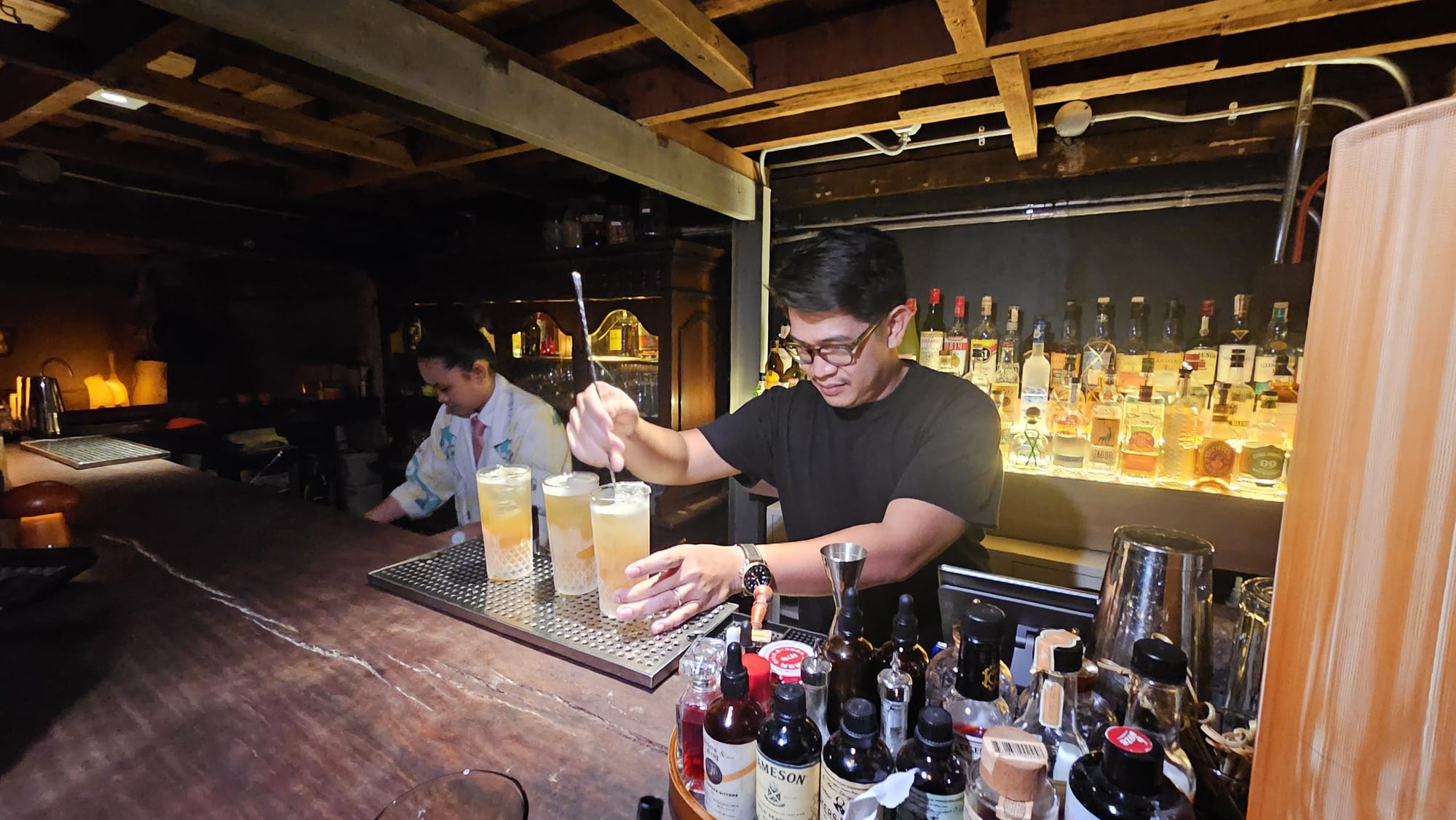
The inaugural Philippine Cocktail Fiesta 2025 gathered nearly 100 bars across 10 cities in Metro Manila, alongside guest shifts and events involving bartenders from Cagayan de Oro, Cebu, Davao, Dumaguete, Iloilo, La Union, Palawan, and Siargao. It made visible a national community that had always existed, even if the industry’s most important conversations continued to happen in the capital.
The move to Cebu turns that visibility into something more consequential.
Cebu City, Mandaue, and Mactan form a natural hospitality circuit, connecting urban nightlife, local communities, tourism, and island hospitality. More importantly, Cebu sits within a wider geography of movement. It is accessible to the Visayas, including Samar, Leyte, and Negros, and connected to the rest of the country by the same networks through which people, produce, ideas, and money already move.
The question is whether the cocktail industry can move with them.
This is where the conversation about decentralization becomes more than a matter of regional pride. If the industry is serious about building a Philippine cocktail culture, then it has to consider where value is created and where it accumulates.
The ingredients alone make the case.
A bar in Luzon can source calamansi, pineapple, coconut, coffee, cacao, and a familiar constellation of tropical ingredients with relative ease. But the Philippines is a country of distinct agricultural and culinary ecosystems. Cebu and the islands around it have access to ingredients that remain rare or difficult to source in Manila: batwan, with its puckering acidity; marang, with its intensely aromatic flesh; and a range of fruits, herbs, spices, and agricultural products that are often known locally long before they become fashionable elsewhere.
When these ingredients do reach Manila, they often arrive as novelties. They are turned into a menu description, a limited-edition cocktail, a talking point.
The more interesting question is what happens when people build the infrastructure to make them available consistently.
A cocktail industry that takes its ingredients seriously cannot only celebrate the farmer at the end of a menu. It has to think about the supply chain that gets the ingredient from a farm to a bar. It has to ask whether there are entrepreneurs who can invest in processing, preservation, logistics, cold storage, distribution, and the relationships necessary to make regional produce commercially viable.
That is where a festival can become something larger than a festival.
The Philippine Cocktail Fiesta’s new Fiesta Exchange program already points in this direction. Filipino bartenders have traveled to Delhi and Singapore, and are scheduled to appear in Hong Kong and Bangkok, while international bars are being invited into the Philippine festival. The movement is deliberately two-way. Filipino bartenders are not simply waiting for the world to come to Manila to validate them.
The same principle should apply at home.
For years, the country’s creative industries have operated under a familiar arrangement: the capital gathers the attention, while the provinces provide the material. Decentralization asks what happens when the attention itself travels. When the people who make the drinks, grow the ingredients, run the bars, and build the businesses get to meet one another closer to where the work actually happens.
This is also where the Fiesta’s broader questions about representation become more meaningful.
The festival has already begun asking who gets to stand behind the bar and who gets to decide what a good drink is. Its Women & Tipple program confronted the persistent reality that women remain underrepresented in the industry’s positions of authority, even as women make up a substantial part of its clientele and workforce.
The geographic question follows naturally: who gets to decide where the center of the industry is?
A capital is useful. Manila has the concentration of bars, media, brands, talent, money, and international attention that makes large-scale gatherings possible. But concentration can become a habit. Eventually, the same people meet in the same rooms, the same ingredients circulate through the same supply chains, and the same definitions of excellence become reinforced by repetition.
Moving the festival to Cebu disrupts that repetition.
It also creates an opportunity to see the Philippines as an archipelago of drinking cultures rather than a single industry radiating from one city. Cebu has its own nightlife, food traditions, producers, bartenders, and hospitality economy. So do Davao, Iloilo, La Union, Siargao, Dumaguete, Palawan, and the other communities that the Fiesta has already brought into its orbit.
A rotating host city could make that decentralization tangible. Every year, the industry would have to travel, listen, spend money, encounter different local economies, and reconsider what it thinks it already knows about the country.
The success of the Philippine Cocktail Fiesta should therefore be measured by more than attendance. It should be measured by what remains after the guest shifts end.
Did a bartender find a new collaborator? Did a local producer find a buyer? Did a regional ingredient find its way into a sustainable supply chain? Did an entrepreneur see a business opportunity where the capital had previously seen only a raw material? Did an international guest leave knowing the Philippines as something more complicated than Manila?
These are the kinds of questions that make decentralization meaningful.
The Philippine Cocktail Fiesta began as a celebration of a growing drinks culture. Its next chapter asks whether that culture can grow without reproducing the same old center.
And if you run a bar in Cebu, Mandaue, or Mactan, you have a chance to help decide what that chapter looks like. The 2026 Fiesta is inviting venues across Cebu City, Mandaue, and Mactan to take part in the festival, with the wider Visayas within reach. Bars interested in joining should head to the official Philippine Cocktail Fiesta website and register before the end of July.
The real promise is not simply that the center will have to travel. It is that, for once, the country might have to look in the other direction. And the archipelagic experience might prove that there can be many spotlights without dimming anyone's shine.
ALSO READ:
Why Showing Up to the Philippine Cocktail Fiesta Means Something
The PH Cocktail Fiesta Happened—Now Here’s Its Legacy
Craft cocktails, social justice, books, board games, and TTRPG. Chopsuey.
View More Articles About: