

Financial Adviser: 5 Business Lessons Everyone Can Learn from Chef Baba Benedicto, Co-Founder of Nono’s Comfort Kitchen

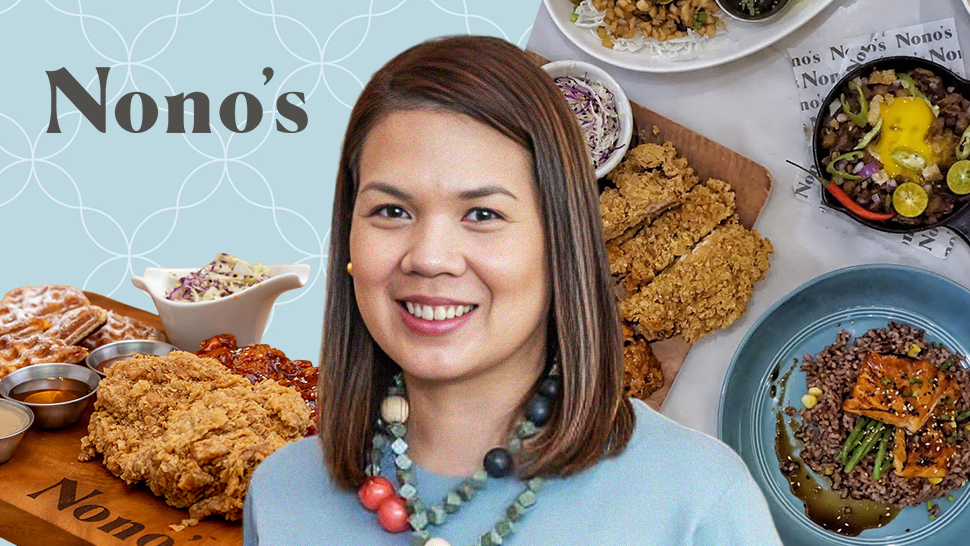
Andrea “Baba” Ibazeta-Benedicto's story is one of passion and entrepreneurship in the culinary world. It all started with a simple dream: to open her own bakery and make delicious treats that people would love. Benedicto's journey is one of determination and innovation, as she pursued her love for baking.
After graduating from Ateneo, Benedicto's ambition to learn baking led her to California in the USA, where she enrolled in a two-year culinary program to improve her skills and learn new techniques. Upon her return to the Philippines in 1999, she started selling her homemade pastries at weekend markets in Makati. It was during this time that a major ice cream company discovered one of her creations and expressed interest in collaborating with her.
The collaboration led her to establish her own commissary. However, after the contract ended, Benedicto decided to repurpose it by establishing her own company, Classic Confections, where she began distributing cakes and pastries to restaurants and coffee shops across the city.
The success of Classic Confections caught the attention of one of the owners of Coffee Bean and Tea Leaf Philippines, who invited Benedicto to supply her pastries to their coffee chain, laying the foundation for a partnership that would lead to the founding of Nono’s Comfort Kitchen.
In 2017, Nono’s first outlet at UP Town Center immediately gained popularity, prompting the founders to launch another branch in the same year. By the end of 2019, Nono's had expanded to eight outlets.
However, it was during the pandemic that Nono's experienced substantial growth. Seizing the opportunity presented by malls offering prime spaces at reduced rates, Nono's embarked on an aggressive expansion strategy. Today, Nono's is one of the fastest growing restaurants in the country with 21 outlets and aiming to double its presence in the coming years.
How did Benedicto overcome the challenges of the pandemic and manage to scale Nono's Comfort Kitchen's operations during that period? What key entrepreneurial qualities of Benedicto contributed to the success of Nono's Comfort Kitchen, and how can aspiring entrepreneurs learn from these traits?
Here are the five business lessons every entrepreneur can learn from Andrea Benedicto, co-founder and managing director of Nono’s Comfort Kitchen:
ALSO READ
Financial Adviser: 5 Business Lessons Everyone Can Learn from the Founders of Brothers Burger
1| Know how to prepare and seize opportunities
In today's rapidly changing business environment, new opportunities can emerge unexpectedly. Entrepreneurs who are well-prepared can adapt to changes more effectively, positioning themselves to leverage new trends and developments.
Being prepared encourages entrepreneurs to continuously innovate and think creatively. By honing their skills and staying informed, entrepreneurs can identify innovative solutions and create unique value propositions that set them apart in the marketplace.
Benedicto’s journey towards founding Nono's reflects a series of pivotal moments that prepared her for entrepreneurial success. It began with her decision to pursue a culinary program at the California Culinary Academy in San Francisco after college, followed by a year of practical experience working in a pastry shop.
With her culinary skills honed, Benedicto ventured into entrepreneurship by participating in bazaars and selling pastries from home. The turning point came when her almond crunch product garnered attention, leading to its inclusion in Selecta's ice cream lineup and prompting her to establish her own commissary.
As her business grew, she expanded into supplying pastries to coffee shops and restaurants, eventually partnering with CBTL Philippines to further expand her brand.
Recognizing the demand for gourmet meals, Benedicto launched Nono's, offering savory dishes alongside pastries. Through adaptability, innovation, and readiness to seize opportunities, Benedicto’s journey underscores the importance of preparation and strategic decision-making in entrepreneurship.
“I lived in San Francisco for three years,” she says. “After college, I went there and took the culinary program at the California Culinary Academy. Then, I worked for one year in a pastry shop before moving back here. I started my business in 1999. You could say I was one of those home sellers before social media. I used to join bazaars like Salcedo Market and Legaspi Market on weekends. Initially, it was just orders from home.
“Then, one day, my big break came when I joined one of the bazaars. Someone bought a can of our almond crunch. It’s actually one of our best sellers. It's caramel with almonds and chocolate. They liked it so much that they gave it to their R&D department.
“Then they called me and said they wanted it to be part of their limited-edition ice cream, one of the components. This was from Selecta. That forced me to move out of my mom’s house and set up my own commissary, so that was my big break.
“I started with pastries, so after that contract was over, I had a commissary. I had to figure out what to do with it, so I thought I could supply coffee shops with pastries and cakes. In 2007, I opened my first store in Greenbelt 5, called Classic Confections. It became my brand, specializing in wedding cakes, birthday cakes, and all sorts of pastries and baking. At the same time, I was also supplying other restaurants.
In 2015, I had to move my commissary to a bigger one because I already had two branches of Classic Confections. Then, one of the guys from Coffee Bean, Walden Chu, tried one of my cakes in a meeting, and he loved it so much that he set up a meeting with me. After a lot of discussions, we partnered up in his commissary and we're still partners there until now.
When we partnered up, it was really to expand Classic Confections and also refresh the Coffee Bean menu, further their display case, and all that. So I started to work on that, and we opened one in Solenad, our third branch of Classic Confections.
So when we opened it there, it was a small pastry shop, and at the same time, customers were asking me (to) do gourmet meals, like savory meals, not just cakes and pastries’. That's where Nono’s actually started.”
2| Know how to create memorable brand experiences
Memorable brand experiences evoke emotions and forge strong connections with customers. Brands that consistently deliver positive experiences enhance their reputation and credibility. When people have positive interactions with a brand, they are more likely to develop loyalty and become advocates for the brand.
Benedicto created memorable brand experiences by infusing personal elements and a clear vision into the brand development process. It began with identifying what would sell, but evolved into a more personal journey that resonated with childhood memories and comfort food.
Naming the brand "Nono's" after the Benedicto's father, Jose ‘Nono’ Ibazeta, added a personal touch and maintained a connection to the existing brand, Classic Confections. Consolidating all recipes under the Nono's brand ensured consistency in offerings.
By selecting a strategic location and engaging designers who understood the brand's vision, Benedicto ensured that the brand experience would be coherent and impactful from the outset. The emphasis on aesthetics, such as proper lighting, further enhanced the brand's appeal and contributed to the creation of memorable experiences for customers.
“It started with what I thought would sell,” she says. “As I worked with my R&D team, it became more personal. It brought back memories for me, and that's where the journey really began.
“When I was a kid, I remember eating this so it became about comfort food. I guess that's how it started, but then the whole vision became clearer. The vision was really about elevated comfort food, comfort food done right.
“Nono’s is actually named after my dad. I wanted something that still tied into Classic Confections since, you know, that was my baby. One of our most popular cakes, the one that Walden tried, was Nono’s Chocolate Oblivion.
“So I thought, ‘Oky, why don't we name it Nono’s after my dad?' It's still personal and at the same time, it still ties to Classic Confections for those who know it. We already knew that we wanted Classic Confections to offer food, but we didn't want to call it Classic Confections because people might get confused. They might wonder why one has only cakes and the other has food. So we decided to give it a totally different name. That's where Nono’s came in.
“At first, we were managing two brands, but it became confusing. So we decided it's better to have just one brand. We folded all our recipes into the brand so that the items that you see in our display at Nono’s are all from Classic Confections.
“Our first outlet was in UP Town Center. We were actually with the Ayala guys and we told them about our new concept and they said that they had a good space, although it's quite far, but we thought, ‘Okay, it's a good space. Let's try it.’
“For our first outlet, we needed a designer who could capture what we're trying to do, so what we did was we actually briefed our designers, and I explained even before it opened what I was trying to do, what our vision was. Of course, getting the dishes right and consistent is always a challenge, and you know, maintaining the quality like making tutok and making sure that it comes out the way we want it to come out.
“And then, there's also the challenge of sourcing the right ingredients while keeping costs reasonable. We want to be in the middle, not too expensive but also not too cheap. Basically, we aim for affordability. So, that's always a challenge.
“I was very, very nervous when it opened, but it really tied everything together. I think when you see your vision come to life, it's something special, obviously. But of course, it's also nerve-racking because you don't know how it's going to be received. Fortunately, everything just really came together.
“The first day was actually on Easter Sunday, in August 2017. We had a good crowd. It's funny, you know, people tease me because I didn't want to take down the 'soft opening' sign for a long time. But it was a really good crowd for our first opening.
“When we opened our first restaurant, a lot of people were saying, "I like your restaurant because it's so Instagrammable," so I didn't understand like, what? And I realized like, it's important to have that look or the proper lighting.”
3| Know how to embrace changing consumer preferences
As consumer tastes and preferences evolve over time, businesses must adapt their products and services to meet these changing demands. By actively listening to consumer feedback, businesses can identify emerging preferences and adjust their offerings accordingly.
Tailoring products to shifting consumer preferences allows businesses to maintain customer satisfaction and loyalty. This can lead to increased customer retention and positive word-of-mouth marketing, as satisfied customers are more likely to recommend the brand to others.
Benedicto adapted to changing consumer preferences by understanding the evolving tastes of the younger generation. Despite maintaining a classic and timeless style in his dishes, she recognized the importance of catering to the preferences of younger consumers who have different experiences with food and are more aware of culinary trends due to increased travel opportunities.
To adapt, Benedicto planned her travels based on food experiences, seeking inspiration from different cuisines and flavor combinations. She remained conscious of new trends but avoided being overly trendy, focusing instead on creating dishes with lasting appeal.
In her menu, Benedicto introduced modern twists to traditional Filipino dishes like sisig and bistek Tagalog. She challenged herself to deliver dishes that were not only different but also memorable.
By aligning her culinary creations with joyful memories and celebrations, she aimed to create meaningful experiences for her customers and ensure that her dishes resonated with them on a personal level.
“When I do something, it's really personal,” Benedicto says. “So, I really like to put a lot of thought into it. I mean, I don't come up with things just for the sake of it. Usually, there's a story, there's a memory, or it could be something I tried somewhere. And I like the flavor combinations or how the ingredients are combined together. That's how I start.
“It starts from there and then, I think over the years, I know already, like, ‘Okay, this ingredient is too expensive.’ So I'm not going to even bother with that. I try to optimize our ingredients, what we have here, and make sure it doesn't just go to one dish, it should go through several. My style has always been classic, timeless. So you see it in my cakes. You see it in my dishes. So I kind of just stick to that.
“I want to cater to the younger crowd. I noticed, though, that the younger generation now have experiences, I guess, with food, dishes, and ingredients that I didn't have at their age, so they're more aware now. I think there are a lot more restaurants out there now because they travel a lot. I think the younger generation travels much more than probably I did when I was that age. After college or in college, they save their money, find a cheap ticket, right? And go somewhere. And part of the experience of traveling is eating, so I think that's interesting to see now, and I think they're more aware, so I keep that in mind when I make something.
“I do plan my travels based on food. So, like, what can I try? I'm very, conscious of where to go, what I'm eating, what are the flavors they're combining, what are the new trends? But I don't intend to be trendy. If I see something, then I always ask myself, is this a trend? Should I introduce it, maybe just for a limited time? Or is this something that could last for a long time? I like to think of those things.
“We have sisig, and we also offer our own version of bistek Tagalog. But again, I try to change it up a bit. So, let's say, for our bistek Tagalog, instead of using regular onions sautéed, I use onion rings. I like the texture, playing with textures, so I enjoy the crunch that you feel, you know. I try to ask myself, what would make this dish stand out compared to others in restaurants?
“One question I always ask myself when I create a new dish is, ‘Would I come back for this dish?’ Is it something special? Is it something that customers will look for? I think that's important. What's memorable?
“For sisig, it comes as an individual serving, and then we use the good stuff. We don't just use the jaw; we really use pork belly and make sure it's crispy. It's the things that I like for the holidays. Every quarter, we try to introduce a new lineup of dishes. For the holidays, we had our slow-roasted pork belly, which is like our version of lechon kawali. I made it in slabs, which could be just for appearance. That’s the way I differentiate.
“They’re just little slabs, but it really took a long time to make sure that it stays crispy, like how? How do we perfect that part? So, that was a challenge. And then, not only do I want it to be crispy, but I also want it to be flavorful. That was a challenge. So, I'm very mindful. It's not just like, ‘Okay, I want lechon kawali, let's just put it there.’
“It has to be like, how is it different compared to others? It's not just a fried dish; it should be flavorful as well. It's like when you eat lechon, which can be crispy, but what makes it better? One's really salty, one has that lemongrass flavor. It has to be something different.
“Now, I spend a lot of time on social media, like on Instagram. I look at TikTok, I look for the trends. There are certain chefs that I really like, but they're more for the classic. But I think for the most part, it's really, again, what I feel people would gravitate to—something familiar, something that's timeless. Something that, when you eat, it reminds you of something. It's about a memory. Because eating out, if you think about it…Filipinos love to eat out. And it's always a celebration of something. So it could be a celebration of your first paycheck or a celebration that it's your birthday, anniversary, or a celebration because a friend came home from abroad or someone got well. It's always a celebration.
“So for me, it should be something happy, something that reminds you of a special memory, so yeah, and I think we're able to do that through food. So you’ll remember, like, ‘Hey, remember when we were in this restaurant?’ You always associate that. Even with food like our Mac and Cheese, it reminds me of when I was a kid.
4| Know how to maintain consistent and reliable food quality
Consistency ensures that customers receive the same high-quality experience every time they visit. This builds trust and loyalty among patrons who know they can rely on the establishment for exceptional food.
Consistency in culinary practices streamlines operations by establishing clear standards and protocols. This reduces errors, minimizes waste, and enhances overall efficiency in the kitchen.
Benedicto emphasizes the importance of innovation to keep the menu fresh and appealing to customers. By introducing new items like freshly baked croissants and bread, they stay relevant in a dynamic culinary landscape.
To ensure consistency across all stores, key ingredients like marinades and sauces are prepared centrally in the commissary. This approach guarantees uniformity in taste and quality regardless of the store location.
Benedicto acknowledges the importance of well-trained staff in maintaining food quality. Line cooks undergo a three-month training period before being assigned to busy stores, where they learn to uphold standards and check food quality.
“We always try to innovate,” she says. “Recently, we added a pastry program where we have freshly baked croissants and bread. We do our own bread. Some of those stores that we newly opened had a bakery inside. So slowly, I think we always have to innovate. You can't just stay where you are because then people will get tired.
“Every quarter it will just be like four dishes or something. It's a limited edition and then we change it and then depending on how well it did, if people ask for it often. Then when we review our menu, which is every year, we could add it to the main menu.
“I think that's one of our biggest challenges: how to make the quality of our food consistent. Right now we're trying to make some things in the commissary like, for example, the marinades and all that. They come from the commissary so it's all the same. Let's say the breading for our chicken or let's say our pasta sauces, they come from the commissary so it's made by one team only and then it gets distributed to all the stores.
“Of course, they do a lot of cooking inside, but we're slowly trying to see what we can make in the commissary, and that's one. And then number two, we do have a team of chefs, so leaders who handle all the chefs in each store. Yeah, it takes a village.
“It really depends on their experience. If they have prior experience, then it's a lot faster. But usually, for example, for the line cooks, about three months would be a good training period and then usually we send them to the busy stores so we can hire them and then they'll get sent to our busiest stores. Because that's where they'll really learn how to be fast and how to check the quality of our food.
“When it comes to pricing, we discuss this with our team. For example, if it's a pizza, we compare it to other pizza brands or restaurants selling pizza. Ultimately, we cost it out and then determine our pricing. We also check our competitors to see how much they're selling it for. Sometimes ours may be more expensive, and other times it may be cheaper compared to others. We benchmark it from there. But oftentimes, we try to keep it as low as possible.
“There are foreign competitors that are quite expensive, and I felt it would be good for another local brand to make a mark. Instead of always preferring foreign brands, Filipinos should support local brands more.
“The top three in our menu is any of our chicken dishes such as the fried chicken, our roast beef belly, and our pork chop. The truffle cheese wontons is our number one appetizer. It's an elevated cheese stick and for cakes, our number one is still the Nono’s chocolate oblivion.”
5| Know how to learn and grow from partnerships
Partnerships foster a culture of continuous learning and growth by encouraging entrepreneurs to exchange ideas, challenge assumptions, and explore new approaches to problem-solving. Through collaborative efforts, entrepreneurs can expand their networks and access new markets that may not have been achievable independently.
Moreover, partnerships provide a platform for mutual support, encouragement, and accountability. By learning from each other's experiences and successes, entrepreneurs can adapt their strategies to achieve sustainable growth.
Benedicto learned and grew from partnerships by being pushed outside of her comfort zone and being exposed to different perspectives and expertise. Initially, she didn't have much interest in accounting or operations, but through the partnership, she was compelled to learn how a business operates, including its structure and the significance of taking risks. The partners provided support and encouragement, allowing her to be more creative and confident in decision-making.
Despite initial discomfort and challenges, working with partners enabled Benedicto to confront her fears and uncertainties as she leveraged the strengths of her partners, resulting in a mutually beneficial arrangement that propelled the business forward.
“One thing about my parents is that they never forced us to pursue a certain career or industry,” she says. “It was more like, 'What do you want to do?' So, even during my time when there were no culinary schools in the Philippines, when I wanted to go to culinary school, it was a bit surprising for them. Culinary school? What career path are you considering? It wasn't seen as a glamorous profession back then. But my parents were very supportive.
“When I was still studying, I knew I wanted to live abroad. I couldn't see myself working a nine-to-five desk job somewhere. So, I thought about my passions and talents. I've always loved cooking and baking, so I thought, why not pursue that?
“Of course, my end goal was to have a bake shop, which, I think, happened years later. It's funny because, in hindsight, you think, 'I don't want a 9-to-5 job because I want my own time,' but as an entrepreneur, your time is 24/7. You're constantly thinking about your work and the impact it has on all your employees. Every decision you make can impact so many lives. It's actually hard to be an entrepreneur.
“I didn’t have much interest in accounting or operations, but I will say that with my partners, it really forced me to learn how a business runs: the structure, all of that, like how a business is run, to be fearless. When we started, how to take risks. I think that's what I've learned: to take risks and be passionate about what you do. They allow me to be creative and give me all that support.
“I've learned how to look at numbers and the story that numbers will tell you. I realized that it's not about being good in math, but it's more about being logical and seeing like, 'Okay, what are these numbers telling you?' They taught me that, and I guess you could say, I was very safe. And then, I was shy and scared to put myself out there. They taught me how to be more confident.
“When you're running your own business, you can make decisions really fast. You don't have to be mindful of how someone would feel the impact of your decision. I was doing fairly well, enough. I mean, for one person, yes, it was good. But I was also at a crossroads where I was thinking of maybe selling the business because I didn't know what was next, how to make it grow, because I didn't like the whole operations part. I just liked doing the creative part. But I didn't like doing operations, you know, accounting, all of those things. I didn't like that part.
“But having partners also makes you grow because they push you. I mean we weren't friends before this and I didn't know them at all. They took a bet on me and I took a bet on them too, because we didn't know each other and they were able to push me to a place where I was uncomfortable, but that's where I grew.
“They saw something in me that pushed me. It’s been a really good experience. I won't say that it's all smooth, and of course, we're going to have uncomfortable conversations, but we still respect each other at the end of the day. I think we respect each other's opinions. We have those uncomfortable discussions, but I think we all share the same values, which is important. I think it's been great. If they weren't my partners, I'd probably just have one store, that's it.
“So that's why it became a really good match because the things I didn't like doing, they did well. I think it was beneficial to both of us. When I met Walden a few times, he shared his values for his company and all that, I believe that we shared the same values. He's very God-centered. So I think as a group, we all believe that we're here for a purpose that is higher than us.”
Henry Ong, RFP, is an entrepreneur, financial planning advocate and business advisor. Email Henry for business advice hong@financialadviser.ph or follow him on Twitter @henryong888
