
AboitizPower President and CEO Manny Rubio on Mapping Out the Future of Renewable Energy for Filipinos

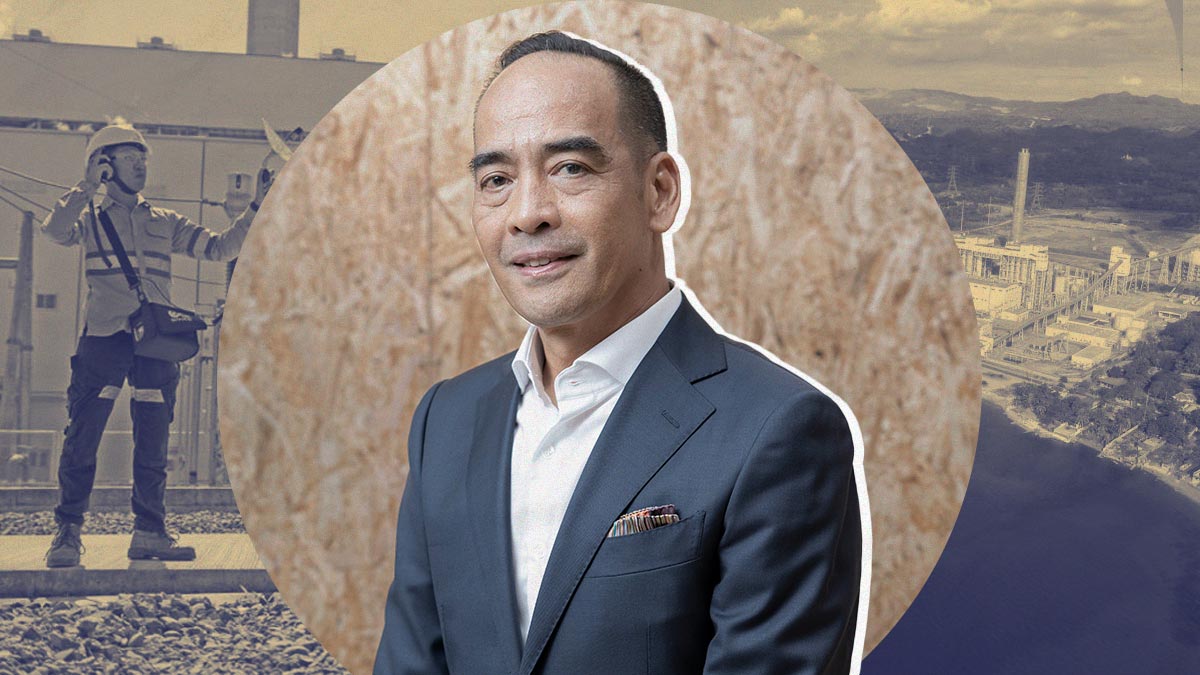
When we think of renewable energy, we can easily get lost in the general macro-outlook of the future it promises. From generating clean energy with no greenhouse gas emissions to having reduced pollution and more affordable power costs, this great transition the world finds itself in offers a glimpse of a kind of utopia.
But if there were ever a virtue needed for all this to come to fruition, it would be patience, and plenty of it. AboitizPower and its president and CEO Manny Rubio personify this in their journey and purpose of “transforming energy for a better world."
Currently, the Aboitiz Group also has Great Transformation 2025 (GT2025), a mission of the Group to become the first “Techglomerate.” For AboitizPower, this thrust in innovative thinking and encouragement in the use of technology perfectly supports its purpose and positions the company well for decarbonization, digitalization, and decentralization.
.jpg)
As with any transformative vision, the transition to renewable energy or RE, which involves the generation, transmission, and distribution of power, is a heavily coordinated effort that requires both public and private intervention. At the heart of AboitizPower's strategic direction towards a cleaner, more sustainable power system is this slogan: "There is no transition without transmission." It's simple enough to grasp, but more complex in ways the common man can ever possibly imagine.
"Transition without transmission emphasizes the importance of a robust energy infrastructure to support the transition to renewable energy—bridging the generation sources to demand centers," Rubio explains. "Developing new RE sources will require building out transmission lines to many remote areas around the country, both on land and sea. This is a monumental task."
Funny enough, monumental still feels like an understatement. There's a delicate balance here, one that considers progress, grace, and inclusivity. AboitizPower is especially careful about ensuring that, in the future that they envision, RE is decentralized and available to all facets of society.

What We Don't Talk About Enough in RE
Of course, renewable energy can have its issues, too. These problems are often cloaked in shiny targets and press release statements. AboitizPower and Rubio, however, have long been cautious about RE's possible woes. As RE relies on indigenous resources, they are prone to environmental conditions. Hydropower plants, for instance, could be affected when rivers dry up. Wind and solar, on the other hand, are intermittent.
"On top of these," Rubio elaborates, "we recognize that current technologies don’t allow RE alone to fuel our country’s entire energy system." In times when conditions are unfavorable for RE sources, AboitizPower addresses this fundamental problem through its grid-scale battery storage systems. These allow excess energy to be stored when there is high demand or when resources fail to produce sufficient power.
Nevertheless, for RE to power the Philippines at a 100-percent clip, it's going to take more than batteries alone. That’s why a healthy dose of more advanced technologies and solutions is instrumental to the switch."A gradual and well-managed transition must occur for RE to take a greater share in the energy mix," the AboitizPower chief underlines.

This is also where Aboitiz Group's overall goal to become the country's first "techglomerate" comes in. This principle of innovation ensures end-users and stakeholders that breakdown avoidance and verifiable efficiency measures through predictive analytics are in place to mitigate possible risks. Enter its centralized Network Operations Control Center (NOCC), the first of its kind in the country.
"It provides real-time data monitoring and control, enabling proactive maintenance, troubleshooting, and informed decision-making," Rubio notes. "Advanced analytics platforms, on the other hand, integrate data from various sources to optimize fuel usage, emissions control, and overall performance."
The NOCC is only one of the multiple ingenious components that can help facilitate a smoother local transition to RE. Innovations like these are what crystallize AboitizPower’s idea of a more sustainable future. "Our goal has always been providing reliable, reasonably priced, and responsibly produced energy to Filipinos, and with RE in the picture, it was only a matter of clearly defining how we intend to carry out that mission," he points out. "We aim to meet the country’s growing energy demands responsibly, minimize our environmental footprint, and contribute to the nation’s RE targets."

As it stands, fossil fuels are still the Philippines' dominant energy source, but the government already has a target of 35-percent RE share by 2030 and 50-percent RE share by 2040 in place. AboitizPower hopes to be a partner every step of the way in this regard.
"Our vision for renewable energy is to catalyze positive change, drive innovation, and foster a sustainable and inclusive energy landscape for the Philippines," Rubio says.
A Vision Decades in the Making
"For RE to become a mainstream and reliable source, considering the inherent intermittency of modern renewable energy sources like wind and solar, there must be a corresponding investment in modern, smart, adaptable, resilient, and efficient transmission systems to deliver this power from generation sources to end-users seamlessly," Rubio adds. "Over the past decade, the Philippines has seen a significant shift in its power generation landscape. Traditionally reliant on conventional sources like coal and gas, there has been a notable increase in the adoption of renewable energy sources."
And AboitizPower is right at the forefront of this paradigm shift.

A pioneer in the business in that regard, AboitizPower has been investing in renewable energy plants for decades now. For example, the brand's subsidiary, Hedcor, where most of its hydropower plants fall under, is almost 50 years old. Its joint venture with Scatec from Norway, SN AboitizPower, has several plants that precede a lot of hydropower plants today. AboitizPower's Tiwi Geothermal Power Plant happens to be one of the oldest geothermal power plants in the Philippines, too.
The company has quietly established itself further with projects like the 94-MWp Cayanga solar in Pangasinan, 159-MWp Laoag 1 and 2 solar in Ilocos, 17-MW Tiwi Binary in Albay, 46-MW Maco Battery Energy Storage System, and 200-KW Magat floating solar, among other initiatives.
"Our choice of locations for renewable projects is strategic, considering factors such as abundant natural resources, local community engagement, and the potential for a positive environmental impact," he explains. "We plan to expand our efforts by identifying regions with untapped RE potential.

"We were already among the leading RE power generators in the country even before we announced our strategic 50/50 goal in 2021," the AboitizPower chief adds.
See, these are the building blocks for the future, not just for AboitizPower's 2030 50/50 portfolio mix (50 percent renewable and 50 percent thermal capacity), but for the next generations of Filipinos who will hopefully never have to worry about power the way their grandparents and great-grandparents did. It's a long and winding road, to say the least. But Rubio is more than happy to patiently steer AboitizPower toward the future, just as long as it means that no Filipino gets left behind.
