
Beyond Hype: Dr. David Hardoon's Pragmatic Approach to Making AI Work

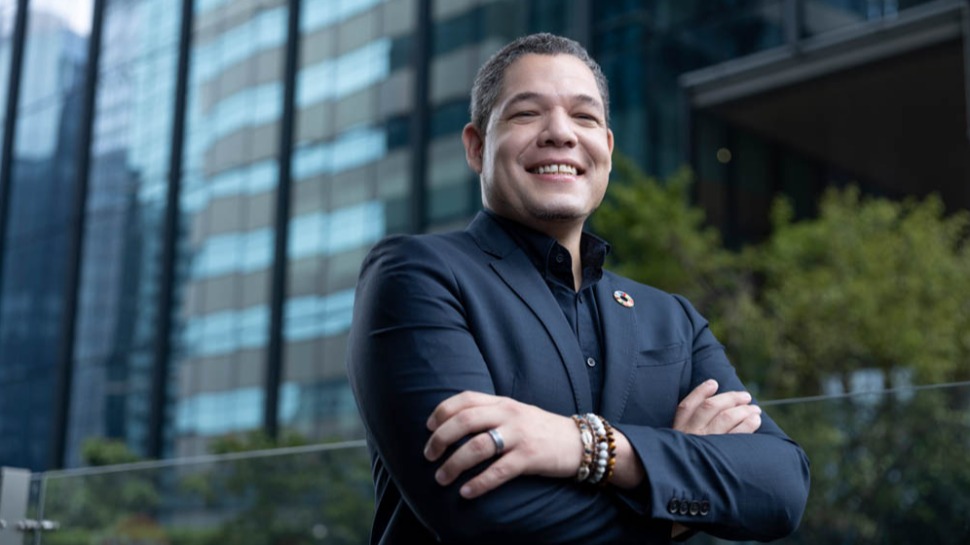

“It started because of detention.”
It’s hard to imagine that David Roi Hardoon’s first foray into data and artificial intelligence began with a disciplinary measure in junior high school. But his story, however unusual, is true.
Imagine a 15-year-old sent to the school library as a form of punishment, but instead finding the one thing that would spark his interest and lay the foundation for a lifelong passion. The young David found a book about Prolog, a programming language based on the concept of logic, which essentially revolves around creating ‘expert systems’ as he puts it. He read the book and was fascinated with the idea that you can program logic. It ignited a passion for exploring the world of data and AI.
“I fell in love,” Hardoon says. “I literally fell in love.”
ALSO READ
Why Energy Shouldn't Compromise Sustainability, From the Chief of AboitizPower
Aboitiz, MVP, Ramon Ang Come Together in P185-Billion Energy Project in Batangas
Soon enough, he poured his heart into learning programming. He wanted to prove that he could start making reasonable solutions based on data. Moving forward, Hardoon eventually became the second student to study AI at the Royal Holloway, University of London.
Finding patterns
The accomplished tech exec’s resume speaks for itself: before becoming the CEO of Aboitiz Data Innovation (ADI) and Group Chief Data and AI Officer—and eventually, Senior Advisor for Data and AI—of Union Bank of the Philippines (UnionBank), he was the head of the Data Analytics Group and Special Advisor for AI at the Monetary Authority of Singapore. Go deeper into his credentials and you’ll discover he has held key positions throughout his career and that it’s peppered with ‘data’ and ‘AI’ from top to bottom.
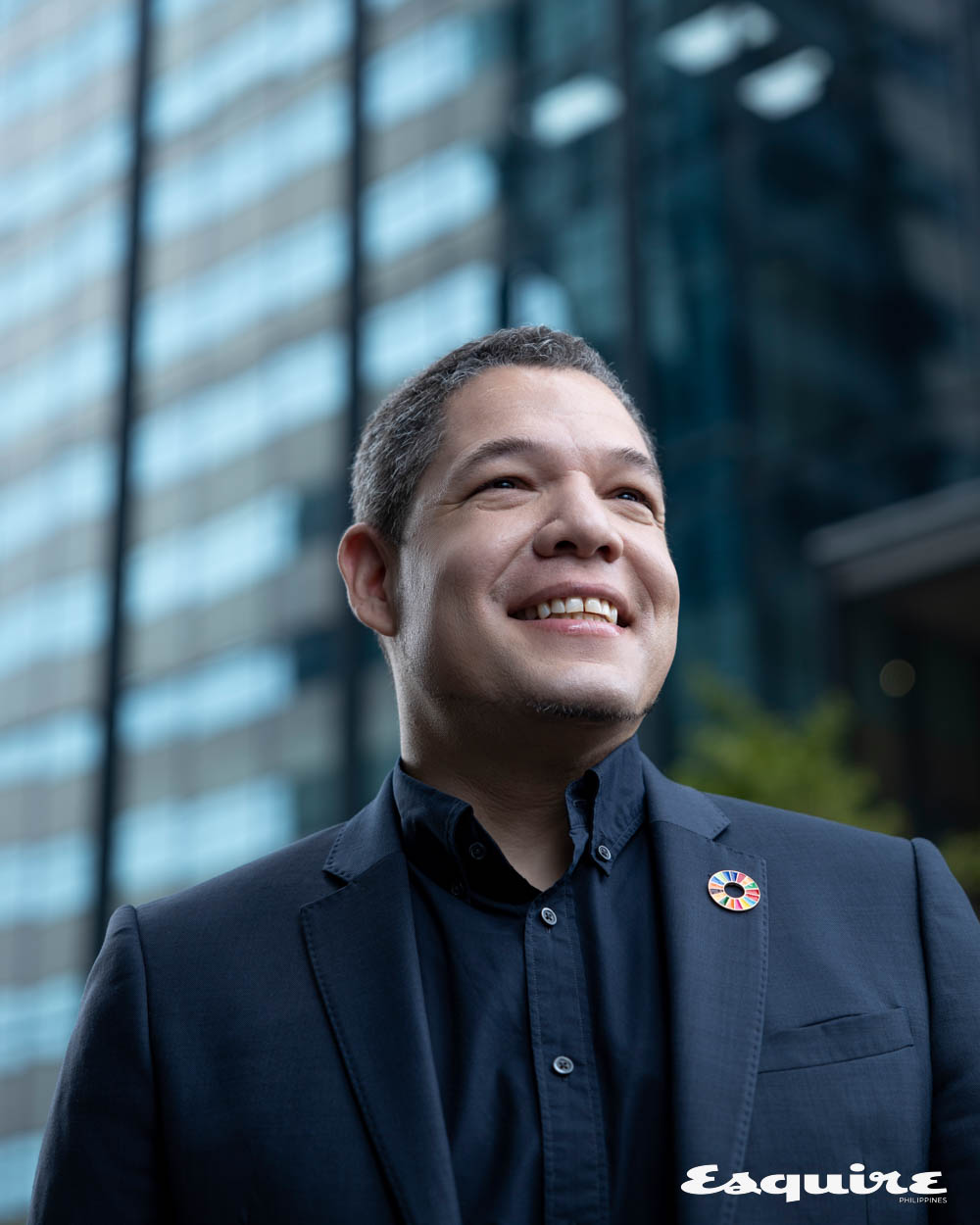
AI, as Hardoon explains, simply revolves around the inherent ability to find patterns. But it doesn’t stop there. Data is crucial to making sound decisions that would lead to solutions to problems and new opportunities.
Hardoon talks briefly about his everyday grind holding key positions in the Aboitiz Group. “I think about patterns. I look at problems and I look at opportunities, whether it is different aspects of the financial services, whether it is in energy, whether it is sustainability, whether it’s about customers—across the board. One day I wake up and I think about the quality of shrimp; the next day, I think about the energy grid. Another day, I think about the strength of cement.
“At the end of the day, it's about thinking of how we can address problems by using patterns that we have—data.”
After working at the Monetary Authority of Singapore, Hardoon was invited by UnionBank to be its Senior Advisor for Data and AI in 2020. Joining UnionBank, according to David, was a privilege because the bank has done a phenomenal combination of investment and effort to digitalize.
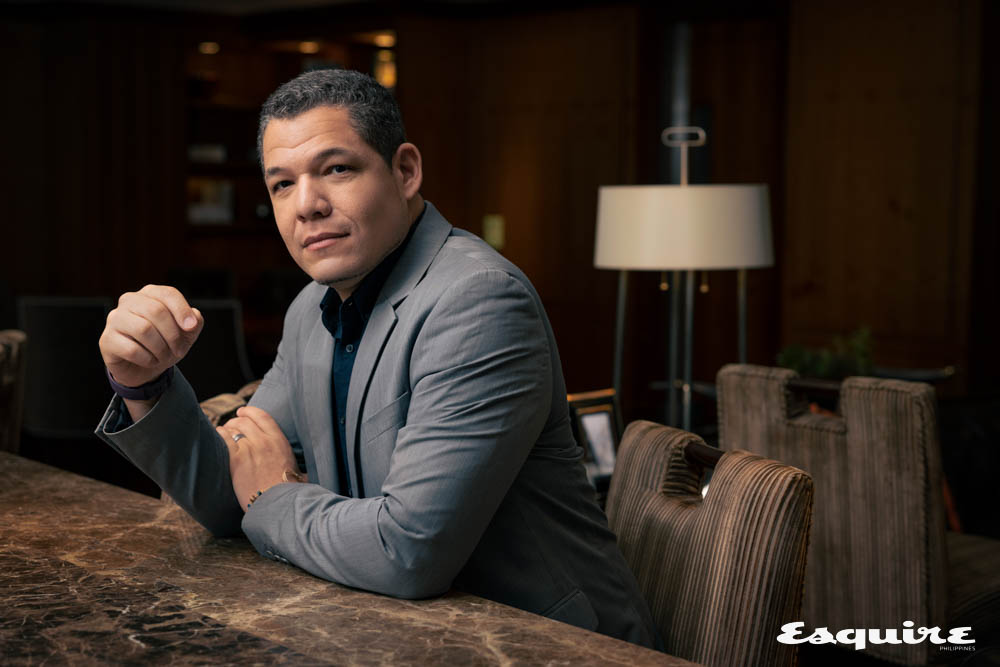
“Now, what does digitalization mean? It means, again—getting back to geek—more data. More digital touch points. So, the question was, what can we do more of? Where can we go beyond, and can we truly maximize these opportunities? These data opportunities using more sophisticated makes—such as machine learning and AI to better understand our customers better engage, sharpen, our service offerings—enhance our defense, et cetera.”
UnionBank was able to prove that AI isn’t just some marketing fanfare. The bank was able to operationalize how the technology can be harnessed by the business to create measurable material impact on customers and other stakeholders. The successful implementation of their systems within the bank prompted other partners in the group to ask: Can we also do this in power? Can we also do this in food? Can we all do it elsewhere?
A powerful tool
Hardoon is careful to emphasize that the vision of ADI isn’t AI: it’s to meet business objectives and improve business outcomes using data and technology. AI is simply a tool—a phenomenally powerful one.
The executive ponders on these questions regularly: How can we go beyond? How can we effectively meet business goals, business objectives and then on the journey, even create new ones, new services that we could never imagine before?
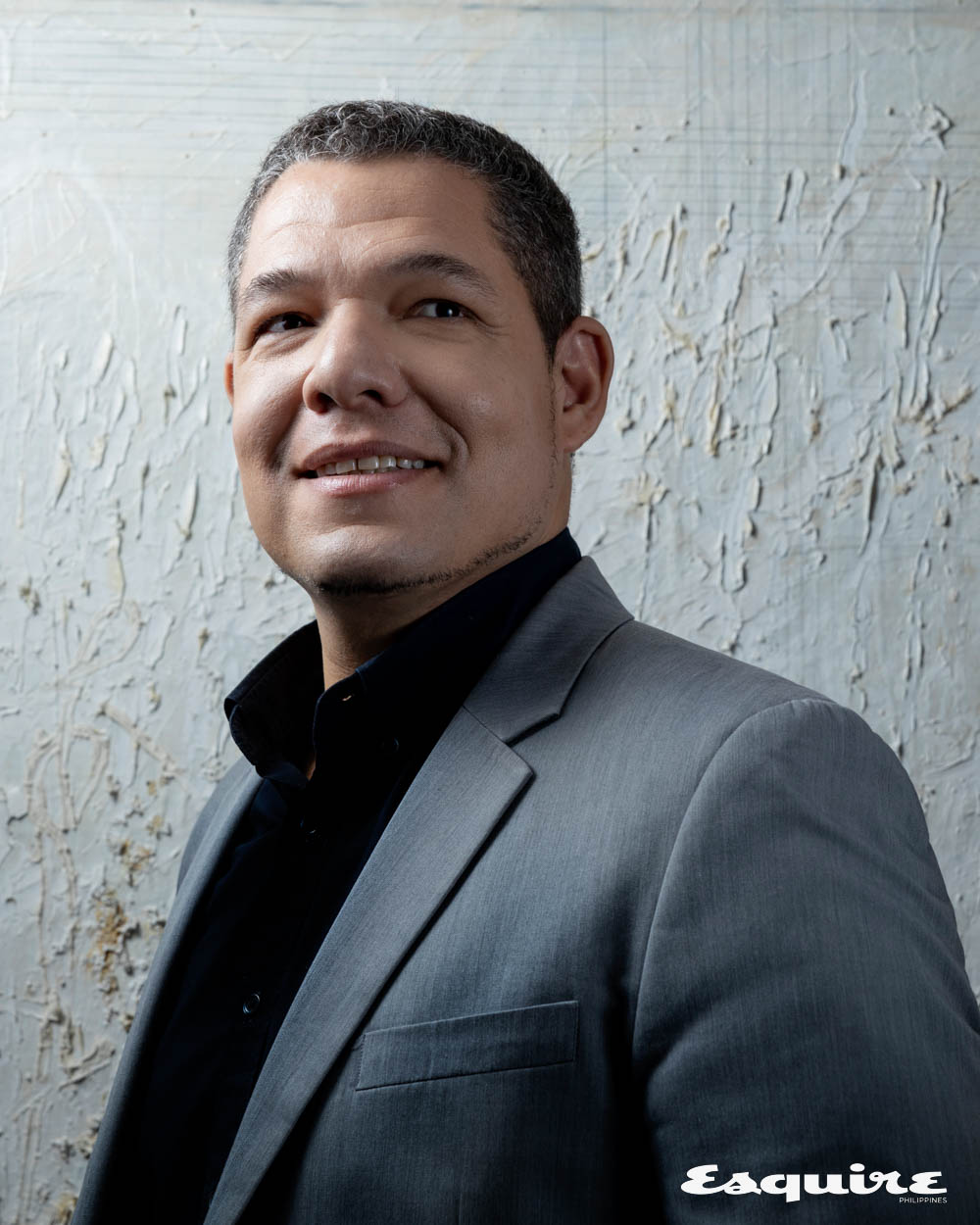
However, it’s not only in the financial sector that AI is frequently used. Generative AI is all the rage these days and at the tip of everyone’s fingertips. Apps that make everyday tasks easier are readily available to practically anyone. And then, there are solutions that aim to solve other problems.
While ADI’s wall-to-wall systems are heavily utilized by UnionBank for servicing clients and combating financial crime, the tech startup also designs solutions for other sectors.
“We have a whole solution that's looking at predicting landslides,” Hardoon explains. “We have a solution that predicts the quality of shrimp based on the (depth) and the temperature of the water.”
“How do they use that information when we predict the likelihood of compressive strength of cement; how does the chemical engineer work with (that information)?” he adds. “When we're telling a financial person of the potential risk or the lendability? How do they use it?”
Anything new can be scary
Obviously, data and AI have more practical applications than what is depicted in sci-fi movies. And while the material impact is evident, there are those who still reject this advanced form of technology. Hardoon has some insights to share with those who fear AI.
“I want to start off by saying I do not want to discredit or sideline people's concerns and fears. I think that would be unjust,” Hardoon says. ”What I would want to do is address them and say two things: one, anything new can be, at times, a bit scary. It doesn’t necessarily mitigate those risks, but I take comfort in that, if you purely look at our history as a species, we've been able to constantly evolve, constantly adopt new things. That’s the amazing thing about us.”
“It is sometimes difficult seeing the future with the lens of the past,” he adds.
Innovation using data and AI poses challenges, and one of the biggest is that it’s not guaranteed, according to Hardoon.

“AI is about information, just having information is theoretically meaningless; it is how you use that information which becomes important,” he says. “When kids go to university for diploma, when a parent puts that money on the table to invest in their knowledge, do they go, ‘Okay, I'll pay this amount of money and I'm going to get this much back in five years?’”
“No!” Hardoon answers himself. “That is the mindset which sometimes is difficult from a very pure business operation, because I think of 1,000 I get five times back. Whereas the mindset should be that of education. I am investing this in my future, and I guarantee you as I guarantee to anyone who does it with this mindset—within months there will be a number. But the starting point is—dare I say—faith and that's the challenge. That is the real challenge. It's not even about how much money; it’s the willingness of putting this on the table to potentially make myself better. And for those who do, it will pay back.”
Needless to say, Hardoon is optimistic about the future of data and AI in the country. The applications he earlier mentioned were all incubated locally, and the executive is quite proud of ADI’s accomplishments.
“The Philippines has an advanced range of opportunities that can benefit from the applications a lot,” he says. “Quite a few number of years ago, I was asked by a reporter, ‘David, why are you so public about what you're doing? I mean, shouldn't you be keeping it hidden and just enjoy it?’ And my point has been, I want the industry to know because the only way for the industry to progress is by the whole industry progressing, not just one part of the industry. The point being is everything that I've spoken about—whether it is financial services, whether it's power, whether [it’s] shrimp [quality]—everyone could do it here and the delta of improvement, the delta of revenue, the delta of efficiency, the delta of value is potentially significant. It's a question of doing it and being willing to put the investment into it.”
“I truly believe that one of the exports of [the] Philippines could be the know-how of making AI work. We’re already doing it but we just started. There could be a lot more, and it could be for others as well.”
