

Theater Review: 'Mga Anak ng Unos' Is A Wake-Up Call in Two Acts

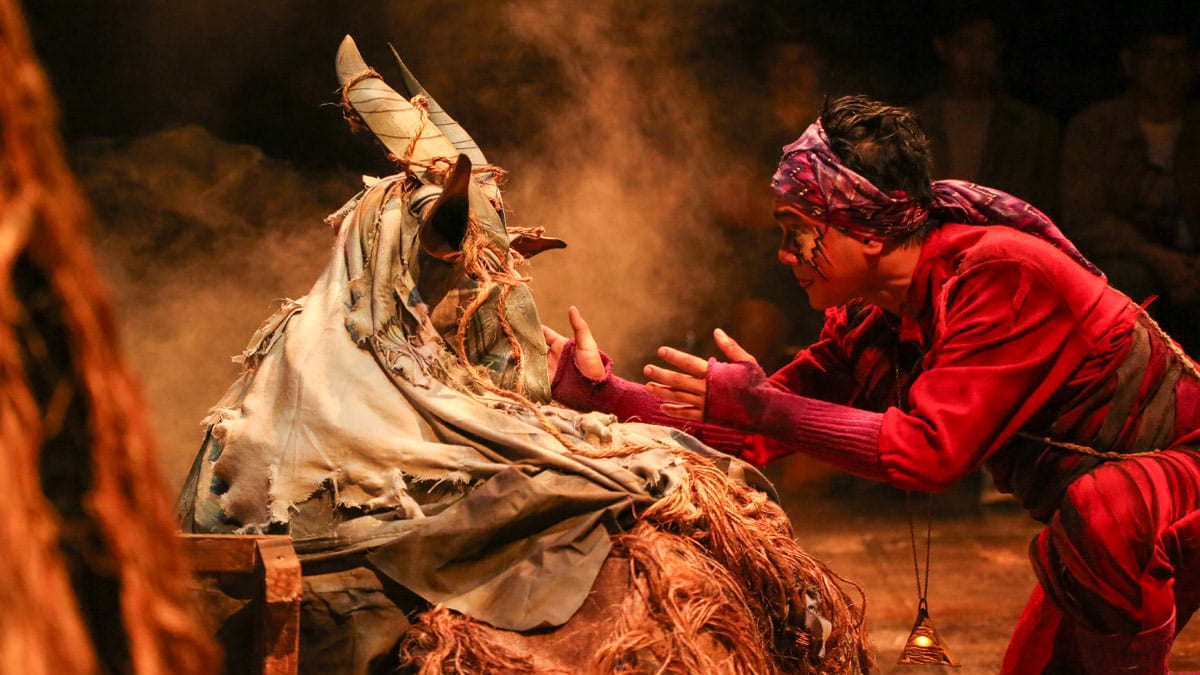
"Hope is the enemy. Hope chains us to the system."
It’s not unusual for a line from a play to stay with me long after the curtain call. But "Mga Anak ng Unos," Dulaang UP’s (DUP) latest twin-bill production, delivers one that lingers with an almost unsettling weight. In a time of worsening climate disasters, the two plays under its banner hold up a mirror to our environmental crisis—one through the lens of mythology, the other through chaotic, fragmented realism. Both, however, make one thing clear: these are plays everyone must see.
The Gods Have had Enough
Joshua Lim So’s Sa Gitna ng Digmaan ng mga Mahiwagang Nilalang Laban sa Sangkatauhan, directed by José Estrella, immerses us in a world where bathalas and mythological creatures wage war against humans for destroying the sacred earth. The diversity of languages spoken by the deities—drawn from the cultures they originate from—adds richness to the narrative, subtly reminding us of the deep, intrinsic bond between Filipinos and nature.
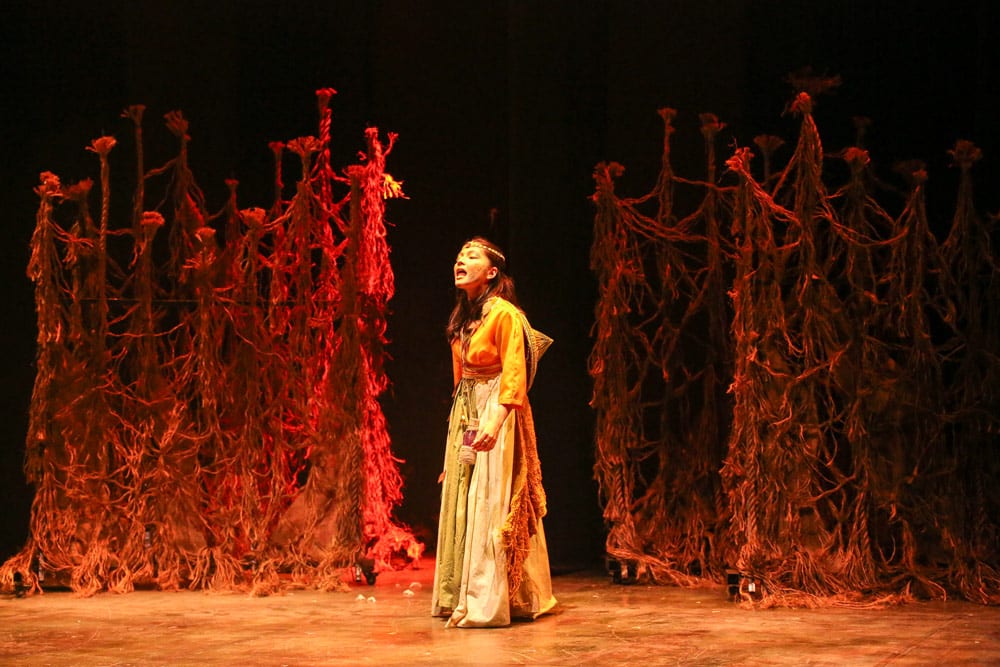
But beyond the spectacle, the play delivers a sobering message: we have pushed even the gods beyond their limits. From deforestation to the mining industry, environmental destruction has reached a point where divine intervention seems justified. While I’m on the fence with the humor used, as I felt like the mythical wonders of the material itself were enough, it did land well with parts of the audience, adding moments of levity amid the heavy themes. Still, the weight of the play lingers, leaving us to deal with the fact that we are, in many ways, beyond redemption.
A Climate Crisis Fever Dream
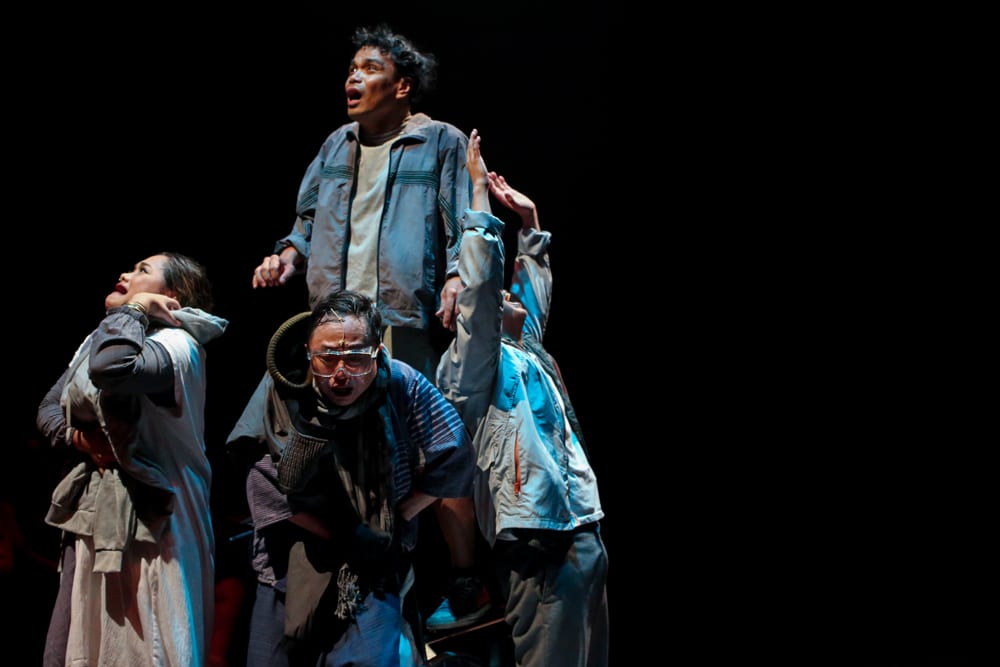
If the first play was a mythological reckoning, Climate in Crazies—co-directed by Issa Manalo Lopez and Tess Jamias, based on David Finnigan’s Scenes from the Climate Era—is a gut-punching descent into our present-day climate crisis. True to its name, the play is wild, unhinged, and deeply unsettling. Scenes unfold in a non-linear way, jumping from one crisis to another—plastic pollution, water contamination, fast fashion overproduction, extreme heat, super typhoons—mirroring the fragmented way we process environmental catastrophes in real life.
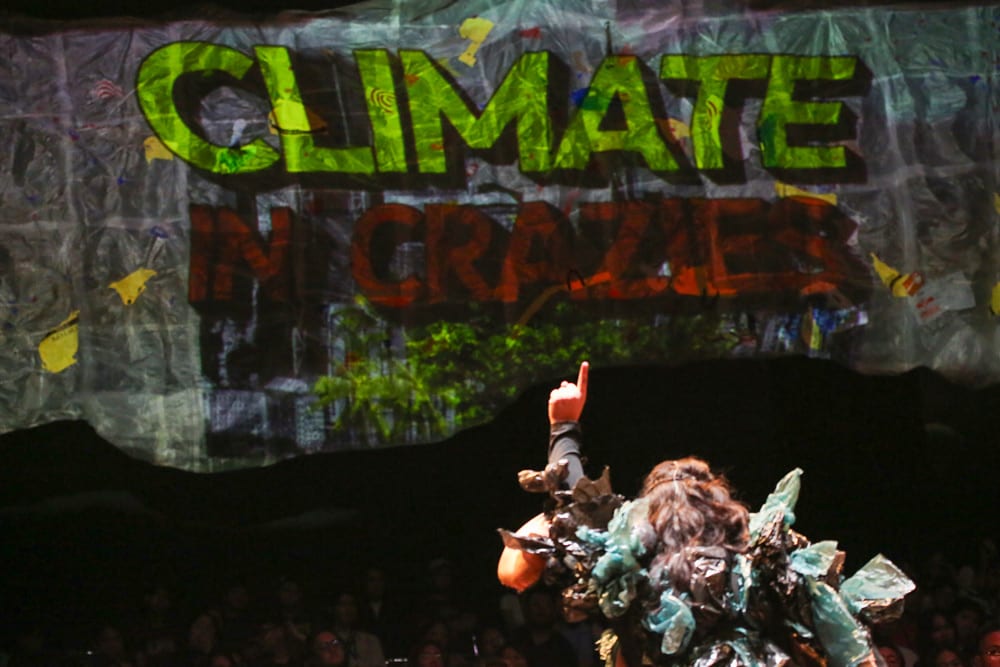
The chaotic storytelling reminds me of Everything Everywhere All at Once. It’s not rigidly structured, but that’s exactly the point. How we experience and remember climate disasters doesn’t necessarily follow a logical order, especially when trauma is involved. One moment, you’re laughing; the next, you’re overwhelmed with rage, then suddenly on the verge of tears. It’s exhausting, disorienting, and even maddening—precisely how climate anxiety feels.
But what struck me the most was how it showed the disproportionate impact of the climate crisis on marginalized sectors. From the scene where the mother shielded her child from the unbearable heat to the elderly woman in a wheelchair being denied emergency evacuation services, these scenes, while seemingly small, are not exaggerations. They are everyday realities for those most vulnerable to climate disasters.
Grounding Hope in Reality
As someone working in an environmental organization and studying development communication, DUP's "Mga Anak ng Unos" reaffirmed what I already knew but often struggled to articulate: hope must be grounded in reality. False hope—the kind that pacifies rather than mobilizes—is dangerous. We need the kind of hope that confronts the truth, no matter how painful.
As we celebrate Earth Month, this production serves as a stark reminder that the climate crisis isn’t coming—it’s here. And while we may not have gods waging wars on our behalf, we do have the power to fight back, especially against oppressive industries that exploit the planet and the people for their own greed. "Mga Anak ng Unos" doesn’t just tell stories. As my colleagues from Greenpeace Philippines mentioned during the talk-back sessions, the performance demands accountability, action, and a reckoning with the forces that continue to push us toward collapse.
Back in college, Dulaang UP introduced me to the power of theater in sparking conversations and igniting change. It made me fall in love with this art form. To be able to watch plays by DUP again after more than a decade feels like coming full circle. Only now, the urgency has never been greater.
"Mga Anak ng Unos" runs until April 13, 2025, at the IBG-KAL Theater, University of the Philippines Diliman. Tickets are available through Ticket2Me.
Eunille Santos is currently taking up Master’s in Development Communication at the University of the Philippines Los Baños, while working for a non-profit environmental organization. A casual theater fan, Eunille enjoys both local and international productions, finding theater a powerful tool for social change.
