
Merging Markets: A Review of Crease on the Fold at MONO8 Gallery

What makes a gallery show different from an art bazaar? It’s not the absence of commerce nor the presence of a middleman, but more obviously, the pricing structures at play. Gallery shows can command five-digit prices for individual works. Art bazaars, on the other hand, offer original works costing a fraction of the price of a table, which—at an average—can go north of P5,000 for a full table (depending on the venue or organizer).
There are full-time artists who sell their works on both platforms despite the stark contrast in pricing structures. The reasons why they choose to do so vary, yet they are afforded a unique perspective of the economics and systems at play with regard to keeping their art sustainable in a developing country.
Crease on the Fold featuring Zeus Bascon’s zine Cultivating A Garden (2023)
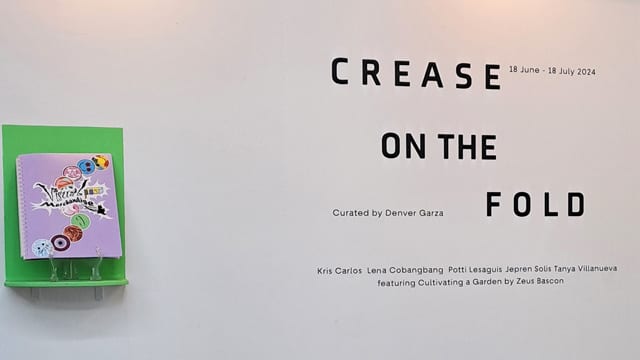
Crease on the Fold, which runs until July 18 at MONO8 Gallery in San Juan, responds to Cultural Center of the Philippines Thirteen Artists Awardee (TAA) Zeus Bascon's Visual Merchandise 2023 show at Pablo Post Gallery. Bascon's exhibition is unusual in that it followed an art-latag modality, or simply put: an informal art bazaar. The brick-and-mortar shop exhibition format is not a new concept, but one that is rarely applied for various reasons, one being in the interest of protecting a gallery’s pricing structures.
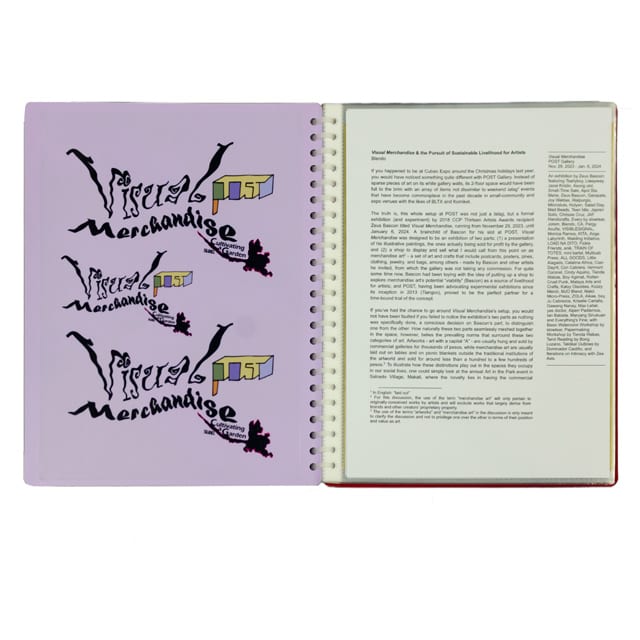
Zeus Bascon's Visual Merchandise
This format has proven to be an engaging and accessible way to exhibit art, sparking a desire to purchase even though art is a luxury. This is demonstrated by projects such as Tin-aw Art Gallery's Manufacturer's Advice: Content May Vary at Art Fair Philippines 2015 or Clear Gallery Tokyo's Art Market Pop Shop in 2019. These projects provide a similar experience and explore the divide between the dynamics of bazaar and gallery exhibitions.
Coming Together
The show’s curator, Denver Garza, focuses on the contexts surrounding the artists’ practice outside their studio work rather than emphasizing artist-made merchandise. As an artist himself with firsthand experience in participating in art bazaars of various scales and having his own studio practice, Garza chose artists who share similar experiences.
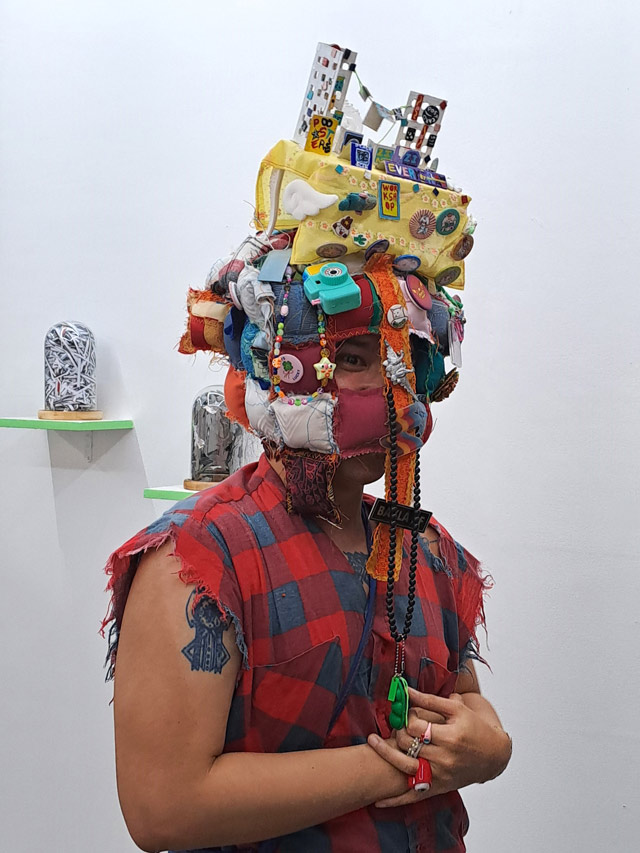
Crease on the Fold curator, Denver Garza, wearing a self-made headpiece depicting a typical “latag” scene complete with merch and other knick knacks.
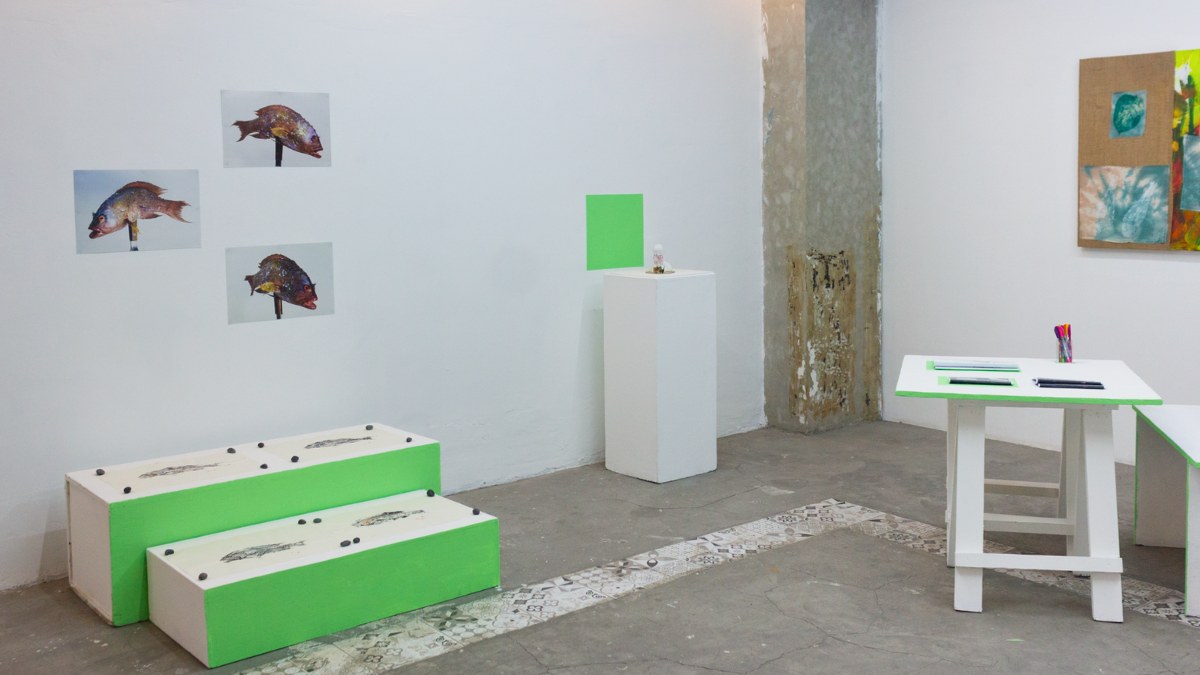
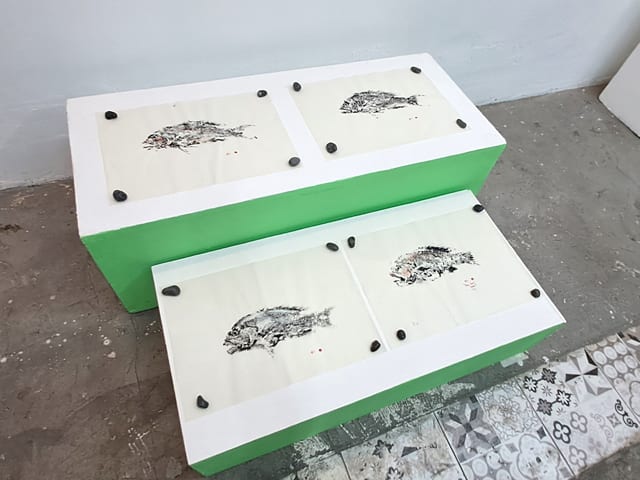
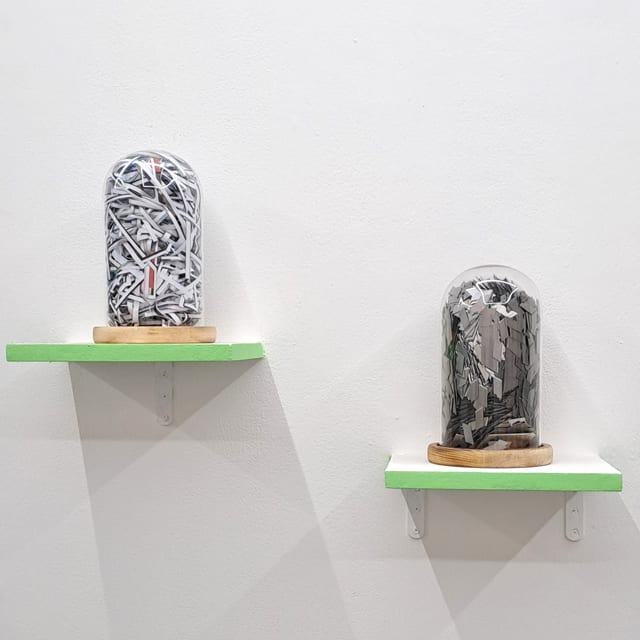
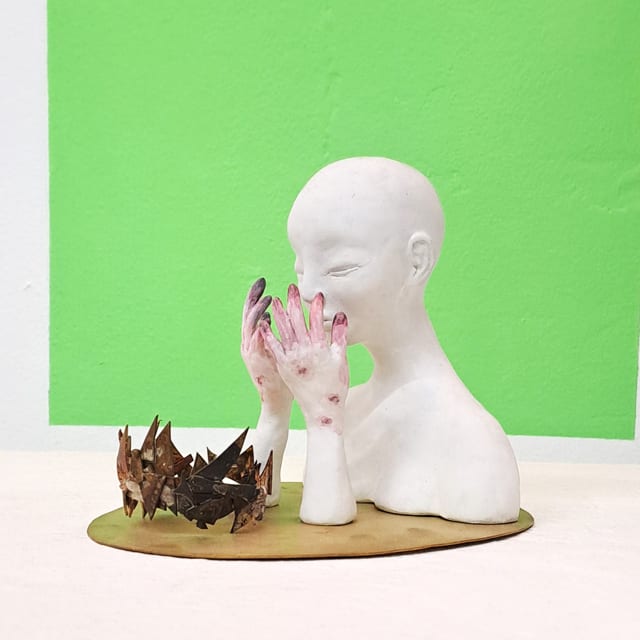
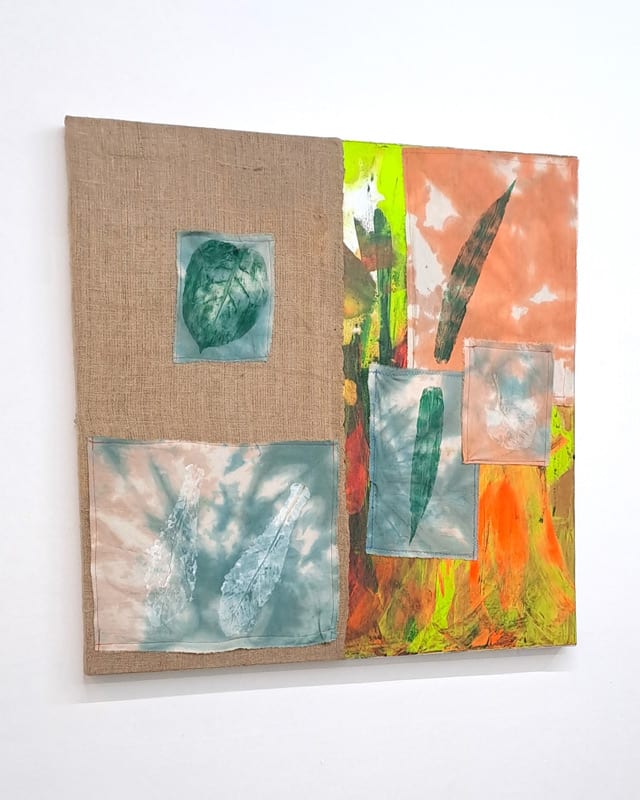
Kris Carlos's body of work is informed by her metalsmithing practice. Despite coming from a family of well-known painters, she veers away from that medium by leaning into sculpture and metalsmithing. Lena Cobangbang, a TAA awardee, has a history of showcasing her work in traditional galleries as well as informal spaces. Potti Lesaguis, who co-manages Sampaguita Projects—an artist-run space that also hosts latags, exhibited an experimental piece that explores the use of fabric dye from her dressmaking practice. Photographer Jepren Solis produced a photobook zine titled "Out of Service," which is showcased alongside discarded objects collected from the production of the zine. Tanya Villanueva, who offers stylized haircuts often conducted in artist-run spaces, created gyotaku prints mirroring her service-based creative practice.
Installation shot of Tanya Villanueva’s gyotaku prints from the series "How Ideas Die" (2024)
Jepren Solis’ (L-R) “Liners” and “Side”, made from cutouts of his Out of Service zine
Finally, the zine Cultivating a Garden by Bascon from his show Visual Merchandise is included as an activated archival piece to which the exhibition responds. Most of these artists have experience showing their work in both galleries and bazaars, except for Solis, who's participating in the gallery exhibition for the first time. The notion of ‘othering’ these artists' respective practices disappears in Garza's curation as the works are presented as a traditional gallery exhibition but one that encourages experience, much like a customer trying a display product, evidenced by the zines of Bascon and Solis, and the invitation to fill out a slumbook and coloring book by Cobangbang.
Kris Carlos’ "I don’t recognize my hands anymore" (2024, brassi, resin sculpture)
Potti Lesaguis’ "Fair Weather" (2024, plant markings, textile, textile paint, burlap, thread, and acrylic on canvas)
Serendipitous Timing and Mirrored Realities
The show couldn't have opened at a better time. Just before the launch of Crease on the Fold, an article titled "Have art markets gone too far?" was published by a local lifestyle website. It highlighted the struggles that artists in art bazaars face, particularly the pressure to create popular art to recoup the costs of their tables. This has sparked heated discussions among artists on X (formerly Twitter) about their thoughts on event organizers that create artist alleys or sections for artists who make original or fan-art merchandise. These spaces, originally intended as platforms for artists to showcase their work, have increasingly become income-generating ventures that benefit the organizers more than the artists.
Even artists whose practices are developed outside the gallery circuit are now facing pressures similar to those of artists who thrive in gallery systems. It seems that no artist is immune to following trends in an effort to make a profit given the state of our economy—unless, of course, they can afford to produce the art they like without fear of financial repercussions.
"My solo shows have flopped financially in my eight years as a full-time artist. I was selling an average of 15% (or less) of my work at each show (six out of seven of my solo shows sold zero to three pieces). Economically, it doesn't make sense, but here I am, being idealistic and delusional to stay. Regardless, it is a conscious choice to be present and continue to be present in the years to come," Garza wrote in the exhibition notes that can be read in length in the zine of the exhibition published by MONO8 Projects.
The curator’s candor echoes a shared pain that artists, even established ones, have gone through in their careers. Full-time artists, whether emerging or mid-career, strive for financial sustainability. It is important to recognize that an artistic career is a long-term endeavor, much like starting a business.
Garza’s effort to highlight nuanced practices that thrive outside of the gallery shows us that artists who seek equity and validation for their labor are not confined to white-cube spaces. Platforms such as art bazaars are fertile spaces equally ripe with opportunities and can be as valuable as galleries where artists can practice their respective disciplines. After all, there is no single way to be an artist.
Crease on the Fold runs until July 18 at MONO8 Gallery, BLK 113, 53 Connecticut, San Juan.
