
Millan Rible: The Architect as Flâneur

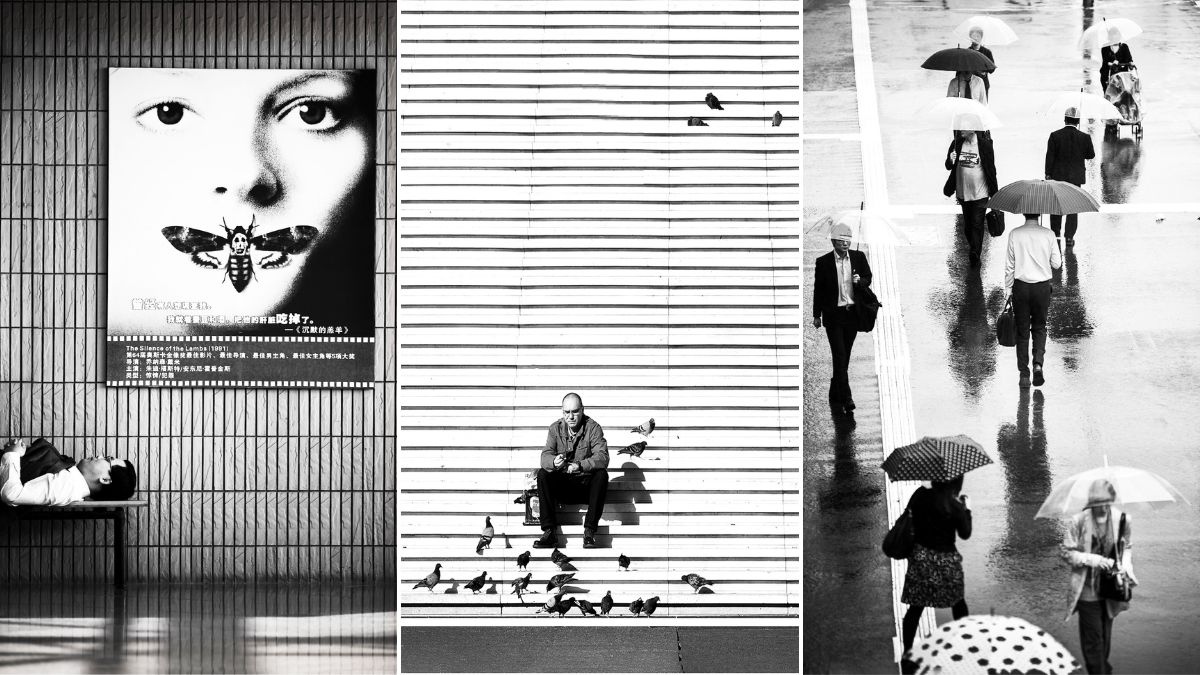
Acclaimed American writer Susan Sontag beautifully wrote in her essay "On Photography" (1977) that the camera has become the tool of the flâneur. In her words: “The photographer is an armed version of the solitary walker reconnoitering, stalking, cruising the urban inferno, the voyeuristic stroller who discovers the city as a landscape of voluptuous extremes. Adept of the joys of watching, a connoisseur of empathy, the flâneur finds the world picturesque.”
Architect-turned-photographer Millan Rible’s work aligns well with this artistic approach and practice of photographic flânerie. It was in China where his love affair with photography all began. Like any other curious migrant plunged into unfamiliar territory, he wandered around Shenzhen with attentive curiosity of his new environment and the culture it has to offer, aimlessly wandering its streets but mindfully searching for good subjects to photograph.
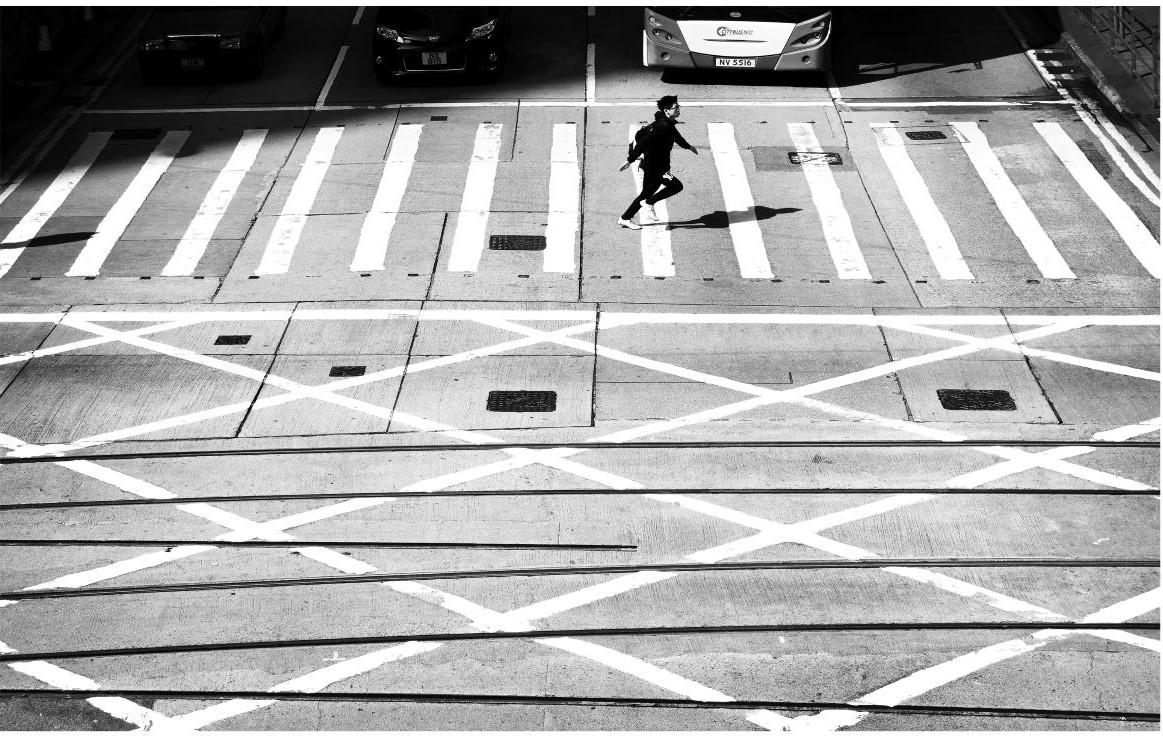
"On the Fly" by Millan Rible
Rible practiced interior and landscape design in China for 16 years. A quick Google search will highlight his extensive experience in the field. Alongside these professional achievements, his social media accounts burst with captivating photo collections he's curated over the years. His IG account, @millanprible, is an ever-growing online repository of his beguiling photos. He is one of those rare breeds of architects who also happens to have a foot in the art world and combines his skills, passion, and awareness on both disciplines to meet his artistic goals.
Rible spent a great deal of his professional career in Shenzhen, which he describes as a very modern and technological city, yet one with places that are full of character. This was at the height of the city's rise as an economic powerhouse—a shining frontier amid China's broadening global presence and economic might. During his stay, it was already teeming with economic activities. Living amidst all these frenzy and the present cultural conditions back then helped him progress creatively and produce his work. The city with its constant currents became the pull for him to document its changing landscape and all the people in it.
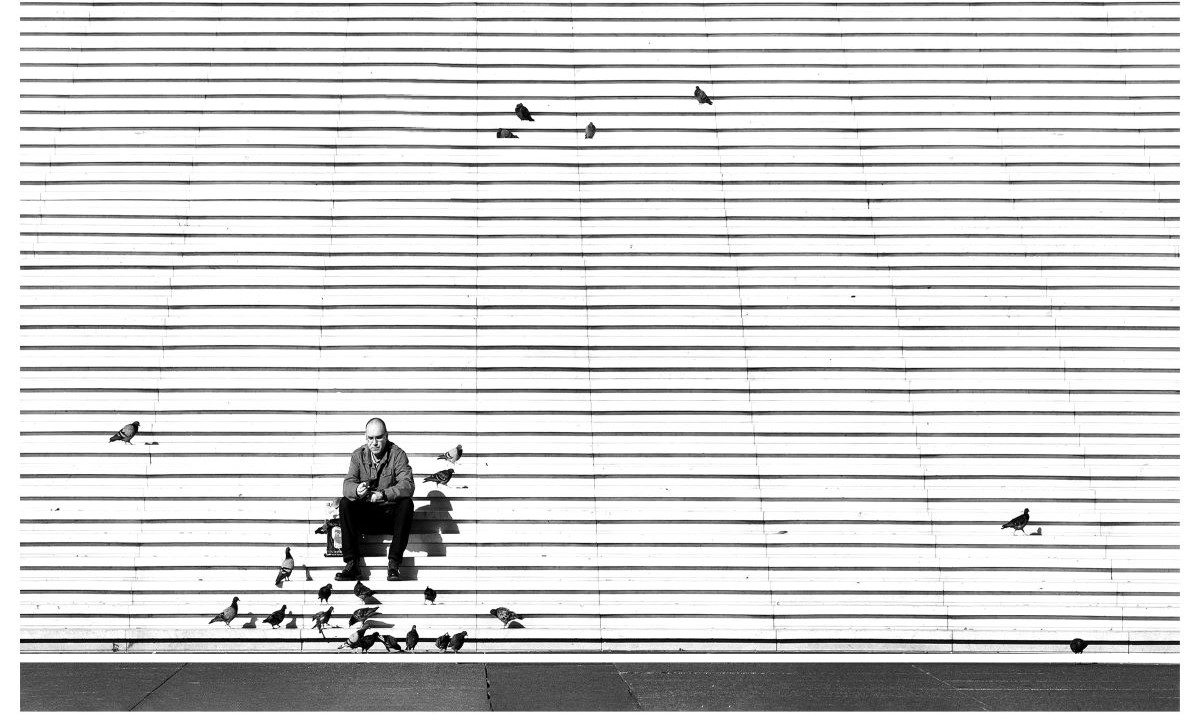
"Flock" by Millan Rible
Fleeting Frames
Due to his background in architecture, he was primarily focused on taking photos of buildings, architectural elements, and landscapes at the onset of his photography. Naturally, he was immediately interested in the tactile, seductive, and imposing presence of built environments and natural landscapes. But much later, he transitioned to a style more akin to street photography in terms of approaches, mannerisms, subjects, and aesthetic intentions. He was drawn closer to the genre mainly for its capacity for storytelling and he felt it was just a natural turn and an expression of maturity in his craft.
Over the years, his production has evolved, and his photos have grown more nuanced as his skills have refined and improved. As Rible explained: "At some point, I grew tired of producing pictures of buildings alone. Without human elements, frames of geometries, lines, shadows, and visual displays of scale and proportion seen in urban landscapes felt lifeless and had become trite and incomplete."
His shift from urbanscapes and architectural photography to more complex photographs, which now include human subjects, stems from his view that landscape photos can be easily replicable. But he holds this notion with much respect and deference to photographers who are devoted to this kind of work.
"The Navigator" by Millan Rible
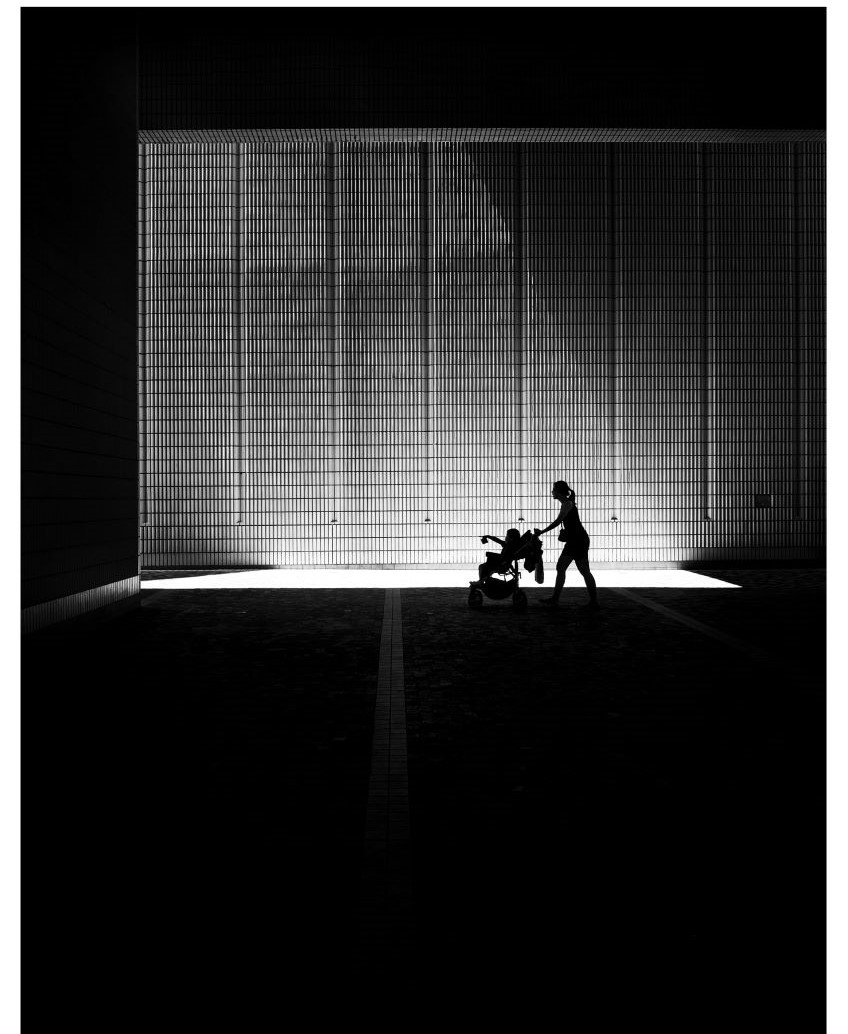
As he later realizes and concedes, there are stories and slivers of truth to be told about how people move around in places familiar to them, and he tries to capture these in the most human dimensions possible. For him, capturing these human experiences and the intangibles beyond the visible interactions between urban environments and the people who occupy them through his medium is worth exploring.
Rible aims his camera at anything that hints a story, but focusing on capturing fleeting images that blend stillness and motion in ordinary moments. What piques his interest is the inherent and palpable energy that resonates from these visual frames.
His photographs focus on the everyday lives of ordinary people, like construction workers and pedestrians, transforming these mundane scenes into visually striking moments within modernist landscapes. This predilection to banality and ordinariness has been a shaping aspect of his work. “I also think ordinary situations have stories worth telling photographically,” he said. In fact, one of his first significant photo collections, featuring working people on the streets, earned him critical attention.
In his routine, Rible unrelentingly waits and lurks for the perfect moment in performing his artistic feat. His photos are always the products of his negotiation to chance and submission to the moment. He enjoys the suspension and release, such ambiguity and revelation that are intrinsic to this approach. But he also laments that some days are better than others and he would just be creatively satisfied ending the day with only one good photograph taken. Given the feat he had to exert and perform in his photographic production, being able to capture his desired images always felt rewarding and redemptive.
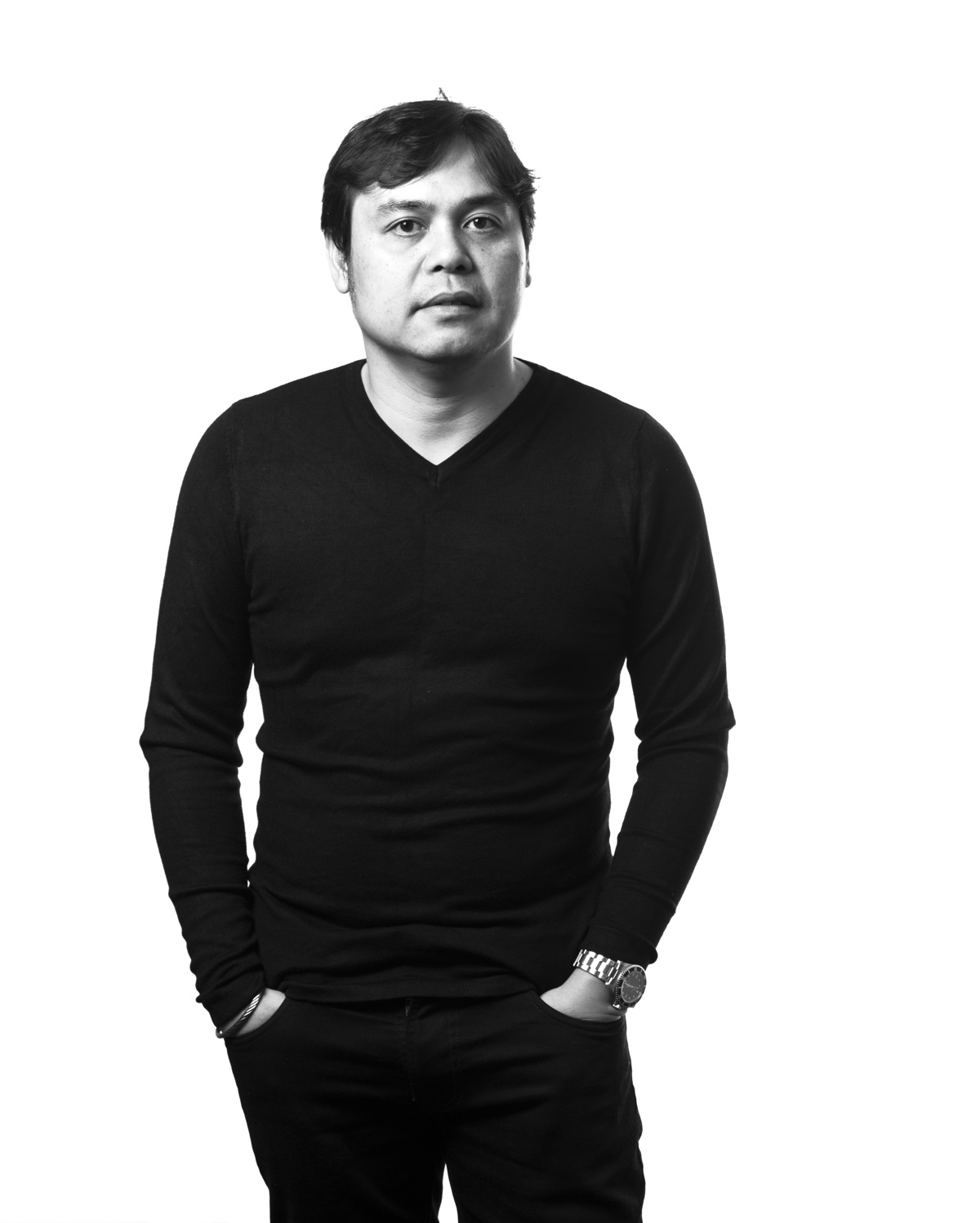
Rible focuses on capturing fleeting images that blend stillness and motion in ordinary moments.
A Life Less Ordinary
He later transitioned to black and white photography. This is to embrace the enigmatic pull and the emotive core of monochromatic photographs that suit his photo subjects, including light and shadows, patterns, cadences, geometry, and movement. What began as a stylistic decision for a more polished look turned out to be a vehicle for his visions, allowing him to project and distill their poignancy, essence, and the visceral experience that his captured images might be able to offer.
“I would rather focus on the moment itself and black and white does it for me. In this choice of framing my images I am able to capture and narrate the stories I want. Black and white photos, for me, are very honest and pure, ” Rible reflected.
ALSO READ
Movers of Filipino Contemporary Art: 25 Artists We Love
Movers of Filipino Contemporary Art: 30 Gallerists, Collectors, and Curators to Know
As an architect, he composes vignettes in his designs, which enhances his framing and storytelling in photography. His love for films and cinematography is likewise evident in the cinematic flair of his photographs.
While in China, Rible became part of a casual group of hobby photographers who regularly organized photowalks. In 2019, he and his fellow photographers were mentored by Xyza Bacani, who had once been part of the migrant labor sector, in a workshop titled "XCB in SXC." Rible has also received photography awards, including the Eye Shenzhen Photography Contest (2019-2020, China) and the Aigle Azur Magazine Publication (France, 2015). He has since devoted much of his creative energy to this artistic passion while also working as an architect and designer. He is now based in Manila.
“A Life Less Ordinary,” Millan Rible's first solo show, curated by Carlomar Daoana, is currently on view at the Upper Gallery 3 of the Pinto Art Museum and Arboretum and runs until March 23.
