
Pacita Mania Lives On: How Abad's Art Conquered North America 20 Years Later

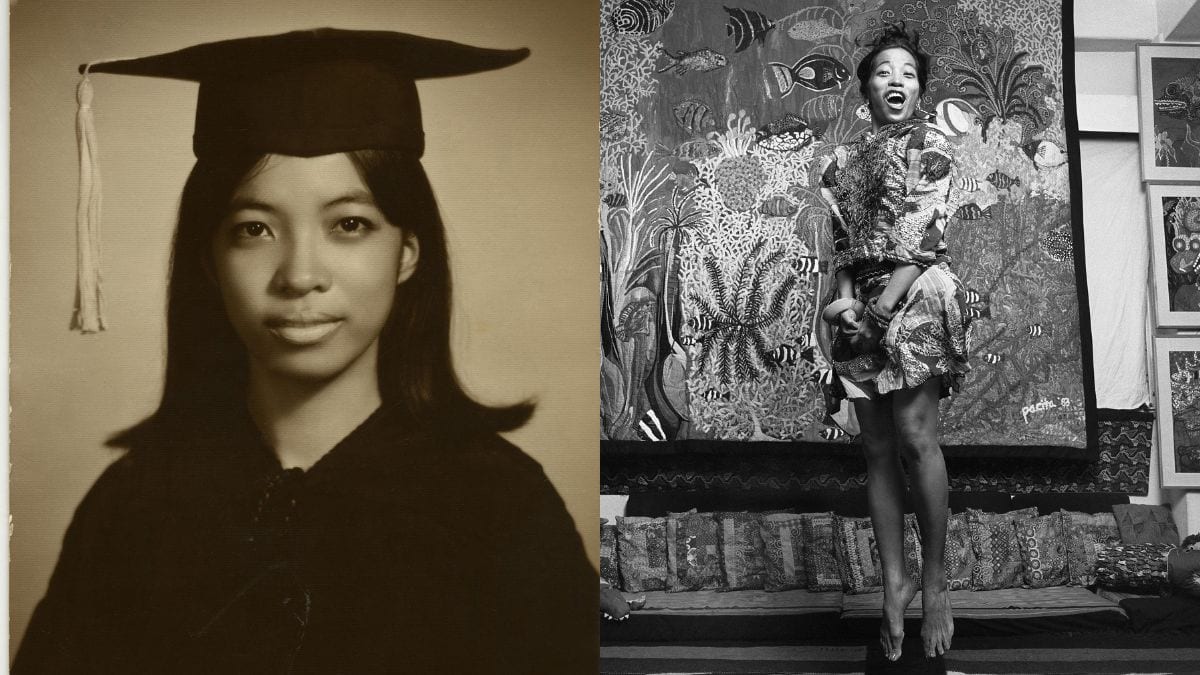
Two decades after her passing, the artist Pacita Abad took a victory lap around North America. Her reemergence in that part of the art world’s sphere couldn’t have been any grander than the self-titled retrospective at the Walker Art Center in Minneapolis, Minnesota, in 2023—the first major survey of Abad’s works. The exhibition traveled to the San Francisco Museum of Modern Art the following year, then to New York's MoMA PS1, before ending its triumphant run at the Art Gallery of Ontario in Toronto.
The critically acclaimed exhibition retraces the artist’s curiosity and restlessness, featuring over 100 pieces in a variety of mediums to reveal the breadth of her work in all its blazing glory. On view were Abad’s ceramics, works on paper and canvas, along with her trapunto paintings, their dizzying lexicon of motifs, materials, and methodologies pointing to the multicultural core of Abad’s practice.
While her art is well-received today, not everyone was a fan during Abad’s early years. In an interview with journalist Yvette Sitten, Abad recalls being told that she “experiments a lot.” “So?” was her insouciant response. “I say … I am alive.”
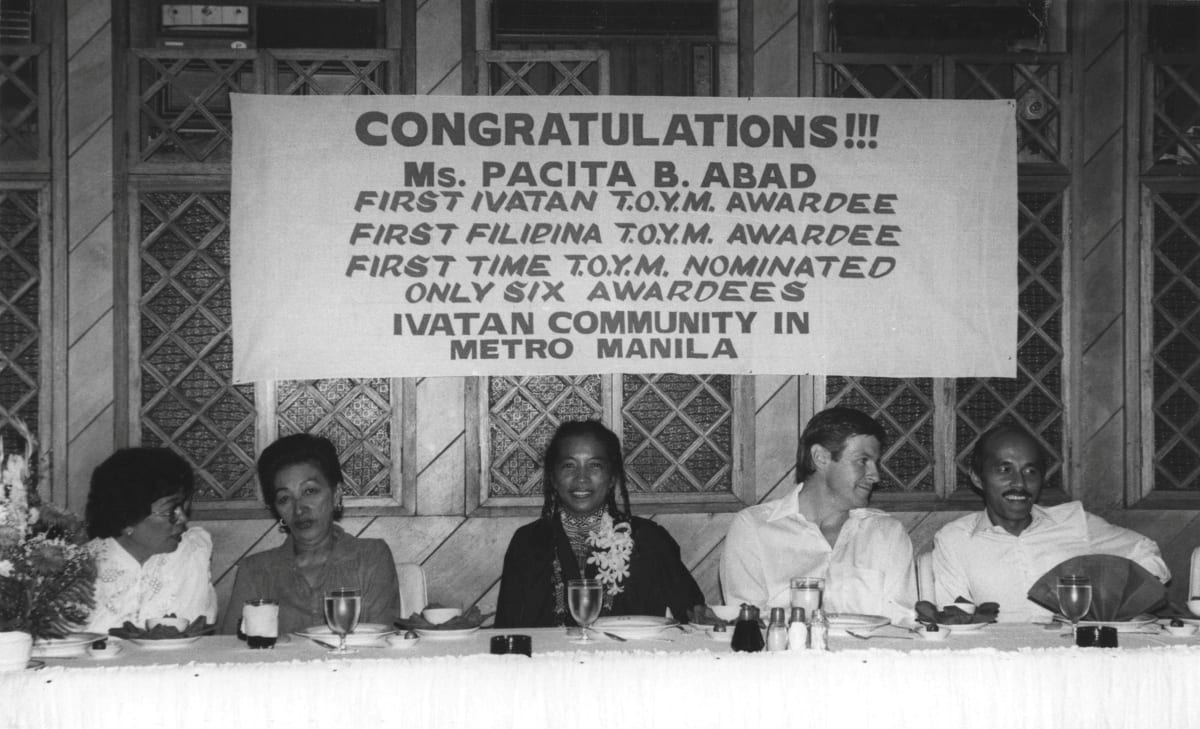
In 1985, Pacita Abad (center) became the first woman to receive a TOYM (Ten Outstanding Young Men) award. She is pictured with (left to right) her mother, the politician Aurora Abad; her husband, Jack Garrity; and her brother, Butch Abad.
That spunk would have made Abad a good lawyer, her original intention before shifting gears to make art. But as an artist aiming for success in 1970s America, Abad realized she needed to up her spunkiness in a milieu where women, people of color, and new methods of artmaking outside the folds of the reigning modes faced rejection from the art world’s gatekeepers.
At the start of her career, Abad showed an inclination toward social realism, painting the people and cultures of the Global South during her travels. Ultimately, tension and terror made their way into her canvases after witnessing the plight of refugees displaced by violent conflicts and political upheavals.
Pacita Abad in scuba gear
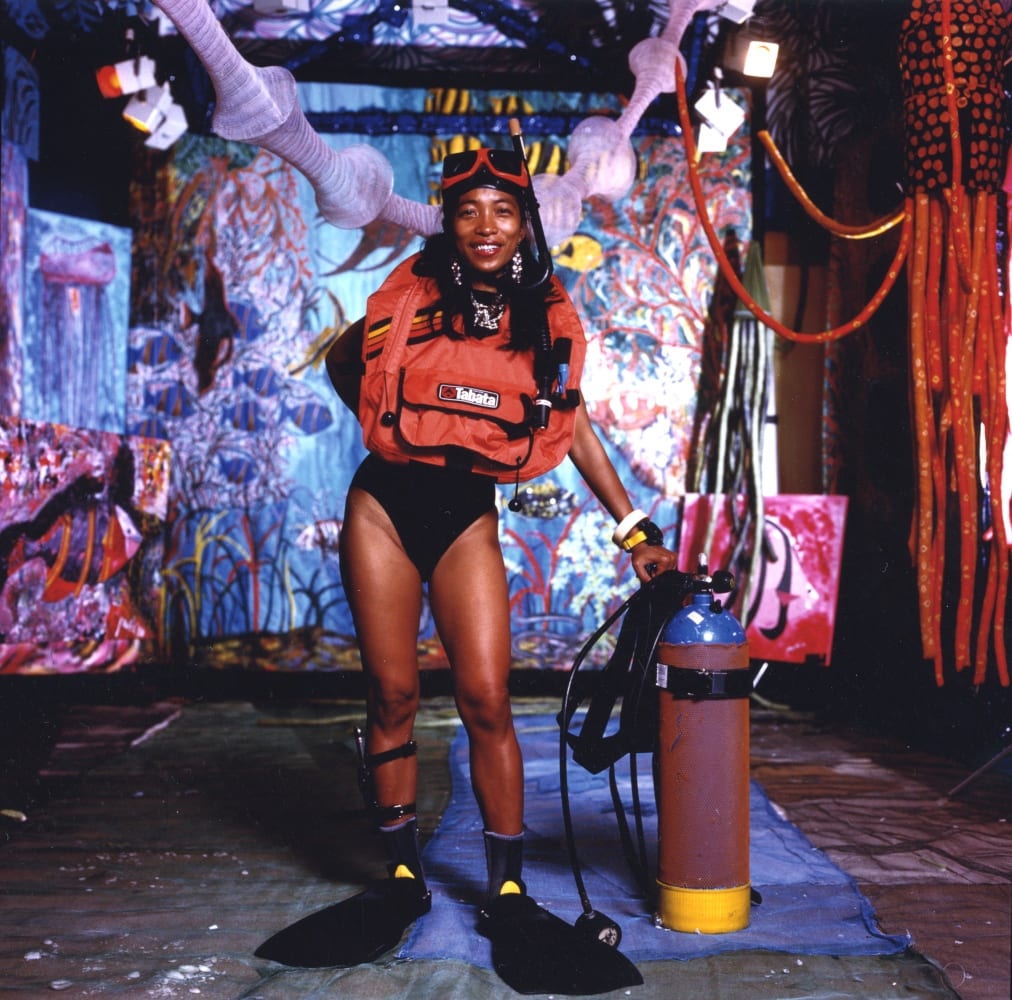
According to her husband, the economist Jack Garrity, “Pacita was fearless and constantly put herself out in challenging situations.” “We hitch-hiked overland for one year, traveling from Istanbul to Manila, crossing Turkey, Iran, Afghanistan, Pakistan, India, Sri Lanka, Myanmar, Thailand, Laos, Taiwan, and Hong Kong. Then we traveled by bus and boat throughout the Philippines from Batanes to Zamboanga.”
“She did the same for her paintings,” Garrity adds, “taking bicycle rickshaws alone around Dhaka in Bangladesh, painting in remote African villages, sketching in Cambodian refugee camps, traveling through the dangerous highlands of Papua New Guinea, and documenting the political riots in Jakarta, among many other adventures. She was not a painter who just stayed in her studio, as she loved going out into the field and meeting the people she would paint.”
Abad with one of her trapunto paintings.
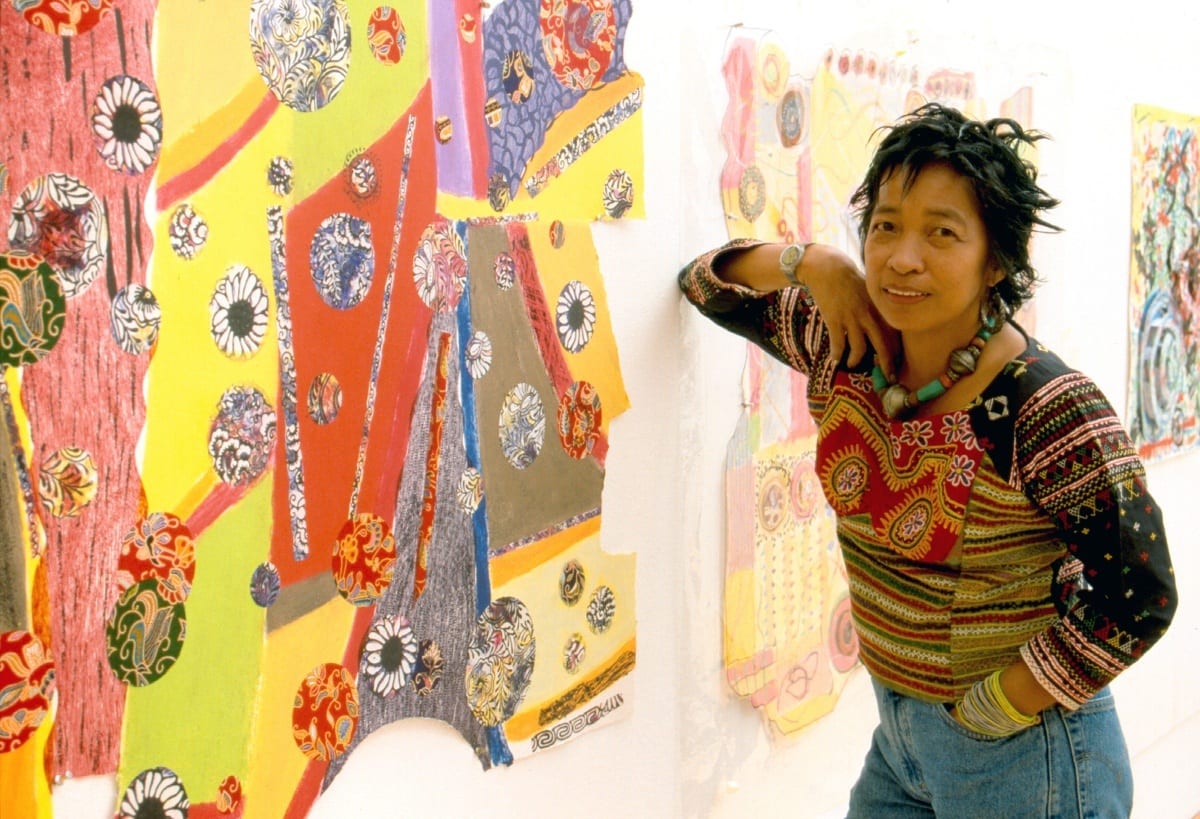
The blueprint for Abad’s most recognizable works took shape in the early 1980s. Employing the ancient Italian trapunto quilting technique, the artist layered fabrics over her paintings before stuffing them with cotton or synthetic fill and adding more elements—beads, shells, plastic buttons, sequins, mirrors, etc.
While dazzling to behold, the trapunto series is, in effect, a clapback to the institutional snobs who marginalized Abad’s work. As recounted by the artist in the Sitten interview, a curator who visited her Washington, D.C. studio proclaimed that her works were “not high art” but something “that caters more to craft.” Unfazed, Abad admonished her visitor, telling her that she needs to “relearn her studies because art can evolve in so many different ways, in so many different processes, techniques.”
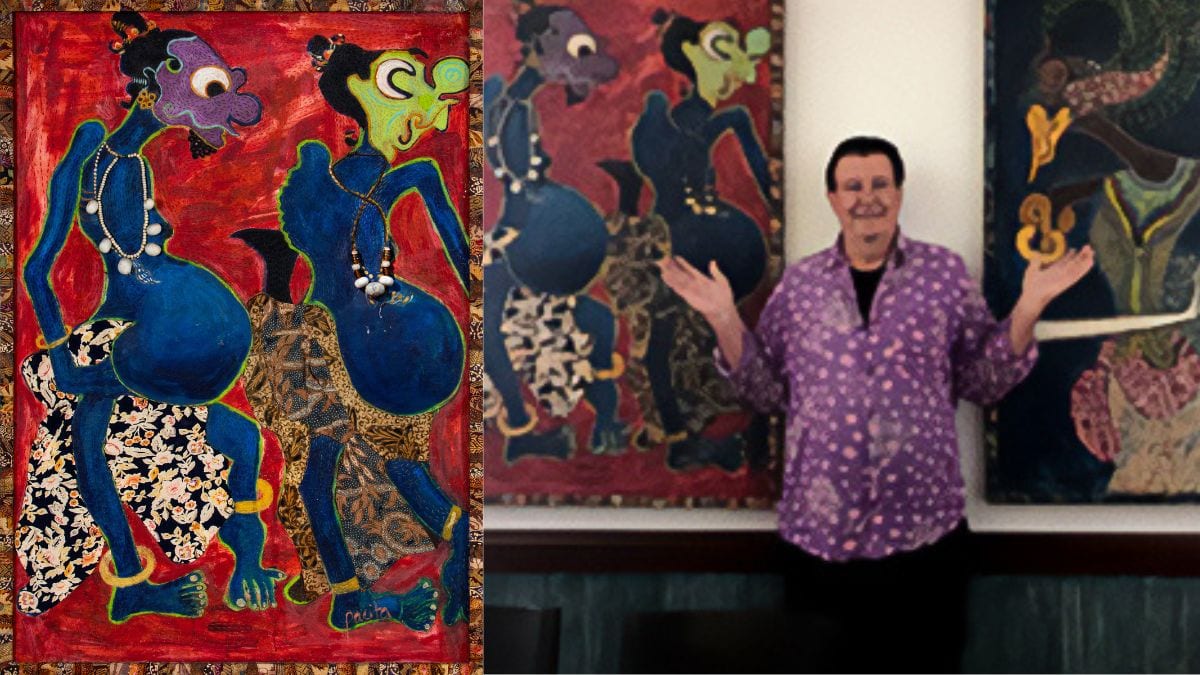
Abad’s trapunto created during her stay in Indonesia, “Gareng Dalam Dua Gaya II” from 1997, estimated at estimated at P1,800,000-P2,600,000 (left); Jack Garrity posing with the painting in Indonesia.
In over 30 years, Abad produced about 5,000 artworks, most of which were shown in over 200 exhibitions in the Philippines and abroad. She was, however, overlooked by European and US museums, having spent most of her life in Asia. “Now, times have changed and the art world’s vision has vastly expanded across the globe,” explains Garrity, who now oversees the artist’s estate. “Those same museums now avidly collect Pacita’s work, and her paintings have been acquired by forty-five museums around the world, making her the most collected artist from Southeast Asia.”
“Anemone,” by Pacita Abad, 1992, oil and acrylic primed on canvas, 84 1/2 x 49 1/2 inches, estimated at P1,800,000-P2,600,000.
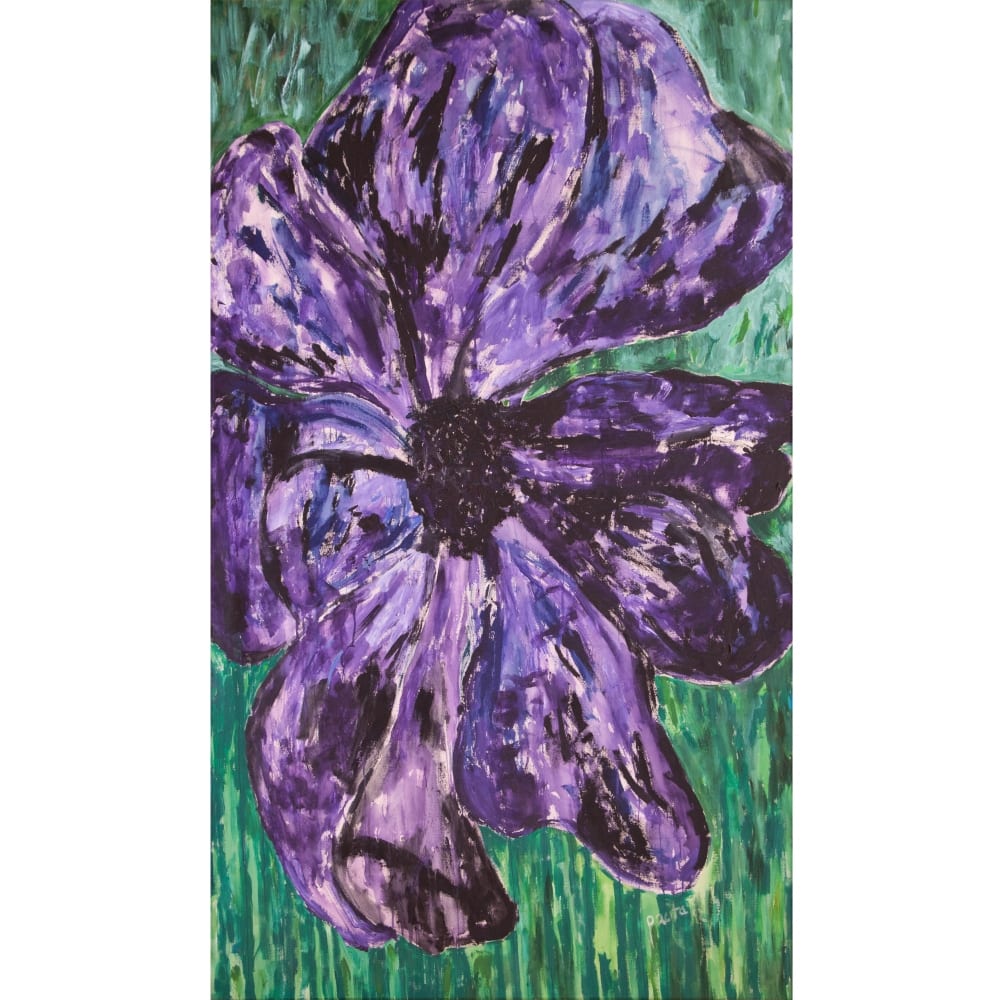
The Pacita mania has spilled over to collectors, as revealed in successful outings in Philippine galleries and international art fairs, from Frieze to Art Basel. At Salcedo Auctions’ "Pursuits: Important Philippine Art & Rare Collectibles" sale, Manila’s collectors will have the opportunity to acquire two paintings from different phases in her artistic journey. “Anemone” from 1992 is an example of her post-impressionist preoccupation, while “Gareng Dalam Dua Gaya II” from 1997 is an exquisite trapunto painting inspired by Indonesia’s shadow puppets called ‘wayang kulit.’ Both are up for live and online bidding on June 14, starting at 2 p.m.
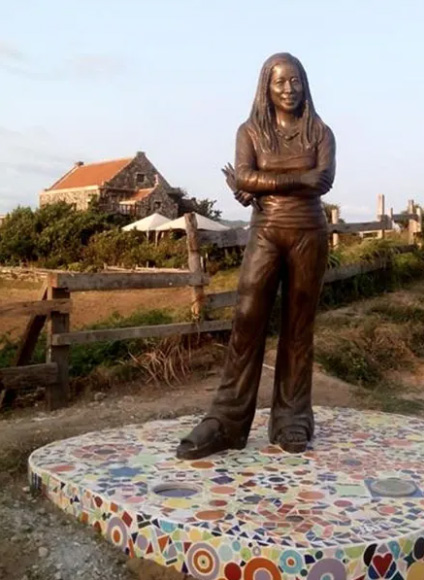
A sculpture of the artist by Julie Lluch at her final resting place at Fundacion Pacita in Batanes.
With the growing interest in her work, Abad’s North American tour is most likely the start of her posthumous journey in the art world. Given her prodigious output, there’s more to discover from a life devoted to art.
“Pacita was passionate about painting, and always worked hard, spending long hours in her studio,” Garrity says. “She wanted to be a great artist and was confident that her paintings would one day hang in museums. During Pacita’s three-year battle with cancer, despite continuous hospital treatments, she created over 1,000 artworks, including painting the Alkaff bridge in Singapore before she passed away. She painted until she could no longer lift her brush.”
ALSO READ
Make Room for Prints: The Changing Landscape of Philippine Printmaking
The Past Is Present: 5 Must-Read Works of Fiction That Illuminate Philippine History
Memorials were held in the US, Singapore, Jakarta, Batanes, and Manila, where then-president Fidel Ramos led the audience in a rousing send-off, shouting “Mabuhay Pacita! Mabuhay Pacita! Mabuhay Pacita!”
“Pacita touched many people with her paintings and personality,” says Garrity. “And now, 20 years after her death, her artwork is even better known than when she was alive.”
Salcedo Auctions "Finer Pursuits: Important Philippine Art & Rare Collectibles" sale presented in association with Exclusive Bank Partner UnionBank Elite is on Saturday, 14 June 2025, 2 p.m. at NEX Tower, 6786 Ayala Avenue, Makati City. Preview ongoing up to June 13, from 9 a.m. to 6 p.m. View the catalogue and register to bid at FINER PURSUITS
