
Love, Grief, Resistance: Pio Abad's Chronicle of Historical Memories

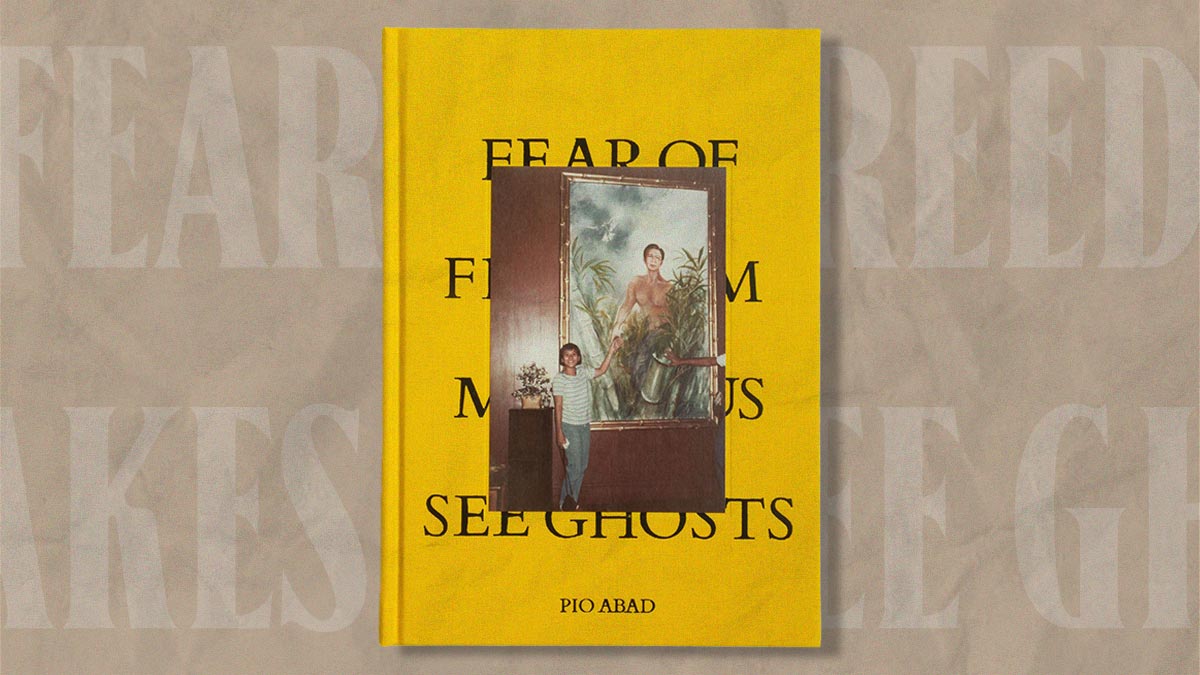
ILLUSTRATION: Igi Talao
Historical revision has been a buzzword in the campaigns leading up to the 2022 presidential election. Fury, tears, and endless discussions revealed the frustrations of the time. My first interview with Pio Abad was right after the election, electing the current national government officials we have today. Our conversation had a bitter taste along with our dashed dreams. Abad opened Fear of Freedom Makes Us See Ghosts (April 19 to August 6, 2022) to a hopeful but worried public, with fears solidifying in the aftermath. The exhibition ran its course, and it was one of the most attended exhibitions at the Ateneo Art Gallery. Three years later, with another election looming in our midst, Abad launched the book of the same title in the same gallery last January 18, 2025–with signals more hopeful. If tides could turn quickly in a decade or so, the opposite can happen when people can eventually make better choices.
Historical Revision and Erasures
Instead of historical revision, what is happening today feels more akin to historical erasure. It is a slow chipping away of our memories–downplaying events until they vanish from our consciousness. Abad’s Fear of Freedom Makes Us See Ghosts addresses the fragility of our memory. It is one thing to talk about millions, billions stolen from the Filipino people. But the impact of showing the paintings, sculptures, jewelry, silverware, antiques, and other luxurious possessions massively collected during the autocratic reign is much more indelible to consciousness. Mounting a massive exhibition is one thing, but it eventually ends–maybe until the exhibition finds a permanent home in a public collection.
'Fear of Freedom Makes Us See Ghosts' (2025) by Pio Abad is co-published by Ateneo Art Gallery and Hato Press. It is edited by Marv Recinto, with contributions from Ma. Victoria T. Herrera, Ambeth Ocampo, Kathleen Ditzig, Katy Wan, and Marian Pastor Roces.
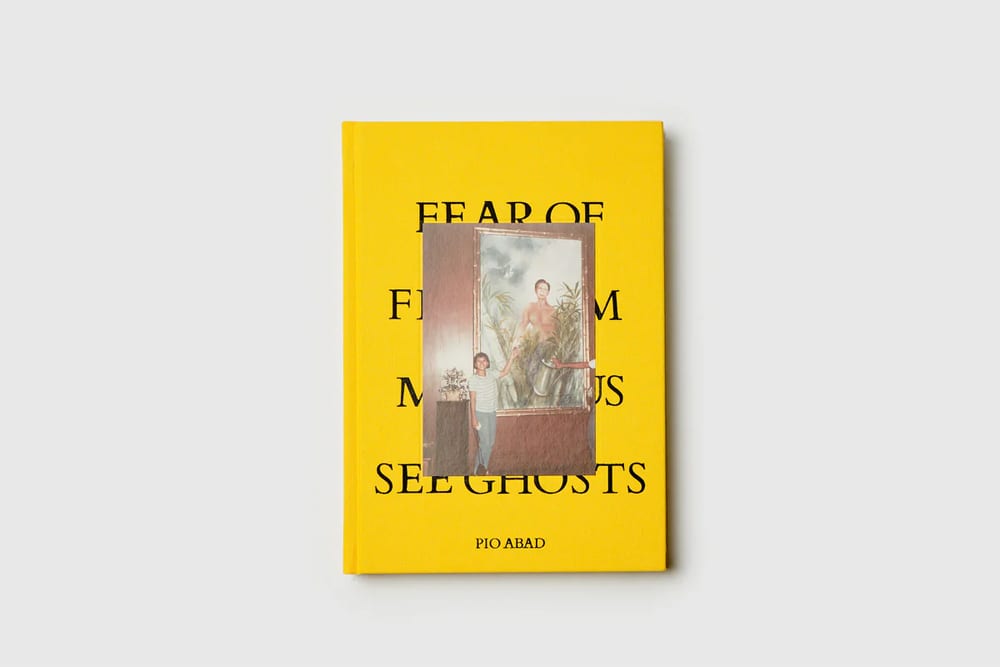
The book, with a cover colored yellow from an old tag in the 1980s and a photo taken shortly after the revolution featuring Marcos Sr. as Malakas, aims to be a permanent record, albeit an inaccessible one because of costs. Yet, it is there–315 pages, photos and lists of art and antiques, exhibition notes and documentation, Boots Herrera’s foreword, Marv Recinto’s editor’s note, Ambeth Ocampo’s interview, and three critical essays spelling out and solidifying the luxuries enjoyed amidst the oppression of the Filipino people.
Pio Abad's 'Fear of Freedom Makes Us See Ghosts': Book launch and conversation at the Ateneo Art Gallery, January 2025
Some Are Smarter Than Others
The first Philippine exhibition of Abad’s project was The Collection of Jane Ryan and William Saunders at the Vargas Museum back in 2014. Swiss Credit Bank contracts (documented by the Presidential Commission on Good Government, through Meynardo Mendoza and the National Historical Commission of the Philippines), Roll No. 66, File Nos.0722–24 and 0784–86) show the Marcoses' use of pseudonyms—William Saunders for Ferdinand, Jane Ryan for Imelda—for their Swiss bank accounts in 1968.
I remember attending the opening and the subsequent walkthrough–and in perusing the book in 2025, I saw myself in a photograph, talking to someone off the side. I was an instructor at the time and walked through several art classes in the weeks after the opening.
'The Collection of Jane Ryan and William Saunders' at the Jorge B. Vargas Museum, curated by Patrick D. Flores, August 2014
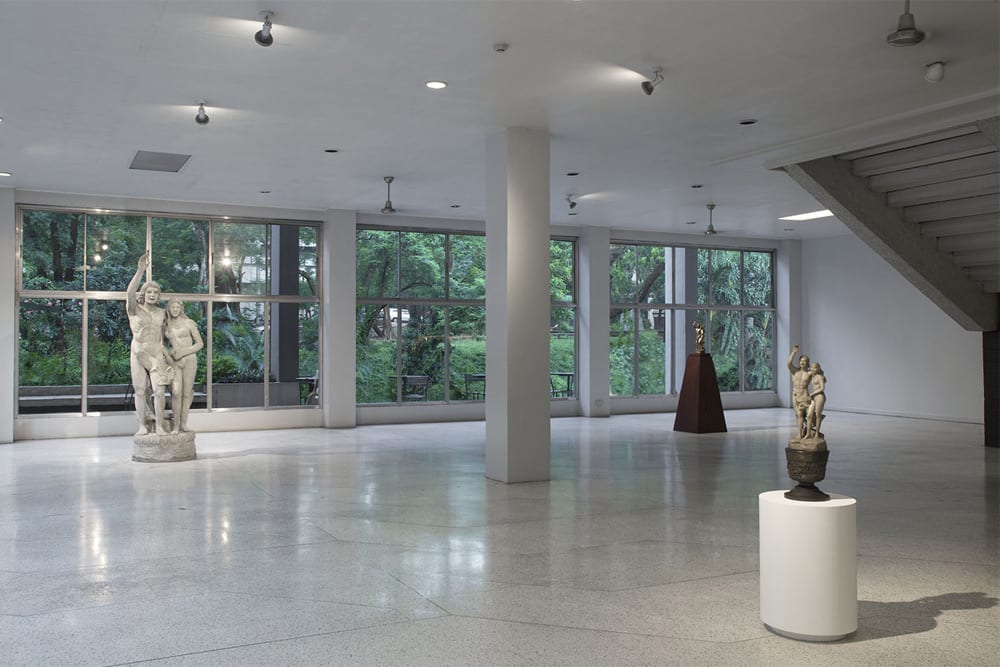
A bronze replica of Anasteceo Caedo's 'Malakas at Maganda'
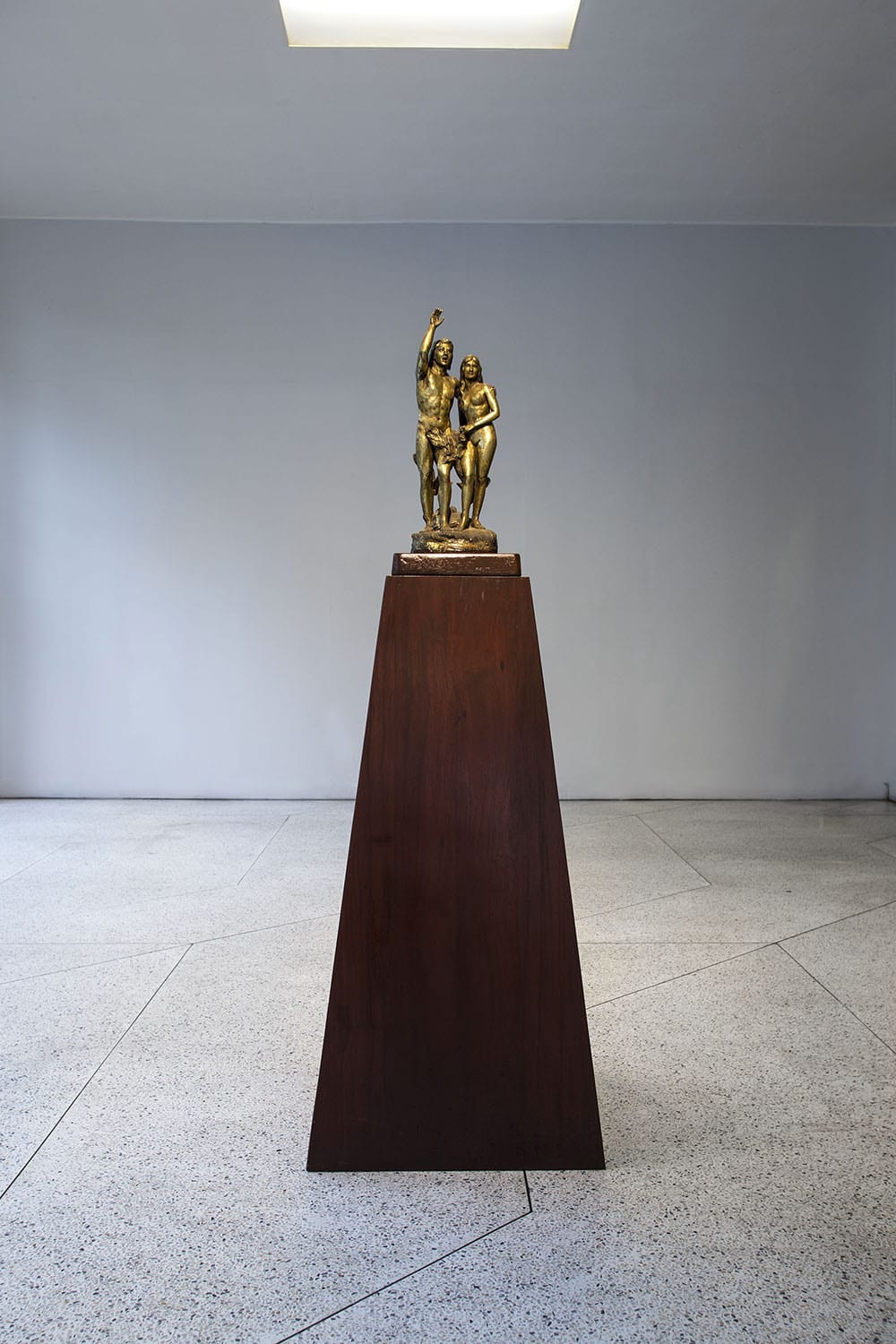
Solidifying the language used was difficult–the potency of "Malakas at Maganda" icons was challenging to translate to a younger generation. The Anastaceo Caedo from the Vargas collection, the bronze replica, and the enlarged replica offer three different perspectives–but the symbolisms needed a more step-by-step explanation in a class setting.
'Fear of Freedom Makes Us See Ghosts' at the Ateneo Art Gallery, April 2022
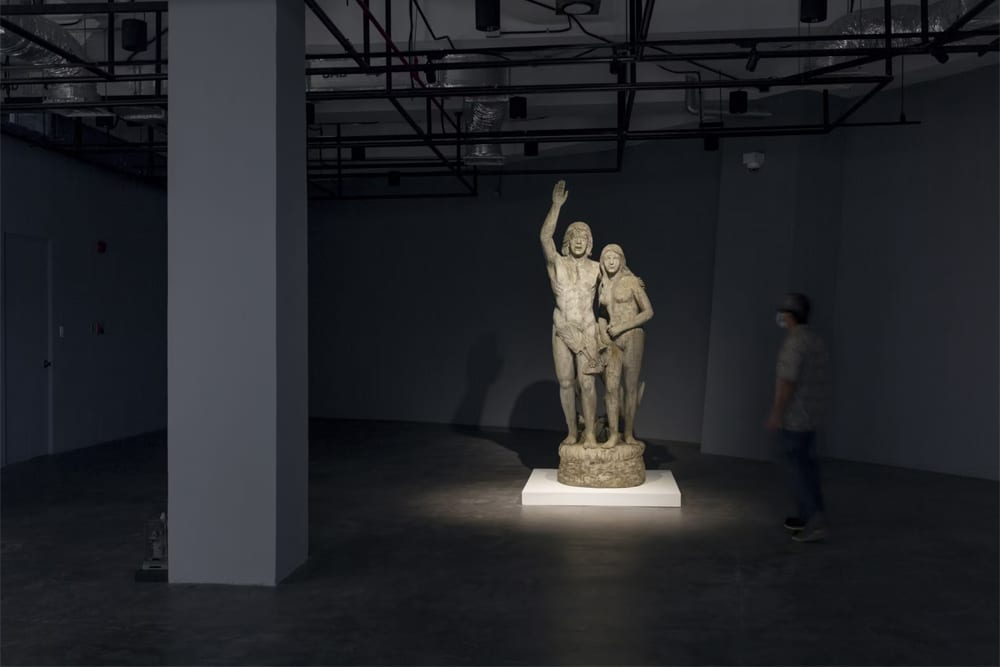
In the 2022 exhibition, the enlarged Caedo replica was the first to demand attention in a darkened room. The looming era of disintegration embraces the viewer. The photographic reproduction in the book lacks the scale, but it attempts to unpack the symbolism embraced by the former dictator and his wife.
Postcards and Paintings
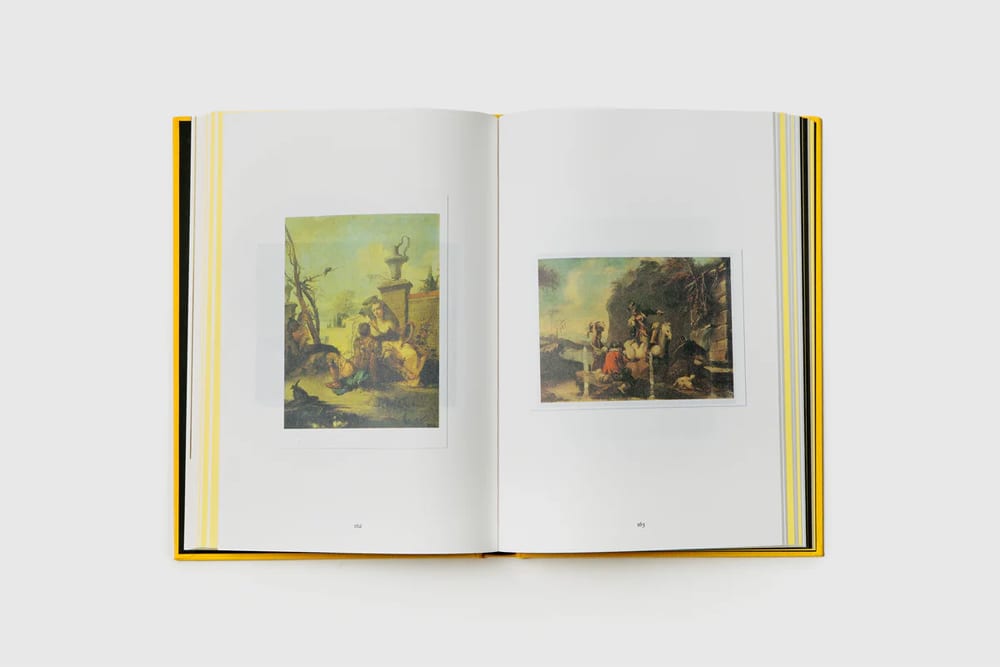
The postcard reproduction of paintings and antiques was most potent in the 2014 exhibition: "Postcard reproductions of Old Master paintings sequestered from Ferdinand and Imelda Marcos and sold by Christie’s on behalf of the Philippine Commission on Good Government," 98 sets, unlimited copies 2014-2017. On the back of the postcards are news items published about the sequestered artworks and the implicated criminal acts.
Postcard reproductions at 'The Collection of Jane Ryan and William Saunders,' Jorge B. Vargas Museum, 2014
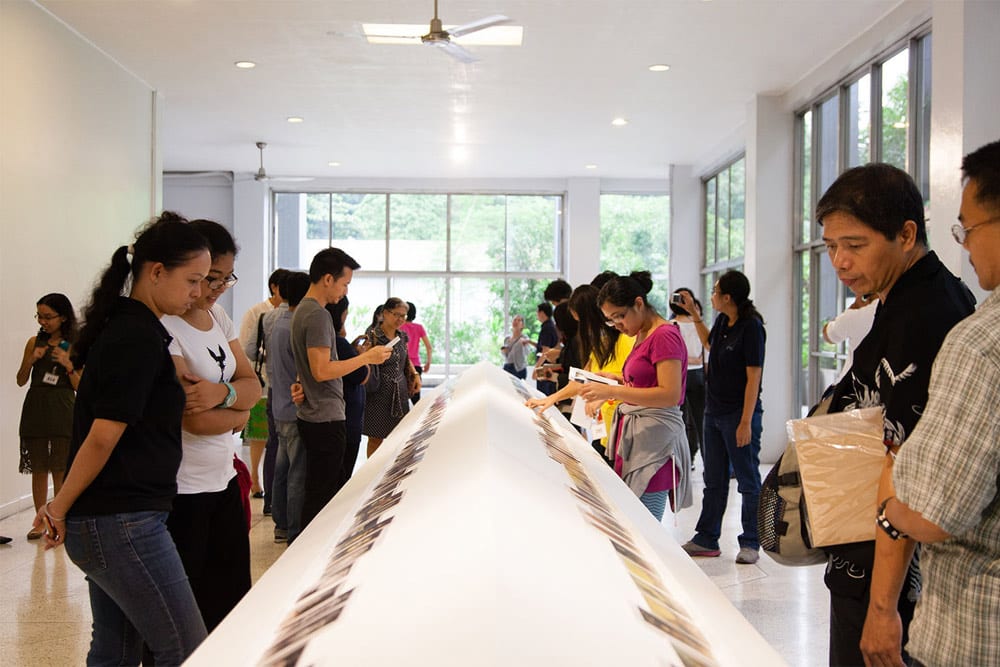
The idea was for the viewers to take home a postcard or two–in a way, the closest they could get to retrieving what was stolen from the country’s coffers. It is not significant in any financial or logical sense, but the act of holding the card and looking at a fragment of stolen wealth in terms of artwork can make anyone pause, even for the briefest of moments.
Postcard reproductions at 'Fear of Freedom Makes Us See Ghosts,' Ateneo Art Gallery, April 2022
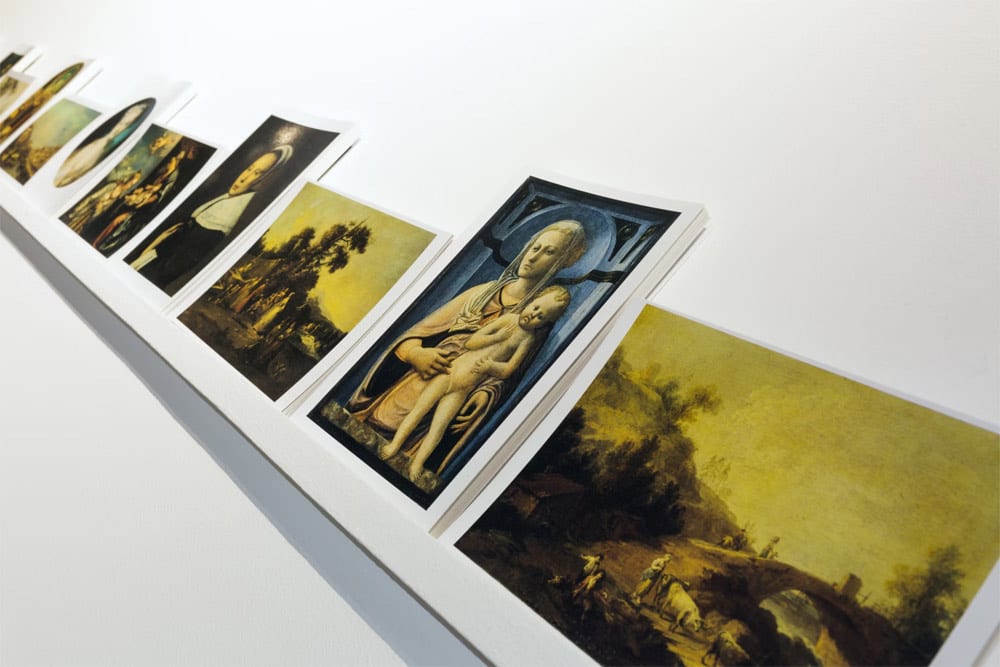
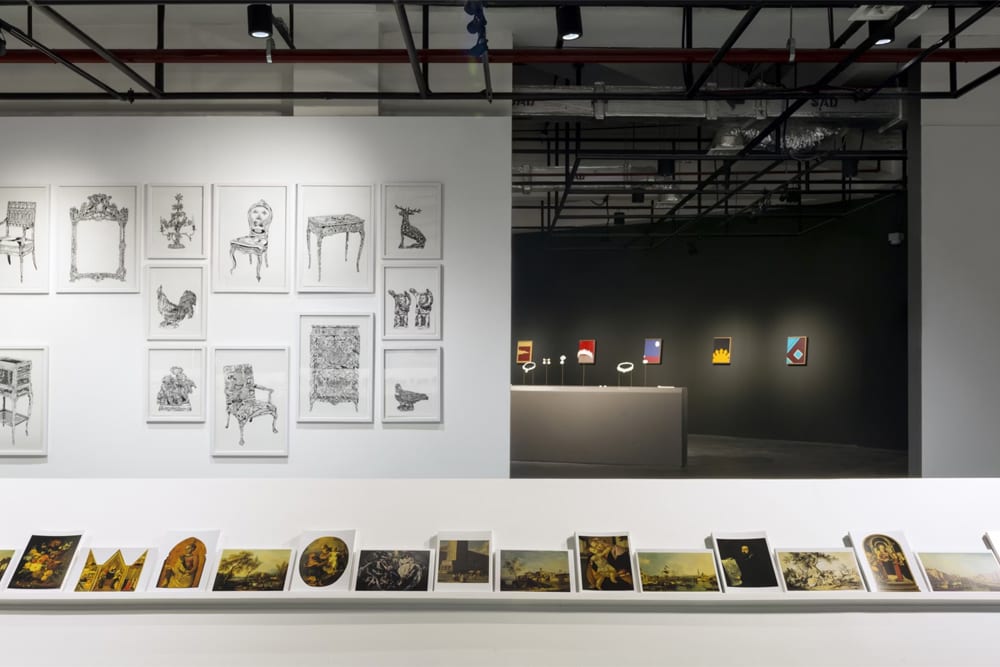
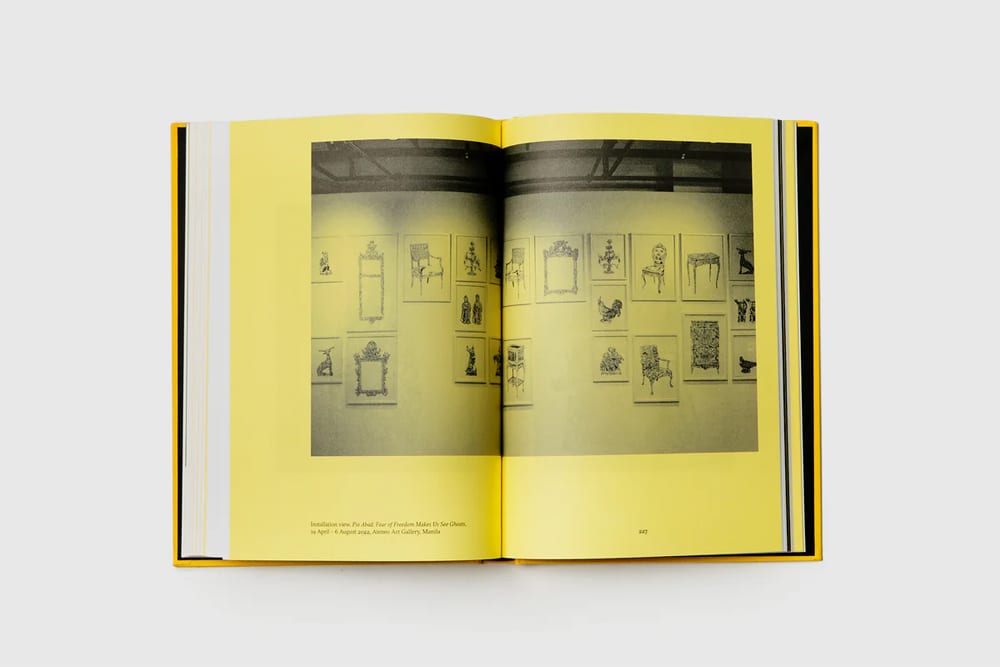
The installation was seen again in the Ateneo Art Gallery in 2022 and takes up most of the pages in the book form. It feels endless, leafing through page after page of artwork–the cost of acquisition would be more than most of us would see in a lifetime. Yet there it is–first in postcards, then in pages. The fragility of cardboard and paper solidifies abstract knowledge.
Working and Non-working Holidays
This year, February 25 will still be a commemoration of the EDSA revolution but is no longer a non-working holiday. Instead, people must go to work, as if nothing worth remembering or celebrating happened. In defiance, several schools and universities suspended work and classes or assigned the day as an alternative learning day. It was well-intended, but the reality is, that most schools and companies will go about their day as usual–workers are not even given the customary extra fee of working a holiday per our labor laws. The erosion remains.
Back in 2016, then-President Duterte allowed for the burial of former President Ferdinand Marcos at Libingan ng mga Bayani–supposedly a resting place of heroes. It was a move with fury, but all the resistance was futile. In a subtle defiance, Abad had his copies of Malakas and Maganda, then at the Museum of Contemporary Art and Design at De La Salle - College of St. Benilde, painted black. The documentation of which was part of his 2022 exhibition at Ateneo Art Gallery.
Copies of Malakas and Maganda painted black at 'Fear of Freedom Makes Us See Ghosts', Ateneo Art Gallery, April 2022
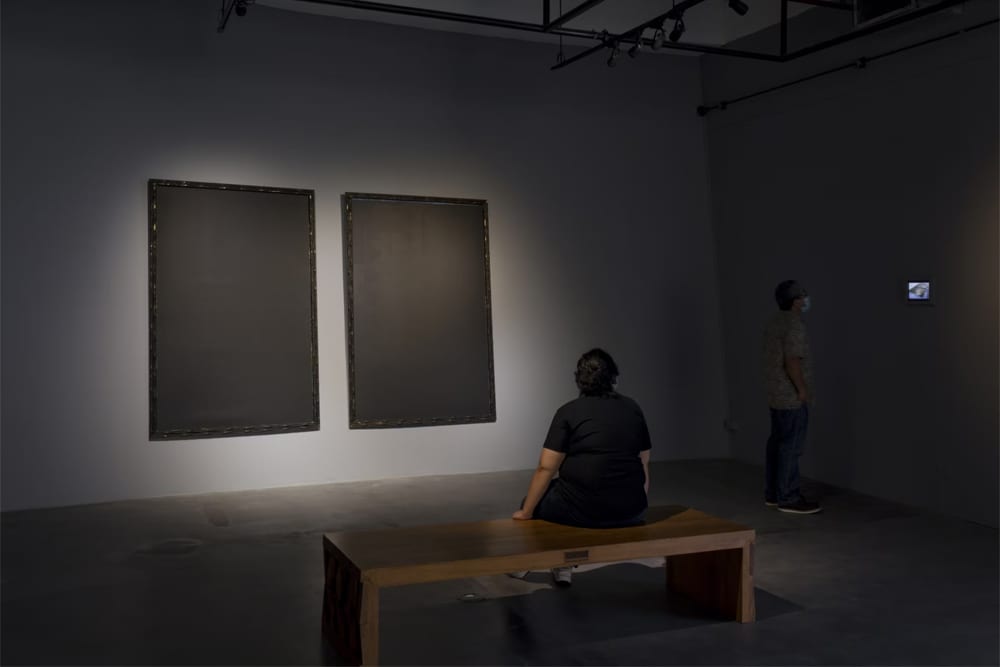
We see it again in the book, with the versions of Malakas and Maganda painted and unpainted. During the book launch, Abad shared that some documentaries used his commissioned reproductions of the paintings, rather than a photo of the paintings themselves–in an ironic taking over the representation of autocratic power.
Diamonds and Plastic
Poignant in the Ateneo Art Gallery 2022 exhibition are the Twenty-four reconstructions of pieces from the Hawaii Collection, modeled from photographs taken by Christie’s. In book form, they are set in black pages–in contrast to the dominant white and yellow.
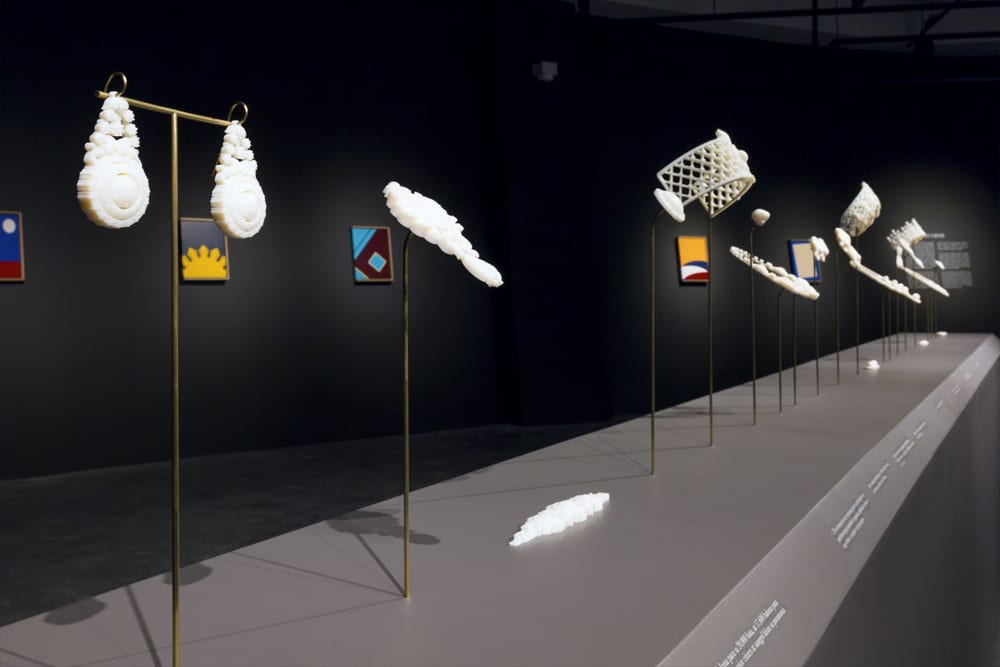
During the exhibition, this is where most of the selfies were taken, particularly under the tiaras, where the audience would pose as if wearing the tiaras themselves. It goes back to Abad’s view that these pieces, though some of them were sold in auction and in a larger perspective a part of the stolen wealth, never found their place back meaningfully for the Filipino people. An immense amount of money was stolen, spent on unimaginable luxury and wealth, was supposedly retrieved, but was never enjoyed or even felt by the ordinary Filipino.
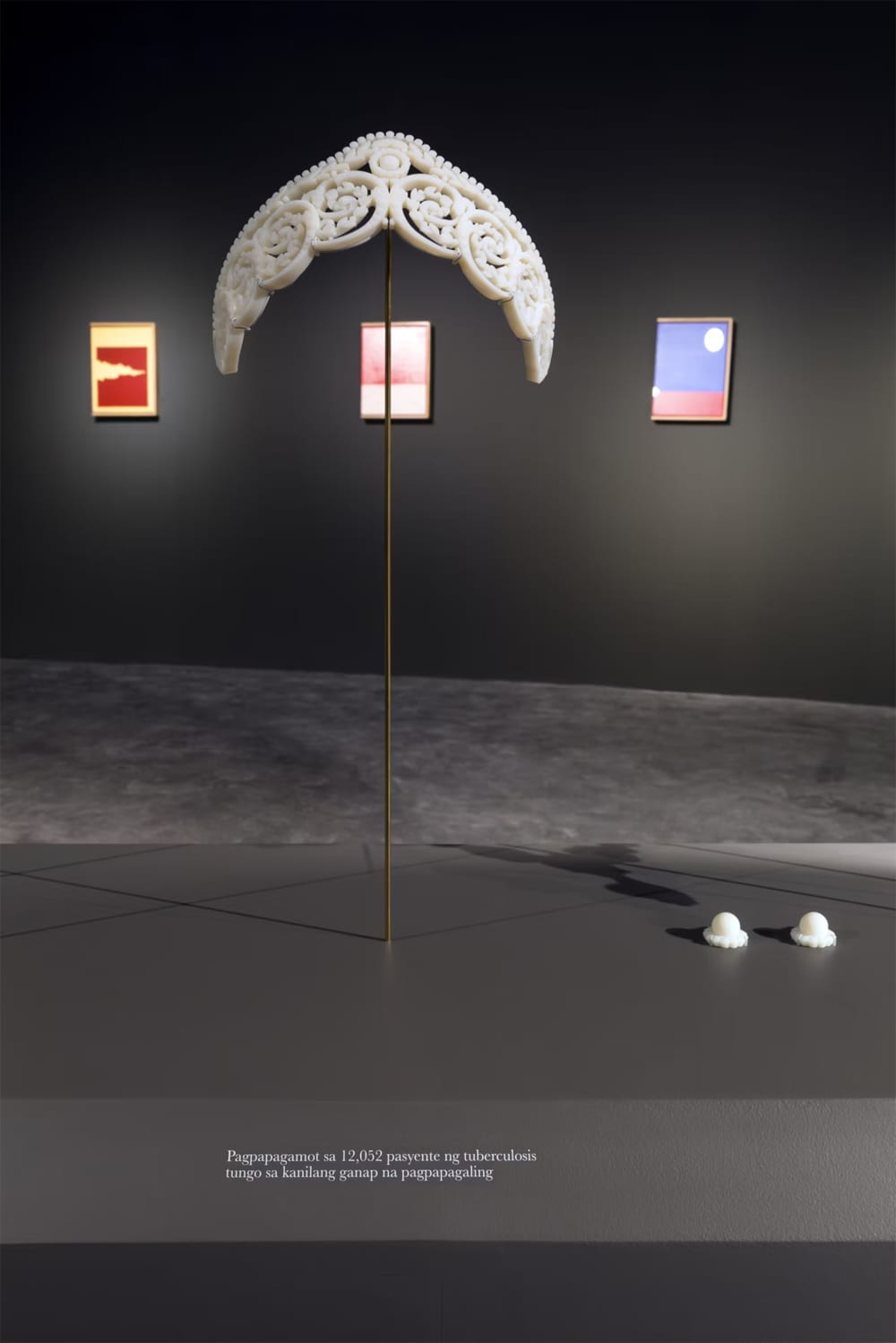
There lies the rub, where triumph was never fully in the people’s grasp. Abad uses seduction in his explanations. The 3D-printed jewelry was the most seductive of his productions, created in collaboration with his wife, Frances Wadsworth Jones.
Larger Than Life and the Turner Prize
The project is never over. 2024 was an amazing year for Abad–with him receiving a Turner Prize Shortlist for his To Those Sitting in Darkness at the Ashmolean Museum, Oxford. Though the Turner Prize eventually went to Jasleen Kaur, Abad’s recreation To Those Sitting in Darkness at the Tate gave another chance to unpack the complexities of beautiful objects bound in autocracy and corruption.
'To Those Sitting in Darkness' at the Ashmolean Museum, Oxford, 2024
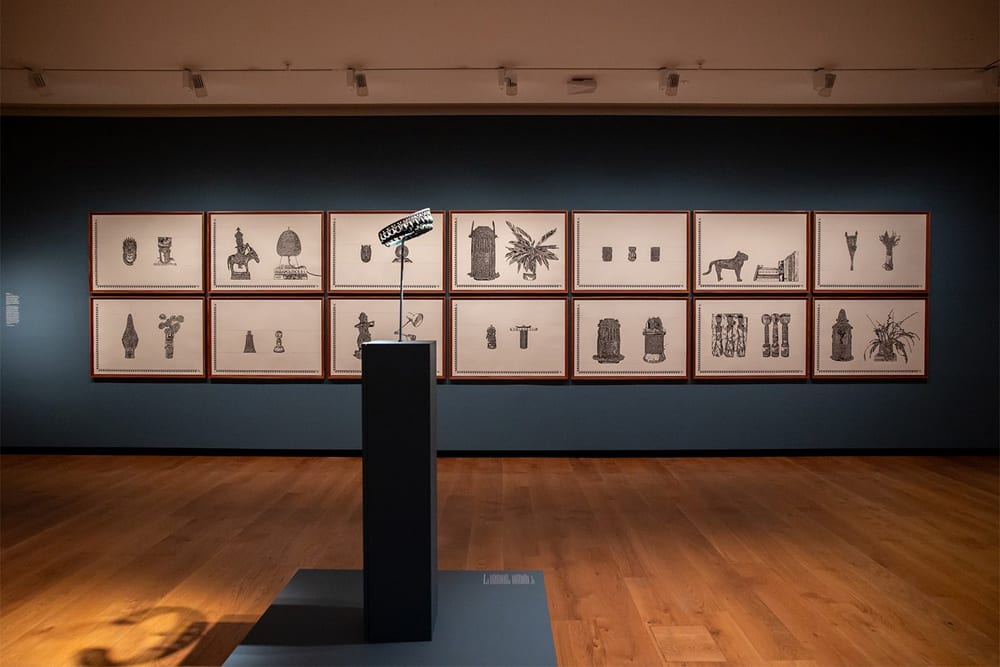
Compared to the 3D printed jewelry shown at the Ateneo Art Gallery and included in his book–the jewelry was larger in scale, as if overwhelming the audience. It is the next iteration of the project, wherein he references Mark Twain’s To the Person Sitting in Darkness, a critique of American colonialism in the Philippines. The difficult narratives remain–in a country beset by instability and a never-ending cycle of struggles.
Turning Toward Hope
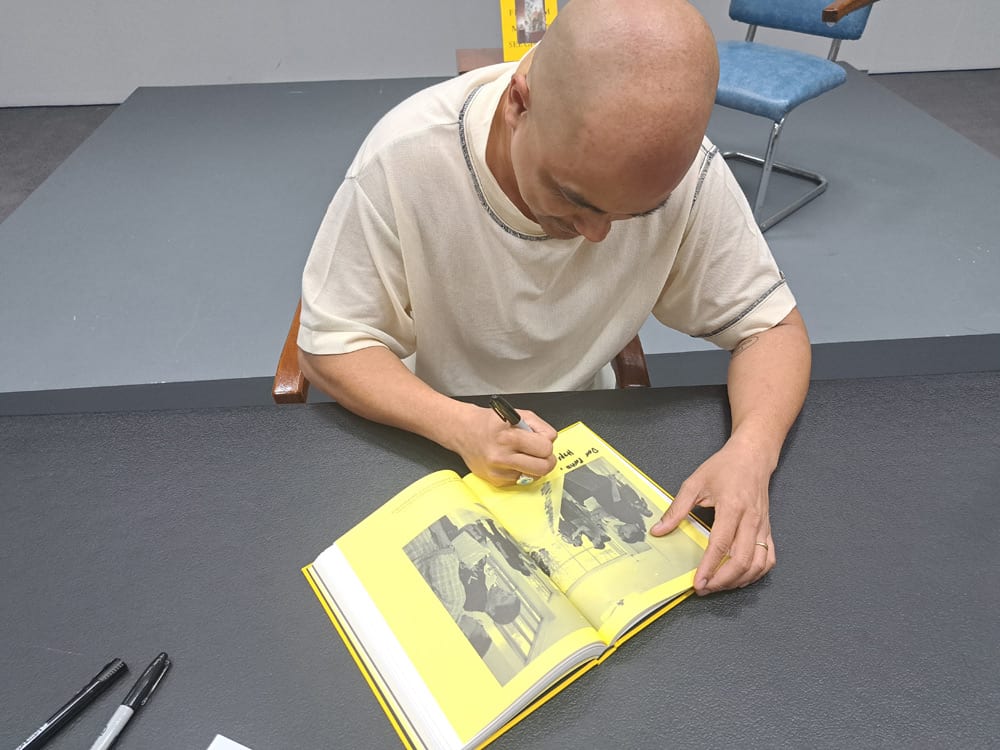
Going back to the book launch, Abad was more positive. I asked him why, and with the birth of his child, he felt that he could not dwell on the negative aspects of life and politics. In my copy, he writes, “Dear Portia, Hope… because we can’t despair forever!” It is a different tone from our last conversation. In times of darkness, we can’t help but continue to hope.
Back when he started the project in 2014, he said that the Internet and Facebook were good things. It was a few years after the Arab Spring in 2011 when the world saw the downfall of several dictators. In the Philippines, it appears that the economy was recovering as well. But the shadow was always there and not everyone felt the economic upsurge. Politicians became comfortable in their positions, with arrogance seeping through their public personas. In the blink of an eye, public opinion shifted, locally and globally.
Love as Resistance
Today, the world is leaning right, and it feels there is no way out. The last essay in the book is Marian Pastor Roces’s "Love, grief, art." Surprising, to say the least. She reflected on Abad’s story and how it intertwined with the country’s story and the messaging of his artworks.
In many ways, the strongest resistance is through love, and as cheesy as it sounds, that is where we find hope. It is another election year, and for Abad, unlike his 2022 exhibition, the book does not try to be everything. It doesn’t seem like he aims to throw a wrench in today’s machine. Rather, the vision is for the future. The next time someone asks about details on the stolen wealth and the absurd luxuries, Fear of Freedom Makes Use See Ghosts documents a part of it–and this part is something most of us will never see in our lifetime. What was stolen was that much, and we will probably never get it back in any meaningful way. The idea is for us to learn from it, and maybe just create a meaningful shift in how we see and do things.
