

Lambanog's Journey to Becoming the World's No. 2 Spirit

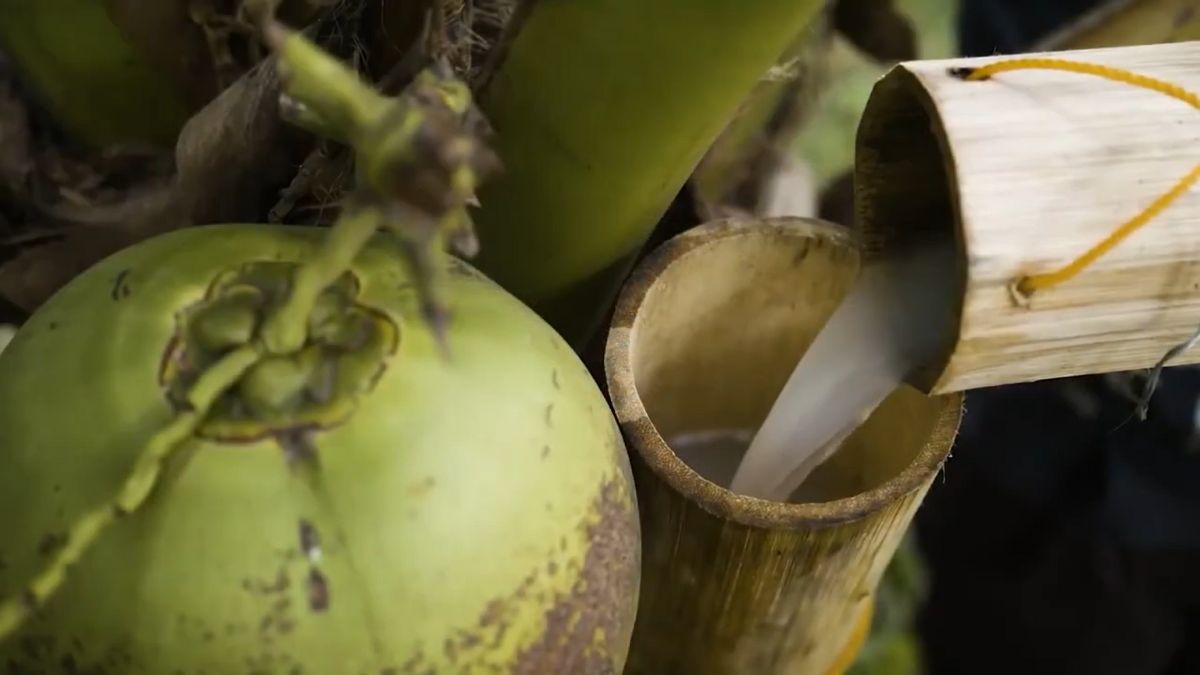
Rising from its previous ranking as the world's 10th best spirit in 2023, the Philippines' lambanog has made a remarkable leap, securing the No. 2 spot in Taste Atlas' global ranking this year. It achieved a rating of 4.4 stars, on par with the top-tier Speyside Scotch from Scotland, and surpassed 77 other well-known spirits, including Scotland's Islay Scotch, Serbia's Viljamovka, and France's Armagnac.
The international food database noted the significant improvement in the quality of the "potent Filipino drink," once likened to the United States' moonshine, due to their similar origins and initial production methods.
Also referred to as Philippine vodka or coconut wine, lambanog is a natural and chemical-free alcoholic liquor produced through the distillation of naturally fermented coconut sap. Packing a serious punch with a minimum of 30% alcohol content, this potent potion is traditionally enjoyed neat but is also a versatile go-to base for crafting other flavored spirits and cocktail concoctions.
ALSO READ:
The 15 Best Wine Bars in Manila
Here's the Healthiest Way to Drink Alcohol, According to a Dietitian
In her book Philippine Fermented Foods: Principles and Technology, microbiology professor and practitioner Priscilla Sanchez draws the distinction between lambanog and tuba. Tuba is essentially fresh sap that has undergone fermentation but no further distillation.
Lambanog, on the other hand, is produced by distilling tuba. The distillation process increases the alcohol content and alters the flavor profile, resulting in lambanog, which is clear and has a much higher alcohol content.
Traditional wine-making was an integral part of Filipino culture long before European colonization. In his journal, Primo Viaggio Intorno Al Mondo (First Voyage Around the World), Italian navigator Antonio Pigafetta describes landing on the island of Zamal (now Samar) on March 16, 1521.
"When they saw the captain’s courtesy, they presented fish, a jar of palm wine, which they call uraca [i.e., arrack], figs more than one palmo long [i.e., bananas], and others that were smaller and more delicate, and two coconuts,” he wrote.
According to the Philippine Coconut Authority (PCA), lambanog is produced across various regions of the Philippines, yet the majority of its production is concentrated in the Southern Tagalog Region.
In this YouTube video, PCA details the step-by-step process of making lambanog.
Step 1. Sap Gathering. Trees that can be harvested for coconut sap can produce 1.5 to 4 liters per day. The Equatorial Green Dwarf (EGD) is one of the best varieties because it is not too tall, making it easy to harvest sap from. It can also yield a significant amount, especially when properly cared for and managed.
Step 2. Fermentation. Once collected, the sap is left to ferment at ambient temperatures. The sap already contains natural yeasts, and these microorganisms start to convert the sugars in the sap into alcohol and carbon dioxide. This fermentation process can occur in open containers to allow wild yeasts from the environment to contribute to the fermentation, enhancing the flavor and complexity of the resulting product. Within 48 to 72 hours, the coconut sap that has been fermented is known as coconut wine, or tuba.
Step 3. Distillation. The fermented sap undergoes the most important process, which is distillation. All alcohol is white after the distillation process and only gains color if stored in wood or an oak barrel. The pure lambanog produced can be distilled multiple times, depending on the volume of the alcohol or proof that the producer aims to achieve.
PCA stresses that pure lambanog is free from chemicals, methanol, water or any artificial flavor. Liquor connoisseurs who have sampled lambanog liken the drink to a version of vodka that's light, sweet, and fruity. This comparison has led to the nickname "coconut vodka" for the spirit.
Several years ago, there were reported deaths after consuming lambanog. But PCA clarifies that the deaths were not due to lambanog but to methanol poisoning.
Former Health Secretary Francisco Duque III explained that methanol is a by-product that naturally forms during the distillation process of alcoholic drinks and is present in small quantities. But this should be eliminated after fermentation.
"Methanol is a chemical commonly used as a solvent in chemical synthesis and fuel. Ingestion of products with high amounts of methanol poses serious adverse effects like blindness, permanent neurologic dysfunction, and even death," the Philippines' Food and Drug Administration (FDA) said.
The FDA advised the public to refrain from purchasing unregistered lambanog products, those offered for sale in informal settings (i.e., stalls without business permits, suspicious vendors, etc.) that are not licensed and regulated to sell alcohol, and those sold in unlabeled containers or poorly printed labelling and damaged packaging.
