What's Next for the Philippines’ Michelin-Starred Restaurants

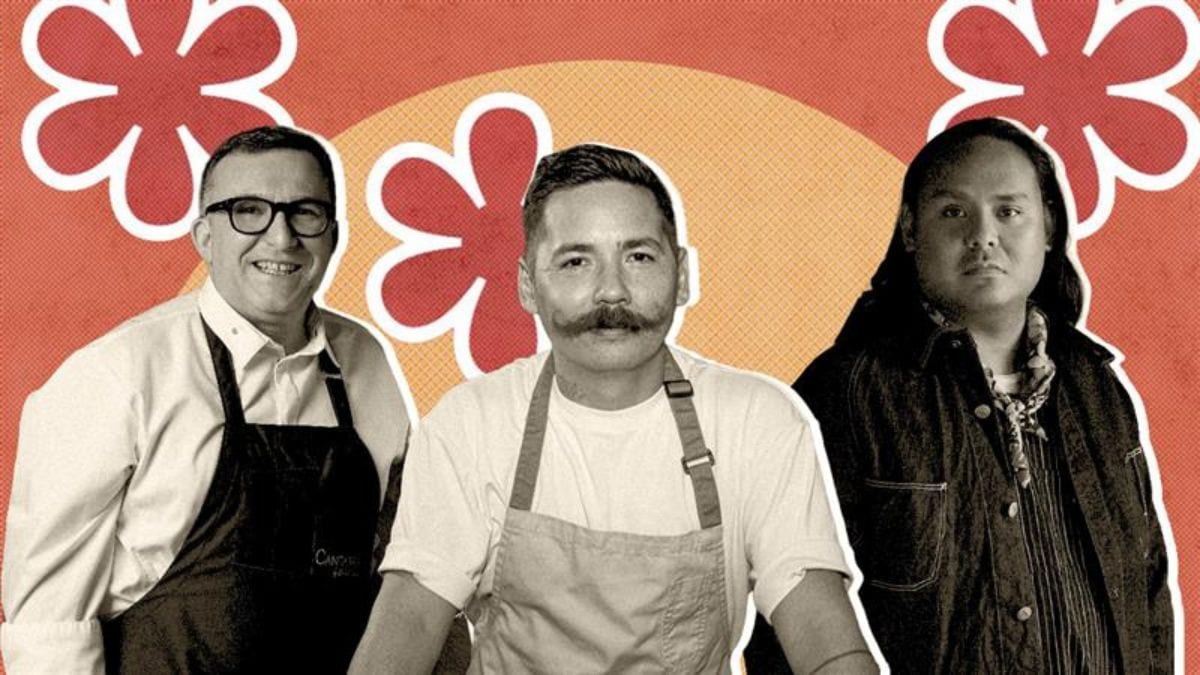
When the Michelin Guide finally landed in the Philippines, it signaled the country’s growing presence on the global culinary map. For the first time, Filipino restaurants stood shoulder to shoulder with some of the world’s finest dining destinations—recognized for the quality of their ingredients, mastery of cooking techniques, harmony of flavors, the chef’s creative identity, and consistency of excellence.
But what happens after the stars are awarded? How do chefs sustain excellence once the spotlight shines brighter than ever?
In the weeks following the announcement, the chefs behind the Philippines' Michelin-starred restaurants shared what the recognition means to them, how it shapes their kitchens, their philosophies, and their drive to keep evolving.
JOSH BOUTWOOD
Helm
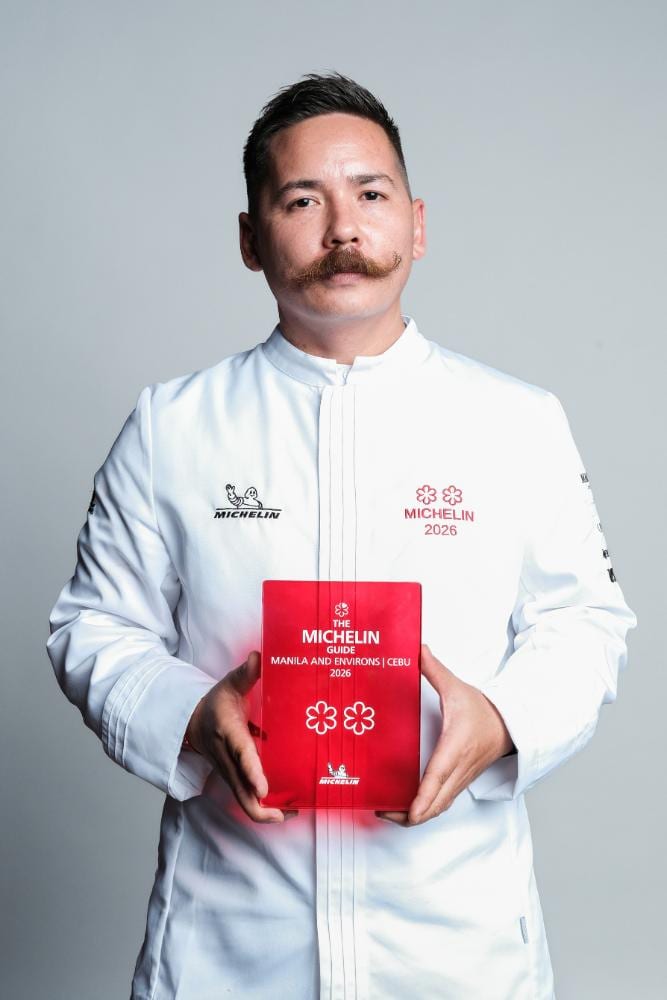
On the impact of Michelin Guide to Helm's daily operations:
Well, now that we've won, it doesn't really change much. What we’ve enjoyed doing has clearly paid off and making changes now might negatively impact what Helm is supposed to be. We've just launched the monochromatic menu, so we really want to showcase that as much as possible. In terms of the beverage program, we’re launching a more premium version of our wine pairing, which should be available in the next month or so. That will give us two wine-pairing options. And of course, as always, every day we try to be better than we were yesterday, so it’s a continuous push for evolution and improvement, with no drastic changes from us at Helm.
What Michelin-quality dining means to him:
When it comes to the criteria Michelin uses in assessing us, I can’t really say which one led to us receiving two stars. All I can say is that we have a very relaxed style of service. We are very casual but also very sophisticated at the same time. We execute extremely well, and we are also extremely personal. Our service style at Helm is professional but casual, with a little bit of humor here and there. I’d like to think that perhaps we created a memory for the inspectors—something they remembered and longed for again and again—and that’s the whole idea of Helm. When guests come to dine, we want that feeling to happen every time.
Aspiration for more Michelin distinctions:
I am so happy about getting two stars that the thought of attempting to achieve three feels a bit crazy right now. I think our priority is to ensure we retain two stars, but with the mentality of aiming for three maybe, without pushing ourselves to the absolute limit. As I said earlier, we want to constantly evolve, improve, and do things better, and we'll see where that leads us. As long as we don’t go backwards, we can only move forward, and we’ll see where that takes us.
That being said, I also think there is an opportunity for my other restaurants to gain a star. A lot of my focus will be on my three other restaurants, to see what we could do better, analyze where we are strong and where we are weak, and work on those weak aspects to level up. Hopefully, from being Michelin-selected, they can achieve a Michelin star.
Managing Michelin pressure:
From the moment it was announced at the ceremony, yes, there has been an immense amount of pressure. I don’t think I actually felt it during the ceremony—I was a little dazed and, to be honest, absolutely shocked. But now that the recognition is starting to sink in, and I see the plaque on the restaurant shelf, it feels daunting to be both the first Filipino restaurant to earn two stars and the first Filipino chef to achieve that. It’s quite a responsibility, and the pressure is there, but I’m trying very hard not to think about it that way and instead enjoy this moment with my team, my family, my children, and our guests.
RODRIGO OSORIO AND CHELE GONZALEZ
Asador Alfonso
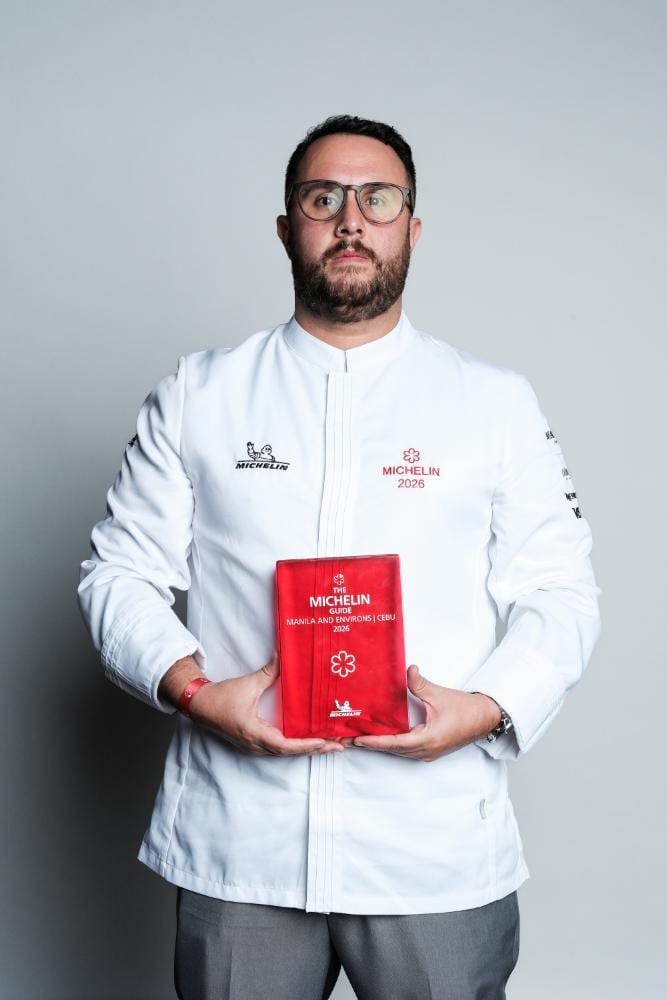
On the impact of Michelin Guide to Asador Alfonso’s daily operations:
Osorio (in photo above): We will continue striving for excellence day after day, just as we have been doing since we opened Asador Alfonso. We’re improving every aspect of the experience to deliver the best possible hospitality to our guests. Consistency, as a solid structure, will allow us to evolve in the future.
Gonzalez: Asador is still a baby, and we are making many changes to ensure that we meet Michelin’s standards, so there is a lot of exciting news coming that I can’t share just yet. We’ve shown a few updates, like dividing the second floor into a more fine-dining space, while the ground floor will be more relaxed and a la carte for families. The whole place is very big, so we’ll have our farm there and a lagoon. The only thing I can say is that Asador has a lot of things coming, and there will be many surprises.
What Michelin-quality dining means to them:
Osorio: A Michelin-starred restaurant signifies exceptional cuisine, high standards of quality in both cooking and service, and a space with a structure dedicated to achieving excellence as its primary objective.
Gonzalez: Asador Alfonso is a destination restaurant—it's a place that really fits the Michelin profile, where you take a car and go there, pretty much how Michelin started. I think we meet the criteria for quality food, especially in terms of ingredients, because we use the best produce from Spain, the best produce from our own farm, and from farms in Tagaytay and Cavite. It really brings the experience of taking a drive—just like how the Michelin Guide began—and enjoying dining in a destination restaurant.
Aspiration for more Michelin distinctions:
Osorio: I believe our job is to maintain and evolve what we've accomplished so far. First, we need to process everything that's happened and be grateful. It's too early to think about that. I prefer to stay grounded and consolidate what we've achieved.
Gonzalez: We are very humbled to receive the award. There are a lot of changes happening—like dividing the spaces—and we have many plans for the future, which we’re doing step by step. Asador Alfonso is just 1.5 years old, so we really need to stay consistent as a one-Michelin-star restaurant, and in the future we can dream of more. But for now, it’s about bringing the best quality we can offer.
Managing Michelin pressure:
Osorio: More than pressure, it's a source of pride and gratitude. It's been a team effort across all departments. Our priority since we opened our doors a year and a half ago has been to strive for excellence every single day. We enjoy every day because we love and value what we do. We'll stay focused because that's been our DNA from the beginning.
Gonzalez: For Asador, there is pressure because it’s still very fresh and very new. We need to take baby steps to keep moving upward, but there are so many amazing things happening, and we really have a plan for Asador to continue growing. So yes—there is pressure, but in a good way, because Michelin can help elevate and improve the quality of everyone in the industry.
NICCO SANTOS and QUENEE VILAR
Celera
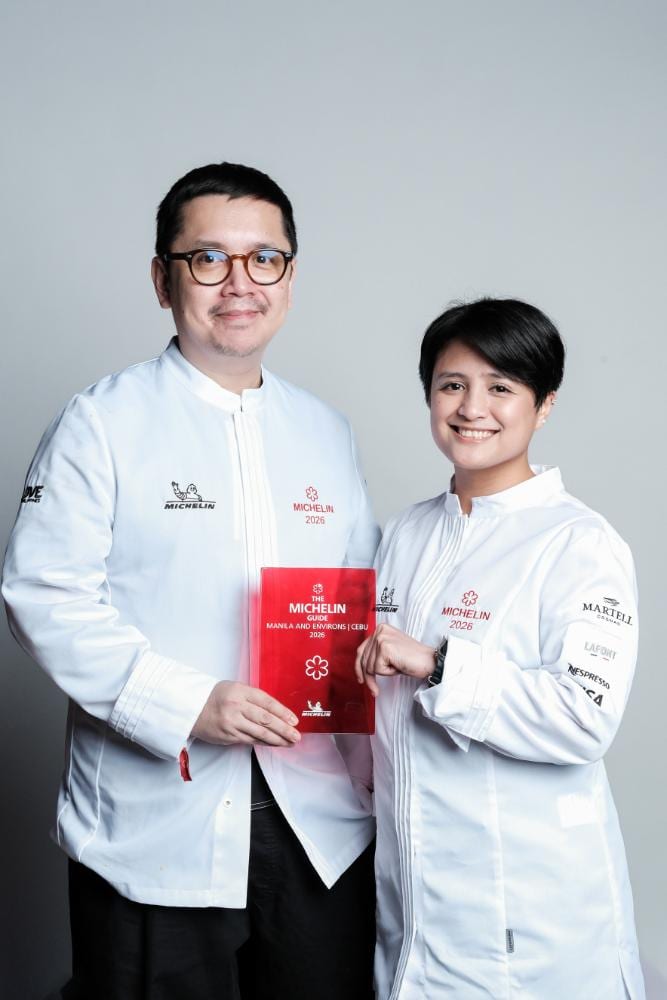
On the impact of the Michelin Guide on Celera’s daily operations:
Before the recognition, we had already been preparing for the next phase: a new upcoming menu, more collaborations on our calendar, and additions to our beverage program. Most importantly, it has been about further grooming the talents in our team to propel their career paths, so there are many plans in the pipeline. It has been a couple of weeks since the announcement, and it’s now sinking in—wow, “now how do we keep that star?”
What Michelin-quality dining means to them:
The five criteria may be known, but the way Michelin chooses is still stealth. It could be anyone walking through those doors, so it’s fair game. Winning this is a recognition across the board and not just limited to the criteria. It’s the music the orchestra played—all the moving parts that make the restaurant. It is for the team, really. For our children and our country, for them to know na kaya natin, kaya ng Pinoy.
Personally, the recognition is an affirmation of all the difficult work and challenges we have gone through from the very start, and we are grateful for that. Lahat ng pinagdaanan namin naka-flashback on replay. To be validated with a star brings full-circle warmth—sulit lahat ng pagod at sacrifice.
Aspiration for more Michelin distinctions:
Of course! There was a specific moment after the awarding, when we were celebrating at the after-party, when we all paused at the same time, looked at each other, and said, “We have work to do.” We’ll let our actions speak for what’s to come.
I just want to share that with or without a star, it has always been important for us to keep improving and to come up with new ways for our guests. For anyone working toward attaining one, it’s best not to obsess and just let it go. We try to remind ourselves of that. So yes, we are working toward bigger goals, but it is essential to stay the course and have fun while doing it.
Managing Michelin pressure:
Most definitely. It can be debilitating, if I’m being candid. It can be a lot, but the key is to stay present and enjoy the process—come back to fulfilling our mission. It’s also essential for us to hold space and give ourselves grace to express our true selves creatively. It is honest work, and we believe people see that, and through it, every guest interaction becomes special. We are excited and very inspired to keep the fire burning, and it helps that we’re all working together with the same vision.
CHELE GONZALEZ
Gallery By Chele
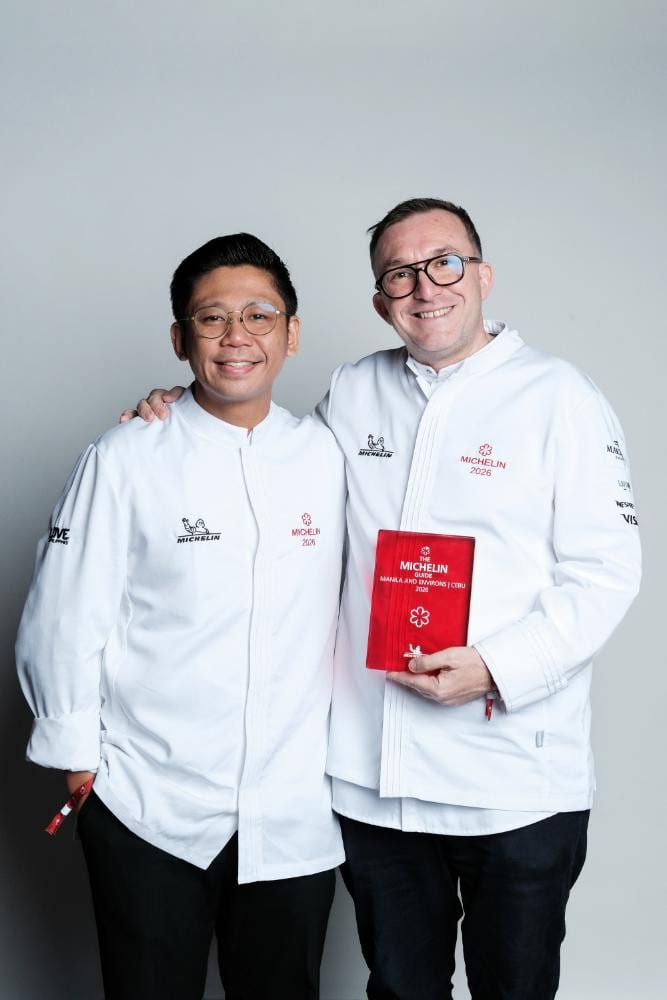
Gonzalez (in photo with Chef Carlos Villaflor): On the impact of the Michelin Guide on Gallery by Chele’s daily operations:
I’m just so excited to go back to the kitchen, start thinking about the next menu—which will be the rice menu—and continue improving. I am proud to say that Gallery by Chele is very consistent. Whether it’s a Michelin inspector, a foodie, or a regular diner celebrating a special occasion, we provide the same experience. That’s an achievement built over 13 years of hard work.
There are two things I want to focus on: first, to push ourselves to become better, to really be the best version of ourselves; and second, to continue promoting sustainability, which is why we have the Michelin Green Star. This means working with local ingredients to highlight the heritage of Filipino produce, in this case showcasing rice, while most importantly ensuring we meet our guests’ expectations—and at the same time, having so much fun in the kitchen.
What Michelin-quality dining means to him:
Michelin is a 125-year-old institution. For a chef, it is the biggest accolade, and since day one, I have been pushing for Michelin to come to the Philippines because I truly believe it is a game changer for how the world perceives Philippine gastronomy. With eight restaurants—two of which have one Michelin star—and Gallery having a Green Star, it’s just amazing! Michelin has been very kind, and I think they were able to balance the way they awarded the stars very well. It’s all about quality, and we were able to reach that standard, which is why we received it during the awards ceremony.
Aspiration for more Michelin distinctions:
Our motivation is to reach two stars. We are a 13-year-old restaurant that has been working very hard to polish everything. So we will continue what we do every day—focusing on becoming better, sourcing better ingredients from the Philippines, and showcasing them. We have three sommeliers in the restaurant, one with WSET Level Three, and we aim to improve every single aspect to become a better restaurant. Hopefully, Michelin will appreciate that, but for us, it’s a motivation to keep working the way we do and to become better every single day.
Managing Michelin pressure:
Of course, Michelin adds pressure, but at the same time, when I came to the Philippines 15 years ago, I never thought the Michelin Guide would happen in my lifetime—and now it is. For Gallery, which is already a very consistent restaurant, our only goal is to exceed ourselves, to grow, and hopefully, Michelin will see that.
KEVIN NAVOA and THIRDY DOLATRE
Hapag
In photo (from left): Chef Thirdy Dolatre, Erin Recto (Hapag's head sommelier), and Chef Kevin Navoa
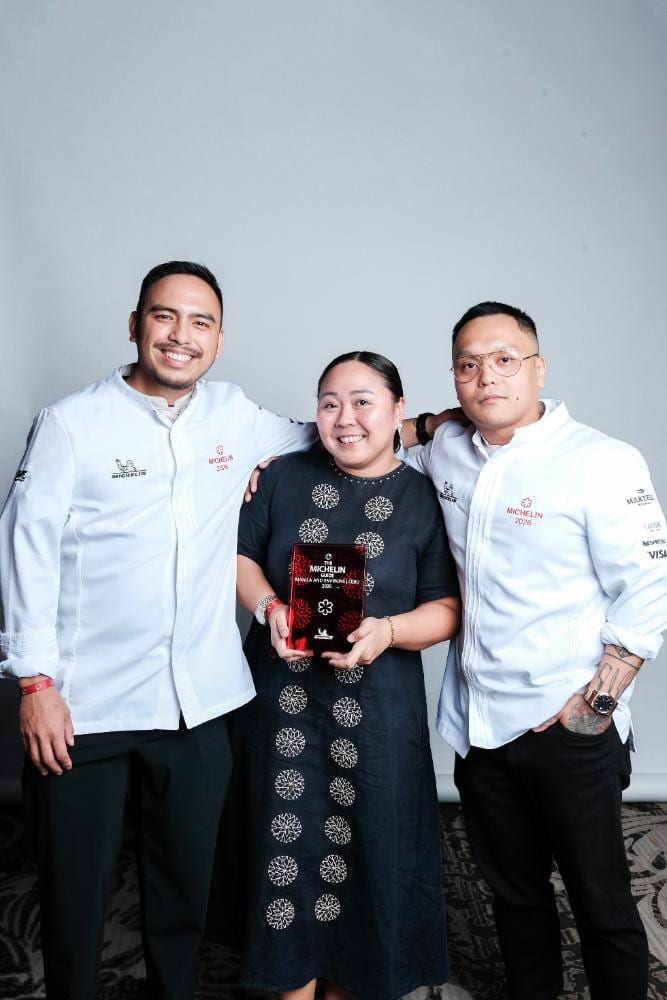
On the impact of the Michelin Guide on Hapag's daily operations:
Navoa: It shouldn’t influence our day-to-day operations. For me, the star simply validates the work we’ve already been doing. If anything, it reminds us that we need to keep getting better at what we do and be prepared for the curveballs that come our way.
At this point, the focus is on refining every detail—from sourcing to cooking to service. Generally, we’re just trying to get better at our weakest points and close the gap little by little when measured against world standards.
Dolatre: This recognition amplifies what we already strive for every day, and it gives me and my team even more reason to push further—for the love of our guests and our cuisine.
Ever since we opened in our humble Katipunan space, we’ve always told our team to stay hungry for positive change and continuous improvement. Knowing where we are now and where we want to go, we will keep working to refine all aspects of the experience—from the kitchen and menu development to service and beverage — to elevate the overall experience for our guests.
What Michelin-quality dining means to him:
Navoa: To me, a Michelin-quality restaurant is one where every part of the experience is cared for—from the food to the service to the ambience. No detail is left out or treated as an afterthought. Everything matters.
Dolatre: What I love about Michelin is how it shines a spotlight on all types of food establishments—from humble carinderias and eateries to elegant fine-dining restaurants. To me, Michelin quality means that in whatever you do, you strive for excellence.
It’s about working on what you love at a very high level, with utmost respect, intention, and humility. It’s a reminder that excellence doesn’t require prestige—just passion, dedication, and heart.
Aspiration for more Michelin distinctions:
Navoa: We haven’t really thought about earning more stars. What matters most to us is using this platform to tell our country’s story. Our goal is to continue building a restaurant that represents the Philippines and can hold its own anywhere in the world.
If, along the way, that journey leads to more stars, then that would be amazing—but it’s never the main motivation.
Dolatre: I’d be lying if I said I’m not thinking about it. But the first responsibility is to maintain the One Star and show up with consistency every single day.
There is still so much to improve and fine-tune, and our goal is constant progress—even just one percent better each day. That mindset keeps us moving forward. For me, the essentials are consistency over complacency, and humility over arrogance.
At the end of the day, the stars are just a result and a reflection of the passion, discipline, and dedication we pour into our craft. What matters most to me personally is that the work fulfills me on a deeper and more personal level.
Managing Michelin pressure:
Navoa: It definitely adds pressure. Earning a star was something I used to dream about back in culinary school—something that felt unattainable because the Guide didn’t even exist in our country.
What keeps me grounded is remembering our purpose: that the restaurant was built to serve and represent our people. That thought alone brings joy and reminds me why we do what we do every single day.
Dolatre: It depends on how you channel that pressure. Michelin will always remain a recognition of the work we do, and it validates the effort we pour in daily, but it shouldn’t change our core.
Restaurant service should remain fun, exciting, and rooted in love and service toward others. It’s about making people feel seen and special. Remove that, and you lose the soul of what we do. It’s always important to take the work seriously without taking ourselves too seriously.
At the end of the day, my team and I will always be the best judges of the work we do inside the restaurant.
JP CRUZ
Inatô
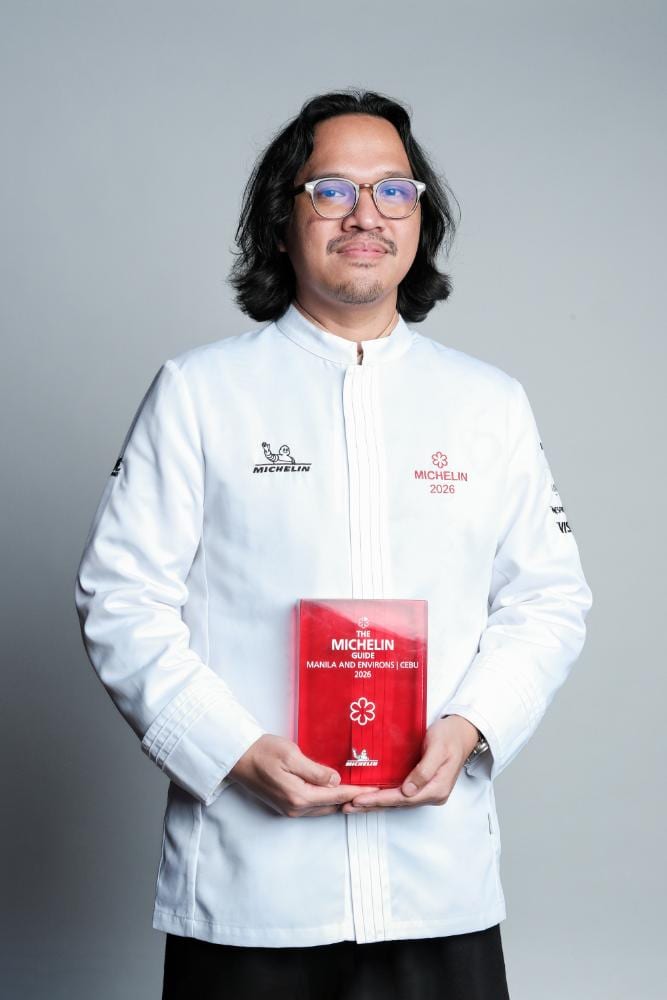
On the impact of Michelin Guide to Inato’s daily operations:
The night we received the award, I learned from Paulo, our restaurant manager, that we had an influx of reservation inquiries! It’s overwhelming, but we’re very grateful. It’s a great honor to have been given this award, and it’s nice to see our dining scene being recognized in this way. We always strive to be better at what we do. This mindset has been with us since we opened our doors, and it will continue as we move forward.
It’s undeniable that there is a certain amount of pressure that comes with this recognition. Although it hasn’t really been our goal, we try to improve what we do bit by bit every day. There will always be room for improvement, and I think being aware of that is key.
What Michelin-quality dining means to him:
I can’t say that I’ve been to enough Michelin-recognized restaurants to be an authority, but the ones I’ve tried have varied approaches to philosophy, food, and service style. I think quality, execution, and how the experience makes you feel are some of the things I expect whenever I dine in one.
Aspiration for more Michelin distinctions:
We’re so happy and grateful to be recognized with a star for our work. But whether it’s this star, more stars, or no stars at all, our mindset will always be to give our guests a consistently good meal and to keep creating in ways that allow Filipino food to shine in our own way.
Managing Michelin pressure:
I think pressure from recognition as big as this is expected. Long before the Guide was introduced, a star—or any recognition—was never the goal. It has always been about presenting our cuisine through our own lens and creating a dining experience guests would want to return to.
ALSO READ
Toyo Eatery's Chef Jordy Navarra Takes You on a Flavor Deep Dive
Josh Boutwood: 'Even When I'm Sleeping, I'm Thinking About Food'
AARON ISIP
Kasa Palma
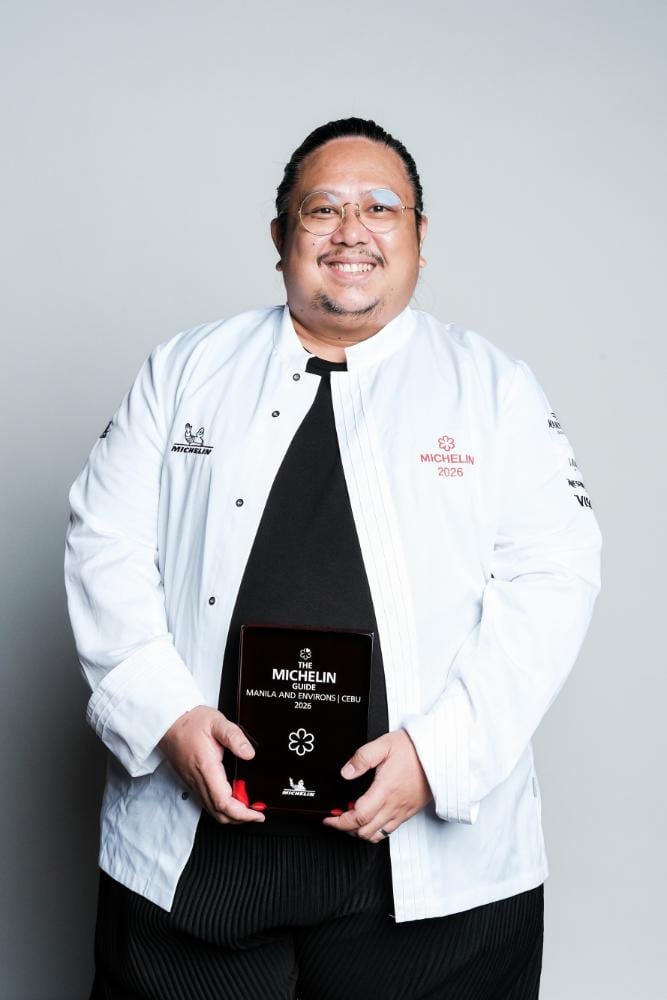
On the impact of the Michelin Guide on Kasa Palma’s daily operations:
It’s business as usual at Kasa Palma, with or without the star. Of course, we’ll continue striving to get better every day—but that has always been our work ethos from the very beginning.
We’ve been planning to improve our wine and beverage program even before the Guide arrived on our shores, so that’s our current priority.
What Michelin-quality dining means to him:
For me, it’s a restaurant that offers a unique cuisine that reflects the chef’s soul—not copy-and-paste, soulless food that anyone can easily recreate. That’s the most important criterion for me. Not all the technicalities and theatrics, but delicious food with soul.
Aspiration for more Michelin distinctions:
I don’t want the pressure to get to my team or myself, so we won’t change our cuisine or our style. We’ll stay true to the soul of what made Kasa Palma what it is. Improvements are part of any good kitchen—with or without a star. We just need to keep striving to be better than we were yesterday.
Managing Michelin pressure:
It definitely can, but it shouldn’t be a monkey on one’s shoulder. Life’s too short—don’t overwork yourself! Learn to take a breather and enjoy the simple joys of life. Work hard, party harder! I get most of my inspiration during downtime, so travel, dining out, and discovering new cuisines are super important to me—they’re all part of my creative process.
DON BALDOSANO
Linamnam
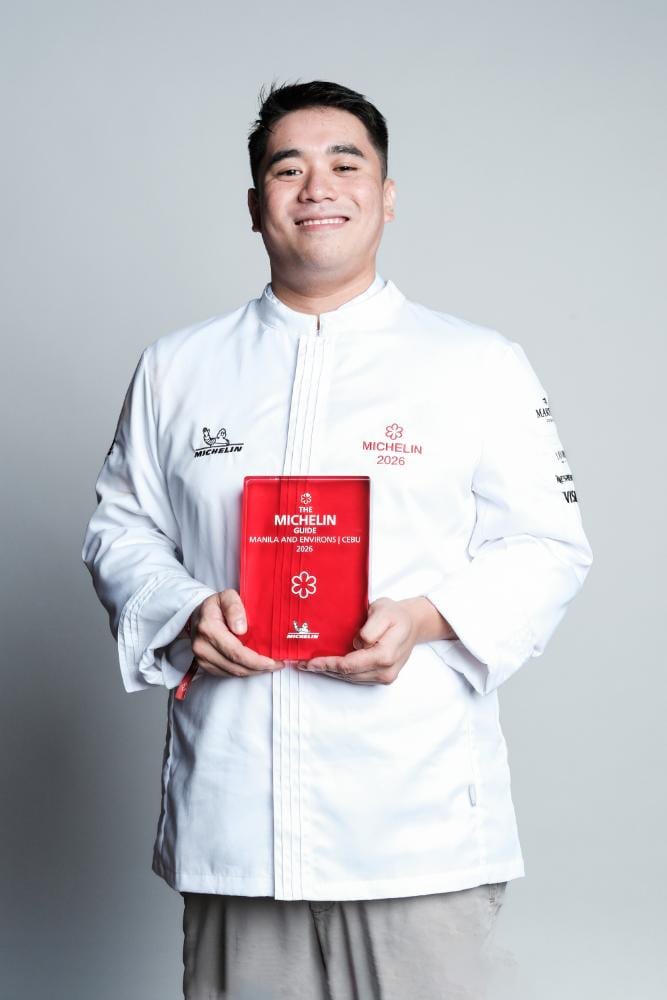
On the impact of the Michelin Guide on Linamnam’s daily operations:
We will continue working with the producers we collaborate with, and use this as an opportunity to explore new produce and share it with a larger crowd.
What Michelin-quality dining means to him:
To me, a Michelin restaurant is one that has character and is able to provide a memorable dining experience.
Aspiration for more Michelin distinctions:
We really don’t think about chasing stars. For us, the most important thing is the message we convey through our food in Linamnam. The star is an honor and a testament to the philosophies of Linamnam.
Managing Michelin pressure:
There is definitely pressure that comes with the recognition, knowing that consistency is very important at this point. But I want to view it differently and think of it as an opportunity to showcase our message and cook even better.
JORDY NAVARRA
Toyo Eatery
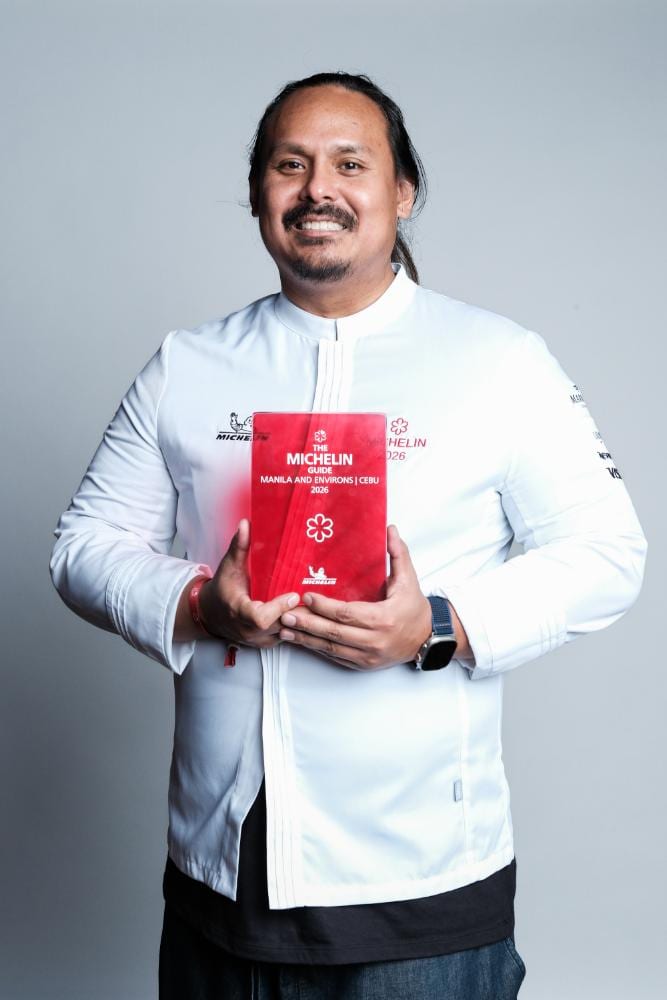
On the impact of Michelin Guide to Toyo Eatery’s daily operations:
I don't think it's a change in our approach or in anything we do. The star is very meaningful for us, but at the same time, the most important thing is representing the work we like to do, the way we like to do it. In a way, we're grateful because the guide saw our work and gave us the star. But we've always pushed ourselves to find new things and improve day to day, and I think we'll just continue with those improvements and that drive. We’re a bit more encouraged by what Michelin says.
We’ll still focus on the details that we can focus on. You know, the funny thing with restaurants and running them is that there’s always going to be something to improve, and it’s a very fluid, active world in terms of making improvements. There will always be something new, something fresh, something you want to explore or improve on. So I think for us, it's about staying dynamic and keeping on looking for the details we can improve, and trying to understand more of what else we want to explore.
What Michelin-quality dining means to him:
I think for me it’s about very good technical execution, fresh perspectives, and good ingredients. But that’s sort of the minimum for good restaurants, right? I think it’s being technically right while staying flavorful, and achieving harmony among flavor, technique, and style. Michelin-star restaurants have something unique to say to the world of dining, and they execute it at a high level.
Aspiration for more Michelin distinctions:
I don’t know if it’s about us trying to get more stars—or, as a lot of people say, “chasing stars.” For me, it’s about finding the improvements from within that we want to make. Hopefully, people around the world will see those improvements, and maybe through that we can achieve more. At the same time, I wouldn’t say we’re trying to find a specific way to do it. So, again, I go back to the first point: we just keep pushing every day, trying to improve everything—all aspects of what we have and what we do—and then we go from there.
Managing Michelin pressure:
There’s already a lot of pressure in running restaurants, and with Michelin Guide, you really feel it. I guess people have specific opinions on what Michelin restaurants should be or what to expect. But at the same time, we try to remember why we’re doing this in the first place, which has always been to represent the food we like to eat, in our own way. So, we try to stick to the basics, focus on our approach, and keep improving. Seeing happy guests is a big part of the full-circle joy you get. I think that’s pretty much it.