

Sagada's Pride: How One Farmer Is Cultivating a Community of Coffee Growers

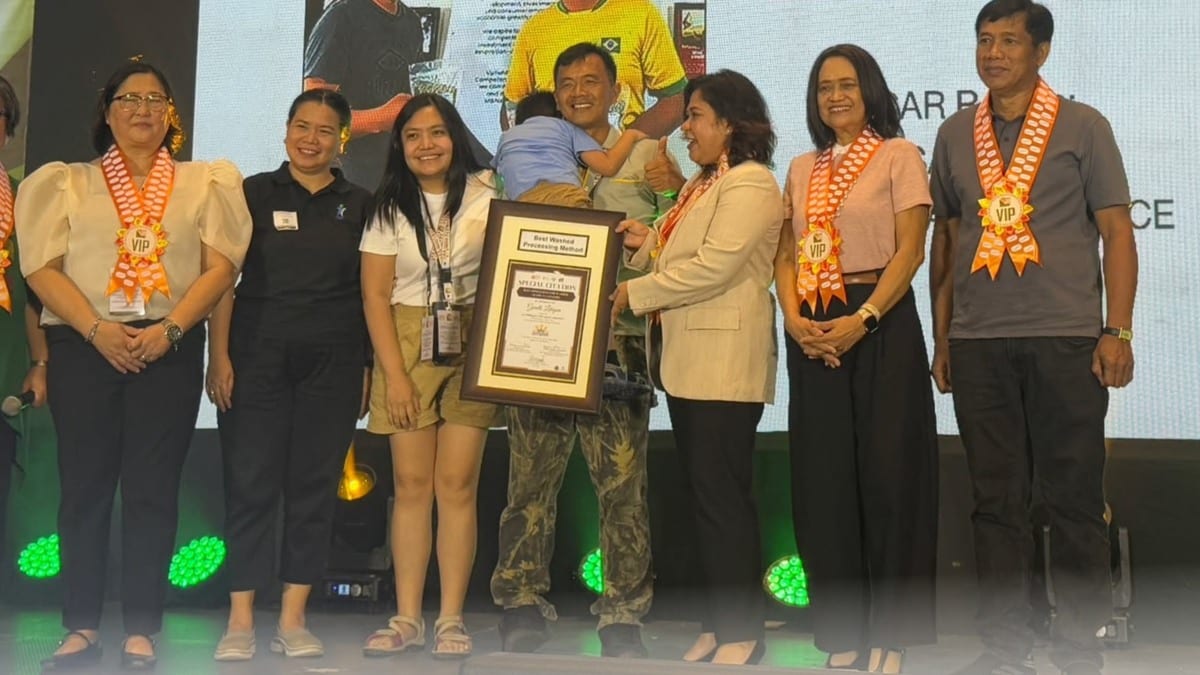
When Gareth Likigan of Sagada, Mountain Province, won Best Arabica Washed Process at the Philippine Coffee Quality Competition (PCQC) in May 2025, it was the culmination of a lot of physical and emotional labor. It was also a vast improvement from his performance in 2024, when he did not even make it past the preliminaries. "They took one look at my entry and sent me away," he said during an interview at his Caveman Coffee Farm in Ambasing, close to the Poblacion of Sagada.
The PCQC subjects coffee beans to rigorous evaluation by experts from around the world. Those certified as specialty coffee producers gain access to wider markets for their products. Likigan acknowledged that last year, in his desire to meet the required volume of 120 kgs to qualify to compete, he sourced half of the beans from a different farm, whose harvest he could not guarantee were all ripe cherries.
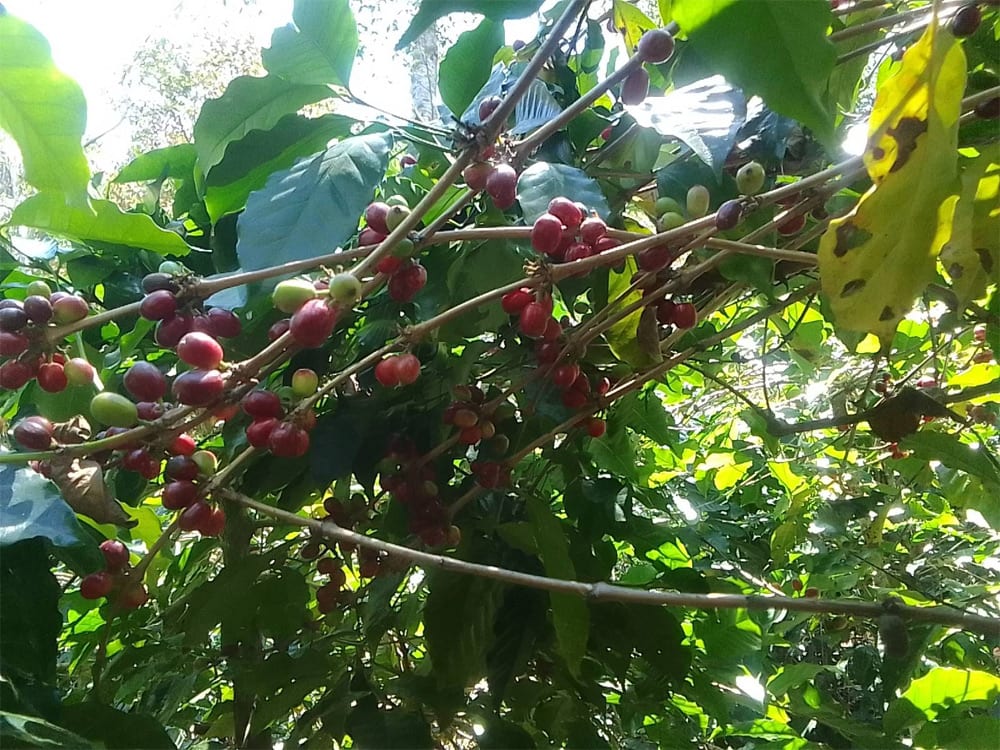
"And it is important for coffee cherries to be harvested only when they are ripe," he stressed. "That is the secret to good coffee."
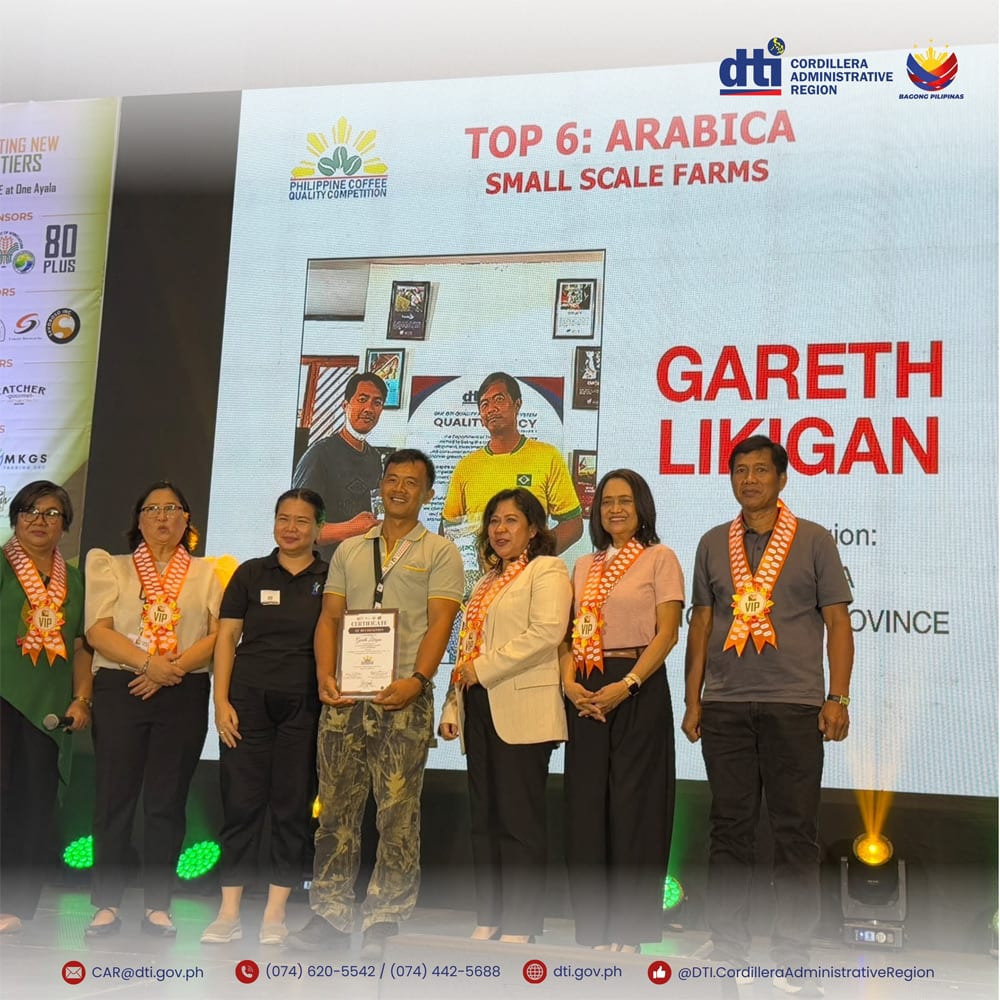
Likigan felt challenged to do better. He just wanted his beans officially graded as specialty coffee. But he did so much better: he also placed sixth best among the entries under the Arabica Small Scale Farms category. This time, the harvest from his five farms amounted to 300 kilograms, so he was able to meet the minimum competition requirement.
Gareth Likigan was awarded Top 6 for Arabica from Small Scale Farms at the Philippine Coffee Quality Competition, where he also won Best Arabica Washed Process
But most people in Sagada have only a handful of coffee trees planted in their backyard, so it would be difficult for most to meet the entry requirement. This may explain why only three coffee farmers from Mountain Province qualified for the PCQC this year.
Likigan also made sure that all coffee cherries were picked when they were very ripe and underwent anaerobic fermentation. The judges remarked on the floral and peach notes, and the sharp acidity of his entry.
But he is determined not to rest on his laurels.
ALSO READ:
This Sagada Coffee Experience Will Make You Think Differently About Coffee in General
Coffee From Sagada Is Challenging the Way We Think About Local Beans
Slow Start for Gareth Likigan and His Sagada Coffee
The Sagada native was not interested in cultivating coffee prior to the pandemic. He was, after all, earning good money as a tour guide in a time when tourism was booming in Sagada.
His parents started planting coffee seedlings on their land at the local government’s prodding in 2014. They knew close to zero about how to cultivate coffee trees. But they had a 2,500 sqm lot, previously dedicated to growing corn and sweet potatoes, that had been neglected. The result was a non-structured, multi-variety coffee farm. After initial failure, they eventually started harvesting coffee beans that they processed and then sold to souvenir shops around town.
"But when I took over in 2022, I set a goal to produce specialty coffee," Likigan said.
The farm became his classroom where he learned from the mistakes that had been made. Browsing the Internet, he found a wealth of information.
"I learned that coffee trees should be planted under shade trees that also had nitrogen-fixing properties, so we planted alnus trees."
Nature Knows Best
Likigan ensures that his coffee is grown 100% organic, without the use of any synthetic fertilizers or pesticides. Aside from the leaves that fall and cover the soil, they also use kitchen scraps and pig manure to enrich the earth. He has also planted sunflowers, which grow very fast, to use as biomass for the trees.
He is a big believer that nature takes care of itself. If any coffee trees are attacked by pests or get sick, he just lets them be, believing that, as with people, they will develop resistance to diseases. When a coffee plant gets too sick, Likigan hits "reset," cutting it very close to the ground to rejuvenate it. After that, it ends up growing even better based on his experience. Some decade-old trees have been rejuvenated.
His reasons to go organic are myriad. For one, guests at the farm taste the coffee cherries fresh off the trees during farm tours, so they should be safe for consumption. "I drink coffee five times a day. I don't want to get any chronic disease from chemical pesticides," Likigan added.
By doing this, he shows other farmers that organic agriculture can be done and sustained, despite the naysayers.
Sharing Lessons
Likigan has learned through trial and error. He willingly shares his knowledge with fellow farmers and encourages them to start small. "They are free to take the coffee wildlings that grow under the existing trees and plant them in their land," he said.
He acknowledges that not many people want to invest the time and effort to initially grow coffee–waiting four years after planting before you can harvest and earn from them. But after farmers see for themselves that coffee farming is not so laborious nor tedious, yet fetches premium prices, then they will grow more and more.
Likigan admits that worldwide, climate change is negatively affecting Arabica coffee harvests, leading to shortages. But this also means that Filipino coffee farmers can step up and cultivate more coffee trees. After all, these trees can bear fruit for up to 100 years.
Likigan has established farms outside of Poblacion, where he has applied what he learned. Only one Arabica variety is planted in each plot to avoid cross-pollination. After all, he needs to keep each harvest pure, unadulterated, and the taste consistent. They are also planted in neat rows to make harvesting more efficient. Every day, he makes the rounds of the farms, pruning and inspecting the trees, making sure that the shade trees do not grow too high to optimize the conditions. The combination of shady alnus and coffee trees maintains a cool microclimate on each farm. These keep the soil moist, so they do not need to water them. No weeds grow either. And even if the sun is at its height, conditions are still favorable under the trees.
Come harvest time (from November to April), he hires day laborers from among his townmates to pick ripe cherries and later, sort the beans. This is the most tedious process and must be done at least twice. Inferior or broken beans can ruin the batch. He hopes for access to a sorting machine that will quadruple the volume of sorted beans per day compared to doing it manually.
Ripe coffee cherries are ready for picking
Coffee Community in Sagada
Likigan wants to support a whole value chain around Sagada coffee. He prefers to focus on farming to produce the best beans using strategies and processes he has refined. He encourages his tour guide friends to learn the coffee process so that when they take tourists on a farm tour, they can help guests maximize the hands-on experience–and consequently, heighten appreciation for what coffee farming entails. He also supports cafe owners by making specialty-grade Arabica coffee available to them.
"I have no intention of going into roasting or putting up my own cafe. That will only derail me from concentrating on coming up with good beans."
Coffee cherries are dried in the sun
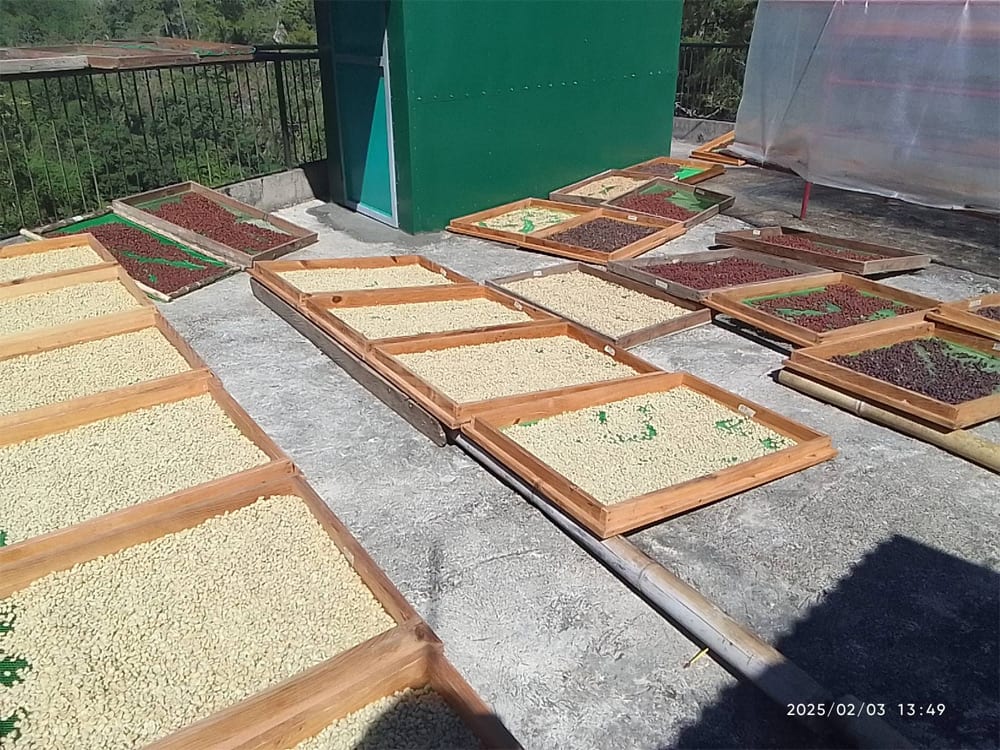
The beans that undergo the washed process are sun-dried for approximately two weeks. Whereas, for the natural process–when cherries are dried with pulp and skin still intact–the drying time takes approximately two months. The fruits are susceptible to mold growth, though. But it’s worth the effort because 95 percent of coffees that win competitions are naturally processed.
Climate change is messing with timelines, though, with unpredictable weather.
The green beans can last for 1.5 years. Then, when someone orders beans, that is the only time they are hulled; otherwise, they become stale. "If there are leftover coffee, I will drink them."
One of his neighbors has planted some coffee trees, but has also planted banana, orange, and avocado trees so that they can earn from these crops while they wait for the coffee trees to bear fruit. That is another option that Likigan supports.
"Many farmers just want to cultivate coffee, not to process it." It is an attractive proposition because growing coffee is not tedious, and they are more compact and lighter to transport than, say, potatoes or chayote. For now, he guides coffee farmers with advice on how to improve the quality of their coffee beans and even how to price them.
In these higher elevations, humidity is high. This poses a challenge to drying coffee beans efficiently. After all, slow drying is crucial to infusing taste into the coffee. Likigan has already started developing a drying area at the top of the building in his coffee farm, where he can seal the air, fix the ventilation, and use a dehumidifier–all to allow for consistent conditions, whatever the weather outside.
Likigan envisions that starting the next harvest, he will buy ripe coffee fruit from his fellow farmers–at a fair price, of course–then process them himself. This will, in turn, guarantee consistency in the quality of coffee he will produce and take care of the volume that the market is clamoring for.
The Future Is in Farming
Likigan tells everyone who will listen that more young people should get into coffee cultivation, since they can spend time on experimentation and innovation to improve the local industry.
He wants to debunk the myth that farming is only for old people. He cites the example of fellow Cordilleran, 22-year-old Rodiyo Tacdoy, whose award-winning naturally processed Benguet Arabica coffee fetched a hefty P9,900 per kg during the PCQC auction.
Likigan also discourages overdramatizing or overromanticizing the idea that farmers live only in small huts and in dire straits. Instead, he reiterates, farmers work hard and should be able to improve their lot in life.
Farming is not Likigan’s main source of income, and he even says it is only a part-time job, especially outside of the months of harvest. But it has become his passion to elevate the level of Sagada coffee.
Red and orange bourbon coffee beans from the Pinumdeng Farm
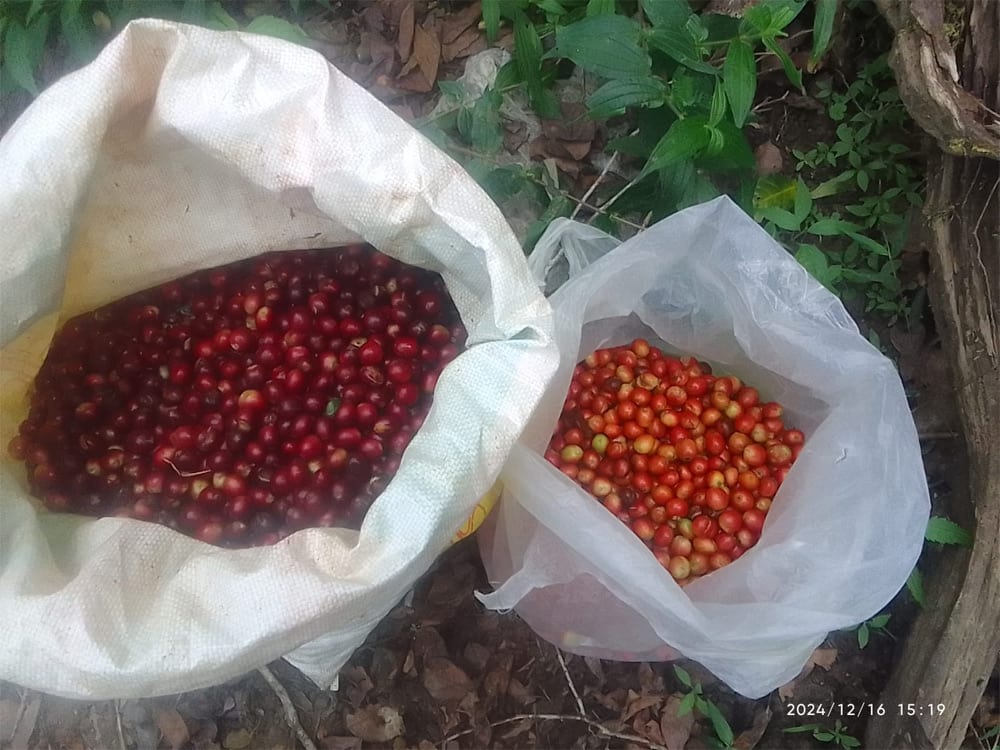
Oh, how thrilled he was the first time he brought home a harvest from the coffee farm that he cultivated from its inception. He happily exclaimed, "Finally, I am truly a coffee farmer!"
He admits that the robust tourism industry helps the coffee industry. Even if specialty cafes do not buy the coffee beans, souvenir shops around town never run out of shelf space for them.
However, Likigan balks at the mislabeling of coffee sourced from elsewhere as "Sagada coffee." Fully cognizant of the premium that the name Sagada lends to products attached to it–think oranges, lemon pies, and the like–he is incensed at the coffee flooding the market, which purports to be from Sagada just so they can be sold at higher prices.
But this also goes to show farmers that there is market demand, that people crave high-quality Arabica coffee.
The Proof is in the Taste
Likigan is serious about research and development. In what he calls his Coffee Library, he has amassed a collection of different varieties of Arabica coffee that have been processed in different ways.
During our visit, he roasted a few grams of his award-winning coffee beans using a stovetop ceramic roaster. The key, he says, is to get the temperature up to 200 degrees C (approximately medium-high heat on a gas stove) for five minutes, then at high heat for two minutes. Telltale signs that you are doing it right are popping akin to popcorn–at first with long intervals, then in quick succession–the roasted coffee aroma wafting through the air, and the change in color from green to dark brown. After which, the beans are swiftly removed from the heat and air-cooled. Likigan says the freshly roasted beans then need to rest for seven days before they can be ground and enjoyed.
"Coffee tastes better when you put a lot of effort into it," he said.
Though Sagada coffee is already held in esteem for its delicious taste and quality, he wants to support that by elevating processes and justify it with specialty grading. And with such high ratings, farmers can sell their coffee for higher prices.
Likigan hopes to teach generations of coffee farmers as soon as their farm is accredited as a learning site for coffee production, where future coffee farmers can try their hand at different steps of the process. For this, Likigan is glad he had the benefit of learning. "How can you teach if you don't have first-hand experience?"
Coffee farming is indeed a craft. Likigan banks on his passion for innovation to improve the Philippine coffee industry. He looks forward to inspiring more of his friends, neighbors, and townmates to benefit from it.
