
Sake Manila 2025: A Toast to Japanese Culture and a Growing Global Palate


Japanese sake, an alcoholic beverage made from rice fermentation and unique to Japan, saw a sharp rise in exports over the last decade. Taiwan, Hong Kong, and China, as well as many European and Oceania countries, are opening up to what's also referred to as the Japanese "gods' drink." A 2024 study attributes this to cultural globalization and the diffusion of Japanese culture.
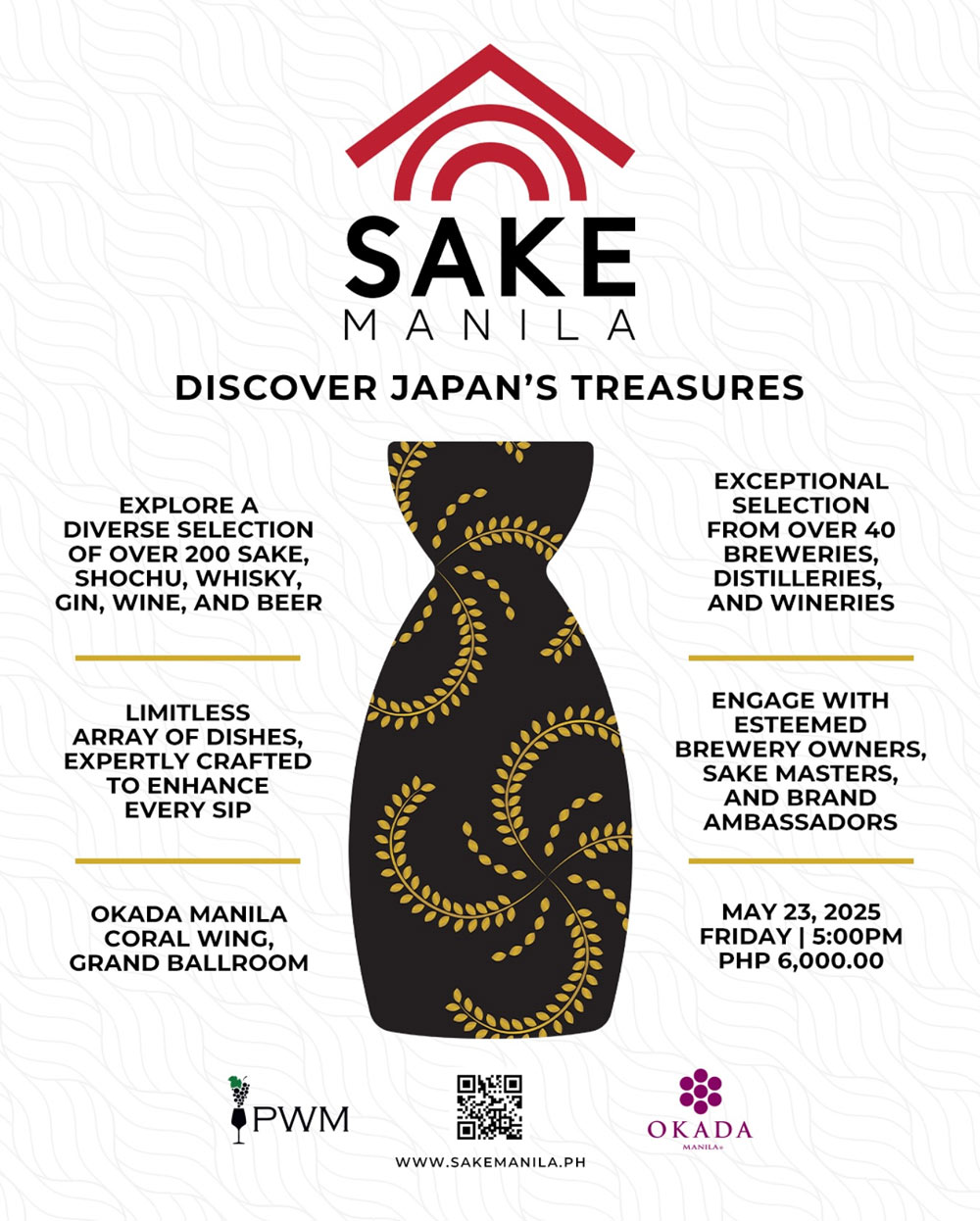
On May 23, 2025, Filipino drinkers and cultural enthusiasts can join the highly anticipated Sake Manila 2025, which offers a unique opportunity to immerse oneself in the captivating world of Japanese beverages. The second installation of the festival is happening at the Grand Ballroom of Okada Manila.
Attendees can look forward to an impressive showcase of over 200 premium labels of sake, alongside other distinguished Japanese beverages such as shochu, whisky, gin, beer, and even wine—all directly sourced from Japan's most acclaimed brewers and distillers. This extensive selection caters to both seasoned connoisseurs and curious newcomers eager to explore the nuanced flavors and intricate processes behind these beverages.
ALSO READ:
How to Order Sake Like You Know What You're Talking About
How To Enjoy Sake, According to Experts
Beyond the impressive array of drinks, Sake Manila fosters a deeper connection with Japanese culture. The event will feature a special "Meet the Makers" segment, allowing attendees to engage directly with master brewers, brand ambassadors, and industry experts. This invaluable interaction provides a unique insight into the artistry and dedication that goes into each bottle, offering a richer appreciation for the heritage and innovation within the Japanese beverage industry.
A highlight of the evening will undoubtedly be the Iconic Tuna Parade, a captivating culinary performance steeped in Japanese tradition. Witnessing master chefs expertly carve fresh tuna is not just a culinary demonstration but a cultural spectacle that embodies the precision and respect for ingredients central to Japanese cuisine.
The cultural immersion extends beyond the culinary realm with a series of cultural performances. Guests will be enthralled by the powerful rhythms of Taiko drums, the elegant melodies of the Koto, and contemporary beats from live DJs, creating a dynamic and engaging atmosphere that bridges traditional and modern Japan. Adding to the excitement, attendees will also have the chance to win fantastic prizes.
The Global and Local Landscape of Sake Consumption
While Sake Manila shines a spotlight on the growing appreciation for Japanese beverages in the Philippines, it's interesting to consider the broader global context of sake consumption.
Sake used to dominate the consumption of alcoholic beverages in Japan, but this trend saw a continuing decline in the drink's home market due to the increasing variety of choice of alcohol, with beer becoming the best-selling drink in the country. There's also a decline in the working-age population, once the main consumer of sake; as well as increasing interest and consumption of other spirits by the younger market. So, it doesn't come as a surprise that the country developed export markets, specifically through the Trans-Pacific Partnership in 2016.
Initially, exports were confined to the United States and South Korea, but Asia, Europe, and Oceania immediately followed suit in their interest in the Japanese sake. Initiatives by both the private and government sectors and a growing demand for authentic experiences with culinary heritage further boosted sales.
According to data released by the Japan Sake and Shochu Makers Association (JSS), Japan's sake exports grew by six percent in 2024, with strong demand in North America and Europe.
Total sake exports reached ¥43.5 billion (approximately US$283 million), with 3.45 million cases (9 liters per case) shipped globally. The average price for a 750ml bottle was ¥1,050 (US$6.84).
The drink's popularity in Europe is evident in consumer behavior, as its consumption is no longer limited to Japanese restaurants. Sake bars have emerged in London, standing side by side with local pubs.
Despite this, Asia's sake imports fell by three percent, due to declining demand in mainland China, which accounts for 44 percent of sake exports in Asia and 27 percent globally.
If Japan's interest in sake declined due to a variety of beverages, China's economic climate is to be blamed for its dwindling demand for Japanese rice wine.
Still, as Asia's numbers decreased, the surge in other parts of the world provided a key growth momentum for the Japanese drink.
Sake Manila 2025 is on May 23, 5 p.m., at Okada Manila's Coral Wing - Grand Ballroom. Tickets are at P6,000.
