
This Philippine Flying Lemur Was Just Released in Ormoc

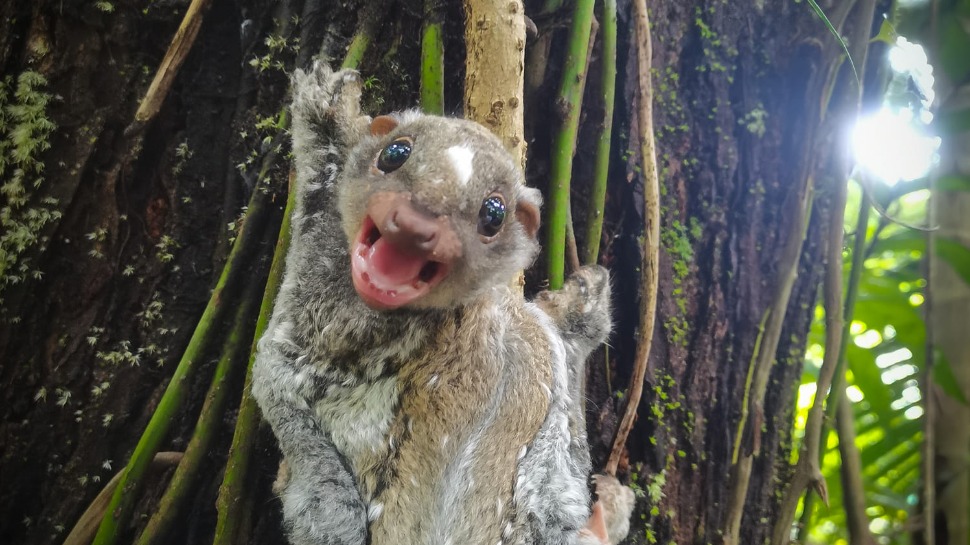
A juvenile Philippine flying lemur referred to locally as “kagwang” was released in the forest of Lake Danao, Ormoc City.
The forester by the name of Ronelmar Aguilar said that the lost lemur had been given to the Department of Environment and Natural Resources (DENR) Office. Fortunately, it had been healthy enough to be released into the wild.
Better known locally as kagwang, the Philippine flying lemur is endemic to the southern part of the country. It's been known to be associated with Filipino folklore. Funny enough, it isn't a lemur (those are only for the primates in Madagascar) and no it also doesn't fly.
ALSO READ:
Masungi's Defenders Win Prestigious International Award
The Philippine Tarsier Has Just Been Sighted in Tacloban for the First Time
A nocturnal animal, the Philippine colugo (scientific name: Cynocephalus volans) is only one of two flying lemur species in the Dermoptera family. The other one is the Sunda flying lemur, which is located in other parts of Southeast Asia. Oftentimes, people confuse the Philippine flying lemur with the Mindanao flying squirrels.
It can be found mostly in Mindanao and some parts of Bohol and Leyte. It is characterized by its distinct brown dorsal fur and grows to about the average of a house cat in size. Male flying lemurs possess much darker tones compared to females.
Unfortunately, it has faced instances of animal cruelty in the past, with people hunting them down because of the bogus belief that they're aswangs. The destruction of their habitats also forces them elsewhere, ending up in plantations. This leads to instances where coconut farmers have to kill them to save their crops.
Back in 2016, it had been considered a threatened species by the DENR. Going back 20 years before that, it had even been part of the Red List of Threatened Species by the International Union for Conservation of Nature (IUCN). Nowadays, it enjoys a better, relatively healthier population due to its resiliency.
