
How Brad Pitt and Damson Idris Trained for F1 The Movie

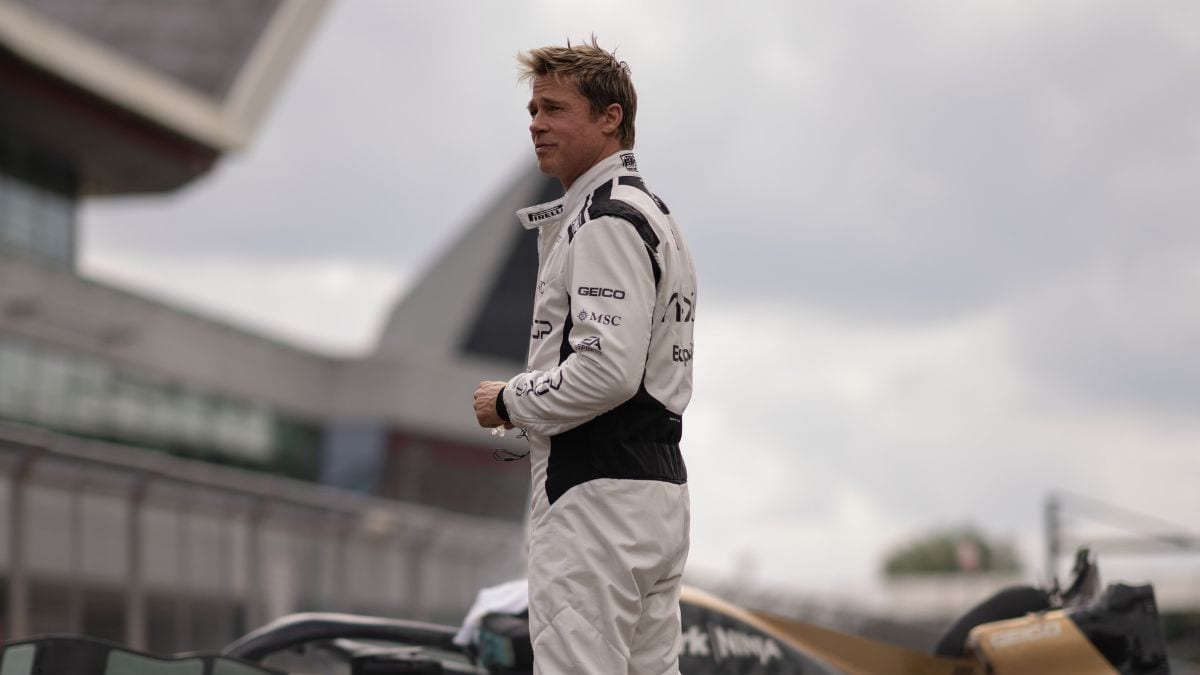
For the first time, F1 The Movie puts actors in real race cars at top speeds against real drivers. Training stars Brad Pitt and Damson Idris to drive race cars at speeds up to 200 miles per hour required rigorous physical training as well as training in driving skill. Usually, this training is a course of study that begins at age six in go-karts and gradually makes drivers fit and skilled enough to handle a Formula 1 car. Pitt and Idris would have to do it in a matter of weeks.
When Pitt and Lewis Hamilton, the film's producer and key consultant, had signed on, director Joseph Kosinski brought both to a racetrack in Los Angeles. “It was Lewis’ first opportunity to see what he was working with, in terms of Brad’s innate talent,” says the director. “Coming out of that, I think Lewis realized that Brad had a lot of natural driving talent. He’s ridden motorcycles his whole life. He’s familiar with managing grip and the racing line and working a hand clutch. We were starting from a very good place.”
“When you first start, you’re making big jumps—gaining seconds. And as the months go by, you’re fighting for quarters of seconds,” says Pitt.

But it was only a start. Pitt and Idris would have to graduate from sports cars, which focus on performance and handling, to open-wheel cars, which maximize speed and aerodynamic efficiency, and from there, graduate from Formula 3 to Formula 2.
In F1 The Movie, Pitt plays Sonny Hayes, dubbed “the greatest that never was” and Formula 1’s most promising phenom of the 1990s, until an accident on the track nearly ended his career. Thirty years later, he’s a nomadic racer-for-hire when he’s approached by his former teammate Ruben Cervantes (Javier Bardem), owner of a struggling Formula 1 team that is on the verge of collapse. Ruben convinces Sonny to come back to Formula 1 for one last shot at saving the team and being the best in the world. He’ll drive alongside Joshua Pearce (Damson Idris), the team’s hotshot rookie intent on setting his own pace. But as the engines roar, Sonny’s past catches up with him and he finds that in Formula 1, your teammate is your fiercest competition—and the road to redemption is not something you can travel alone.
“When you first start, you’re making big jumps—gaining seconds. And as the months go by, you’re fighting for quarters of seconds,” says Pitt. “The first month is just learning to trust the car—that the car will stick to the ground, the car will stop, even when you’re heading for a wall. The more you put into it, the better it sticks, the faster you can whip around a corner, even as every instinct in your body is screaming, ‘No! No! No! No! No! It’s gonna give way, it’s gonna give way, it’s gonna give way!’”
Kosinski adds, “The physicality is intense. Formula 1 drivers are real professional athletes. The forces on the body—the cardio of resisting five or six Gs corner after corner, hour after hour, it’s much more difficult than you could realize. Your head is five times its normal weight, so the first thing that goes is your neck. The only way to build that up is to drive, lap after lap after lap. So in their months of training, Brad and Damson not only honed their racing skills, but their physicality.
The drivers largely responsible for training Pitt and Idris were Luciano Bacheta, who also served as the lead sequence choreographer and stunt driver, and Craig Dolby, also a stunt driver.
“On top of driving, they also have to remember their lines and their acting performance, which racing drivers never have to do,” Bacheta continues. “They have to remember reactions and show emotional responses to story while driving, with their eyes only, through the visor.”
Pitt drives alongside Joshua Pearce (Damson Idris), the team’s hotshot rookie intent on setting his own pace.
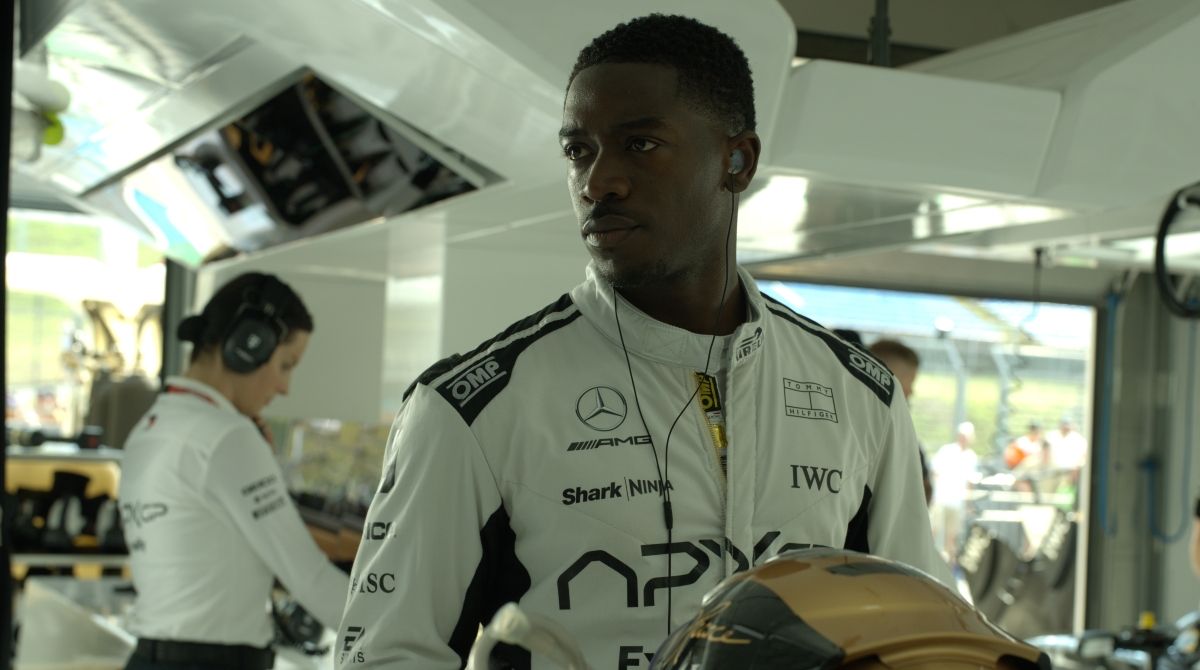
Bacheta and Dolby started Pitt and Idris in simulators, then six weeks of driving in lighter and less powerful Formula 3 cars before moving to the Formula 2 machines. “Aim number one,” Bacheta says, “was to get them to be able to operate the car and drive it around safely.”
“Once they were able to get around, we were able to start talking about going faster,” says Bacheta. “We would talk about the rate of steering input, speed to the peak of braking, speed to full throttle, where do you lift and where do you not.” All of the film’s stunt and camera car drivers—a team of racers who grew up together in the sport and know each other well—would advise the actors over open mics on subtle tweaks they could make to improve their times. “It was a really fun experience to bring them through that,” says Jonathan Kennard, who drove the camera car that would film Pitt and Idris.
ALSO READ
Lewis Hamilton on Winning Again and Making the Formula 1 Movie With Brad Pitt
A Taste of the Good Life with the BMW 7s
“There was a lot of information that the actors just wouldn’t have known—guidance that came naturally to us as drivers who had been racing for decades,” says stunt driver Duncan Tappy. “We’d go through a track map and go through each corner, the gears, the racing line. It’s natural information for racing drivers, but not for actors.”
Doing this for hours every day is punishing on the body, says Bacheta. “As you go faster in these cars, you start putting on an extra G in a corner. That takes a toll,” he adds.
Which is where the physical training came in. To train their bodies, the filmmakers brought on Barry Sigrist, who has worked with English Premier League teams and the Haas Formula 1 team. “Drivers naturally through their careers will go from karting through faster and faster cars and hopefully into Formula 1. Through that process, they’ll naturally get car fit,” he explains. “They get exposed to these forces and they adapt. With Brad and Damson, we had to accelerate a process which can take decades.”
With the G forces moving through the car, it was important that Pitt and Idris’ bodies could absorb the stress through their cores, back, and necks, and even their Achilles and calves through hard braking.
Testing the actors’ fitness was remarkably similar to the processes on the Formula 1 teams—VO2 max testing, which measures the actor-athletes’ maximum oxygen uptake as an indicator of their cardiovascular fitness, and a BATAC machine for reaction training, used in many sports, which trains the neuromuscular system from stimulus to reaction.
In the end, how good was Pitt in the car? It cannot be said that he set any lap records in the Formula 2 car, but Kelly attests that his best times were only five seconds off the fastest F2 times.
F1 The Movie is now showing in cinemas.
