
Captain America: Brave New World Is the Movie America Needs But Not the One it Deserves

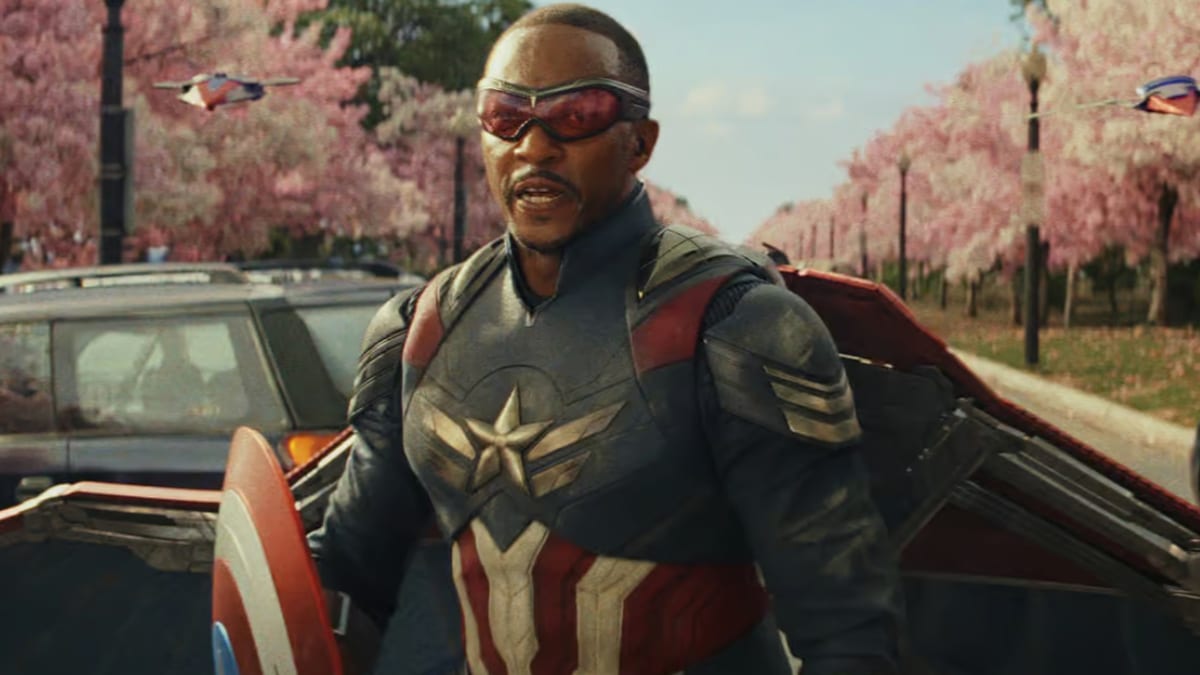
In January this year, Captain America actor Anthony Mackie got the Internet into a tizzy when he said Captain America doesn’t represent 'America.' Feathers were ruffled, panties were bunched, and fans tore into the actor for his comment. After all, how can a superhero named Captain America not represent America? Mackie said, "Captain America represents a lot of different things, and I don’t think the term 'America' should be one of those representations. It’s about a man who keeps his word, who has honor, dignity, and integrity."
Considering that America elected a man convicted on 34 counts of felony and an adjudicated rapist into the highest post in the land, maybe Mackie wasn’t wrong. In 2011, promoting Captain America: The First Avenger, Chris Evans said, "I'm not trying to get too lost in the American side of it. This isn't a flag-waving movie." He goes on to say, "It feels more like he should just be called Captain Good. I think that everyone could agree that Nazis were bad, and he, Cap, just so happens to wear the red, white, and blue." Fast forward 14 years later, and America has a man do a Nazi salute at a rally celebrating President Donald Trump’s inauguration. Sorry, Chris Evans, but it looks like not everyone agrees that the Nazis were bad. At least not America’s sitting President, who sent his Vice President, JD Vance, to cozy up to Germany’s extremely far-right AfD party, who are, basically, Nazis.
Captain America was created by Joe Simon and Jack Kirby during World War 2 specifically to fight the Nazis, so what happens when 2025 America starts to look like 1940’s Germany? What, exactly, is America, and what does it stand for? In Captain America: Civil War, Iron-Man and Captain America clash when they take two different stands on the Sokovia Accords, a legal framework that subjects enhanced individuals to oversight and management by the United Nations. Tony Stark believed that superheroes needed to be kept in check and trusted an organization to do the right thing. On the other hand, Steve Rogers, Captain America at the time, believed that organizations were subject to abuse and that the best way forward was giving the individual freedom and trusting them to do the right thing. Who made the correct stand?
In the MCU, the Sokovia Accords were established by the United Nations, but the comics equivalent was called the Superhuman Registration Act, a law passed by the American government that Captain America viewed as discriminatory and contrary to personal freedoms. He believed that if the government—or specifically, politicians— controlled the heroes, it could determine who the villains were. A government, for example, that decides that transgender individuals do not have the right to exist; or a government that believes that Diversity, Equity, and Inclusion are contrary to its values. As a Trump appointee, Darren Beattie, said, "Competent white men must be in charge if you want things to work." Is this the America that Captain America is supposed to represent? When Sam Wilson stood with Steve Rogers against the Sokovia Accords, it was because both men were wary of government overreach. Since he’s sat in the Oval Office, President Trump has been proving them right. Elon Musk can only wish he were Tony Stark, but he’s definitely got the money. Was it surprising that a tech billionaire sided with the government when Musk’s DOGE is the epitome of overreach?
So when Mackie and Evans talk about values that go beyond America, beyond the red, white, and blue, it’s because Captain America stands for something greater than a country that can be led astray. Captain America represents ideals that transcend borders. Goodness. Honor, dignity, and integrity. Words that no longer seem congruous with a country that sides with the invaders of smaller, weaker nations; a country that no longer wants your tired, your poor, your huddled masses but instead wants to deport them; a country that confuses freedom with impunity and justice with retribution. America hasn’t been great for a while, and it doesn’t appear it will be again for at least another four years.
Whatever greatness America ever had, at any rate, was built on the backs of immigrants and slaves. The African slaves brought to America in 1619 to the British colony of Jamestown, Virginia, were the first of several generations of African Americans that provided the backbone of America’s workforce. Cheap, indentured labor shaped the attitudes and culture of what became, at some point, the greatest nation on earth. Chattel slavery lasted for 246 years until it was outlawed in 1865. The United States, meanwhile, was founded on July 4, 1776, which makes it just shy of 249 years old. African Americans have been slaves for about as long as the 'America' has existed as a sovereign nation. Even after slavery was abolished, racial segregation laws existed as recently as 1965, when Donald J. Trump was 19 years old. The President’s billionaire benefactor and now 'special government employee' Elon Musk grew up in South Africa, where apartheid was abolished only in 1994, one year before the 24-year-old moved to the United States.
When Steve Rogers passed on his shield to Sam Wilson in Avengers: Endgame, it wasn’t a thoughtless gesture nor a sentimental one. He gave the shield to Sam because they both shared the same values, which is pretty much what Mackie and Evans said. Sam Wilson represents an idea greater than America, a nation so young that racial discrimination was part of the law a mere two generations ago. "My father was told he had to drop out of school in eighth grade to pick cotton with my grandfather," Mackie said, "and now I’m Captain America."
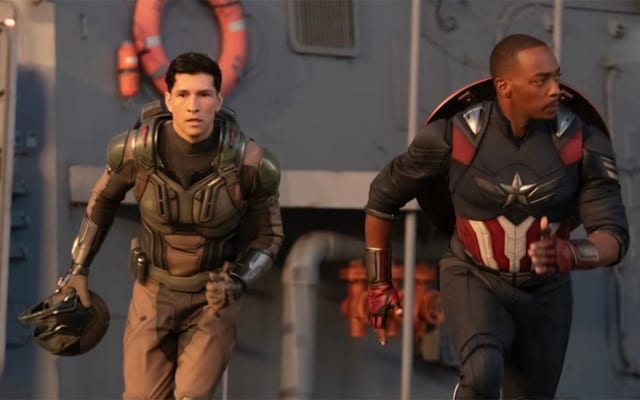
When a fourth film was announced in 2022, it was originally titled Captain America: New World Order, but later changed to the less politically-charged and nuanced Brave New World. Originally slated for a summer 2024 release, the film was pushed back to February 2025 because of reshoots. The result is a film with an uneven tone that falls far below the bar set by 2014’s Captain America: Winter Soldier, arguably one of the best films in the MCU. The plot feels like a wobbly bicycle that struggles to maintain its balance but manages to right itself in the end. The character of Ruth Bat-Seraph (Shira Haas), President Thaddeus ‘Thunderbolt’ Ross’ (Harrison Ford) security adviser, was clearly meant for a bigger role, evidenced by an MCU-esque costume later in the film that we never get to see in action.
Ruth Bat-Seraph is the secret identity of Sabra, who in the comics is an Israeli superhero. The film describes her instead as a 'former Black Widow' with a throwaway line to explain a superhuman display of combat prowess. Given that the UN Human Rights Council has deemed the IDF guilty of committing war crimes in Israel’s war on Gaza, it might have been a prudent move on Disney’s part to scale down Haas’ part in the film. Her Israeli origins aren’t even referenced at all. Ford replaces the late William Hurt as Thaddeus Ross, who last appeared in 2021’s Black Widow. Army General Ross, who has frequently clashed with the MCU’s heroes, has just been elected President and, towards the end of the film, transforms into the rampaging Red Hulk.
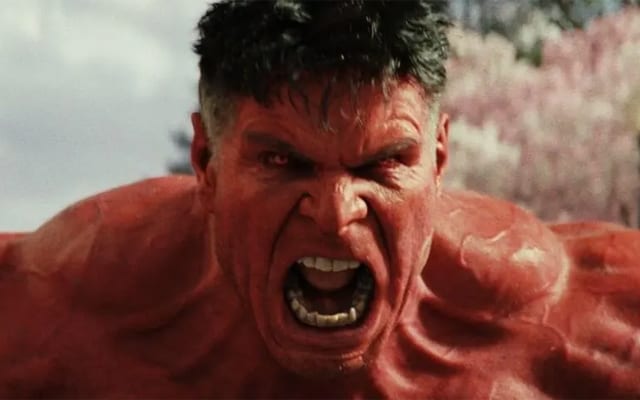
A newly-elected red President who brings about chaos and destruction? It’s a crazy plot for a film, but it’s even crazier that the statement applies to America today. In fact, an eight-foot Gamma-irradiated behemoth will probably cause less damage in the long run than a democratically elected leader who sees himself as a king. Captain America: Brave New World is uncharacteristically low on humor for an MCU entry as it tries to root itself into the world of espionage and politics. It’s par for the course for a Captain America film, but the plot is all too predictable when the Red Hulk—which would’ve been better as a surprise twist—plays a huge part in marketing the film. The Red Hulk and another secret adversary are actually villains in The Incredible Hulk comics, which makes the fourth Captain America movie feel like a third Hulk film minus Mark Ruffalo.
That said, Captain America: Brave New World manages to entertain after it’s done with the perfunctory, predictable plot and gets into the climactic showdown between Captain America and the Red Hulk. It isn’t the best in the franchise, but it’s the most important. America has never been closer to being taken over by HYDRA than it is today, and a Captain America who represents what America aspires to be rather than what it currently is is the superhero it desperately needs.
"Thank you," Sam tells Steve as he receives the shield in Avengers: Endgame, "I’ll do my best."
"That’s why it’s yours," Steve responds. There’s an unsaid importance and urgency in having an African American take on the mantle of Captain America. It is a sharp rebuke of a shameful past, a proud declaration that America stands for all its citizens, not just the privileged few. A Captain America who represents freedom, whose wings are functional as well as symbolic. Sam Wilson understands the weight that’s been thrust upon him, and he promises to do his best. In a time where society teeters towards dystopia, such as the one in Aldous Huxley’s novel Brave New World, sometimes, doing our best might be the most heroic thing we can do.
