
Q&A: Journalist Jonny Dymond on BBC World Questions and the British Royal Family

BBC World Questions, a public gathering and radio program produced by the British Broadcasting Corporation (BBC) World Service, is arriving in Manila on March 5. This gathering offers global audiences the opportunity to interact directly with politicians, leaders, and thinkers on a variety of critical issues confronting their nation and the world.
For the Philippine leg happening at the Diamond Hotel, a distinguished panel composed of leading politicians, academics, and commentators, including Defense Secretary Gilberto Teodoro, Akbayan leader Rafaela David, journalist Richard Heydarian, and former Supreme Court Justice Antonio Carpio, will delve into topics like economic development, living costs, human rights, and foreign relations.
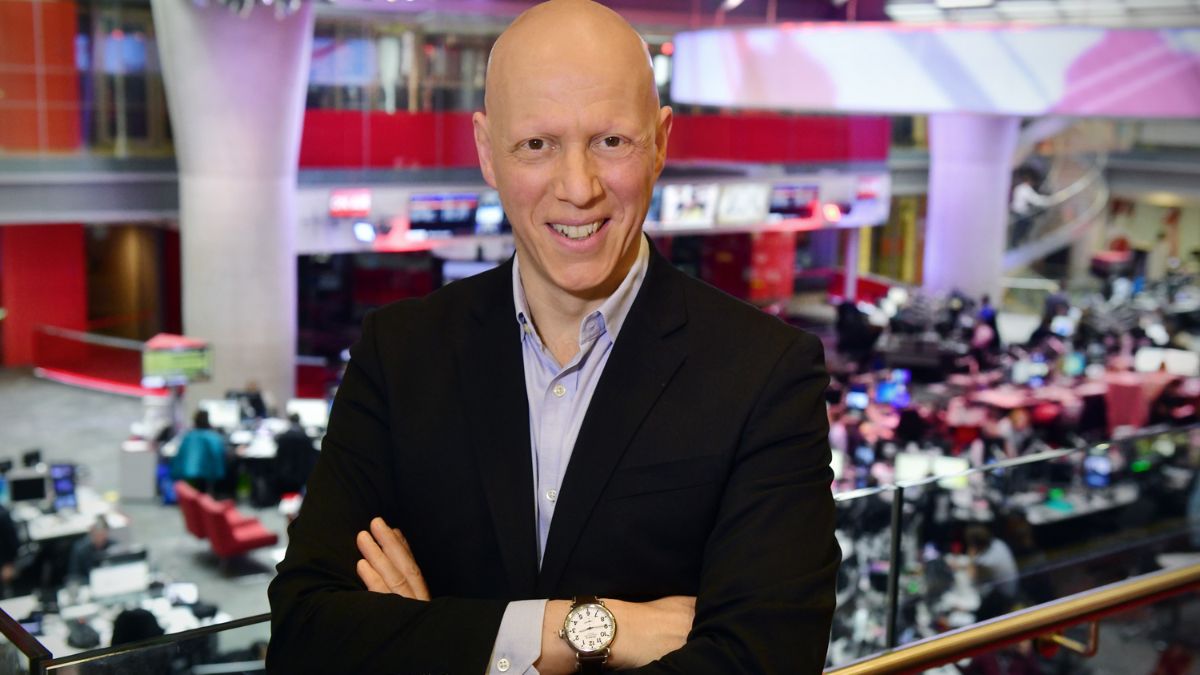
Seasoned BBC journalist Jonny Dymond will be moderating the discussion, ensuring an insightful and engaging experience for both the live audience and the global listeners tuning in via BBC World Service.
BBC World Questions offers global audiences the opportunity to interact directly with politicians, leaders, and thinkers on a variety of critical issues confronting their nation and the world.

In an exclusive interview with Esquire Philippines, Dymond emphasizes the significance of a platform like BBC World Questions particularly in the context of growing polarization and division globally.
"I hope that we play a small part in helping people understand the value of debate: allowing leaders to explain their ideas, encouraging open and civil disagreement, and hearing directly from voters, residents, and citizens," he says.
"I'd like to think that we are contributing towards helping people understand that there are different sides to an argument. That life is not black and white. That there are lots of shades of grey," he adds.
He also highlights the interesting aspect of identifying universal issues through the program, noting that while different places have unique challenges, they also share common concerns. He hopes the program fosters a sense of global unity and a deeper understanding of the intricate nature of addressing these shared concerns.
"I hope [the debate] helps people understand that we are part of a common whole and that solutions to our problems are a bit more complicated than slogans might suggest," he says.
Dymond talked to us more about BBC World Questions and also about his job as BBC's Royal correspondent in this Q&A:
ALSO READ:
President Marcos on Life After Exile: 'Our Own Survival Required That Somebody Go Into Politics'
Do You Talk About Politics With Your Family?
Which of the issues facing Filipinos today do you think deserves more global attention?
I am particularly interested in the Philippines and its opportunities as a young nation. Compared to its neighbors, like Japan and Korea, which face demographic decline, the Philippines has a growing population and labor force. This presents a significant opportunity for the country's development.
However, the challenge lies in education. While the Philippines has the potential to exploit its growing population, the education system may not have received the necessary funding and achieved the same level of success as seen in other parts of the world. This suggests that the opportunity may not have been fully grasped yet. This is an aspect that I find particularly intriguing.
It would also be interesting to explore the ongoing international positioning of your region.
What are your expectations about the upcoming debate in Manila?
I truly hope we have a lively audience in Manila. While I can't claim to truly understand the country's culture, I always strive to learn. Before every program, I delve into the nation by reading extensively and speaking with anyone willing to share their knowledge. However, as I've experienced living abroad, true understanding often comes later, sometimes even after leaving.
Therefore, I approach this event with humility. I'm not here to dictate or prescribe solutions. Instead, I aim to facilitate a productive discussion – not as an expert on the Philippines, but as someone dedicated to fostering open dialogue. This opportunity is incredibly rewarding, and I'm deeply honored to be coming to the Philippines.
We're interested in learning about your work as a BBC Royal Correspondent. How long have you been covering the Royal Family?
I've been covering this beat for about six years now. These have arguably been some of the most eventful years for the Royal Family in the past three or four decades. Maybe with the exception of the death of Diana, Princess of Wales. While it's not quite right to describe these circumstances as fortunate, from a journalistic standpoint, they've provided significant opportunities. Key events included Harry and Meghan's wedding, their subsequent departure, Prince Andrew stepping back from royal duties, the passing of the Duke of Edinburgh, and most recently, the queen's death and the coronation of the new king. It's been an incredible period, and I've been quite fortunate to report on it.
What have you found to be the most challenging aspect of reporting on one of the world’s most scrutinized institutions?
A notable issue is the limited number of sources available for such reporting. Unlike other beat reporting, where multiple perspectives can be gathered, royal news typically relies on information from the palace alone. This poses a risk of merely echoing palace press releases. The challenge for a dedicated journalist lies in providing context and discerning the news' novelty, truly testing journalistic integrity.
Being the BBC's royal correspondent brings its own set of challenges, given the long-standing relationship and expectations for a respectful coverage approach, contrasting with the aggressive style of some UK newspapers.
Major events, particularly the death of the late queen, require precision, immediacy, and engagement in coverage, highlighting the delicate balance between journalistic integrity and the institution's dignity.
What is the most memorable experience that you've had covering the royal family that had an impact on you?
There have been many memorable experiences while covering the royal family. One notable trip was with Prince William and his wife Catherine, now the Prince and Princess of Wales, to Pakistan. We traveled to the Hindu Kush mountain range to highlight the effects of global warming on the glaciers. The logistics of taking a helicopter ride through the Hindu Kush at dawn with the Pakistan Air Force were simply breathtaking. Such opportunities are rare, and I consider myself very fortunate.
However, covering the death of the late queen will forever be a profound memory for me. It was overwhelmingly emotional and carried a significant sense of responsibility to report accurately and respectfully for our listeners. So, it's a mix of extraordinary journeys that, despite being incredibly hard work and less glamorous than they may appear, are truly remarkable. Those grand ceremonial events are unforgettable.
Dymond has been on the frontlines of reporting significant global events, including elections, conflicts, summits, and crises.

From your perspective, how has the British monarchy evolved, especially in its relationship with the media and the public?
In terms of media relations, the institution has gradually become more open, albeit within a constrained framework. I'm among those who grasp, and to some extent, sympathize with their stance—acknowledging themselves as a public institution while also wanting to maintain the privacy of a private family.
It has become more open with the media, and the individuals involved have become more relaxed. The king, when he was still a prince, had a tough time with the media. Understandably, he took it personally and found dealing with the media challenging after receiving a torrent of negative coverage. But both he and his son, Prince William, have largely moved past that, partly because they recognize the necessity of maintaining a relationship with the media.
Regarding the public, it's about finding the right balance of closeness. In today's world, celebrities—and yes, the royal family counts as celebrities—often share extensively with the public as part of their brand, especially on social media. The royal family has preserved its mystique while becoming more accessible. For instance, Prince William now takes selfies with supporters at events—a stark contrast to the previous stance of 'No, we're not doing that.'
The king's first public appearance after the late queen's death, engaging with people through handshakes and conversation, noticeably differed from the queen's more reserved waves and smiles. This is not a criticism but simply a reflection of the differences in their public interactions.
How do you balance public interest and privacy while covering the Royal Family? What are the ethical considerations?
There are significant considerations. For instance, a situation arose when a letter written by the Duchess of Sussex, Meghan Markle, to her father was leaked to a newspaper. I received a call at two in the morning on a Sunday from my news desk, asking for my opinion on whether we should cover it. I said no, it's not for us.
For me, that was clearly a part of the Duchess's personal life. You must consider that aspects of their personal lives can sometimes spill over into their public roles, impacting the institution or even having constitutional significance since this organization represents our head of state. Thus, you ought to adhere to principles regarding what to report. Coverage should extend beyond mere public curiosity.
The BBC places great importance on responsible reporting, and I'm glad I declined to cover the story at 2 a.m., especially after the Duchess won a legal case against the newspaper, highlighting the fairness issue. Covering it would have been a mistake. While most stories are clear-cut, certain situations call for experienced judgment and a deep understanding of the BBC's ethics and purpose.
Royal events, from weddings to state funerals, are global phenomena. Could you walk us through the process of preparing for such a major event?
These big events are overwhelming, rich with history—some, like the coronation, span a thousand years. Though not all events carry centuries of history, the amount of preparatory background reading and research is extensive, sometimes starting months or even years in advance. Personally, I find myself increasingly engrossed in these events, despite initially having no interest in grand ceremonial occasions or the royal family. I believe understanding the 'fairy tale' aspect is essential; approaching these traditions with skepticism or dismissal can make effective reporting challenging. For me, involvement is key.
The BBC, being a 'big beast' with numerous outlets, makes these occasions incredibly demanding. Take the Queen's funeral, for instance—it was a whirlwind of activity, culminating in a long day aimed at conveying the atmosphere to our audience.
Royal events are indeed unique. After a while, you might start to take the grandeur for granted, but witnessing thousands of soldiers in dress uniforms or poignant moments like seeing the Queen's coffin carried is moving. Being immersed in the event is necessary, but it’s also critical to maintain professional detachment to ensure balanced reporting. These experiences, profoundly impactful, will stay with me for a long time.
The Royal Family faces its fair share of crises. How do you approach reporting during these sensitive times?
Well, there's always a difference between the immediate crisis and the essential job of a journalist, particularly a daily news journalist, which is to provide perspective. Often, when talking to programs on air, I remind them that this institution has persisted for a thousand years. Unlike almost every other monarchy, it not only survives but, by and large, thrives.
Let's not kid ourselves; a significant proportion of people in the UK are either disinterested in or oppose the Royal Family. Not everyone is out there cheering with a flag, far from it. However, there's still fairly significant support for what is, undoubtedly, a very unusual institution. So, when a crisis arises and everyone is panicking, it's also my job to say, 'Take a longer view. This is an institution that has adapted and will continue to adapt, regardless of how smart or foolish the individuals may be.' Somehow, the institution is quite clever.
Its deep roots in British life, society, and institutions mean it's not disappearing anytime soon. So, we chase these crises, report them, and ensure they're well-covered. But it's also crucial to contextualize them. When everyone says the sky is dark and everything's falling apart, I say, 'Well, you know, that was just one interview. Remember, this game has been played for a long time.'
Dymond is currently the BBC's Royal Correspondent.

How do you see the role and relevance of the monarchy evolving in the modern world?
On one level, it is bizarre that a hereditary head of state still exists in our modern government system. Yet, it has cleverly fit into the fabric of our government, marked by a steady retreat from the actual wielding of power.
There are lots of arguments that say maybe you should replace it with something that has a bit more power and could check on other government institutions in the UK. But this is an agent of influence rather than power. And it is very conscious that it has to use its influence very carefully. It is astonishingly sensitive to, and rightly so, to accusations that it is sticking its oar in on political issues.
It has transitioned into a purely symbolic position, focusing on operations within civil society, supporting charities, embodying what is known as the welfare monarchy, and ensuring its relevance in a rapidly evolving nation.
Recent coronation coverage highlighted its adaptability, with attendance from leaders of six non-Christian faiths, increased female participation, and greater diversity, reflecting the nation's dynamic changes—a diversity not universally embraced. Yet, the monarchy, particularly the king, deeply understands this diversity through extensive grassroots involvement and impactful work with disadvantaged youths.
This isn't just praising the monarchy; it's acknowledging its capacity to adapt to a country that's vastly different from what it was 70 years ago under the late queen's rule.
How has this specialization influenced your career and your growth as a journalist?
It's given me an insight into a side of the country I previously didn't understand. It has taught me the importance of airing what one might call good news, ensuring we don't solely focus on negative stories.
As a foreign correspondent, I'd jump from covering an earthquake, to a school shooting, to an EU crisis, thinking that news was inherently about tragic events. That perspective has shifted.
I recall waiting outside a hospital in Central London for the birth of (the baby of) Kate, Prince William's wife. Speaking to people who had been waiting there for days, one woman's comment struck me. When asked what she was doing there, she replied, 'It’s good news. There's so much bad news around.' That moment resonated with me; sharing positive news is essentially my role as a royal correspondent—bringing light, laughter, and color.
I now almost view the royal family as a 'ministry of fun' or a small bureau of good news. It’s crucial, not to overwhelm, but to remind people that not everything is a disaster or crisis. Sharing good news and light has been a valuable lesson in my journalism career.
BBC World Questions: Philippines will be broadcast on World Service English on Saturday, March 9. It will be available online at www.bbc.com/worldserviceradio, on BBC Sounds and most other podcast providers. The public may attend the live debate via registering through this link.
