
Tron: Ares Is Peak Nerd Cool


I’m going to come clean with two confessions. First, I love Tron. I saw the film back in 1982 and it hit my nerd imagination so hard that I wanted a frisbee for Christmas that year and was majorly bummed that the Tron ride hadn’t opened yet when my grandmother took me to Disneyland. I rewatched Tron again on Disney+ along with Tron: Legacy to catch up on the story ahead of Tron: Ares, and I have to say, it definitely seemed a whole lot cooler when I was nine. The graphics are crude and rudimentary compared to the hyperreal sophistication of today’s technology and the story’s glacial pace bored the living daylights out of my Gen Z and Gen Alpha children (whom I’d entrapped into a Tron double header), but the cult classic inspired a whole generation of creatives from the people who run Pixar to the French duo Daft Punk, who scored 2010’s Legacy.
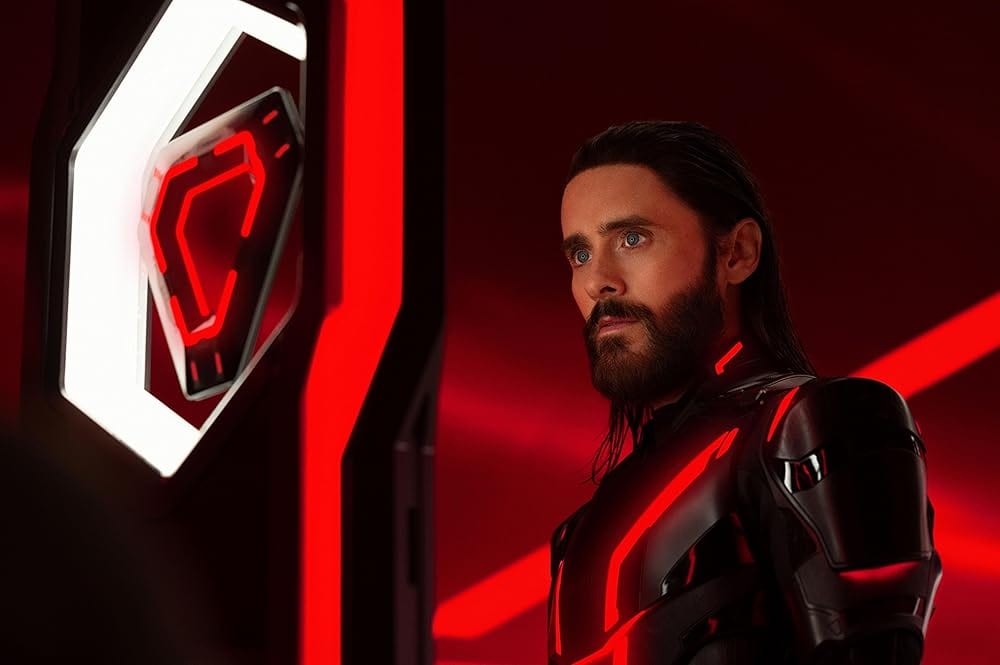
Tron: Ares is set 15 years after Legacy, starring Jared Leto as the titular Ares, a computer program much like the original Tron in the first film. My second confession is this: I’m actually a fan of Jared Leto. I enjoyed his take on the Joker in David Ayer’s Suicide Squad, and I thought Morbius was a perfectly serviceable, if unremarkable, superhero movie. So, as I talk about Tron: Ares, know that Leto in the lead role is more of a plus for me as opposed to the general negative buzz around his projects that stems mostly from his shenanigans as a method actor.
Jared Leto as Ares in 'Tron: Ares'
ALSO READ:
5 Underrated Sci-Fi Movies That Will Give Your Brain a Workout
What's Going Wrong With Sci-Fi?
Ares is largely removed from the events of Legacy, with Sam Flynn (Garret Hedlund) and Qorra (Olivia Wilde) nowhere to be found despite the story revolving around Sam’s company, ENCOM, which he’d inherited from his father, Kevin Flynn (Jeff Bridges). It also features ENCOM’s perennial adversary, Dillinger Systems — a software giant rivalry reminiscent of Apple and Microsoft’s animosity in the '90s — but without Edward Dillinger, Jr. (Cillian Murphy, who cameos in Legacy) and instead has programming whiz Julian Dillinger (Evan Peters) at the helm. The main conceit of the entire Tron franchise is the anthropomorphism of software programs, almost like the anime Cells at Work, but for computers. In the first film, Flynn is transported into what is called The Grid, a bold imagining of the world inside a computer, populated by programs in humanoid forms and engaging in gladiatorial combat using discs and light-emitting motorcycles. In the 2010 sequel, it’s Flynn’s son Sam who gets converted into digital data, featuring much of the same things that made the original cool and iconic, like discs and light cycles, but with a badly-needed graphics upgrade.
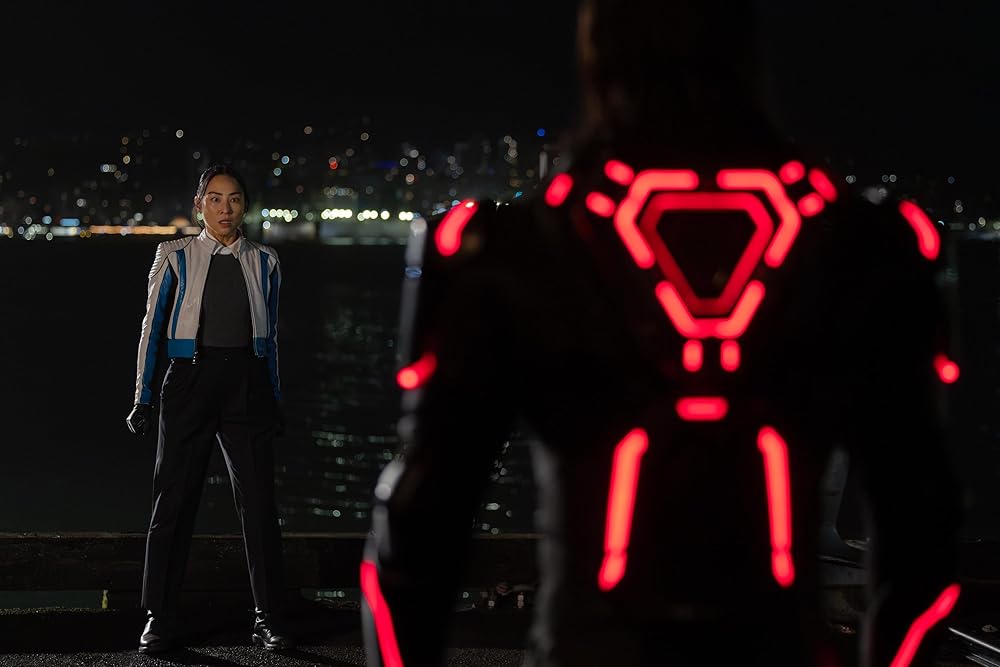
Despite the lack of a direct connection to Legacy, Tron: Ares unmistakably carries Tron DNA, but this time around, the digital world comes to life in our world. This was teased at the end of Legacy when Qorra is shown alongside Sam in the real world. Ares runs with the idea of 3D printing, and it’s a military-industrial complex wet dream. Disposable 3D-printed soldiers and machines of war that can be ready in minutes? Yes, please. Oh, but there’s a catch — these constructs can only exist in the real world for 29 minutes before “de-resolution,” or crumbling, Thanos snap-style, into digital cube dust. Enter the film’s MacGuffin, the Permanence Code, which ENCOM’s current CEO, Eve Kim (Greta Lee), has discovered and that Dillinger Systems is after.
Greta Lee as Eve Kim
It’s perfectly on point that trillionaire Julian Dillinger uses groundbreaking technology for manufacturing weapons of mass destruction, as it’s a parallel to today’s tech billionaires using their massive fortunes to compare dick sizes with rocket ships and social media platforms. Basically, men very often squander human resources and technological advances in terrible ways. Terrible, yes, but also, very, very cool. In fact, the entirety of the Tron franchise can actually be summed up with this word. It’s just so freaking cool. If the concept of Tron was cool in 1982 and the graphics dial was cranked to super cool in Legacy, Tron: Ares takes it a few steps further with flying machines, solid light-emitting batons and drones, and handheld digitizing lasers that send people into the Grid.
It was also a smart choice to bring the action into the real world. The Grid is cool, but an entire film set in a sunless landscape that resembles a nerd’s gaming set-up with LEDs and overdesigned hardware can get old after two films. But contrasting Tron technology with real-world objects keeps the cool factor without over-saturation. Add a perfect soundtrack by Nine Inch Nails on top, and you’ve got a movie that’s just bursting with cool.

The question is, is cool factor enough to make a movie good? Well, no. Obviously not. That never works out for Zack Snyder, even though I’m personally a huge fan of his four-hour cut of Justice League (an article for another time). But Tron: Ares actually has the actual seeds of substance to go along with its abundance of style because you see, Ares wants to be a real boy. He’s one part Pinocchio, one part Velveteen Rabbit, and one part top-of-the-line gaming rig with all the bells and whistles. Ares wants the Permanence Code to stay in our world forever, which probably doesn’t seem like a great idea to us given how bonkers things are these days, but a rogue military AI’s gotta do what a rogue military AI’s gotta do.
Greta Lee is also too good an actress to let some silly thing like a bare bones plot get in the way of a stellar performance. Eve Kim, who’s driven by a deep-seated need to honor her late sister’s legacy, is nuanced and something of a little jab to the tech bros of today. After all, while Julian wants the Permanence Code to squeeze out maximum profits from his military contracts, Eve wants to use it to solve things like ending world hunger and curing cancer. You know, just like how Jeff Bezos spends his billions on ostentatious yacht parties while his ex, Mackenzie Scott, quietly donates hundreds of millions to nonprofit organizations. Oh, and did I mention Julian’s mother (Gillian Anderson), the former CEO of Dillinger Systems, is very disapproving of her son’s recklessness and disregard for, well, anyone else?
This isn’t to say simply that girls are good and boys are bad, mind you. Ares’ second-in-command, Athena (Jodie Turner-Smith), is the counterargument to Ares’ aspirations to be real and, therefore, mortal. Flynn points out that the Permanence Code is actually an Impermanence Code if Ares uses it because if he dies in the real world, he dies for good, just like a regular human. Athena understands this and prefers to have the option to come back after being de-rezzed, thank you very much.
Tron: Ares is a sleek, highly entertaining addition to the Tron franchise with stunning visuals, exciting music, and an abundance of Easter eggs to keep the hardcore Tron fans happy. The ending teases more of the Tron story and a connection to its legacy, so here’s hoping it doesn’t take another 15 years for the next chapter.
