

Today I Learned: Method Acting and How Actors Commit to Their Roles

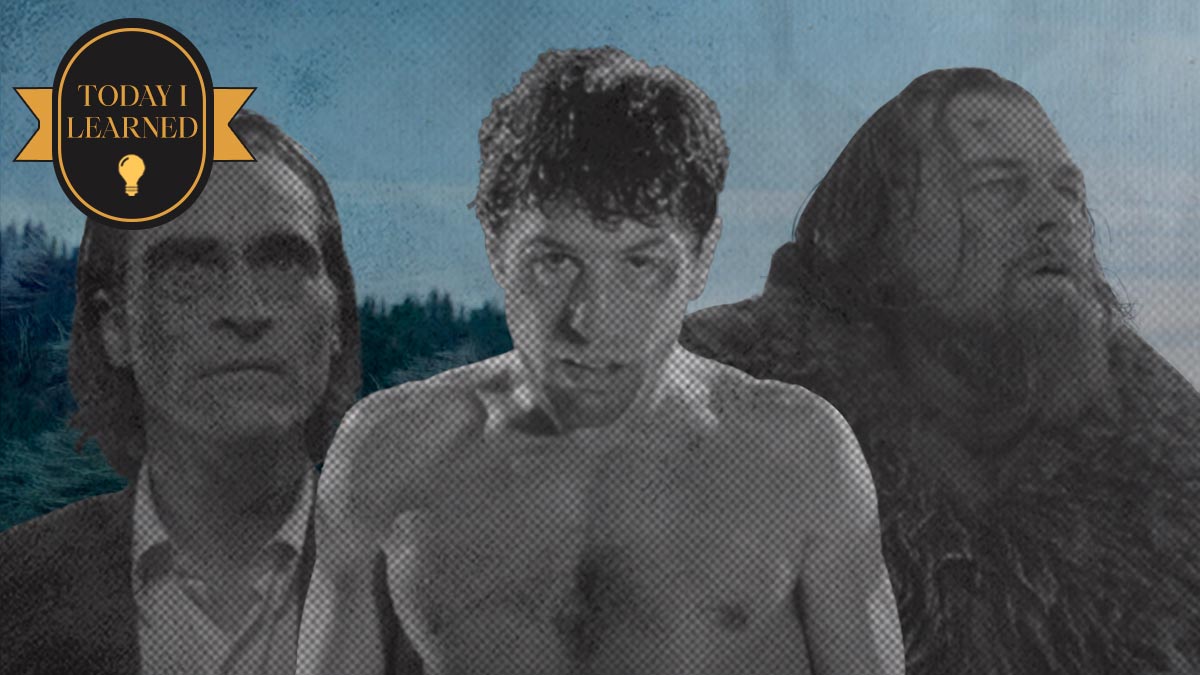
Actors, whether onstage or onscreen, approach their portrayals through different ways. Some of the major acting methods are classical, which emphasizes overly dramatic gestures and slower speech; Chekhov technique, which tries to connect the subconscious to the physical; Stella Adler technique, which requires actors to conjure mental images while performing; and so on. Some of these techniques overlap or are derived from one another. And then there's method acting, which recently sparked a wave of memes and tweets following a showbiz controversy in the wee hours of Wednesday morning. You know what we're talking about.
What Is Method Acting
Method acting, sometimes called "the Method," is an acting technique that starts at rehearsals, even before the theatrical run or even beyond the film production. It requires actors to put themselves through the feelings and life experiences of their characters or by drawing on personal experiences and emotions to bring unparalleled authenticity to their performances.
It was developed by American director-actor Lee Strasberg, who focused on the emotional memory technique, where actors recall personal experiences to evoke genuine feelings.
ALSO READ:
A New Documentary Reveals Jim Carrey's Extreme Method Acting
Ryan Gosling's Method Acting for Barbie Has Taken on a Life Of Its Own
History of Method Acting
Method acting was built on Stanislavski's system (or "the System"), which was developed by Russian theater practitioner Konstantin Stanislavski (i.e. Stanislavski's system) in the first half of the 20th century as an effort to resolve artistic struggles early in his career as an actor. Basing on his own training under different productions as well as his experience, he organized a systematic methodology influenced by three theater companies and movements:
- the director-centered, unified aesthetic, and disciplined ensemble approach of the Meiningen Company (1860-1890) led by the Duke of Saxe-Meiningen (in the present-day German state of Thuringia), his wife Ellen Franz, and Ludwig Chronegk. The company used the approach Gesamtkunstwerk (loosely translated as "total work of art"), which involves unifying all the creative disciplines in the production, such as lighting, music, song, dance, and so forth.
- the actor-centered realism of Maly Theatre, which was established in 1806 in Moscow. From the 1820s to 1840s, it got rid of the traditions of vaudeville and romanticism and, instead, employed a realistic style.
- the Naturalistic staging of André Antoine, who opposed the traditional teachings of the Paris Conservatory. Theatre Libre, which he founded in Paris in 1887, operated as a théâtre d'essai (workshop theater) that welcomed pieces that had been rejected (or would have been rejected because of their form or subject) in other theaters. Antoine advocated naturalistic, behavioral acting dependent on the interaction of actors and helping actors to find their psychological motivations. He believed that the environment determines our characters, which is why, in Naturalism, creating the set comes before starting the rehearsals.
Stanislavski's system emphasized the "art of experiencing," which is in contrast of his "art of representation."
Many of Stanislavski's students ended up teaching acting in the United States, which ultimately brought "the System" (or at least some version of it) from Russia to America. It should be noted that the students who took Stanislavski's practice to the U.S. only had the initial ideas of the system and not the detailed and elaborate version published in the 1930s, An Actor's Work and An Actor's Work on a Role.
One of Stanislavski's students was Polish thespian Richard Boleslawski, who founded the American Laboratory Theatre in New York in 1923. Boleslawski eventually taught Strasberg, who then developed early parts of Stanislavski's system into "the Method" or method acting.
In a 1982 New York Times article by theater and film critic Mel Gussow, who was also the one who called Strasberg the "father of method acting in America," wrote:
"The Method requires that an actor in preparing for a role delve not only into the character's life in the play, but also, far more importantly, into the character's life before the curtain rises. In rehearsal, the character's prehistory, perhaps going back to childhood, is discussed and even acted out. The play became the climax of the character's existence."
Other students of Boleslawski are Stella Adler and Harold Clurman, who were among the founding members of Group Theatre (1931–1940), which utilized Stanislavski's techniques and eventually developed them into other acting methods. Often compared to Strasberg's "Method Acting" is the Stella Adler's "Imaginative Acting." While Method Acting's source of emotion is the actor's personal experience, Adler requires actors to use their imagination and external research. Strasberg also focuses on the inner life and psychological depth, while Adler focuses on the external world and the character's context.
Actors That Used Method Acting
Like many actors and directors who are also educators, Strasberg trained and influenced many theater and film actors through the Actors Studio, which was founded in 1947 in New York. Up to 700 actors auditioned during its founding year, with only 50 of them selected to become the first batch. These actors went on to employ Method Acting at some points in their careers or passed on its philosophies to other actors.
Robert De Niro
Robert De Niro studied acting at Lee Strasberg's Actors Studio, but he also went to the Stella Adler Conservatory. Just the same, he used the immersive acting technique during the filming of Taxi Driver (1976), where he played the role of veteran-turned-cab driver Travis Bickle. He reportedly obtained a cab driver's license and worked as a cab driver himself, and also went under firearm training. For Raging Bull (1980), De Niro trained with former middleweight boxing champion Jake LaMotta, who was also the subject of the biographical sports drama.
Leonardo DiCaprio
For The Revenant (2015), Leonardo DiCaprio went as far as camping out in the cold wilderness to prepare for the role of Hugh Glass, a real-life frontiersman who survived after being left for dead and mauled by a grizzly bear. During the filming, they spent nine months in Canada and Argentina, where they were in "an all-natural environment, succumbing to whatever nature gave [them]," he said in a Yahoo! News interview.
Al Pacino
Like Robert DeNiro, Al Pacino directly studied under Strasberg at the Actors Studio. In Scent of a Woman (1992), he played the role of blind veteran Frank Slade. Aside from meeting with people from the Associated Blind Foundation in New York and learning how blind people perform everyday tasks through classes organized by the Lighthouse Guild, he reportedly did his day-to-day tasks as if he were blind, even before filming.
Joaquin Phoenix
Dedicated to playing Arthur Fleck in a manic-depressive state in Joker (2019), Joaquin Phoenix went to great lengths to transform himself physically and mentally. First, he lost 52 pounds for the role. In a 2019 interview with the Associated Press, he talked about "feelings of dissatisfaction, hunger, a certain kind of vulnerability and a weakness" after the weight loss, which informed his role in the film.
