
What is the Best Marvel Animated Series and Why Is It X-Men ’97?

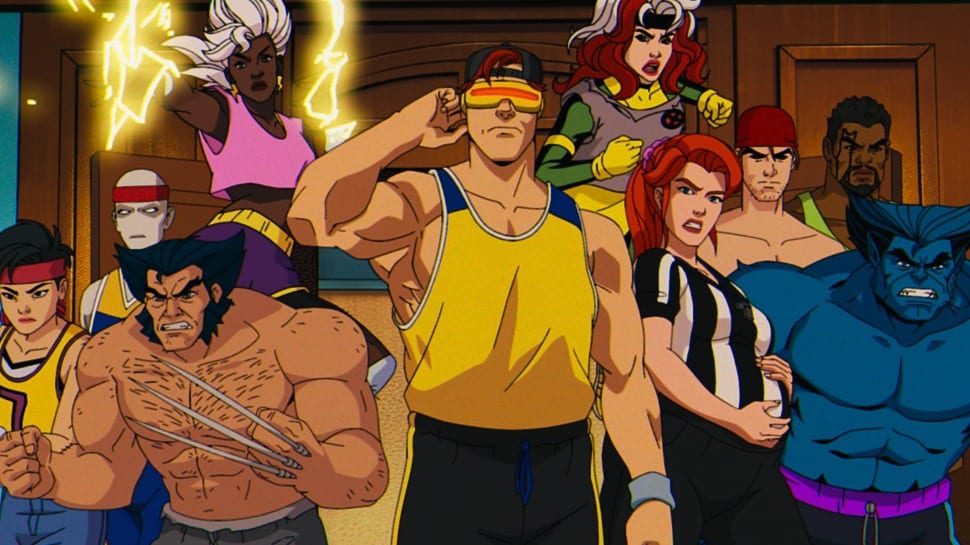
Disney+’s X-Men ’97 is more than just a nostalgia trip. Picking up where the beloved animated series left off in, well, 1997, X-Men ’97 was marketed as a retro cartoon drawn and animated in the same style as the original. Disney+ gave away swag that referenced VHS tapes, which might as well be archaeological relics in the age of TikTok. But the series proves that everything the X-Men ever stood and fought for remain as relevant today as they did 30 years ago.
The X-Men have always been analogous to the civil rights movement, a greater meaning and purpose picked up along the way after the late Stan Lee’s admission of creative laziness where he decided some people are just born with superpowers. No radioactive spider bites, no exposure to gamma rays…some people are just born that way. It quickly became apparent that mutants, who were always feared and persecuted in the comics, were an easy metaphor for ethnic minorities and later, the LGBTQ. It was fitting, then, that Disney hired Beau DeMayo, a black gay man, to kickstart the reboot and reintroduce the X-Men to audiences old and new.
ALSO READ
The Real Reason Behind That Spider-Man Reference in ‘Challengers’
Every Marvel Studios Film and Disney+ Series Announced Through 2027
DeMayo was fired right before the show launched for undisclosed reasons but it’s speculated that his spicy social media, where he frequently posts shirtless thirst traps, and a creator’s OnlyFans account, was too volatile for the family-friendly Disney+. This led to some trepidation about the show, but any doubts were blasted away by its two-episode premiere when X-Men ’97 reminded everyone exactly why Charles Xavier’s merry band of mutants were the world’s most popular superhero team in the ‘90s. The writing is stellar.
Sure, sometimes it’s on the nose, too, but no animated series in recent memory has been as quotable as X-Men ’97. “Charles Xavier entrusted me with his dream,” Magneto tells a group of frightened United Nations delegation, “and it does not ask you to love or embrace my kind as your own, but merely to accept that this is a shared world with a common future, and that my kind, like yours, have the right to live in it. I am trying to be better. Please… Do not make me let you down.” The last bit is a kicker because he’s saying this as he’s holding everyone a few hundred miles up in the sky. Meaningful? Yes. Relevant? Sure. Did Magneto just use a pun? Absolutely.
It’s this kind of cheekiness paired with social relevance that’s pushed X-Men ’97 past expectations. The pacing is uneven, with some storylines rushed and relationships unearned, such as Storm’s love connection with the Cheyenne mutant Forge, but DeMayo crammed as much as he could in 10 episodes, weaving one cohesive story with threads pulled from various comic storylines. Comic readers will recognize various story beats and references, and it’s clear that DeMayo didn’t just do his homework—he is as big an X-Men fan as it gets.
Unlike Disney+’s What If series, which is cel-shaded CGI, X-Men ’97 is a 2D, hand-drawn cartoon that looks almost identical to the original series. It was important to retain the animation style to show direct continuity but with minor, almost imperceptible tweaks that make the show palatable and even compelling to newer audiences. The art looks like the classic animated series but with modern cinematic sensibilities, utilizing new angles and perspectives picked up from 30 years of cinematic evolution.
Evolution, in fact, seems to be the perfect word to describe X-Men ’97. As mutants, aka Homo Superior, are considered to be the next step in the evolutionary ladder for humans (Homo Sapiens), X-Men ’97 is the graceful evolution of one of an animated series that impacted a generation. It even updates the iconic X-Men opening theme, keeping it both familiar and fresh. Not only does X-Men ’97 keep the unforgettable music, it recreates the entire opening sequence but makes minor tweaks and changes each episode like a fun Easter egg hunt for sharp-eyed viewers. The opening sequence is a living, evolving part of the series as much as each main episode. In one example, Jean Grey changes hairstyle from loose to ponytailed to reference events that happened in a previous episode. Costume changes, new characters, absent old characters…it’s almost as much fun watching the opening sequence and figuring out what’s different as it is to watch the actual show. It’s little things like this that demonstrate how much thought has been put into the series.
We haven’t even gotten to the season’s main plot, which is a doozy. Sure, the plot is essentially the same that every iteration of the X-Men face, which is persecution for being different, but it’s just as relevant today as it was in the ‘90s and as relevant as when the X-Men were created in 1963. With social media amplifying the debate, the X-Men’s struggles as an analog for the issues of racism and homophobia is more relatable than ever. When the show’s creators said shapeshifter Morph would use they/them pronouns, it created a social media shitstorm where the usual suspects accused Disney of going ‘woke’ and pushing an ‘agenda’. Never mind that Morph, who doesn’t even have hair or a nose in their default form, is as genderless as it gets and that the gays have always seen their struggles reflected in the X-Men.
In fact, X-Men ’97 doubles down on the LGBTQ metaphor with an innocuous line from the blue-skinned, three-fingered Nightcrawler, who tells his adoptive sister Rogue, “blood is blood, but family is a choice.” It’s a line that will fly past most heteronormative audiences’ heads but means the world for any gay person who has struggled to be accepted by their blood relations but found comfort and solace in found family. The X-Men is exactly that: a found family of outcasts, shunned sometimes by even their own flesh and blood.
X-Men ’97 introduces us to Roberto “Bobby” Da Costa, a wealthy Afro-Brazilian mutant whom the X-Men rescue from anti-mutant extremists who, surely not by accident, resemble the emboldened white supremacists of today. Bobby hides his mutant nature from his parents in much the same way as closeted gays who fear rejection and risk being disowned. The parallels are as obvious as it gets and his subplot throughout the ten-episode series is as important as the overarching theme of intolerance. What happens when those who hate us have the means to eliminate us?
X-Men ’97 tackles this question head on, unafraid to throw shade and use recent history to prove its point. When anti-mutant extremists storm the United Nations, it’s eerily reminiscent of when crazed, self-labeled ‘patriots’ flooded into America’s Capitol. The X-Men have never shied away from real world parallels, such as when religious extremism led to the lynching of two mutant children in the seminal God Loves, Man Kills graphic novel. The 1982 story, released at the height of televangelism, which promoted harmful and bigoted religious attitudes, was the inspiration for the 2003 X2 film.
Despite the relevant themes and memorable quotes, X-Men ’97 never gets preachy. When government agent Val Cooper chides Magneto, who at the beginning of the series takes over the X-Men as part of Charles Xavier’s last will and testament, “most nations don’t allow a terrorist to be their leader,” he responds, “yet so many allow their leaders to be terrorists.” It’s a mic drop moment that reflects a sad, chilling truth that has never changed. It’s 2024 and we still have despots and demagogues who invade smaller nations unprovoked or kill tens of thousands under the pretense of rooting out a terrorist group. Nothing has changed.
That’s why X-Men ’97, as an homage and continuation of the classic, is Disney+’s best animated series. No episode is wasted as it crescendoes to a three-part finale that sets the stage for a much-needed, much-wanted second season. DeMayo will no longer be involved, but he’s reportedly written and plotted out much of what’s to come. If the new showrunners love the X-Men half as much as he does, it looks like we’ll be in for one hell of an uncanny ride.
