
How Paul McCartney's Flight From Kenya Led to Sgt. Pepper's Lonely Hearts Club Band

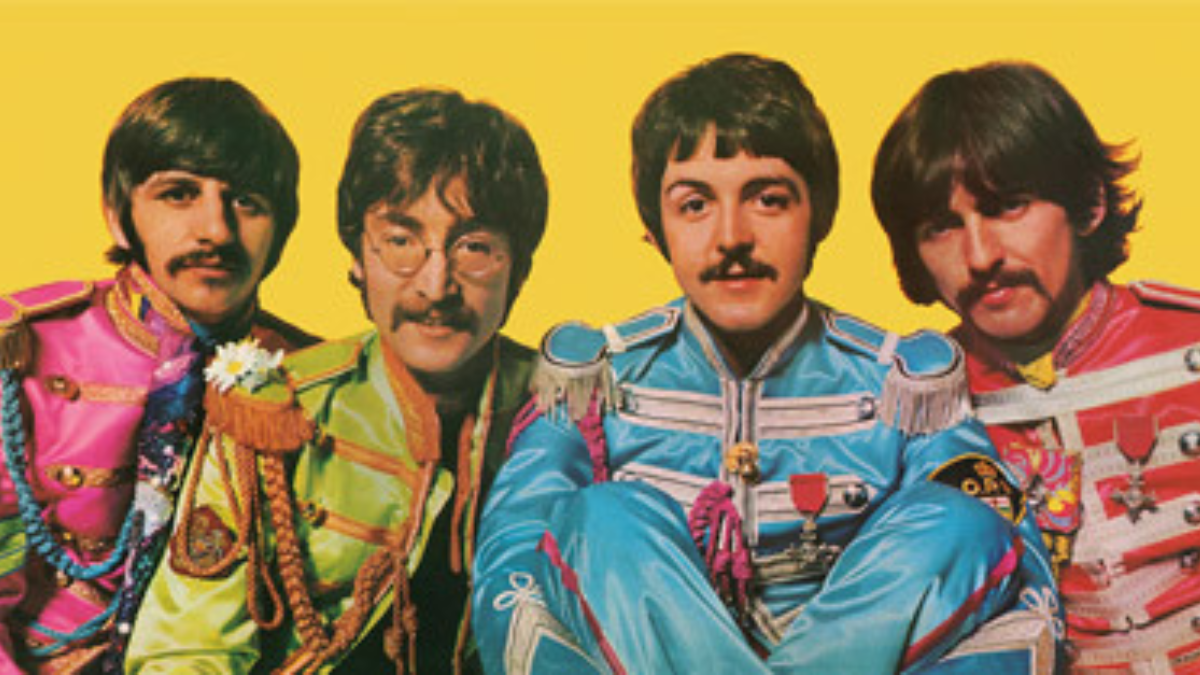
Sgt. Pepper's Lonely Hearts Club Band was a defining cultural event of not only the '60s but of the entire 20th century. It represented a cultural upheaval, one that music badly needed at the time. That album crystallized the zeitgeist of that generation and reimagined music as an art form for generations to come. As one of the first concept albums, it shattered the popular music industry and stirred it away from focusing on singles to creating full-blown spectacles. In many ways, it also encapsulated the Beatles experience. From there, things were never the same.
And Paul McCartney knows the exact moment that impending shift came about. As the Beatles release their final song, "Now and Then," we look back on this interesting moment in time.
Sgt. Pepper's Lonely Hearts Club Band is apparently a byproduct of a flight from Kenya to England in late 1966, as told in one of the most important McCartney books Paul McCartney: Many Years From Now by Barry Miles. It was a ride that would sow the seeds for this new epoch in music.

ALSO READ:
How the Beatles' Biggest Concert Day Was Overshadowed by Misfortune in Manila
The Last Beatles Single Is Not the End

The story goes that McCartney had flown to France on November 6 to meet Mal Evans in Bordeaux on the 12th before heading over to Kenya for a safari holiday together with his then-girlfriend Jane Asher. They would visit Ambosali Park at the foot of Mount Kilimanjaro and spend the night at the Treetops Hotel in Aberdare National Park.
On November 19, 1966, the group was on its way back to England from Kenya. It was here that the beloved Beatles legend came up with Sgt. Pepper, all because, as he explains it, they were "fed up with being the Beatles." They were destined for so much more, he thought. Whatever that meant.
"We really hated that fucking four little mop-top boys approach," McCartney explains. "We were not boys, we were men. It was all gone, all that boy shit, all that screaming, we didn’t want anymore, plus, we’d now got turned on to pot and thought of ourselves as artists rather than just performers. There was now more to it; not only had John and I been writing, George had been writing, we’d been in films, John had written books, so it was natural that we should become artists."
On the plane, the concept materialized. He continues.
"I thought, Let’s not be ourselves. Let’s develop alter egos so we’re not having to project an image which we know. It would be much more free. What would really be interesting would be to actually take on the personas of this different band. We could say, ‘How would somebody else sing this? He might approach it a bit more sarcastically, perhaps.’ So I had this idea of giving the Beatles alter egos simply to get a different approach; then when John came up to the microphone or I did, it wouldn’t be John or Paul singing, it would be the members of this band. It would be a freeing element. I thought we can run this philosophy through the whole album: with this alter-ego band, it won’t be us making all that sound, it won’t be the Beatles, it’ll be this other band, so we’ll be able to lose our identities in this."
He also shot down the rumor that Mal had come up with the name. It was more of a friendly banter between creative geniuses, McCartney posits. "We were having our meal and they had those little packets marked ‘S’ and ‘P’. Mal said, ‘What’s that mean? Oh, salt and pepper.’ We had a joke about that. So I said, ‘Sergeant Pepper,’ just to vary it, ‘Sergeant Pepper, salt and pepper,’ an aural pun, not mishearing him but just playing with the words."
Out of that came "Lonely Hearts Club." The bassist further elaborates:
"There’s lot of those about, the equivalent of a dating agency now. I just strung those together rather in the way that you might string together Dr Hook and the Medicine Show. All that culture of the sixties going back to those travelling medicine men, Gypsies, it echoed back to the previous century really. I just fantasised, well, ‘Sergeant Pepper’s Lonely Hearts Club Band’. That’d be crazy enough because why would a Lonely Hearts Club have a band? If it had been Sergeant Pepper’s British Legion Band, that’s more understandable. The idea was to be a little more funky, that’s what everybody was doing. That was the fashion. The idea was just take any words that would flow. I wanted a string of those things because I thought that would be a natty idea instead of a catchy title. People would have to say, ‘What?’ We’d had quite a few pun titles – Rubber Soul, Revolver – so this was to get away from all that."
ADVERTISEMENT - CONTINUE READING BELOW
Funky is one way to describe (arguably) the most important record ever. The Beatles would begin recording the Sgt. Pepper title track in February of the following year. Sgt. Pepper's Lonely Hearts Club Band would come out in late May 1967. All this from a safari tour.
