

10 Groundbreaking Inventions and the Women Who Made Them

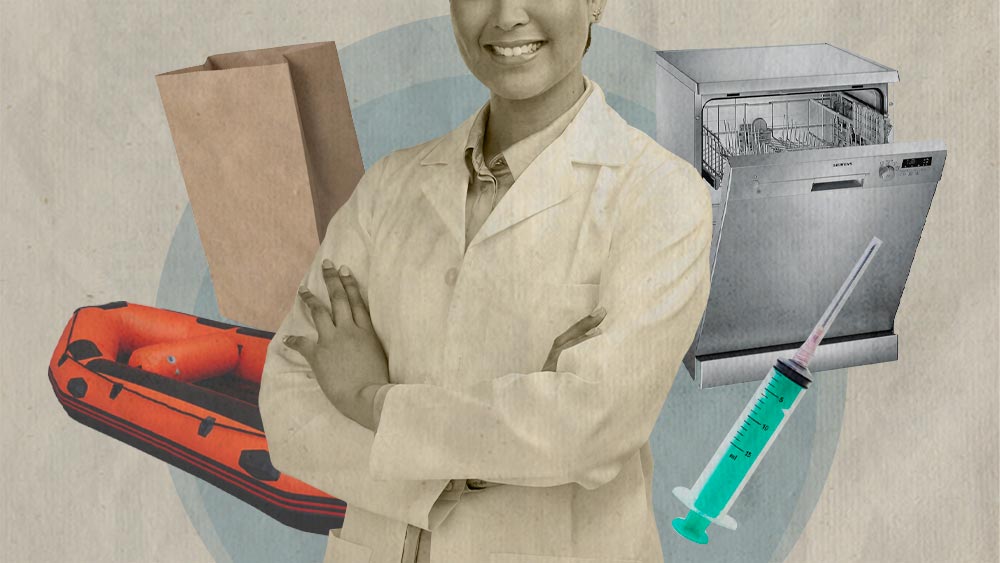
From making our homes more comfortable to creating technology that keeps us connected, these female inventors have overcome obstacles to bring their brilliant ideas to life. Their contributions are not just important pieces of history; they inspire a future where everyone has a chance to innovate.
On Women's Month, let's celebrate these women and the lasting impact they've made on our world.
1 | Dishwasher
Josephine Cochrane, a famous socialite from Ohio, invented the first commercially successful dishwasher in 1886. Stories tell of her family frequently hosting parties, and Cochrane would get frustrated with the chips that her fine china suffered during handwashing. Although manual dishwashers had already been invented at that time, none met Cochrane's standards for efficiency and gentleness on delicate dishes. Determined to find a solution, Cochrane took matters into her own hands. She measured the dishes and then designed wire compartments that could fit plates, cups, and saucers, securing them in place to prevent damage. The compartments were placed in a wheel inside a copper boiler, and a motor turned the wheel, circulating hot soapy water from the bottom of the boiler, effectively cleaning them without causing any damage. She called her invention the Garis-Cochran Dish-Washing Machine, patented on December 28, 1886.
2 | Windshield wiper
Alabama native Mary Anderson was visiting New York City on a snowy day in 1902 when she observed a trolley driver having trouble seeing through the windshield. The driver had to either open the window to see or stop the vehicle to clear the snow and ice. This inspired Anderson to develop a device that could wipe the vehicle's windshield without the need for the driver to go out of the vehicle. Her invention used a lever inside the vehicle to move a rubber blade across the windshield. The American inventor was granted a 17-year patent for her "window cleaning device" in 1903, but manufacturers doubted its market potential. Then, as automobiles became more widespread and the speeds at which they traveled increased, the need for clear visibility became important. Cadillac was the first car manufacturer to include windshield wipers as a standard feature in cars in 1922, leading to their widespread use in the car industry.
ALSO READ:
A Filipino Scientist Discovered a New Cockroach. He Named It After a Pokemon
Two Filipino Scientists Honored with Prestigious International Science Award for Work on Snail Venom
3 | Medical syringe
Before Letitia Geer's invention, syringes existed but were cumbersome and often required two hands to operate: one to hold the syringe and the other to push the plunger. This made the process of administering medication more challenging. Understanding the limitations of existing designs, Geer conceptualized and patented a syringe that could be operated with one hand. The device included a cylinder to hold the medication, a plunger to dispense the medication, and a handle that allowed the user to pull back to draw medicine into the cylinder and then push to inject the medicine, all using the same hand. This design allowed the other hand to hold the patient steady or perform other tasks, significantly improving the efficiency and safety of medical procedures.
4 | Flat-bottomed paper bag
Working in a paper bag factory in Springfield, Massachusetts, Margaret E. Knight noticed the limitations of the existing envelope-style paper bags, which were less durable and could not stand upright. She envisioned a machine that could automatically fold and glue paper to form a flat-bottomed bag, much like the grocery bags we use today. After several months of design and experimentation, Knight built a wooden prototype of her invention. The flat-bottomed bag design increased the bags' carrying capacity and made them much more practical for everyday use. Her machine significantly improved the efficiency of paper bag production, allowing for the mass production of strong, reliable bags.
5 | Paper coffee filter
Melitta Bentz, a German homemaker and entrepreneur, was becoming increasingly dissatisfied with the bitter taste produced by conventional coffee-making methods, which typically required boiling the coffee grounds loose or filtering them through linen. This prompted her to experiment with various materials to filter coffee grounds. The breakthrough came when she punched holes in the bottom of a brass pot and lined it with blotting paper taken from her son's school notebook. The paper effectively filtered out the coffee grounds, allowing for a cleaner and more refined cup of coffee. Recognizing the potential of her invention, Bentz patented her coffee filter and filter paper in June 1908 and founded a company, Melitta, to produce and sell her coffee filters.
6 | Toilet paper holder
African American inventor Mary Beatrice Davidson Kenner's toilet paper holder was designed to allow toilet paper to be easily accessible and to include a means for the roll to be readily changed. What set her invention apart was its practicality—it featured a small shelf on which to place a new roll, facilitating a smooth transition once the old roll was used up. This feature addressed a common inconvenience with traditional toilet paper holders and showcased Kenner's focus on user-friendly design.
7 | Life raft
Prior to Maria Beasley's invention, life rafts were very basic, often consisting of little more than wooden planks lashed together, offering minimal protection or stability to those stranded at sea. Beasley's life raft was a considerable improvement over these basic designs. Beasley's patent described a raft with guard rails and metal floats, features that significantly enhanced the safety and effectiveness of the raft. The guard rails provided a level of security and support for survivors, reducing the risk of falling overboard in rough seas. The metal floats improved the raft's buoyancy and stability, making it more reliable in various maritime conditions.
8 | Gas heater
Living in Morristown, New Jersey, African American inventor Alice H. Parker personally experienced the inefficiencies and challenges posed by the primary heating methods of her time—wood or coal burning stoves and fireplaces, which provided inconsistent heat and required constant attention. In search of a more effective way to heat her home during the cold winter months, Parker developed a natural gas-powered central heating system, which allowed for the distribution of heat more evenly and efficiently throughout a building. Interestingly, Parker’s design included a concept remarkably similar to modern central heating systems: it featured a main burner that would heat air within a furnace, then utilized a series of ducts to distribute the warmed air to different rooms within the structure.
9 | Advancement of Voice over Internet Protocol (VoIP)
Although often associated with the initial invention and development of Voice over Internet Protocol (VoIP), Marian Croak's contributions are more accurately linked to the broad adoption and innovation of this technology. VoIP enables people to conduct voice calls over a broadband Internet connection, bypassing the need for conventional (or analog) telephone lines. This technology is the backbone of modern communication platforms like Zoom, FaceTime, Skype, and many others.
10 | Bamboo incubator
Recognizing the high infant mortality rate in the Philippines, particularly in rural areas where electricity was scarce or nonexistent, pioneering Filipina pediatrician Dr. Fe del Mundo innovated a solution to aid premature and sick babies who needed a stable and warm environment to survive. Her invention, the bamboo incubator, was ingeniously designed from locally available materials, primarily bamboo, making it cost-effective and easy to assemble. It used natural heat sources, such as hot water bottles, to provide the necessary warmth to help maintain the body temperature of premature and newborn babies.
