

How Taiwan's Tallest Building Stands Strong Against Earthquakes

Taiwan was rocked by a devastating 7.4-magnitude earthquake on Wednesday morning, the strongest to hit the island nation since 1999. The tremor caused significant damage to buildings and infrastructure in the northern and eastern parts of Taiwan, including areas in and around the city of Hualien. It also resulted in the death of nine people and left more than 800 individuals injured.
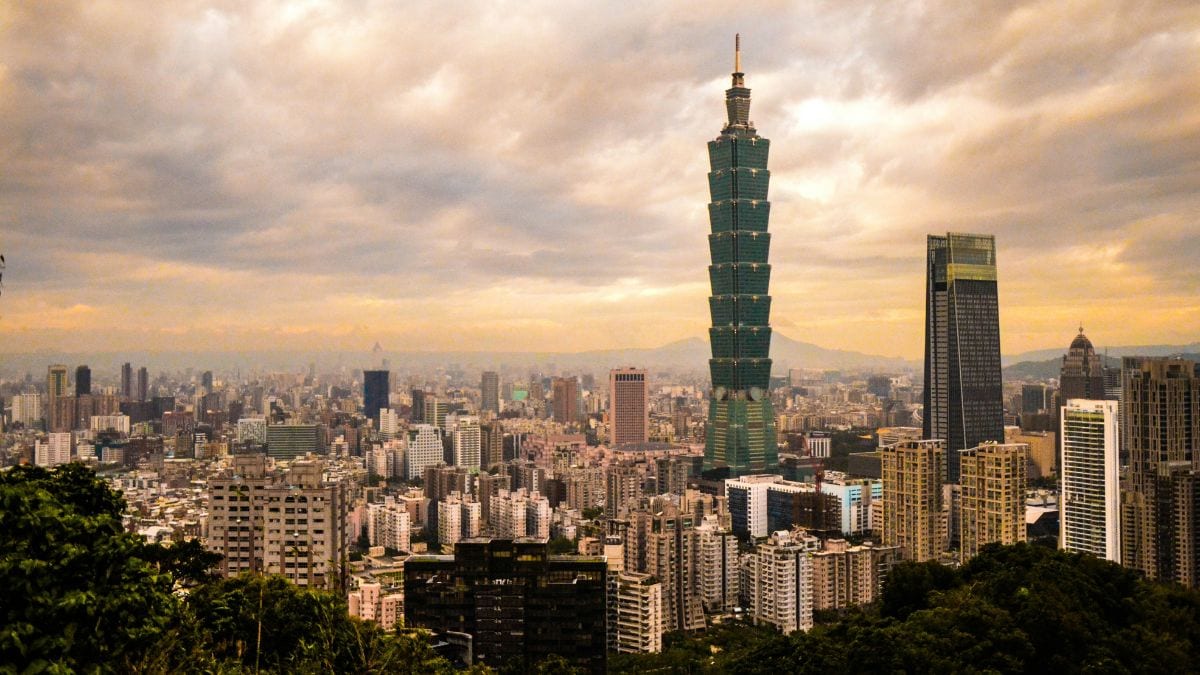
In the midst of this natural disaster, videos captured the 508-meter-high Taipei 101, located in the Xinyi District of Taipei, swaying with the earthquake's motions, showcasing its architectural strength and endurance.
ALSO READ:
Is Your House Safe From Earthquakes? PHIVOLCS Has an App for That
How to Assess Your Home After an Earthquake
Built between 1999 and 2004 on a 30,277-square-meter plot, the iconic skyscraper features 101 floors above ground and five basement levels. Details provided within the building indicate the construction expenses reached 58 billion New Taiwan Dollars (NT$). The monumental project has been instrumental in the transformation of Taipei's central business district (CBD), turning the surrounding area into a bustling center for business, shopping, and leisure.
How did Taiwan's tallest skyscraper, once the tallest in the world, manage to stand tall through this powerful tremor?
First, unlike traditional buildings, Taipei 101's unique W-shaped structure features a zigzag design at all four corners. This not only reduces the impact of strong winds but also strengthens the building's ability to withstand strong earthquakes.
Taipei 101 is equipped with a 660-metric-ton tuned mass damper (TMD), which is a critical component in reducing the building's movement during typhoons and earthquakes.

The building is supported by eight megacolumns. Each of these columns has a cross-section measuring three meters in length by 2.4 meters in width and is made of high-strength concrete encased in steel plates 80 mm thick.
Furthermore, Taipei 101 is equipped with a 660-metric-ton Tuned Mass Damper (TMD), which is a critical component in reducing the building's movement during typhoons and earthquakes. Constructed from 41 layers of 12.5 cm-thick steel plates, this damper acts like a giant pendulum. When there is an earthquake or a typhoon, the reaction force of the ball counterbalances the vibrations and shaking caused by the movements of the earth or a strong wind.
The golden ball, valued at 4 million US dollars, is suspended from cables between the 92nd and 87th floors and is also the largest and most famous wind damping ball in the world.
Over the years, Taipei 101 has successfully withstood several strong tremors, proving the effectiveness of its engineering and design.
Shortly after its completion, Taipei 101 was shook by a 6.7-magnitude earthquake in 2005. The building demonstrated its resilience, with no structural damage reported.
In 2016, a 6.4-magnitude earthquake struck southern Taiwan. Despite the distance from the epicenter, Taipei 101's TMD was recorded swaying to counteract the building's movement, showcasing its seismic defense systems in action.
Taipei 101 also remained unscathed during the 2009 Morakot typhoon.
These instances illustrate Taipei 101's status not just as an architectural marvel but also as a testament to advancements in earthquake-resistant technology, making it one of the safest and most studied skyscrapers in an earthquake-prone region.
