
Bohol Has Been Recognized by UNESCO As the Philippines' First Global Geopark

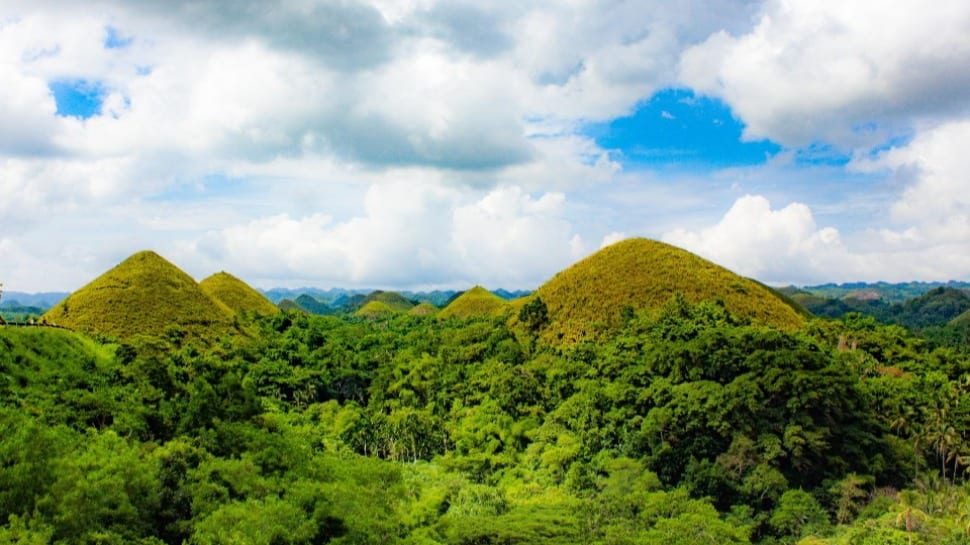
It might have taken some time, but Bohol has now been added to the United Nations Educational, Scientific and Cultural Organization (UNESCO)'s network of Global Geoparks, a release on Wednesday, May 24, 2023, confirms. This makes the island the first in the Philippines to be designated as such.
According to the United Nation's cultural agency, Bohol Island's distinctive geological identity lies in its 150-million-year history, where “periods of tectonic turbulence" raised the island from ocean depths.
“Traces of the island’s subterranean past can be found in the limestone which forms characteristic karstic structures. The geopark abounds in karstic geosites such as caves, sinkholes, and cone karst, including the famous cone-shaped Chocolate Hills in the center of the geopark,” UNESCO wrote in its report.
ALSO READ:
This 73-Year-Old Is One of the Last Makers of Traditional Asin Tibuok in Bohol
Summer in Panglao: A Guide to Capturing the Beauty of Bohol
UNESCO says that the island's features are the “only one of its kind in Southeast Asia,” with a special mention of the Danajon Double Barrier Reef. The said reef situated along the northern coast has 6,000 years' worth of coral growth to it.
It also acknowledged how the island has been taking care of its 1.4 million inhabitants. Local sources of income like rice, coconut, corn crops, fishery, and aquaculture each contribute to the island's sustainability and tourism. Bohol is noted for being a prime eco-cultural destination for its white sand beaches, biodiversity, diving spots, and heritage, among others.
Bohol Island has been a contender for the UNESCO Global Geoparks for quite some time now. The island is finally part of UNESCO's newest designated geoparks, which include the following for 2023:
- Caçapava, Brazil
- Quarta Colônia, Brazil
- Lavreotiki, Greece
- Ijen, Indonesia
- Raja Ampat, Indonesia
- Maros Pangkep, Indonesia
- Merangin Jambi, Indonesia
- Aras, Iran
- Tabas, Iran
- Hakusan Tedorigawa, Japan
- Kinabalu, Malaysia
- Waitaki Whitestone, New Zealand
- Sunnhordland, Norway
- Jeonbuk West Coast, South Korea
- Cabo Ortegal, Spain
- Khorat, Thailand
- Mourne Gullion Strangford, United Kingdom
UNESCO Global Geoparks are described as “spectacular sites with an important geological history and attributes. These sites also promote sustainable development, hand in hand with local communities.” This also means that two UNESCO member states have now been added to the network, namely New Zealand and the Philippines. There are now 195 sites across 48 countries.
