
A Feminist POV: Why the Philippines Needs Divorce Now

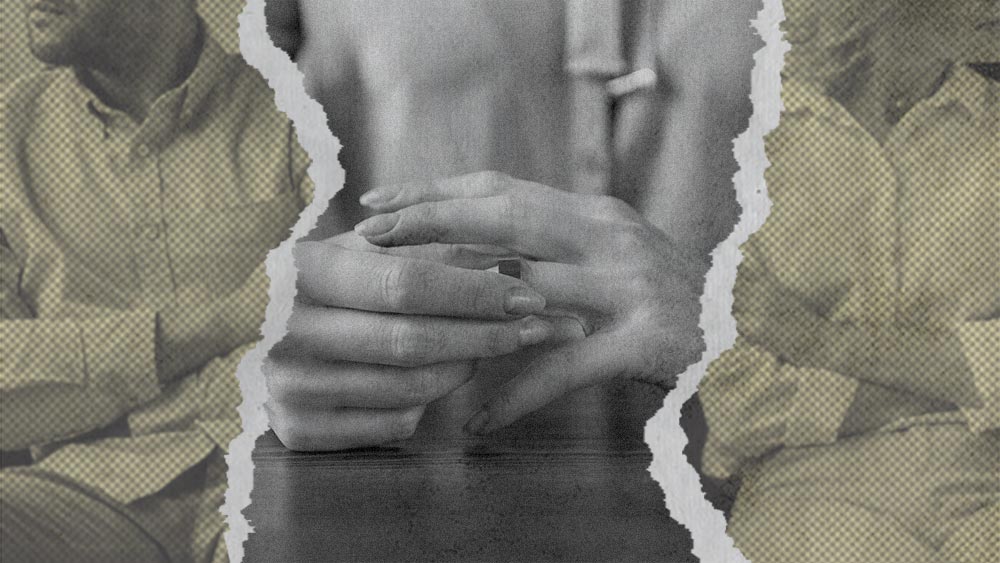
Since the news of House Bill 9349 or the “Absolute Divorce Act” getting the nod from the Philippine Congress broke out, posts about divorce flooded my social media news feed. The last time the divorce issue generated this much traction was in 2018 when the House of Representatives passed a similar bill, only to languish in the Senate.
History shows that divorce has long existed in the country: pre-colonial Philippines allowed women to obtain divorce. Divorce laws existed during the Spanish, American, and Japanese occupation, and the Code of Muslim Personal Laws of the Philippines (Presidential Decree No. 1083 1977) allows Muslim Filipinos to file for divorce under certain conditions.
But here’s the thing: in this overwhelmingly Christian country, passing the divorce bill might just be a bitter pill to swallow. Why? Because pushing for divorce requires recognition and acceptance that family and marriage are political institutions—that while they can be sites of empowerment and comfort, they are also sites of inequality and oppression. You raise your brow, how come, you might ask, my family and marriage oppress me? Your answer to this will reveal two things: you either name your oppression or your privilege. This, I believe, is a compelling ground on why we should pass the Divorce Bill now.
ALSO READ
The Absolute Divorce Bill Is Finally Here. What Now?
The Inevitability of Divorce in the Philippines
Two sides
This discourse continues to be polarizing. For the critics, marriage is an “inviolable” institution, and divorce breaks families and taints the sanctity of marriage. Filipinos are known for their tight-knit familial relationships and they claim divorce destroys these relationships. Such, they say, signals a decay of our cultural and religious beliefs and values. The influence of the Catholic Church and various religious groups continues to manifest in the country’s laws, policies, and public attitudes on moral issues. We see how the absence of laws on divorce, abortion, same-sex marriage, and euthanasia is a clear symptom of this authority.
As I scroll through social media, it seems to me that the most common and gripping argument for divorce is the emphasis on the right to exit dysfunctional marriages. Violence against women remains a pervasive issue in the country, as also reported in the 2022 National Demographic and Health Survey where 17.5 percent of Filipino women experience any form of physical, sexual, and emotional violence from their partners.
In contrast to annulment and legal separation, divorce provides a relatively easier way out, a second chance, and a renewed opportunity for a clean slate in life. Moreover, women who bear the brunt of failed marriages and are trapped in abusive relationships can seek refuge and protection in divorce.
So, what does a feminist perspective on divorce look like? Isn’t the strongest argument out there already a feminist stance, as it recognizes women’s suffering in long-dead marriages? Well, yes! But there’s more to unpack in that argument. In recognizing that family and marriage are political institutions, we also acknowledge that we all have different contexts and experiences, and to shove one’s religious or personal beliefs onto others just won’t cut it.
Family as a political institution
Culturally, our traditional view of the family revolves around the concepts of love, respect, and happiness—and is thus seen as non-political. This perspective seems to serve as an anchor for the pro-family and pro-marriage arguments against divorce.
Since Filipino family values are fundamental to our psyche, any conflict or disagreements in the family must be resolved. This further strengthens the obsession with views like “family is family,” “blood is thicker than water,” and “nanay/tatay/kapatid mo pa rin yan.” Yet this is grossly mistaken. As feminists have argued, the family is shaped by laws and regulated by the State, including those pertaining to rights and properties.
Of course, ideal families do exist, but just as they are real, so are dysfunctional ones. Many families are marred by disagreements and unequal parenting responsibilities, and are not based on love but on coercion, power, and violence. Women are already facing impossible standards in their societal roles, and they become even more vulnerable at home due to the existing gender division of labor and inegalitarian views on childrearing and housework.
Family experiences are diverse, and divorce validates these contexts. The family is an institution that can be both a haven of comfort and a source of empowerment. But this does not erase the fact that for some, it is a space where abuse, violence, inequality, and oppression occur. Good for you if you have a thriving and happy family like these lawmakers, but using this to oppose divorce is reckless and unacceptable.
Marriage as a political institution
Marriage is often viewed as a choice between two individuals based on love, affection, trust, and commitment to each other and God. It is seen as binding and serves as the foundation of the family. The phrase “till death do us part” seals the deal. But this perspective neglects the basic fact that relationships can be irreparably broken and that marriages can fail.
This is true in the case of many families in the Philippines. In marriage, women can experience happiness and fulfillment. But also, women can suffer at the hands of abusive partners. Motherhood responsibilities and household work contribute to women’s economic vulnerability and dependency. Even those who can juggle career and family responsibilities are piggybacked on the works of other women or domestic helpers. This is evident in the culture of conditioning girls in anticipation of marriage, in remarks such as “Magaling ka na magluto, pwede ka na mag-asawa,” “Kailangan marunong ka sa gawaing bahay para hindi ka iwan ng asawa mo,” and “Kababae mong tao, hindi ka marunong sa gawaing bahay.” The list goes on.
Additionally, issues such as marital rape and domestic violence are perceived as private problems of couples, preventing them from being addressed as gender justice and equality issues. As feminists emphasize, the personal is political. Recognizing marriage as a political institution means accepting the fact that not all marriages are built on love and respect, that marriages fail, and that as human beings, we have every right to an accessible exit from failed marriages. Divorce affords us this dignity, freedom, and autonomy.
Pass the Divorce Bill!
Patriarchal and oppressive systems retard societal progress. We may be wrong in thinking about these structures as not subject to justice, but it’s a welcome mistake if it means we have been enlightened about these realities. It’s time to break every form of willful ignorance—go touch some grass, check your privilege, and critically participate in the discourse to know why the heck we need to give a hoot about this issue.
Marriage and family, as political institutions, can be sites of oppression, but they can also be sites for change. Divorce is a tool for this change. In today’s shift in attitudes and socio-political landscape, maybe the question is not really “Is the Philippines ready for divorce?” but “Is the Philippines ready to move forward?” #PasstheDivorceBill
Krissah Marga Taganas is an Assistant Professor of Philosophy at the University of the Philippines Los Baños.
