
Boxer Imane Khelif Is a Woman Competing in the Women's Division

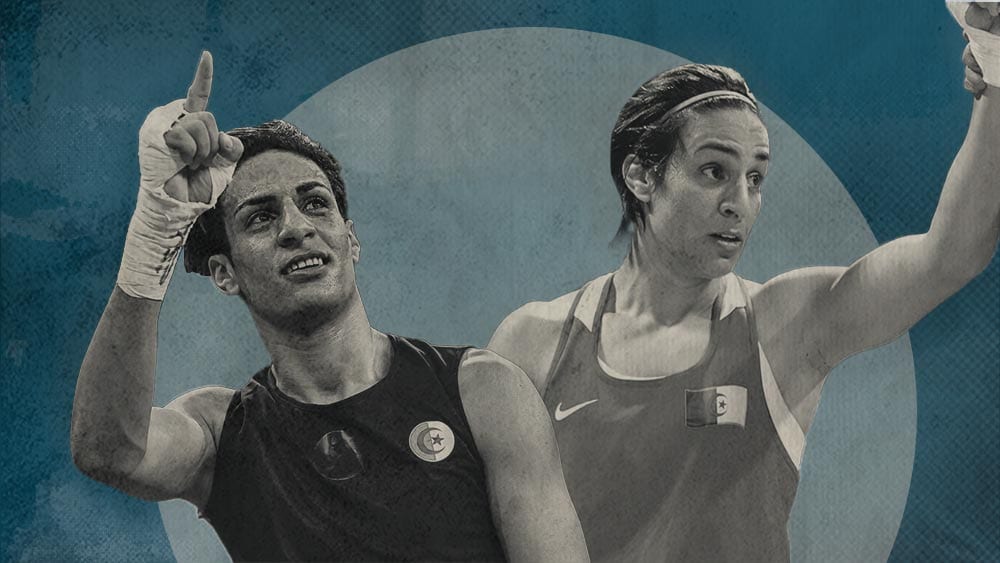
Just 46 seconds into the Women's Boxing 66kg Prelims round on August 1 of the Paris Olympics 2024, Italy’s Angela Carini threw in the towel after a few punches thrown at her by Algeria's Imane Khelif. A heated debate later exploded on the internet concerning gender eligibility in sports, particularly because the Algerian Olympian was disqualified by the International Boxing Association 2023 World Championships after failing an unspecified gender eligibility test.
High-profile personalities have also made comments that Khelif is a man or a transgender woman, both of which are misinformed as she is female-assigned-at-birth, a woman on her passport, and has always competed in the women's division throughout her boxing career.
On Saturday morning, August 10 (Manila time), Imane Khelif won the Olympic gold medal during her fight against China's Liu Yang. It was a unanimous decision. She is the first Algerian woman to earn an Olympic boxing title.
ALSO READ:
Imane Khelif Doesn't Deserve All The Hate She's Been Getting
Remembering Mona Sulaiman and Nancy Navalta, in the Wake of the Aprilia Manganang Controversy
Imane Khelif: A Woman Boxer from Algeria
Imane Khelif, born May 2, 1999, hails from a rural village in Tiaret Province in northwestern Algeria. A March 2024 UNICEF article detailed how she started her career in boxing, which wasn't her first sport. Khelif, at the age of 16, played football but was bullied by the boys in her village as the sport isn't exactly a game for girls in most cultures. Having to dodge the boys' punches, according to writer Ruth Ayisi, got her into boxing. For training, Khelif had to travel for 10 kilometers to the next village. She sold scrap metal to afford the bus commute.
Three years later, at the age of 19, she ranked 17th at the 2018 Women's World Boxing Championships – Lightweight in New Delhi, after losing to Kazakh boxer Karina Ibragimova, with a score of 3-2. During the 2019 Women's World Boxing Championships – Lightweight in Russia, she ranked 33rd after losing to Russia's Natalia Shadrina with a score of 4-1. Khelif was eliminated in the first rounds (Round of 32) of both international competitions.
Khelif represented Algeria at the 2020 Summer Olympics held in 2021 in Tokyo, Japan. She made it to the Round of 16 and beat Tunisian boxer Mariem Homrani with a 5-0 score, but she lost in the quarterfinals round against Ireland's Kellie Harrington with a score of 5-0.
In the 2022 Women's World Boxing Championships - Light Welterweight in Turkey, Khelif was able to get to the semi-finals round, where she beat Dutch boxer Chelsey Heijnen. She went head to head with Ireland's Amy Broadhurst, who beat her with a 5-0 score. Broadhurst went home with a gold medal, while Khelif bagged silver.
In the 2023 Women's World Boxing Championships – Welterweight in New Delhi, Khelif made it to the semi-finals round after a win by RSC against Kenya's Friza Anyango in the Round of 32, a 4-1 win against Russia's Azaliia Amineva, and a 5-0 score against Uzbekistan's Navbakhor Khamidova. In the semi-finals, she was up against Thailand's Janjaem Suwannapheng, whom she beat 5-0. But shortly before the finals round, Khelif was deemed ineligible.
All the Women's World Boxing Championships that Khelif previously joined were sanctioned by the International Boxing Association (formerly Association Internationale de Boxe Amateur or AIBA).
International Boxing Association's Gender Eligibility Test
Like Khelif, Taiwan's Lin Yu-ting was also disqualified towards the end of the Women's World Boxing Championships in 2023. The Taiwanese boxer won in the semi-final round of the Featherweight competition but was stripped of her medal by the IBA just before the final round.
The publicly available document IBA Board of Directors Meeting Minutes from March 25, 2023, said that it was Marko Petric, IBA Head of Sport, who presented the cases of Khelif and Yu-ting. It said that they "failed to meet eligibility rules, following a test conducted by an independent laboratory."
When asked by the Board, as narrated in the minutes of the meeting from March 2023, on why this issue was being brought up only at the end of the Championships, IBA Secretary General and CEO George A. Yerolimpos "explained that testing was conducted upon the request of the Technical Delegate and Medical Jury of the Championships. The results became available in seven days and the IBA Secretary General and CEO, acting on behalf of IBA, notified the athletes immediately about their disqualification, giving them twenty-one days to appeal the decision to CAS."
Yerolimpos also said in March 2023 "that IBA has the results from two independent laboratories in two different countries at its disposal, both of which indicate that the athletes do not meet one of the eligibility criteria to continue competing at the Championships."
He was referring to a test performed during the IBA Women’s World Boxing Championships in Istanbul 2022, when the results came out after the competition, and another test performed during the IBA Women’s World Boxing Championships in New Delhi 2023, when the results came out in the middle of the championships.
IBA also released a statement on July 31, 2024, days after the opening of Paris Olympics 2024. They clarified that the disqualification of Yu-Ting and Khelif was a result of their failure to meet the eligibility criteria for participating in the women’s competition, as set and laid out in the IBA Regulations."
They also noted that the "athletes did not undergo a testosterone examination but were subject to a separate and recognized test, whereby the specifics remain confidential. This test conclusively indicated that both athletes did not meet the required necessary eligibility criteria and were found to have competitive advantages over other female competitors."
While IBA is steadfast in its position that the tests "remain confidential," IBA President Umar Kremlev was quoted by Russia's TASS News Agency in 2023, saying, "Based on DNA tests, we identified a number of athletes who tried to trick their colleagues into posing as women. According to the results of the tests, it was proved that they have XY chromosomes. Such athletes were excluded from competition."
IBA added in their 2024 statement: "While IBA remains committed to ensuring competitive fairness in all of our events, we express concern over the inconsistent application of eligibility criteria by other sporting organizations, including those overseeing the Olympic Games. The IOC’s differing regulations on these matters, in which IBA is not involved, raise serious questions about both competitive fairness and athletes’ safety."
What the International Olympic Committee Has Said About the Issue
A statement made by IOC on August 2, 2024, said that "[Yu-ting and Kheli] were the victims of a sudden and arbitrary decision by the IBA. Towards the end of the IBA World Championships in 2023, they were suddenly disqualified without any due process."
They added in their statement:
"The current aggression against these two athletes is based entirely on this arbitrary decision, which was taken without any proper procedure–especially considering that these athletes had been competing in top-level competition for many years.
Such an approach is contrary to good governance.
Eligibility rules should not be changed during ongoing competition, and any rule change must follow appropriate processes and should be based on scientific evidence."
On June 22, 2023, the International Olympic Committee has "withdrawn the recognition of International Boxing Association, upon the recommendation of the IOC Executive Board."
"We highly value the sport of boxing. We have an extremely serious problem with IBA because of their governance," IOC President Thomas Bach was quoted during their remote meeting.
With IBA not recognized by the IOC, this effectively makes the IOC the arbiter for boxing at the Paris Olympics, as they did at the Tokyo Olympics in 2021. If the sport doesn't find a "credible, well-governed international federation," boxing will not be included in the sports programme of the Olympics in Los Angeles in 2028.
The IOC uses the Framework on Fairness, Inclusion, and Non-Discrimination on the Basis of Gender Identity and Sex Variations, which was released in November 2021.
Principle 3 (Non-Discrimination) of the Framework says: "Eligibility criteria should be established and implemented fairly and in a manner that does not systemically exclude athletes from competition based upon their gender identity, physical appearance, and/or sex variations." In addition, as long as it's consistent with Principle 4 (Fairness), "athletes should be allowed to compete in the category that best aligns with their self-determined gender identity."
It should be noted that "criteria to determine disproportionate competitive advantage" may be required, in relation to the athlete's performance and physical capacity. But they emphasized, "no athlete should be subject to targeted testing because of, or aimed at determining, their sex, gender identity, and/or sex variations."
A position statement released by IOC in January 2023 pointed out: "While a Framework-led process may consider the relevance of endogenous testosterone levels, it should not be assumed a priori that a certain level of testosterone will predict the performance of an individual athlete. In addition to considerable individual-level variation in performance, the relevance of testosterone will vary across sports."
IOC spokesman Mark Adams emphasized in a press conference on July 30, prior to the Khalif-Carini match: "Everyone competing in the women’s category is participating, following, complying with the competition eligibility rules." Gender and age of the athletes are based on their passport.
In another press conference on August 1, Adams said: "Testosterone is not a perfect test. Many women can have testosterone, which is in what would be called 'male levels' and still be women, still compete as women. This panacea, this idea that suddenly you do one test for testosterone and that sorts everything out—not the case, I'm afraid. But each sport needs to deal with this issue, they know the sports and the disciplines the best. They need to tailor the testing and so on, with that. I hope we're all agreed that we're not calling for people to go back to the bad old days of sex testing, which was a terrible thing to do."
Elite Sports and Disorders of Sex Development (DSD)
Hopefully, we all know the beautiful diversification of gender, sex, and sexuality.
Sex is often associated with medical factors: genitals, levels of hormones, chromosomes, and other physical aspects. Sex is also often assigned at birth, where the doctor makes the medical decision for someone else, the infant. "Biological sex" can be a rather unfair phrase since it doesn't fully encapsulate the complexity of biological, anatomical, and chromosomal variations. So, "assigned at birth" is a more appropriate phrasing as it acknowledges the fact that someone made a decision for someone else, which may later on not align with the person's sex, gender identity, and gender expression.
Khelif is assigned female at birth, identifies as a woman, and has always competed as a woman in the women's division of boxing.
For argument's sake, going with IBA president Kremlev's statement that Khelif has XY chromosomes doesn't defeat the fact that she is a woman who's assigned female at birth. This makes her a cisgender woman, if we're concerned about labels, despite having XY chromosomes that are used as sex determination for males.
Again, just going with Kremlev's statement, the presence of XY chromosomes in Khelif's DNA suggests that she has Disorders of Sex Development (DSD), which is also sometimes called Variations in Sex Characteristics (VSC) or Diverse Sex Development (also, DSD). This is labeled in IOC's aforementioned Framework as "Sex Variations."
Disorders of sexual development is an umbrella term for conditions associated with atypical development of internal and external genital structures. It can be associated with variations in genes, developmental programming, and hormones.
DSD is also associated with the endogenous presence of androgens, which should not be confused with doping (or the injection of performance-enhancing drugs and hormones, such as testosterone, androgens, and anabolic steroids).
A 2020 published in The Journal of Clinical Investigation ("Controversies surrounding female athletes with differences in sexual development" by Khattab et. al.), which is also echoed by several other studies, say that testosterone "increases muscle mass, strength, and recovery" and "increases erythropoiesis and hence the athlete’s oxygen-carrying capacity." However, most of these trials are made in exogenous presence of testosterone (i.e. doping), and not naturally occuring levels. "The advantages of endogenously occurring androgens are unclear and remain debatable in the literature," Khattab et. al. indicated.
In the past, international sporting organizations implemented policies to monitor testosterone levels in female athletes as part of traditional "sex testing," which was first enforced by the IOC in 1968. The practice, according to a 2017 published study by Maayan Sudai, came as a response to the anxieties that "Soviet male athletes would compete as females to increase the Communist medal count." It included subjecting female athletes to invasive physical examinations. These tests were later changed to be more chromosomal, which was first challenged by Spanish female hurdler Maria Patino, whose tests resulted in the discovery of a Y chromosome. Her condition was called androgen insensitivity syndrome, in which she has a Y chromosome, but her cells are not receptive to testosterone, meaning her body reacts only to estrogen, thus developing only physical female traits. Patino lived as a woman, played the sport as a woman, and "had the strength traditionally expected of women," but was ultimately banned in the 1988 Olympics.
In 2011, the International Association of Athletes Federation (IAAF) instituted regulations for hormone levels for athletes, but this targeted women with hyperandrogenism or those females with excessive production of androgens/testosterone. Several cases questioned this ruling, with one argument saying that the testosterone test discriminates against women. It doesn't help that widely cited empirical evidence available yield conflicting results, one study (GH-2000) says that hormonal profiles of elite athletes actually differ from the usual reference range, thus the previous IOC testoserone test is "untentable." The other, the Daegu study, suggested "indirect evidence for performance-enhancing effects of hyperandrogenic DSD concentration in female athletes."
Given these ongoing arguments, even in the scientific community, the debate over gender eligibility in sports continues to intensify. It is crucial for sporting bodies to develop fair and transparent policies that ensure the integrity of competition while respecting the rights and identities of all athletes.
The worst thing about this controversy is that Imane Khelif’s journey to the Paris Olympics is currently being undermined. Her story, that of a bullied girl playing football in her village who went on to become an Olympian, should also be worth telling.
UPDATED (August 10, 2024): This article has been edited to include Imane Khelif's win during the final round on August 10, 4:51 a.m. (Manila time).
