
Cebu Welcomes 650 'Residential Cruisers' in a Four-Year Voyage

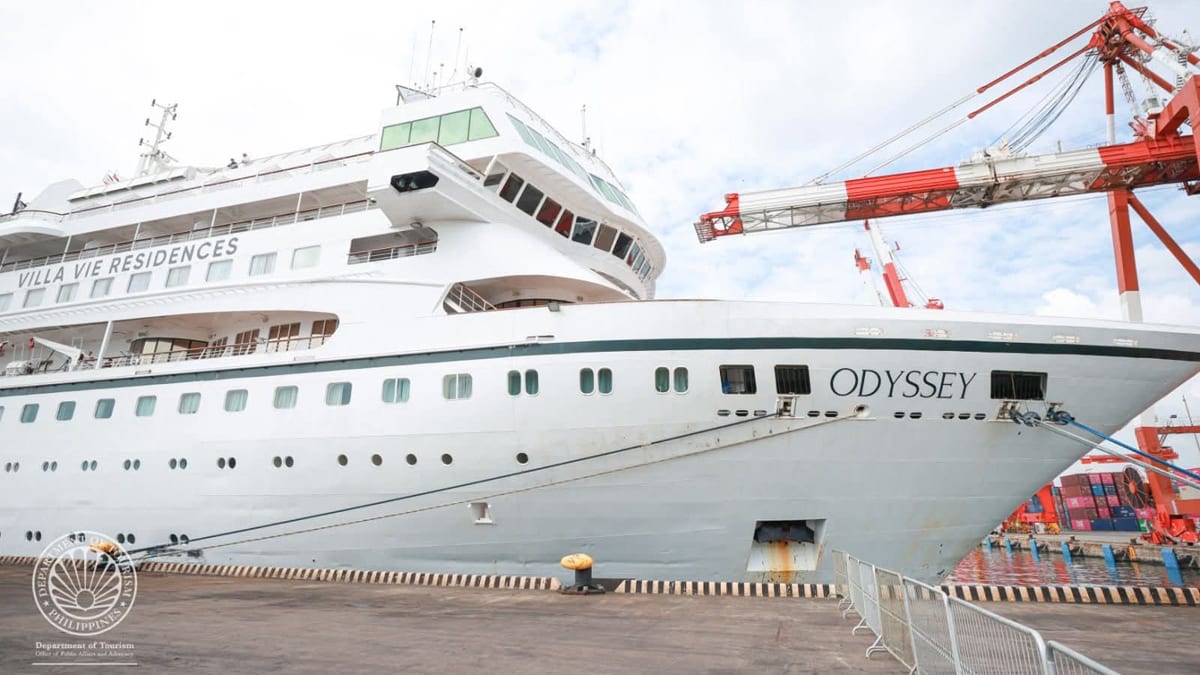
It wasn't a typical tourist cruise. On October 5, the Philippines welcomed 650 passengers who don't just visit on vacation, they live permanently at sea. These "residential cruisers" aboard the Villa Vie Odyssey ship are on a three-and-a-half-year global voyage, with Cebu their final Philippine port of call.
Villa Vie Odyssey is a 924-passenger ship operated by Villa Vie Residences, which champions the concept of fractional or full ownership of a cabin, essentially turning a cruise ship into a high-end, global condominium complex. Passengers aren't on a two-week vacation; they've simply moved in.
ALSO READ:
How a Filipina Conquered Global Cruise Entertainment
A Look at the 2.8 Billion Peso Facelift of This Asian Cruise Ship
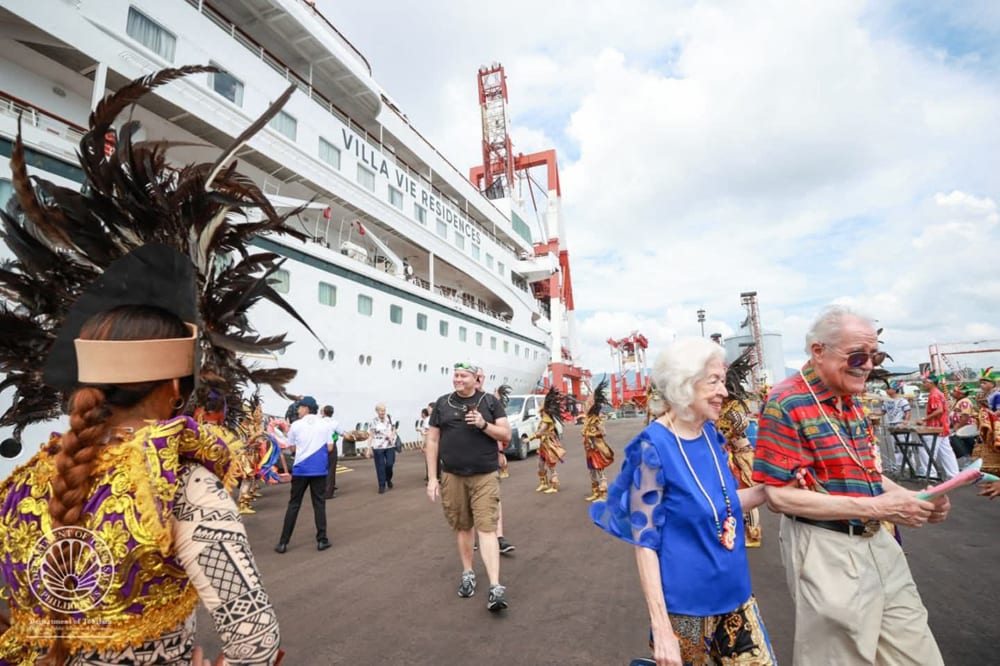
When the Odyssey arrived at the Cebu International Port, the province was still reeling from the M6.9 earthquake that damaged several heritage sites on the evening of September 30. Still, the Department of Tourism (DOT) provided a Filipino welcome, greeting the cruisers with traditional leis and a spirited performance by Sinulog dancers.
Tourism Secretary Christina Garcia Frasco noted on their arrival: "We're very grateful that MV Odyssey has arrived in Cebu. It’s been a very difficult past few days for our fellow Cebuanos who have experienced the devastation of the 6.9 magnitude earthquake. And for this vessel that has sailed to 147 countries around the world to come here to the Philippines and to come to Cebu today is very meaningful."
Guests were offered curated optional tours, blending city exploration in Cebu and Lapu-Lapu with Mactan's famous beach escapades and intimate experiences celebrating local arts and crafts.
Frasco noted that the cruise passengers also gave financial aid to the earthquake victims in Cebu. "They informed me that when they learned of the earthquake in Cebu, they voluntarily came together to gather funds. And I think their last count reached around $16,000…to contribute to the relief efforts in Northern Cebu," she said.
Some of the passengers were from the United States, India, South Africa, Greece, and Romania, said the DOT chief.
DOT Secretary Christina Garcia Frasco welcomes guests aboard the Villa Vie Odyssey

Cruising as a Global Lifestyle
The Odyssey's current voyage, which began in September 2024 and spans almost four years, made its initial Philippine call in Subic Bay, followed by stops in Manila, the white-sand beaches of Boracay, and the natural wonder of Puerto Princesa, before concluding its Philippine leg in Cebu. The ship is already scheduled to return in May 2026.
This "permanent resident at sea" model is a lucrative niche market within the travel industry, attracting affluent retirees and the elderly who prioritize travel and luxury. The global residential cruise market hit $5.8 billion last year, and experts at Growth Market Reports project it will nearly double to an estimated $10.8 billion by 2033, growing at a Compound Annual Growth Rate (CAGR) of 7.1 percent.
According to the Villa Vie Odyssey's website: "The surge in demand for luxury living experiences and the desire for unique, travel-oriented lifestyles are among the primary growth drivers for the residential cruise ship market. As affluent individuals and retirees seek alternatives to traditional land-based residences, the concept of owning or renting a home at sea has gained considerable traction. The integration of world-class amenities, such as fine dining, wellness centers, and cultural activities onboard, has elevated the appeal of residential cruise ships, making them a preferred choice for those looking to combine comfort, adventure, and exclusivity. Furthermore, the post-pandemic shift towards remote and hybrid work models has enabled more individuals to consider long-term or permanent residency at sea, further boosting market growth."
The post-pandemic rise of remote work has only accelerated this trend, allowing more individuals the flexibility to choose a life of unlimited global travel.
The Future of Philippine Cruise Tourism
The arrival of elite vessels like the Odyssey underscores the Philippines' growing prominence in cruise tourism. The DOT projects close to 50,000 cruise passengers will visit the country this year, dropping anchor in locations including Manila, Cebu, and emerging destinations like Samar Island and Kalanggaman Island in Leyte. This figure represents double the 25,067 arrivals recorded in 2023.
However, the local industry's expansion faces a critical hurdle: infrastructure. Major ports, including Manila's South Harbor, often rely on crowded, makeshift facilities—a cargo port that doubles as a passenger terminal—which presents a less-than-ideal first impression for the world’s most discerning travelers. As the country continues to host these high-value ships, the need for modern, dedicated cruise port facilities becomes the clear next step to fully realize the nation's potential as a premier cruise hub.
