
The New English Alphabet Song Just Killed Elemenopee

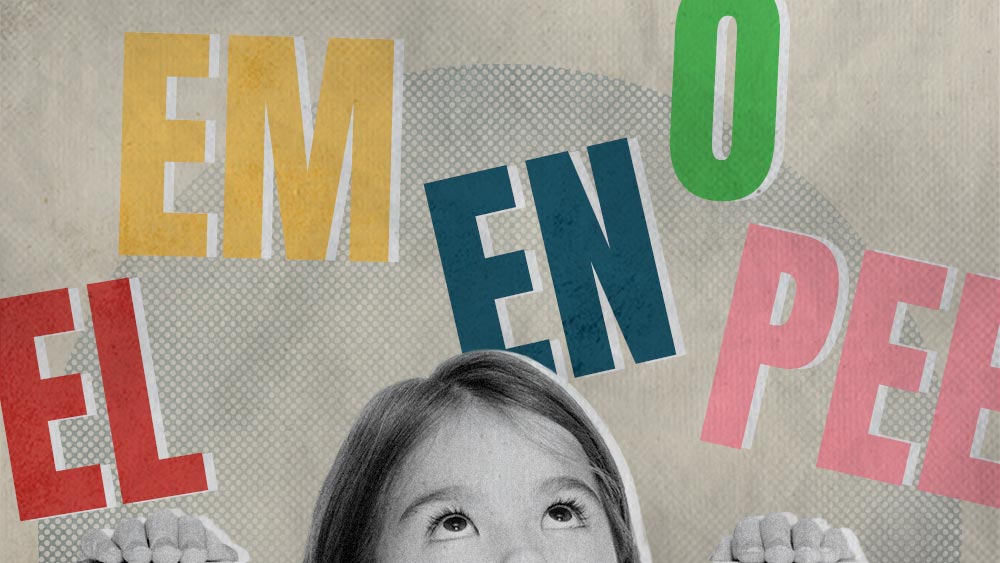
Most of us sing the English ABC song the same way: a slow and rhythmic start from the letters A to G, and then another set with the same tempo from H to K. Then comes a deep breath to blurt out the next letters in one go: "Elemenopee," which—lest we forget—stands for the letters L, M, N, O, and P. The rest of the letters are sung as slowly as the start, with X-Y-and-Z at the end. Then, a conclusion: "Now I know my ABCs, next time, won't you sing with me?"
The part from L to P is distinctly sung so fast that it has become the iconic word; it's gibberish, but it's part of our collective memory. So, imagine our surprise when social media tells us that Elemenopee is no more.
ALSO READ
This Filipino Illustrator Is Championing Filipino Sign Language Through Art
Baybayin Should Not Become a National Writing System
The New ABC Song
Slowly gaining popularity in American preschools in the past years, the new English alphabet song starts off with the same tune we're familiar with. But things take a turn as soon as they reach our beloved Elemenopee.
Instead, there are distinct pauses every three letters, which individually as a set also have short stops. L, M, and N are sung in three beats as a line; then O, P, and Q, and so on. The "and" in X-Y-and-Z is also gone.
The closing line isn't as friendly as it was with the "sing with me" invitation. Instead, they get, "Now I never will forget / how to say the alphabet," which sounds more like an anxiety-ridden reminder.
Preschool teachers (and moms) have pointed out online that the reason for this change is to emphasize that, for one, Elemenopee is actually five separate letters and not some mumbo-jumbo. Also, apparently, the "and" between Y and Z is sometimes confused to be another letter or another N.
Intriguing Origins of the ABC Alphabet Song
The English alphabet song, like most nursery rhymes, has a catchy tune, which is why it was so easy for us to learn the ABCs. Its melody is instantly recognizable, and that's because it shares its tune with other well-known nursery rhymes such as "Twinkle, Twinkle Little Star" and "Baa Baa Black Sheep." There's also a French folk song titled "Ah, vous dirai-je, Maman" ("Ah, Mother, if I could tell you") that carries a similar tune.
"Ah! vous dirai-je, maman" is a popular children's song in France.
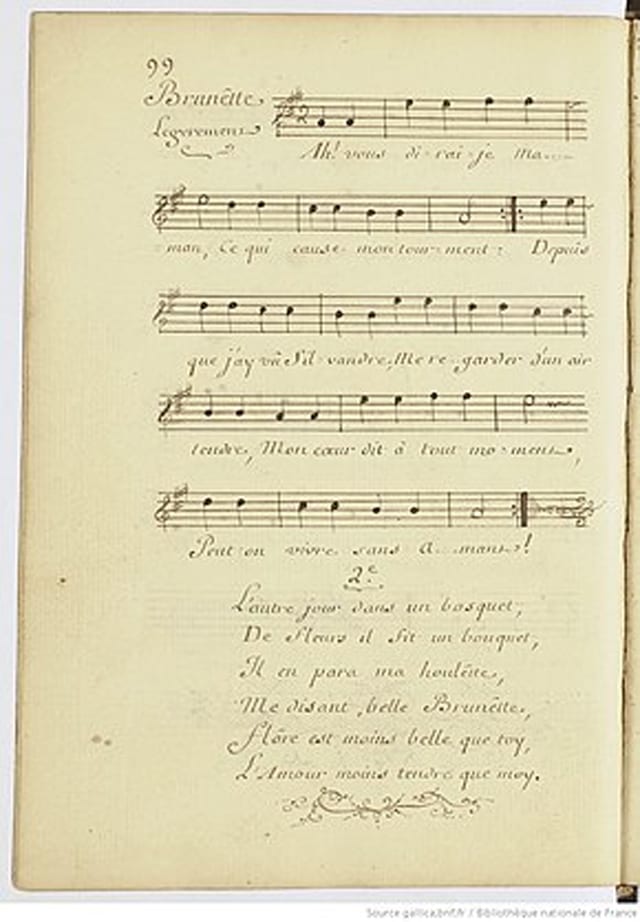
The exact origins of the melody are unknown, except that it came from a pastoral song from 1740, then published in 1761. The earliest known publication of both music and lyrics was in 1774, a love poem titled "La Confidence Naive" in Brussels. France's children's song, "Ah! vous dirai-je, maman," was inspired by the the 1774 piece.
Wolfgang Amadeus Mozart then published "Twelve Variations on 'Ah, vous dirai-je, Maman,' K 265" in Vienna in 1785. It is based on the French folk song, making the tune even more popular than ever.
It wasn't until 1806 that English poet Jane Taylor penned the words for "Twinkle, Twinkle Little Star."
Fast forward to 1835, and an American music publisher named Charles Bradlee copyrighted the song under the title "The Schoolmaster." This version included the now-familiar lyrics: "A, B, C, D..." and so forth, making it an effective educational tool for teaching children the alphabet. The song's legal title was quite a mouthful: "The A.B.C., a German air with variations for the flute with an easy accompaniment for the piano forte."
Interestingly, the ABC song is not just an English phenomenon. The melody has been adapted for alphabet songs in other languages as well. For example, French and German versions of the song exist, helping children in those languages learn their alphabets. Arabic has its own version called "Alif Ba Ta," which covers the first letters of the Arabic alphabet. Similarly, Japanese and Chinese have poems that serve the same mnemonic purpose. In Japanese, the "Iroha" poem contains all the syllables of the language, while the "Thousand Character Classic" serves a similar function in Chinese.
While we may not know the exact individual who first thought to pair the alphabet with this particular tune, we do know that it has become an invaluable educational tool. The new ABC song builds on this long history of the nursery rhyme that most of us in English-speaking countries know. It's a version that clearly separates every letter, so the change actually makes sense.
But we still want justice for Elemenopee. RIP.
