

Looking Back at the Gruesome Murder That Ended Mandatory ROTC in the First Place

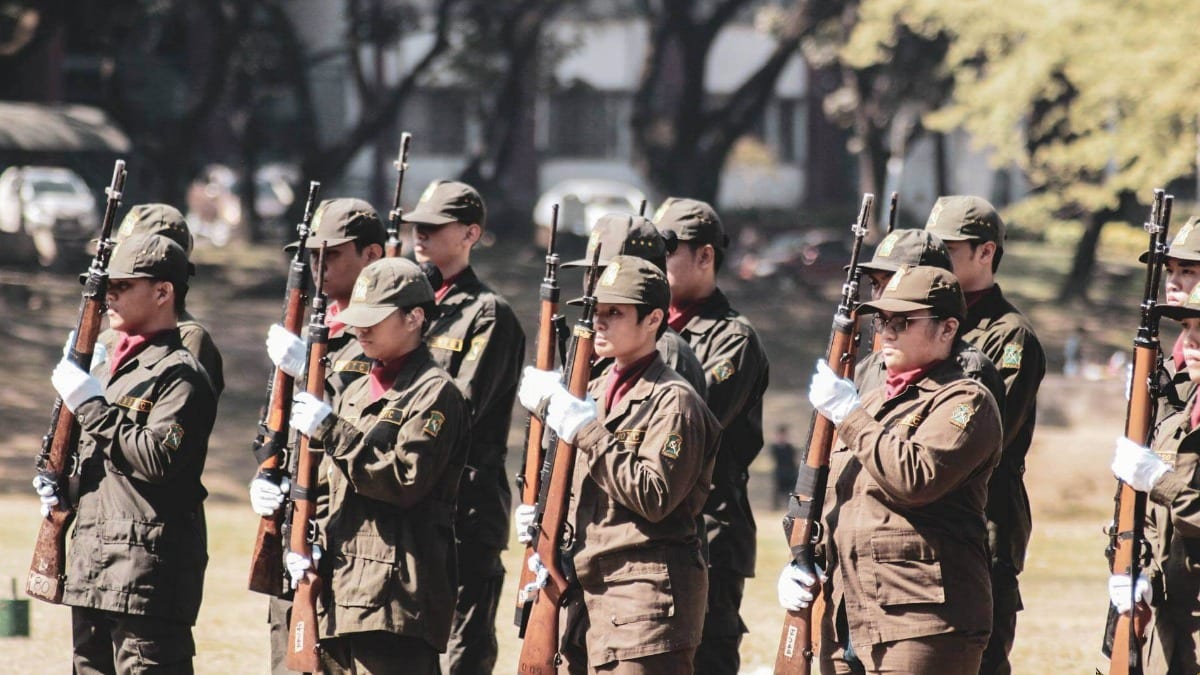
Chances are, the proposed measure that would revive the mandatory Reserve Officers’ Training Corps (ROTC) program is going to pass in the Senate before the end of the year. The author of Senate Bill 2034 or the "ROTC Act," Senator Ronald "Bato" dela Rosa, practically guarantees it. He has even assured the public that those who will go through the program, both local and foreign students, won't be subjected to abuse. Easier said than done, of course.
Public opinion has shifted over the years. It was during former president Rodrigo Duterte's term that there was a cultural shift in our attitudes toward the program. Three years into his presidency, Duterte certified as urgent another attempt to bring back ROTC: Senate Bill 2232, which mandates basic ROTC for Grade 11 and 12 students. Nothing came out of it.
Now the program is seeing its best chance for a comeback. Duterte's daughter, Vice President Sara Duterte, has repeatedly expressed support for the bill. And just recently, a Pulse Asia survey commissioned by Senator Sherwin "Win" Gatchalian concluded that eight of 10 Filipinos are in favor of bringing it back.
We figured it was time to look back at the history of the program—including past scandals, the gruesome death that led to its abolition, and how the new version fares in today's political climate.
Remembering Mark Welson Chua
LOOK: Special report of @varsitarianust where late Thomasian Mark Welson Chua exposed the corruption in the program. His dead body was later found floating in the Pasig River, wrapped in cloth and packaging tape. #NoToMandatoryROTC#EndStateFascism pic.twitter.com/jXHQAI3Orn
— League of Filipino Students - UST (@LFSUST) February 3, 2019
It was in 2002 that Republic Act 9163 or the "National Service Training Program (NSTP) Act of 2001" was signed into law, providing college students with alternative courses, like internships and literacy programs, among others, instead of ROTC. The move was triggered by clamors for reform after the brutal murder of University of Santo Tomas cadet Mark Welson Chua.
Chua, who tragically passed away in the hands of his fellow cadet officers, had exposed anomalies in UST's ROTC program at the time. He and Romulo Yumul revealed the issues in a special Varsitarian report published on February 21, 2001.
The sophomores from the Faculty of Engineering filed a complaint against the program with the Department of National Defense, which led to the dismissals of UST-ROTC commandant Maj. Demy Tejares and several others. Some of the complaints included the dubious collection of registration and exam fees, bribery, extortion, and inefficient instruction, among others. Chua and Yumul also highlighted discrepancies in their grades, which didn't match the registrar's office records. But the most damning part of the report was the gun-pointing incident involving Department of Military Science and Tactics staff administrator Genesis Binagatan and former cadet officer Paul Tan.
The Varsitarian's report read:
"According to Tan, the incident happened during the fifth training Sunday of the first semester. At that time, he was relieved from his designation because he did not attend the previous training days. AB student Eliseo Pitargue, a cadet officer who was then handling about 20 cadets in the School for Cadet Officers (SCOs), asked for help because he could not accommodate all of them. Tan took command of some SCOs and gave them physical exercises. Then, Binagatan interfered."
Tan explained:
“He [Binagatan] didn’t even ask me if I had authorization. He confronted me on that very instant. Minura niya ako. [But] I answered him back, ‘Sir don’t you know that you are not supposed to do that in front of these cadets? I am a superior officer. That’s the basic in military leadership."
Binagatan would proceed to bring out a .45 caliber pistol from his car. “He was very angry. Then, he cocked his gun, and then pointed it at me,” Tan said in the report. Binagatan's anger would be directed at another cadet officer, Arnulfo Appari, after. When he went out, Aparri said Binagatan slapped him, added Tan.
Binagatan denied the allegations. The story, however, would resurface after Chua was found dead.
Chua disappeared a month after the report came out. His father, Welson Chua, reportedly received a call saying that his son had been kidnapped. He'd been asked for a P3 million ransom. Chua's dad couldn't meet the demand.
The cadet's body was found floating and rotting in the Pasig River on March 18, 2001. Chua's body was wrapped in a carpet and his head, in packaging tape. Meanwhile, his hands were tied and his legs were bound by more packaging tape. Chua's family claimed that this was an act of revenge after their son's exposés. Suspect-turned-witness former ROTC officer Franco Suelto also identified Appari as one of the men who wrapped Chua's body using the old carpet inside the DMST office.
Then-President Gloria Macapagal-Arroyo asked officials to expedite the investigation. Then-Armed Forces of the Philippines Chief Diomedio Villanueva and Department of Education, Culture, and Sports Secretary Raul Roco also promised to abolish Mandatory ROTC.
In 2004, Manila Regional Trial Court Branch 18, led by Judge Romulo Lopez, gave the four suspects, Arnulfo Aparri Jr., Paul Joseph Tan, Eduardo Tabrilla, and Michael Von Rainard Mangangbao, the death penalty. It would be commuted to life imprisonment after the penalty was abolished in 2006. Unfortunately, some suspects remain at large.
ALSO READ:
Five Years Since Kian delos Santos' Brutal Shooting and This Is Where We Are
Honor or Horror? A History of Hazing in the Philippines
A Short Timeline of ROTC Scandals

Issues of bribery, corruption, and abuses have marred the program even before Chua's death. As far back as the mid-90s, several ROTC cadets' hazing incidents have been reported.
In 1995, De La Salle University student Seth Lopez passed away due to injuries from hazing activities by cadet officers in a house in Tanay Rizal. Four years later, we'd learn of the death of Saint Louis University student Arthur Salero, who died of hazing, as well.
The new millennium brought the tragic news of Mark Welson Chua. But the abuses didn't stop there. There was also the case of ROTC cadets who had been mobilized by the government in 2006. The officers reportedly spied on and red-tagged student leaders at the University of the Philippines in Diliman. Tonyo Cruz also reported similar questionable politically motivated incidents transpiring at the Polytechnic University of the Philippines in 2007 and in UP Los Banos in 2010.
In 2014, ROTC scandals rocked Benguet State University, De La Salle University, Ateneo de Davao University, and PUP Sta. Mesa, too. From Jezreal Sacpa testifying against ROTC officials for sexual abuses to hazing charges filed against La Salle ROTC corps commanders and more red-tagging, these cases are hard to ignore. Two years later, ROTC cadets from the Pamantasan ng Lungsod ng Pasig reported experiences of physical abuse and attempted rape.
One of the latest victims of the ROTC program's violence was Iloilo State College of Fisheries student Willie Amihoy, who was allegedly attacked and killed by his ROTC corps commander. He had been found dead inside a comfort room on school premises.
These are only a handful of incidents of abuse. More of them, widely reported or otherwise, exist in university archives elsewhere.
A Wave of Support in the Face of Persistent Criticism

Concerns persist but Dela Rosa argues that the new program should not be limited to military subjects. Dela Rosa is also confident that his new measure has provided the necessary safeguards.
"Hindi lang militaristic, kundi subject diyan yung disaster response, environmental preservation, kasama na diyan yung personality development, discipline, moral development, intellectual development ng mga estudyante. Personality development, discipline, patriotism, nationalism,” the chairperson of the Senate public order and dangerous drugs committee said in a statement.
In the Gatchalian-commissioned survey, on the other hand, the reasons for the ROTC reboot are as follows:
- To train students so they are prepared to defend the country (60 percent)
- To teach or develop leadership skills to the youth (59 percent)
- To teach the value of teamwork to the youth (52 percent)
- To improve the youth’s level of physical fitness (40 percent)
- To make young people patriotic (35 percent)
Critics continue to assert that it would only do harm to students' resources and mental health. Others say that it is still prone to abuse of power and corruption. Fears of hazing, harassment, and abuse prevail, as well. In the study, 56 percent of people believe that "it will just waste the time of the youth that should be dedicated to studying.”
But with the support of the Vice President and allies like Gatchalian and Dela Rosa in the Senate, we just might see the resurrection of the controversial program sooner than we realize. With it, we are reminded of victims, both past and present, as well as questions of its original mandate when tragedy strikes.
