Whatever name is used, the mention of this mountain evokes many emotions and images for many around the world. For the Sherpa people of Nepal, it is a sacred mountain. It also holds significance for many Buddhist cultures. For the secular world, it is best-known as the highest mountain above sea level.
And for mountaineers everywhere, it’s one of the greatest goals—if not the greatest goal—they could possibly achieve: to reach the summit of this majestic wonder.
The last time a Filipino was able to reach the peak of Mount Everest was nearly two decades ago. But recently, a group of Filipinos decided it was time to end the slump.
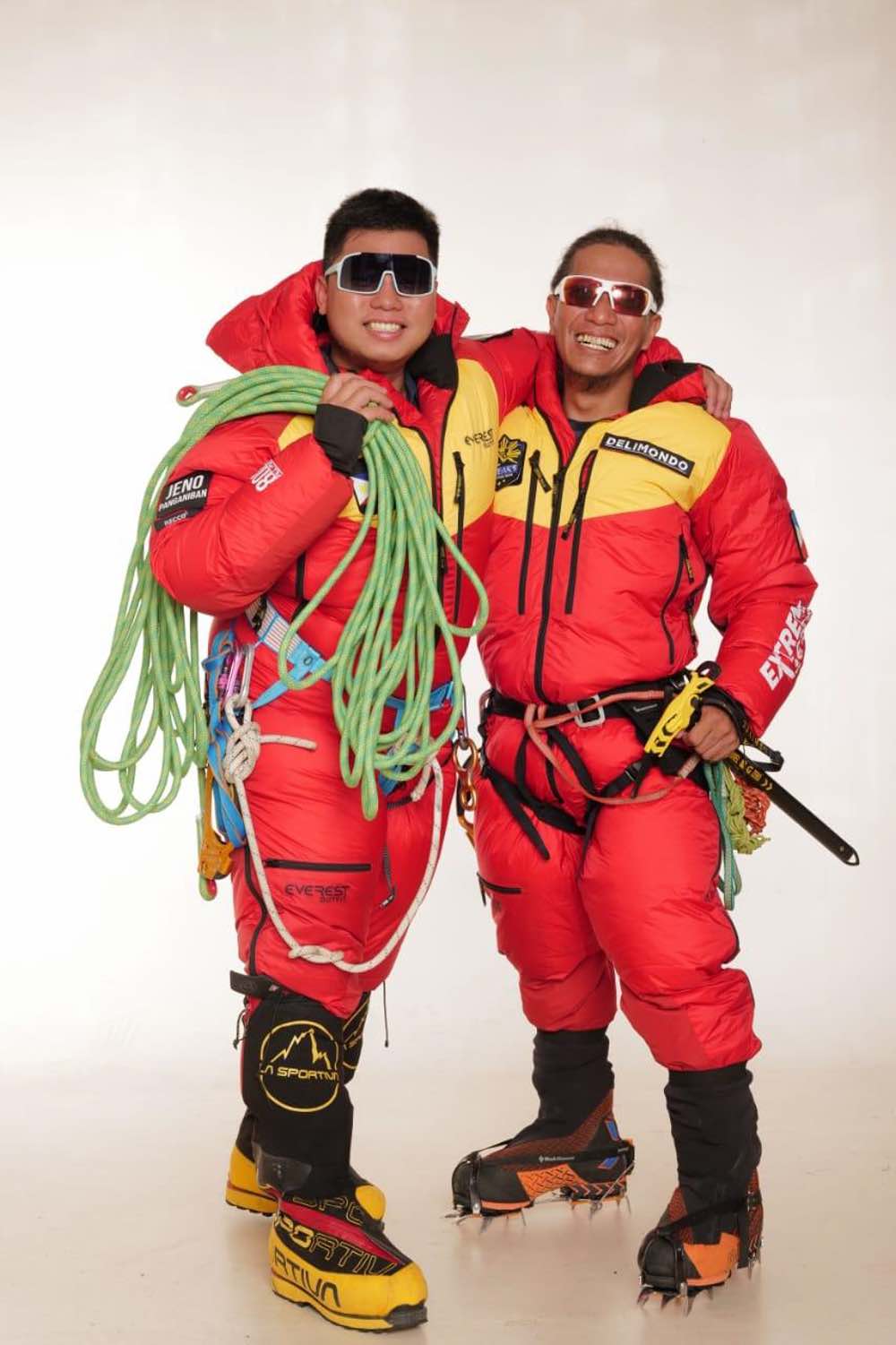
Miguel Mapalad, 42, from San Juan, and Jeno Panganiban, 30, from Pasig, were part of a small group that dared to scale the heights of Everest this year, once again bringing pride to Filipinos everywhere.
ADVERTISEMENT - CONTINUE READING BELOW
Jeno Panganiban and Miguel Mapalad are the first Filipinos to scale Mt. Everest in nearly 20 years
PHOTO: Courtesy Miguel Mapalad
“It meant everything to us,” Panganiban tells Esquire Philippines. “It’s (been) almost two decades na walang Pinoy. Gusto naming patunayan na ang mga Pilipino, kayang makipagsabayan sa mga Western mountaineers. For mountaineers (like us) na nakatira sa tropics, at sea level, aakyat sa high altitude? Talagang nagugulat sila. ‘Uy! Mga Pilipino kayo!’ It really meant everything to us, lalo na nung nakasubaybay na ang sambayanan sa journey namin. Nakaka-proud.”
Of course, the idea of climbing Everest didn’t just come up overnight. Both men may be seasoned mountaineers now, but as with everything, there’s always a beginning.
Mapaladl’s mountaineering journey started back in high school when his church group invited him to hike up the famed Mount Cristobal at the boundary of Laguna and Quezon. Before that, because of his love for the outdoors, he was already active in hiking and camping. But going up Mount Cristobal was a first.
CONTINUE READING BELOW
watch now
“Wala akong alam talaga,” he relates. “Nahihiya ako sa mga kasama ko. Na-survive ko naman sya. Mount Cristobal is a challenging mountain dito sa Pilipinas. Hindi sya pang-level 1 na hike.”
And with Cristobal also being steeped in local folklore, there was also an element of thrill and fear. “Maraming mythical creatures daw dun, pero wala naman akong naramdaman,” he adds with a laugh. “Although nakakatakot kasi na-absorb ko (ang mga kwento nila). Nasa gitna ka ng forest, marami kang maririnig na mga huni, pero buti naman wala akong nakita.”
The sense of fulfillment in surviving such a challenging activity got Mapalad hooked. He joined a mountaineering club in college and started training more seriously. After graduating, he pursued further training in survival schools and how to do rescues. Later on, in 2005, he quit his old job to become a full-time mountain guide.
As he hiked more and met other mountaineers, he became more serious and started thinking about Everest. He initially thought it was impossible; at that time, even the thought of climbing the highest mountain in the Philippines seemed completely out of the question.
ADVERTISEMENT - CONTINUE READING BELOW
“Pero mas nauna pa akong naka-akyat sa Nepal kaysa naakyat ko ‘yung highest mountain dito sa Pilipinas,” he says.
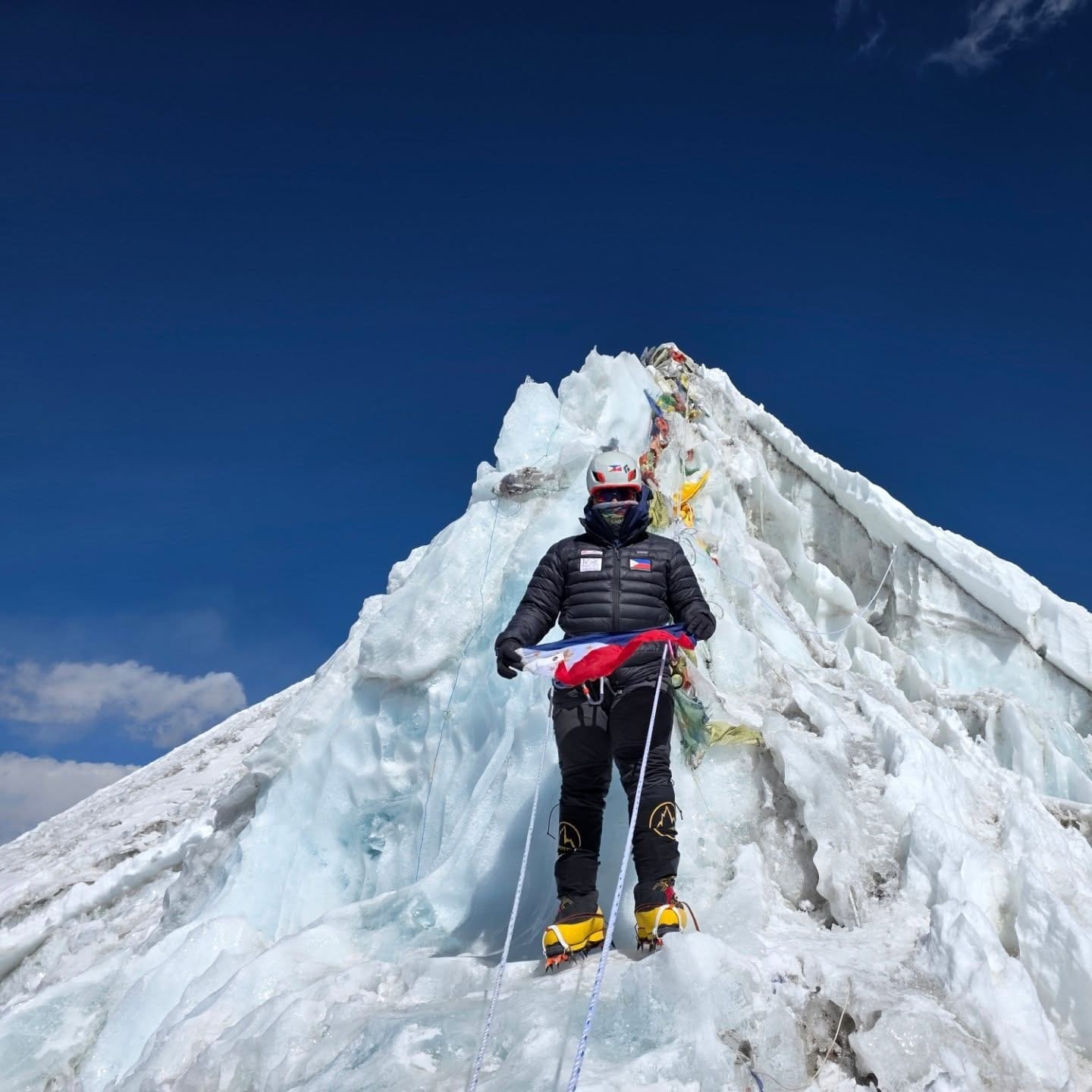
Miguel Mapalad strikes a pose on the way up the summit of Mt. Everest
Courtesy Miguel Mapalad
Circle of friends
For Panganiban, mountaineering came in 2016 as a college junior studying Computer Science. “Naghahanap ako ng something different sa life ko at that time,” he says. “And ‘yung circle ko nun, mahilig silang mag-outdoors. Nakikita ko ‘na bago ‘yung pictures nila sa Facebook, sa Instagram, and that got me envious.”
He asked them to start including him in their hikes and outings, and the first one was in Mount Talamitam in Nasugbu, Batangas. “My first time, it was really hell for me. Kasi I was unprepared, no one was guiding me. ‘Di ko alam ‘ung tamang susuotin. Naka-sleeveless ako, sunog na sunog, dehydrated.”
Behind the suffering, however, was the fulfillment as well. “Wow, ito pala feeling kapag may naakyat na bundok,” he says.
Panganiban later started to explore more mountains in the Philippines: in Tanay, Batangas, Montalban, Benguet, Ifugao, Mountain Province, falling in love with the beauty of the country and its peaks. “Full package siya for a tropical country,” he says. “Yung flora, ‘yung fauna. At napaka-challenging.”
ADVERTISEMENT - CONTINUE READING BELOW
It was in 2022 when he first reached to the Himalayas. It was his graduation, and he had already climbed a lot by then. He thought it was time move on to a new a chapter in life and was planning to close the old chapter by climbing only up to Mount Everest’s Base Camp—the last and grandest hike he could imagine then.
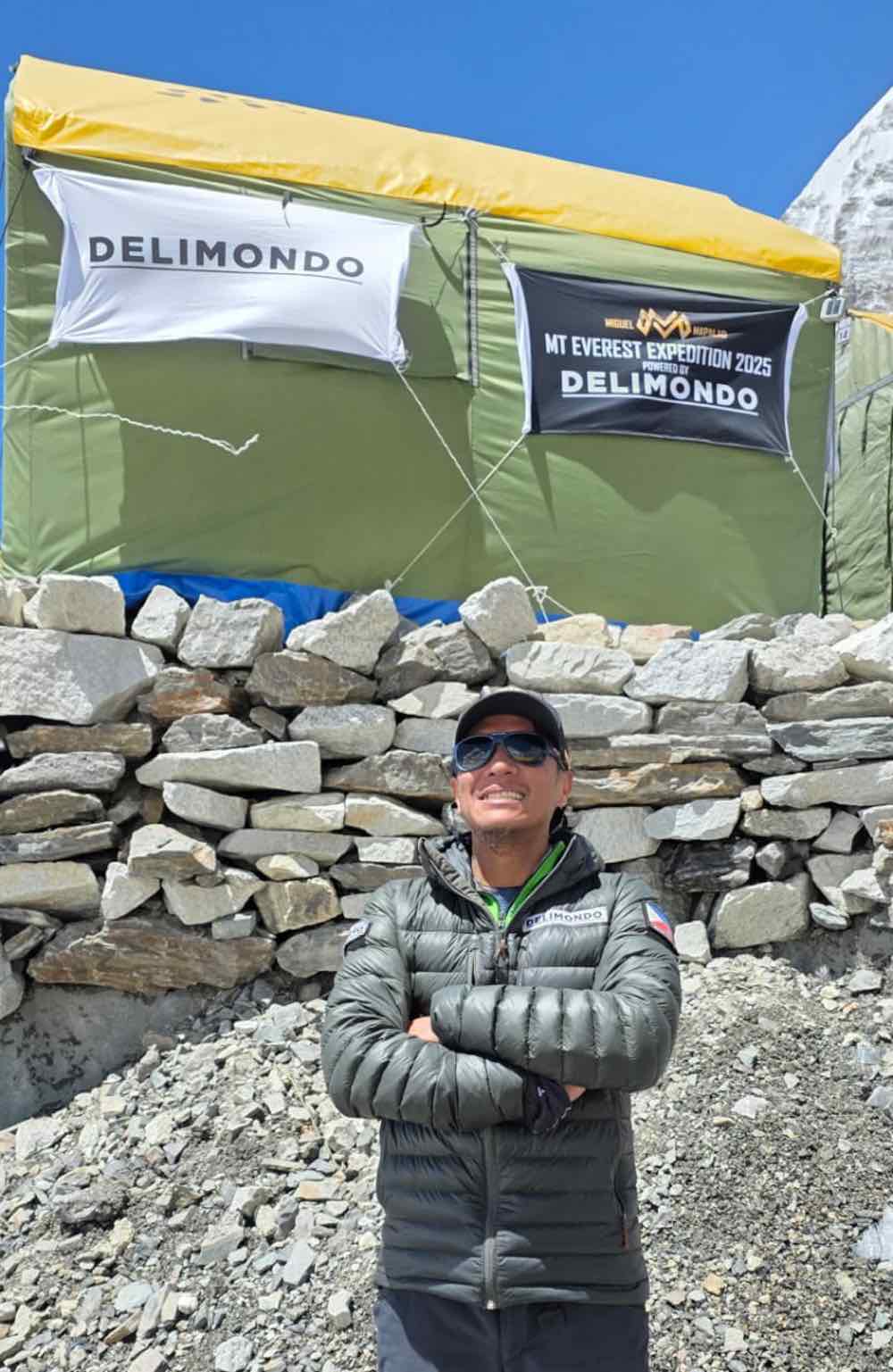
Mapalad at Base Camp
Courtesy Miguel Mapalad
But when he saw the Himalayas, he couldn’t help but exclaim, “Wow! Ang ganda pala. Ang sarap maging mountaineer. Sabi nga nila, once a mountaineer, always a mountaineer.” Panganiban decided he couldn’t stop and craved the greater challenge.
Looking to Everest
Even at that point in their lives, both Mapalad and Panganiban still felt Everest was an impossible dream. It was far, expensive, and dangerous. So they first tried exploring mountains near Everest, slowly building confidence and gaining more skills. When they finally felt ready, they agreed it was time to finally go for the ultimate prize in mountain-climbing—scaling the summit of Mount Everest.
But preparing for the feat entailed a lot of effort.
“Ako, as a mountain guide, lagi naman akong nasa bundok,” Mapalad says, adding that there are other things to consider when climbing Everest, including familiarizing oneself with a different climate and weather. He also acquired rock-climbing skills.
“Galing tayo sa tropical country, e,” Panganiban says. “Galing din tayo sa sea level. For us Filipinos, to train for this mountain is really a commitment. It requires 100 percent dedication for this mission. Aside from that, kinailangan din naming yung mental toughness. Alam namin na mahihirapan kami. Malamig, mahangin, magugutom kami, mauuhaw. Pero kailangan naming maging tough para matapos naming yung journey.”
It was important, they said, to also familiarize and adjust to higher altitudes, lower temperatures, unusual winds, and of course, snow. They faced all these amid a vastly different terrain than they are used to in Philippine mountains.
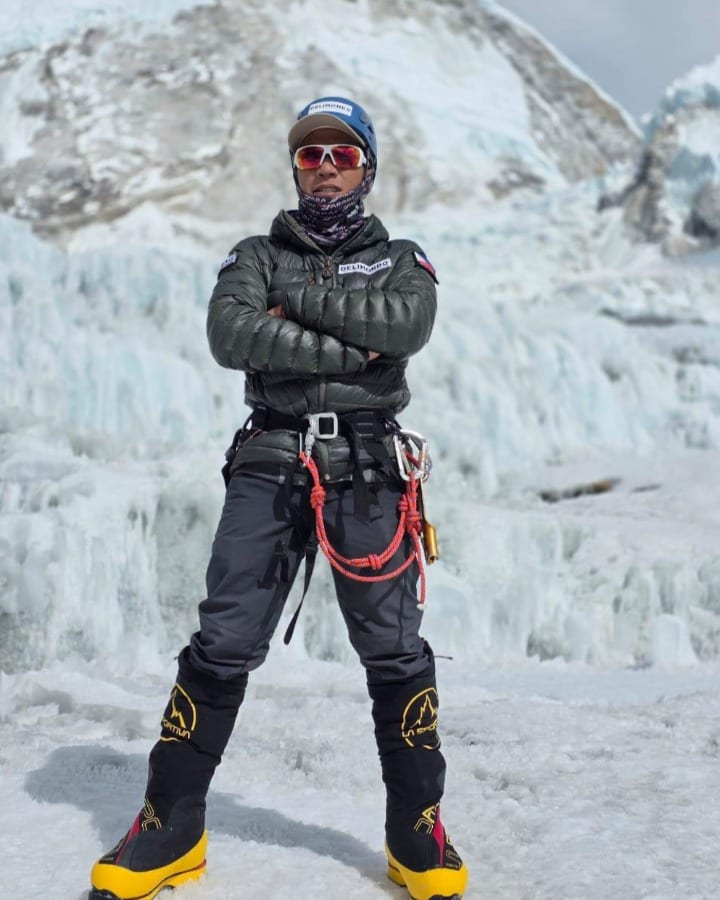
“Yung terrains sa Everest, kapag nag-start na ng mga 3,000 above, wala na syang forest,” Mapalad shares. “Talagang barren na. Wala nang puno, wala nang nabubuhay. Kadalasan ang landscape dyan ay parang desert, moraines, ice, and rocks. Ganun lang. Maraming matatarik. May mga ups and downs, hindi lang puro pataas ‘yan.”
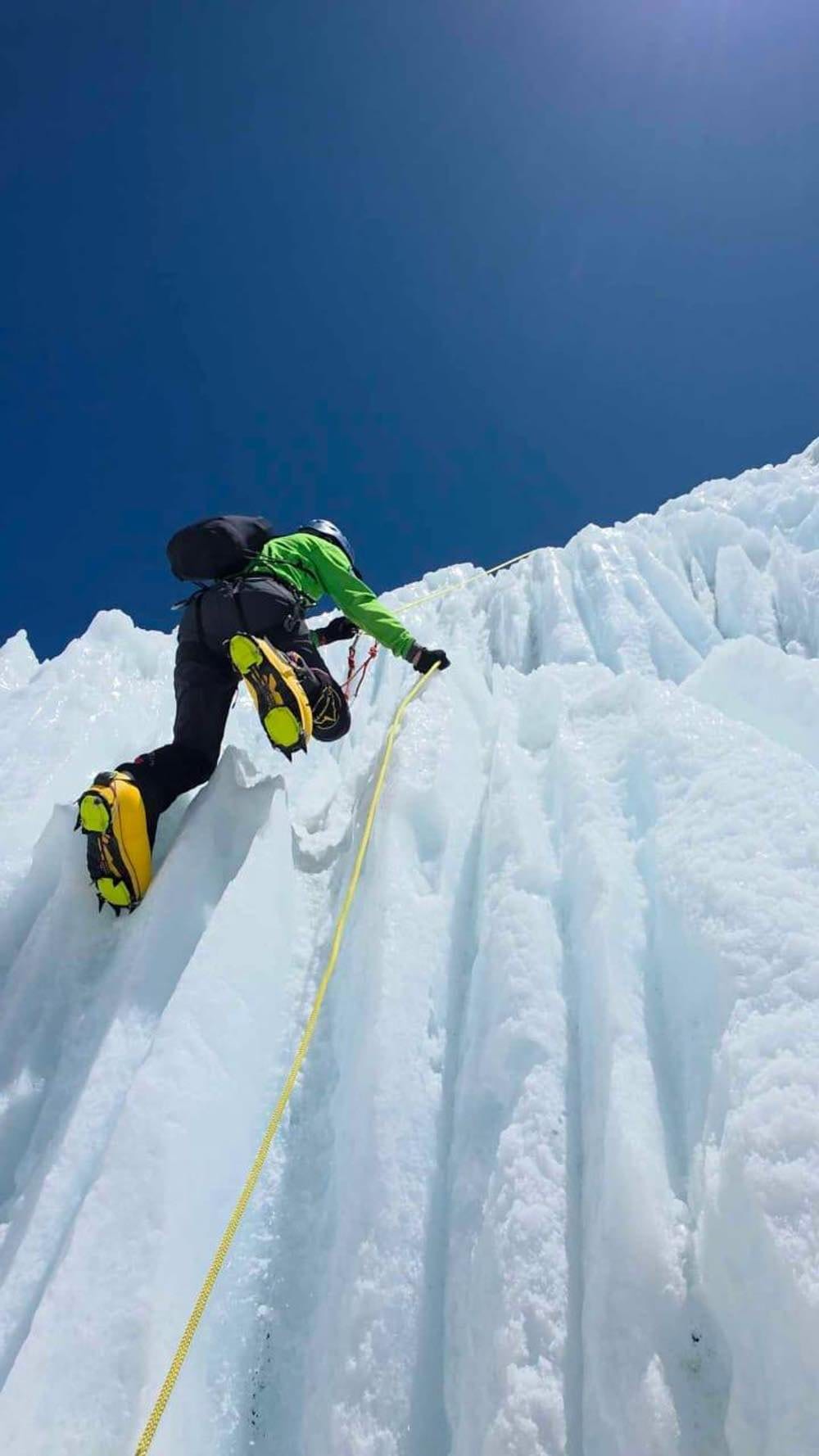
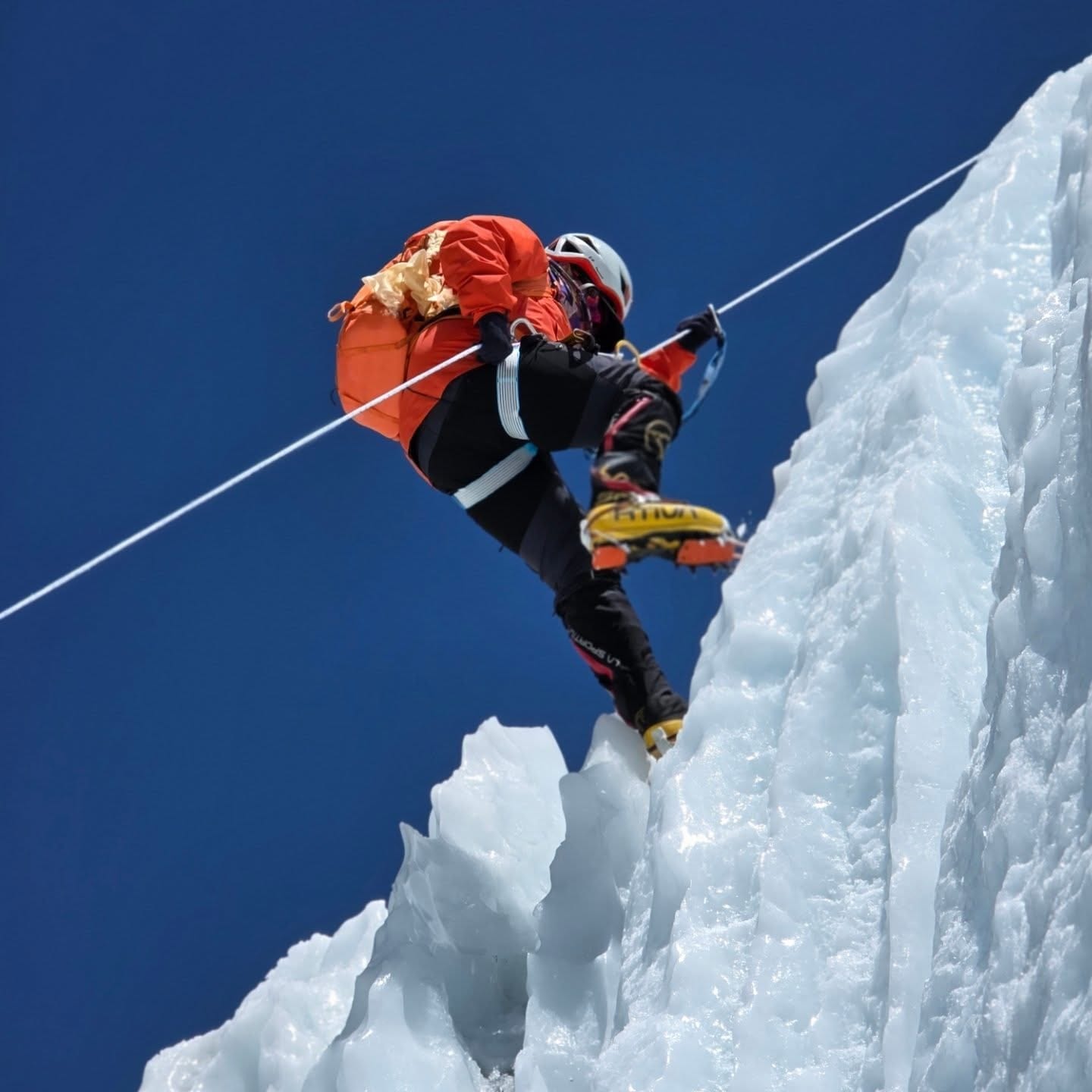
“Habang pataas kami nang pataas,” Panganiban says, “mas nagiging snow and ice. Yung trail sa Everest, the one that makes it so unique is that mataas talaga sya. Andyan yung mga crevasse, andyan ‘ung mga serac. So yun yung mga challenges sa trail. Kailangan naming tumalon. Kailangan naming gumamit ng ladder. Kailangan naming gumamit ng ascender para maakyat kami sa rope.”
Scaling Mt. Everest is treacherous, with numerous reports of climbers losing their lives every year
PHOTO: Courtesy Miguel Mapalad
More challenges
One of the most painful parts of climbing high altitude mountains is that the human body—especially one used to sea level environments—needs to adapt to high altitude. One cannot simply just decide to climb extremely tall mountains on a whim. This is where climbers can feel AMS (Acute Mountain Sickness); headaches, cardio pain, stomach problems are some possible symptoms, so it is imperative to acclimatize before moving to higher elevation.
“So may rule kami dyan,” Mapalad says. “Climb high, sleep low. Kung napapansin nyo sa program namin, akyat baba kami sa Everest. Nakakapagod ‘yun.”
Additionally, as a certified survival instructor, Mapalad also possesses other survival skills, although he believes these skills, while helpful, were not always applicable. “Survival instructor ako dito sa Pilipinas, so mostly specialized ako for jungle survival. Halimbawa maligaw ka, mapilayan ka, pwede tayong gumapang, pwede tayong tumagal mga more than 24 hours, unlike sa high altitude. Kapag wala kang oxygen dun, or na-disgrasya ka kahit kaunti lang, kahit nagkasakit ka lang sa tyan, medyo mahirap na ang survival.”
He also explains that survival is really the idea of addressing emergencies, and that the main learning he applied as a survival instructor is to be careful and alert so that nothing becomes a survival situation for him and his companions.
Preparations for Everest was also not just the physical. They also needed to be mentally and psychologically prepared. The pair also looked out for each other as this was crucial in keeping themselves mentally ready.
“Alam namin na may possibility talaga na may mangyari sa amin ni Miguel,” Panganiban says. “So we did our best to approach this mountain safely. Preparation is every day, chine-check namin kung okay kami. Accountability buddies kaming dalawa. We checked supplies, we checked the weather, if it's okay.”
Throughout the journey, they were also constantly documenting and sharing their progress online as a way to cope. “Hindi lang naman to get views or what,” Panganiban says. “Para makapagbigay ng assurance sa friends, family, and loved ones namin na okay kami. Kahit nasa extreme conditions. Sinasabi namin, ‘Mom, Dad, we’re okay. No need to worry. Pinaghandaan namin ‘to.’”
The mountaineers believe that some uniquely Filipino traits and habits helped them mentally prepare.
“(Siguro yung) magtiis. Sanay tayo sa hirap, ‘no?” Mapalad shares with a laugh. “Minsan, mayroon kaming kasama sa expedition na inuubo lang, nag-give up na. Samantalang kami, ilang beses din kaming nagkasakit. (Tapos) yung bonding naming ni Jeno, yung tawanan namin, yung Filipino humor namin—yun yung nabigay ng push sa amin to go up.”
“Nakatulong din yung bonding namin, yung Filipino humor,” Panganiban agrees.
As for supplies, the key items the pair brought included supplemental oxygen and, of course, food. But even with food, they avoided eating too much. Aside from losing appetite as they climbed, they had considerations around packing light as well as reducing toilet breaks. They planned easy to prepare meals. They brought juices and chocolates for calories and energy, and they had water and a burner to cook food.
Jeno Panganiban says the pair faced numerous challenges in the quest to reach the peak of the world's highest mountain
PHOTO: Facebook / Jeno Panganiban
“Nagdala rin kami ng Filipino comfort food,” Panganiban says. “Sobrang nakatulong sa pag-akyat namin. Adobo. Lechon kawali. Dried mango galling Cebu. Sobrang sarap. Gin!”
But ultimately, they packed as lightly as they could; minimal resources to enable them to climb up and back down safely.
Climbing Everest isn’t just a few days’ worth of commitment, nor is it even just a week. It is a true expedition that requires months, even years, of preparation and getting used to the climate and altitude. Panganiban even went ahead for additional preparation, making his journey a total of nearly three months. Mapalad, on the other hand, had just come from other high-altitude treks, which served as his initial prep, so he took only two months since he was already acclimatized.
The pair’s climb itself can be divided into segments. It started at base camp, then they went from camp to camp, with daily stops at the next camp, all the way up to Camp 4 where the final trek to the summit begins.
“Ang pinakanakakatakot na part is yung from Base Camp to Camp 1,” Mapald says. “Yan yung pinaka-dangerous part ng Everest, which is yung Khumbu Icefall.”
They have good reason to fear Khumbu Icefall, which has claimed many lives and is extremely dangerous as it is prone to avalanches. There are also crevasses to cross, some of which are hidden and covered by thin layers of snow. But the Filipino mountaineers prepared a strategy to cross. “Tumatawid kami dyan ng madaling araw o gabi kung kalian matigas yung yelo,” Mapalad explains. “Yan yung pinaka-safe na pagtawid doon.”
The most physically challenging moment came on the third day, when they had to go from Camp 3 to Camp 4.
“From the third day, wala na talaga kaming tulog,” Panganiban reveals. “Wala kaming maayos na pagkain (at) tubig. ‘Yung tubig namin, bino-boil lang namin yung snow tapos ilalagay namin sa water bottle.”
From Camp 3, the pair arrived at Camp 4 and didn’t sleep; they merely rested for four hours. At 6:30 p.m., they left Camp 4 to begin their ascent to the peak during the night. It was a climb that lasted almost about 12 hours.
“Sa Death Zone,” Panganiban narrates, “pagkarating namin, sobrang lakas ng hangin. We had to wait it out.”
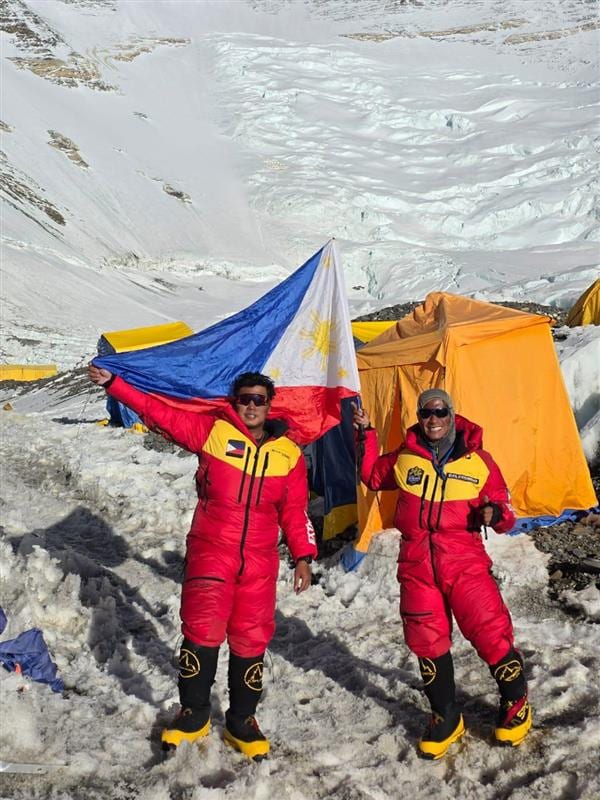
Waving the Philippine flag on the way up Mt. Everest
PHOTO: Courtesy Miguel Mapalad
The so-called Death Zone is the part of the mountain after Camp 4 which is above 8,000 meters where the atmospheric pressure as well as oxygen levels are so low that the human body cannot last for very long. This is where a majority of climbers lose their lives.
“Before kami umakyat ng Everest,” Mapalad adds, “may idea na kami sa Death Zone. Physically nakapaghanda na kami. Nag-research na rin kami kung paano naming maha-handle yung almost zero oxygen. So confident kami.”
The view from the top
The mountaineers finally arrived at the summit around 6:30 a.m. By then, they had been awake for over 24 hours.
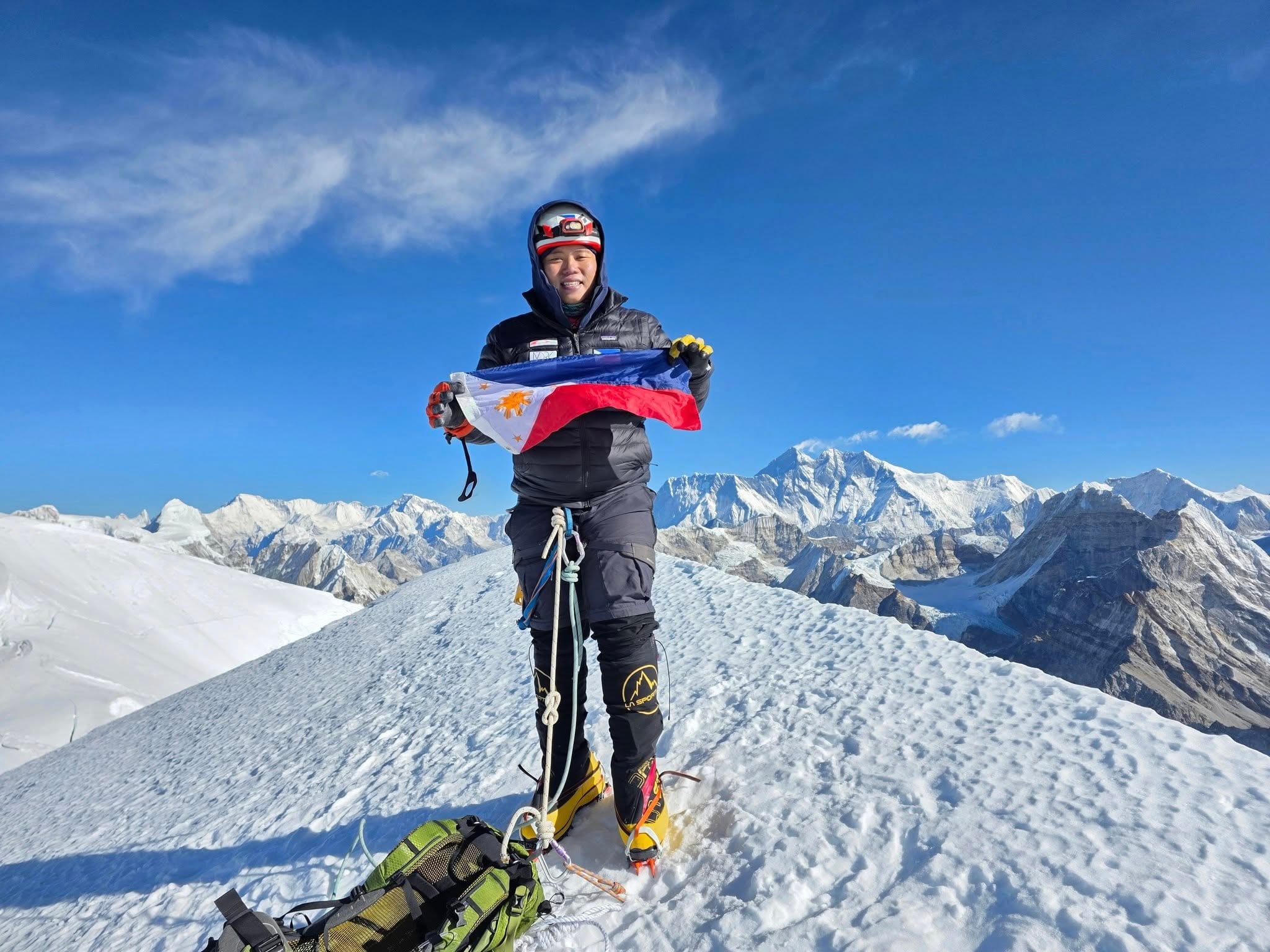
At that moment, Panganiban recalls thinking, “This moment is incomparable. Nakatuntong na ako sa pinakamataas. Nasa pinakamataas na ako. Nasa taas na ako ng everything and everyone else sa lupang ibabaw, at hindi ko yun maikukumpara sa ibang bundok. Every mountain is lower na. Nakaka-proud na na-raise ko pa yung Philippine flag doon.”
“For me,” Mapalad shares, “siguro naramdaman ko yung medyo dramatic moment before reaching the top. Siguro mga 10 steps before the top, talagang dyan ako naluluha. Lifelong dream ko ‘to. Natapos na. Ito na. Ilang sandali na lang, ako yung tao na nasa pinakataas ng mundo. Once naabot ko yung pinaka-peak ng Everest,” he adds with a small laugh, “medyo nawala na yung drama kasi sobrang lakas ng hangin.”
The view from the summit was, as they had hoped for, breathtaking.
Mapalad narrates that even during the dark wee hours just before dawn when they were still ascending, it was already beautiful. “Nung medyo mataas na kami, around 8,600 (meters)… tinitingnan ko na yung paligid. Wow, ganda! Grabe! Ibang bansa na yata yung nakikita ko dito sa kabilang side. Ibang klase. First time ko na makakita ng sobrang liwanag na mga bituin. Andami nila. Tapos yung ulap na sa ibaba. May mga nakikita akong city siguro, ilaw, sobrang malayo. Ang ganda. And then nung dumating na yung liwanag, mas maganda.”
“Everything was so perfect,” Panganiban says. “Yung sunrise, tinamaan ang Mount Everest. Yung shadow nya, it’s a perfect…pyramid? Perfect cone? Basta perfect. Tapos nung nandoon na kami sa Hillary Step, we could see the earth’s curvature. It’s really one of a kind.”
The way down
Of course, having already reached the summit, they now had the challenge of having to go back down. They could only stay for around 15, maybe 20 minutes, max and then had to cut their moment of triumph with the reality of the next challenge that awaited them. It was also very cold, the wind was very strong, and they were running on very limited oxygen.
“Kailangan naming isipin yung pababa kasi mas delikado yun,” Mapalad says. “So nag-picture lang kami and diretso na kami bumaba sa Camp 4.”
Mapalad notes that the most dangerous aspect of a mountain trek is actually the descent. “Dyan yung halos 80 percent ng mga nadisgraysa sa Mt. Everest, yung mga namatay, is yung going down. Kasi naubos na yung energy, oxygen, tapos inabot na ng gabi. Hindi kasi pwedeng abutin ng gabi sa Death Zone. Sobrang lamig. Minsan inaabot din ng hypothermia, nagkakasakit. Kaya sobrang ingat na ingat kami.”
The pair made their way down from the summit around after lunch. They went to sleep without eating or drinking, and they woke up around 6:00 a.m. to continue their descent. They were doing their best to conserve their oxygen.
“Mind over matter,” Panganiban says. “Willpower na lang namin ang nagbaba sa amin kasi pagod na kami from the summit.”
“Siguro mas emotional ‘yung pinaka-ending ng trek,” Mapalad shares. “Life and death, sobrang dramatic experience. Yung pag magsa-shower namin, medyo may kasamang luha pa. Pati yung pagsubo namin ng masarap na pagkain, yung tunay na pagkain sa exit.”
“Kasi, going up, sobrang positive namin,” Panganiban adds. “Parang walang makakapigil sa amin going up. Pero nung nandoon na kami sa finish line (upon returning), end of the road, doon nag-sink in lahat. Wow, sobrang grateful kami, sobrang blessed kami to have (reached) the summit and climbed down safely.”
Panganiban and Mapald says they looked out for one another during the climb
Courtesy Miguel Mapalad
When asked about their feelings about reaching the world’s highest peak and how they would define what it really means to conquer a mountain, Panganiban is quick to correct the notion of “conquering” a mountain.
“Sabi kasi nila, you don’t ‘conquer’ a mountain,” he clarifies. “Kasi it’s not a battle between you and the mountain. Ang bundok pa rin naman talaga ang may huling salita. Bumibisita ka lang din naman. You conquer yourself. May kaunting conquering din (in that we challenge) yung sarili namin. We try to do better every time, mountain by mountain. Mas nagiging magaling kaming mountaineers.”
Mapalad agrees. “Hindi ko rin masabi na ‘conquering’ yung mountain. Ang nakikita ko sa mga bundok na mga inaakyat ko, para syang magagandang babae na liligawan mo muna,” he says with a laugh.
Having now reached the summit of Mount Everest, both men don’t plan to stop any time soon.
“Ang project ng team namin—14 Peaks—is maakyat ang lahat ng 14 8,000-meter peaks sa buong mundo,” Mapalad shares. “Meron na kaming dalawa na naakyat. Ang next big project namin is yung K2 sa Pakistan. Mas malaking challenge compared to Mount Everest. Mas technical, mas unpredictable ang weather, snow, and ice conditions.”
Jeno Panganiban standing on the summit of Mt. Everest
PHOTO: Facebook / Jeno Panganiban
“If we will be blessed with sponsors pa, aside from 14 peaks, pwede pa naming i-squeeze in yung Seven Summits, which is the highest peaks sa lahat ng continents naman.”
As they wrap up this chapter in their lives and move on to the next, both mountaineers hope to inspire other Filipinos with similar dreams, and share advice to others to help them attain those dreams.
“Huwag mo masyadong i-overthink ‘yung grand picture ng Everest,” Panganiban says. “Kapag in-overthink mo yun, hindi mo na gagawan ng paraan. Nangarap din lang naman ako. Sinabi kong hindi ito imposible. Alam kong napakalayong journey pa. Marami pa akong kailangang matutunan. Kailangan pang pag-ipunan. Pero hindi siya imposible. You will meet the right people to help you in this journey.”
“Kaya rin nating mga Pilipino ‘yan,” Mapalad reminds us all. “Kahit nakatira tayo sa tropical country. Nakakapag-adjust naman ang katawan natin. Huwag nyo (lang) mamadaliin. Hindi rin basta-basta ang pag-akyat ng Mount Everest. Sabi kasi nung iba, may pera ka, makakaakyat ka ng Mount Everest. No, huwag. Delikado po yun. Mas maganda paghandaan mo. Seek advice sa mga nakapag-high altitude na. Mag-research. Slowly but surely.”
Indeed, we know that the success and achievements of these Everest explorers will continue to motivate and inspire more Filipinos to pursue and achieve their dreams. This is true Pinoy Pride.
We use cookies to ensure you get the best experience on Esquiremag.ph. By continued use, you agree to our privacy policy and accept our use of such cookies. Find out more here.