

Meet Sean Reyes, the Highest-Ranking Filipino-American Official in the U.S.

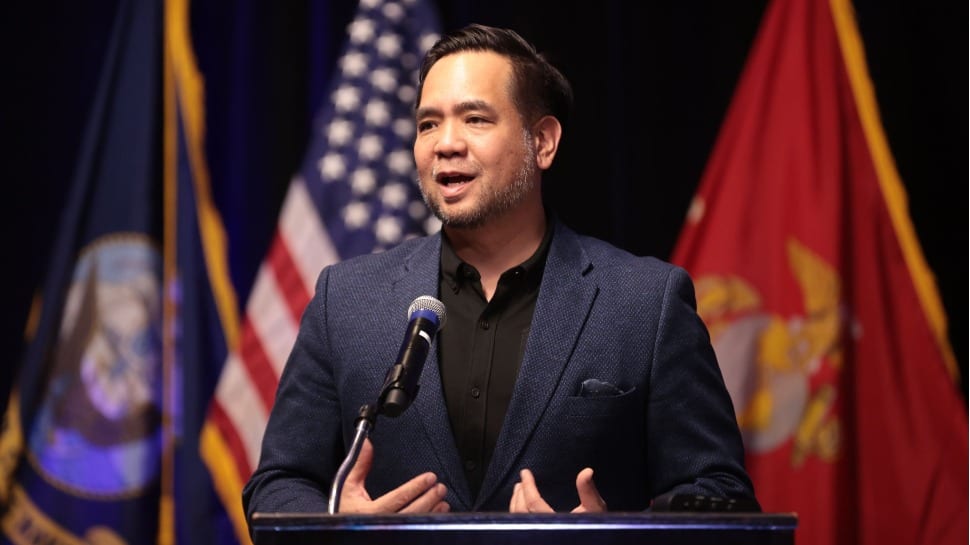
Soon after Atty. Sean Reyes was appointed Attorney General of the state of Utah in the United States in 2013, he was invited to a meeting with then-Philippine Ambassador to the U.S. Jose Cuisia. Reyes flew to Washington D.C. and met with the ambassador, who said something to him that he’s been carrying around ever since.
“He told me, ‘Sean, you're the highest-ranking Filipino-American in the United States right now. There are a lot of eyes on you,” Reyes says. “He might have been exaggerating, and he may not remember, but he said, ‘The hopes and dreams of the Filipino people not just in America but around the world rest with you. Don't blow it!’
“Oh, okay. Thank you. No pressure, Mr. Ambassador! And he laughed and he said, ‘No, I know you'll do well, because you come from a good family. You've been taught well.’”
.jpg)
As AG, Reyes is the so-called “people’s lawyer,” the top legal officer of the state that advises and represents the legislature and state agencies. Reyes was first appointed to the job after his predecessor, who was embroiled in a political scandal, resigned before he could be impeached. Reyes served until 2016 and then ran for re-election and won. He ran again in 2020 and is now serving another four-year term until 2024.
Reyes is the first attorney general of Filipino descent not just in Utah but in the entire United States. It’s something that’s constantly in the back of his head.
ALSO READ
Rising Filipino Racing Star Bianca Bustamante Joins Formula 4 Team PREMA
Dave Bautista Breaks Down His Three Tattoos Dedicated to His Filipino Roots
“It's always there,” he tells Esquire Philippines. We meet him in Las Vegas, Nevada, at the sidelines of the annual SHOT Show at the Venetian Convention Center, where he's supporting the booth of Filipino firearms company Armscor. “I always know that I'm not just representing my state, or America, but I represent my Filipino culture and heritage. I'm very mindful of that. I know that I am who I am because of my Filipino roots. Not exclusively, because I have a number of different parts of my heritage, but so much of what I think are the best parts of my upbringing were because of my Filipino heritage.”
Filipino roots
Reyes himself was born and grew up in Los Angeles, California, but his father Norberto “Buddy” Reyes is from Zambales. The senior Reyes, whose uncle was the former President Ramon Magsaysay, was a singer and radio and TV show host and also dabbled in the arts as a painter. He moved to America in the late 1960s.
View this post on Instagram>p“He also worked as a line producer for MGM Studios,” Reyes says. “He was so creative and he was my hero. When he came to the States, he started all over again. He was practically homeless and not treated particularly well in the 1960s.” >pThe elder Reyes met his wife, who had a Japanese-Hawaiian blood, and raised a family. Sean says he grew up in a tough neighborhood in L.A. but remembers summers in Hawaii working in his grandparents’ ranch and farm on the Big Island. >pIn high school, Reyes got into martial arts and sports like volleyball, which eventually led to him being recruited to play for Brigham Young University in Utah.>p“I was an English major and wanted to be an English professor, and a poet,” he says. “I wanted to write. But instead I ended up in law.” >pReyes earned his law degree from U.C. Berkeley and graduated with honors. He practiced for nearly 14 years with a big law firm back in Utah and became one of the first minority lawyers to make partner at a major law firm. In 2008, he was also selected as the top young lawyer in the United States by the American Bar Association. >p
 Photo by Twitter / @seanreyesUT.
>p>pThe young lawyer eventually left the firm and spent time as a general counsel for a technology and entertainment company that eventually became a venture fund. It was around that time that the political scandal involving his predecessors as AG was happening. Reyes actually ran for AG in 2012 but lost, only to be later appointed to the position by the governor. >p“(At the time) I didn't know if I wanted to do this job,’ he says. “But my father had always taught me, especially with the example of people like Uncle Ramon Magsaysay, that we have to give back. And my dad said, this country has given us so much, and you should always serve when you can. >p“He also always taught me to stand up for those who can't stand up for themselves,” he adds.>pEntering politics >h2As AG, Reyes was tasked to clean up an office that had been racked with scandal and inefficiencies. Quickly he managed to built up the people’s trust back in the office. He and his team also notched win in high-profile cases involving issues like drug dealers, human traffickers, child predators, and white-collar criminals.>pThis early there are already talks about him possibly running for higher office, wih people encouraging him to look at the Senate or governor or other things.>p“I love the AG job,” he says. “To be able to go rescue kids from child sex traffickers and bring men, women and children home, and to tackle issues like organ harvesters and forced labor around the world—those are the things that I love to do. And I don't know if I'd be able to do that with another position.” >p>p
View this post on Instagram
But Reyes is already a rising star in American politics. A vocal supporter for former President Donald Trump, he spoke at the Republican National Convention in 2020 alongside people like Dana White and Ivanka Trump; he’s the first-ever Filipino-American to command the stage at such a high-profile event.
“It's a very partisan, divisive political environment,” he acknowledges. “But we try. We've made my whole administration about fighting human trafficking, fighting the opioid epidemic, helping to bring resources to mental behavioral health, crises like teen suicide, and then fighting white collar fraud and crime. Those things, I tend to find that most people, regardless of their background or political affiliation, can rally behind. Who doesn't want to protect our children? Who can't acknowledge that maybe social media and the internet while, you know, beneficial on one side also pose a number of different threats? Parents everywhere I go, whether Democrat or Republican, aske me, ‘What can we do? How can you help us? And so I really try to focus on those areas because I think they have the ability to bring Americans closer together.”
And it’s not just Americans he’s helping. Reyes has caught the attention of politicians on this side of the planer. Just last December, he flew to the Philippines to meet with President Bongbong Marcos and Senate President Juan Miguel Zubiri. He also visited an Aeta tribe in his father’s home province of Zambales and worked with a local foundation to provide potable to water to communities.
Meeting Marcos
“We met with President Marcos to talk about the needs of Filipinos: energy, self-defense, education, entertainment, and tourism,” he says. “I brought several people including some that are here who are globally recognized in those spaces. We had a wonderful meeting there. Many senators and congressmen met with law enforcement. That's my purview. I’m trying to help empower Filipino law enforcement with technology.”
Sean Reyes (first from left) with Senate President Juan Miguel Zubiri, Armscor President Martin Tuason, Hollywood actor Joe Mantegna, and Arsmcor SVP Lisa Tuason
.jpg)
With such a high-profile position, Reyes has become not just a champion of the downtrodden, ordinary folk seeking justice, he’s also become, as Ambassador Cuisia said, a beacon that Filipinos in the U.S. and all over the world can emulate. While there are no concrete plans yet beyond 2024, Reyes vows to keep doing good fighting the good fight no matter what position he occupies.
“It's hard because the longer you're in there, the more people think, ‘Oh, he wants to continue to, what's the next step? And what's the next level?’ But really, it's just about me wanting to serve where I think I have the best ability and can make the most difference in my skill set and is most conducive to giving back.
“I want public service to be accessible to everyone in part because I want more Filipinos to run for office here in the United States,” he adds. “We don't have enough representation, and we don't have enough voice.”
