
A Short History of Universidad Literaria de Filipinas, the First Filipino-Run State University

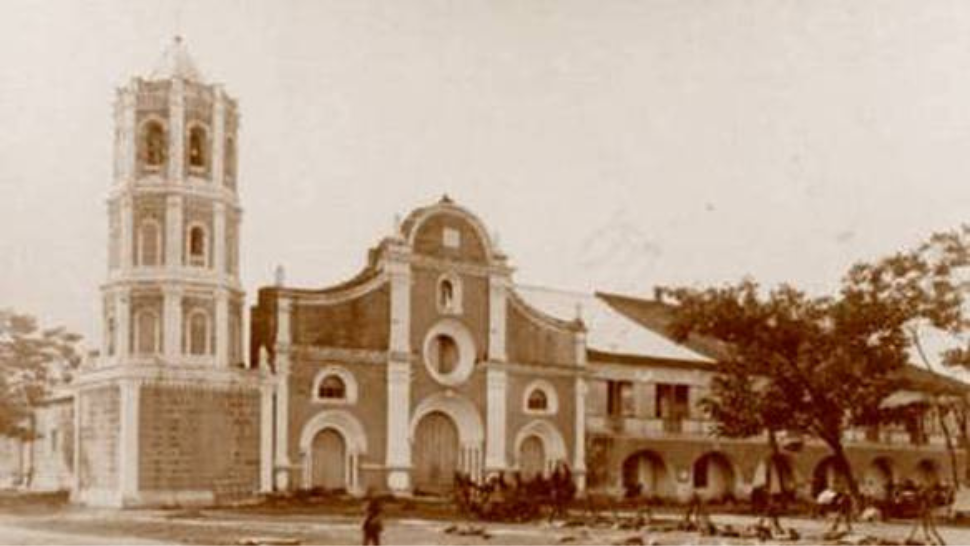
With President Emilio Aguinaldo declaring the Philippines independent from Spanish rule in June 1898, the country was going through a period of great optimism. With it, the fledging Philippine Republic knew that it had to start empowering and decolonizing the next generation of Filipinos and so education reforms were a top priority. The Philippine revolutionary government knew how vital it was to have an academic institution Filipinos run by Filipinos, after all.
Hence, President Emilio Aguinaldo established the Universidad Literaria de Filipinas by virtue of a presidential decree just four months later on October 19, 1898. This was unheard of at the time, considering that the University of Santo Tomas, which once earned the title Universidad de Filipinas (but went unused) and was a royal Spanish university, was arguably the most influential private academic institution in the Philippines. The new national university presented quite the alternative.
Dr. Joaquin Gonzalez holds the distinction of being the institution's first rector. He also taught medicine.

ALSO READ:
Dr. Ariston Bautista, the Doctor of Revolutionaries and Heroes
The Life and Times of Gregoria de Jesus, Mother of the Philippine Revolution
It had originally been located in Navotas and Tambobong before transferring to Malolos in Bulacan, right beside Barasoain Church. Holding classes in Barasoain Church Convent, the university's operations coincided with the government-run Instituto Burgos and Academia Miliar (a precursor of sorts to the Philippine Military Academy).
Dr. Joaquin Gonzalez was installed as its first rector. The Spanish mestizo physician was a trained Doctor of Medicine in Spain, graduating from the Universidad de Valladolid and the Universidad Central de Madrid. He was a member of the Malolos Congress that wrote the Constitution, as well.
The university hoped to maintain a secular and nationalistic approach with him at the helm, albeit still using the Spanish language as a medium of instruction. It would offer courses in law, medicine, pharmacy, and notary public, obtaining the services of the leading minds in the country back then. Apolinario Mabini was even said to have invited Emilio Jacinto to study here. Jacinto, unfortunately, succumbed to Malaria a year later.
Sadly, Universidad Literaria de Filipinas never got to live up to its full potential. The Philippine-American War would break out the next year, lasting until 1914. When the Republican capital abandoned Malolos in the face of American Forces in March 1899, the university would, at the very least, continue to teach at San Sebastian Church Convent in the new Republican capital in Tarlac. Revered historian, botanist, and playwright Leon Maria Guerrero would become the university rector. The First Philippine Republic became a guerilla government in November 1899 and the university would immediately be shut down soon after.
The United States Insular Government of the Philippines would eventually open the University of the Philippines in 1908. Gonzalez' son, Bienvenido Maria, would become the first president of UP.
No other institution would claim the Universidad Literaria de Filipinas' lineage, so to say. Tarlac State University would add the story of the Universidad Literaria de Filipinas as part of its own institutional history. Bulacan State University denied it, as well. There had even been proposals made to UP to claim its memory, which would have made 1898 its founding year. It wasn't exactly met with much support.
While short-lived, the Universidad Literaria de Filipinas nevertheless holds the distinction of being the first Philippine state university. It was reflective of a time of shared new hopes in a new societal order. But, as luck would have it, it wouldn't prosper through turbulent times for the country's patrimony. Thus, the institution ended up becoming just a distant, often forgotten, footnote in the unraveling of the first Philippine Republic.
